

How to Protect Your Business With a Weather-Resistant Roof
To safeguard your business, invest in a weather-resistant roof tailored to your local climate. Opt for top-quality materials like metal or impact-resistant tiles that provide durability and energy efficiency. Ensure skilled professionals handle the installation to minimise leaks and enhance resilience against severe weather. Consider design features such as sloped roofs and proper ventilation to prevent moisture buildup. Regular maintenance and inspections can help catch issues early, extending the life of your roof. This investment not only reduces long-term repair costs but also improves your roof's performance. There's much more to discover about how to protect your business from unpredictable weather.
Key Takeaways
- Opt for robust, climate-appropriate roofing materials such as metal or impact-resistant tiles to endure harsh weather conditions.
- Ensure that qualified professionals carry out the installation to enhance roof durability and prevent leaks or damage.
- Incorporate design elements like steep pitches and reinforced structures to improve resistance against wind and snow.
- Carry out regular inspections and maintenance to spot and resolve potential problems before severe weather strikes.
- Create a thorough plan for employee safety and emergency communication during adverse weather events.
Importance of Weather-Resistant Roofing
When protecting your business, it's crucial to understand the significance of weather-resistant roofing. Current roofing trends highlight that a roof's resilience is vital for its longevity and effectiveness.
Ensure your roofing contractor employs proper installation techniques, including effective seals, flashing, and ventilation systems, to prevent leaks. Design features such as steep slopes and overhangs can significantly improve your roof's ability to endure harsh weather. With the increase in severe weather events, it's more important than ever to ensure your roofing system can withstand such challenges.
Consider your local climate—areas prone to hurricanes or wildfires need tailored strategies to enhance roof durability. Additionally, installing quality gutters, downspouts, and scuppers helps divert water away from your building, reducing the risk of water pooling and related issues.
Regular maintenance and inspections are essential. By identifying potential problems early, you can prolong your roof's lifespan and minimise costly repairs.
Prioritising weather-resistant roofing not only protects your investment but also promotes sustainability and efficiency, benefiting your business and the environment alike.
Selecting Quality Roofing Materials
Choosing the right roofing materials is crucial for protecting your business from the elements. Here are four key considerations to keep in mind:
- Climate-Specific Solutions: Choose materials that suit your local weather challenges, whether it's heavy rain, extreme heat, or snowfall. For instance, tile roofing is effective in hot, dry climates, promoting air circulation and heat dissipation.
- Durability and Longevity: Select long-lasting materials like asphalt shingles or metal roofing to reduce maintenance and replacement costs. Durable materials provide superior weather resistance against environmental damage.
- Energy Efficiency: Opt for materials with good insulation properties to help control indoor temperatures and lower energy bills. High R-value insulation can lower heat transfer, potentially decreasing energy bills by up to 50%.
- Cost-Effectiveness: Weigh initial costs against long-term benefits, such as reduced repair expenses and increased lifespan.
Staying informed about roofing trends can lead you to innovative options, like impact-resistant tiles that offer better protection against harsh winds and debris.
By investing in quality materials tailored to your business needs, you not only safeguard your assets but also create a safer environment for your employees and customers.
Prioritising these factors will help you make informed decisions that benefit your business over time.
Designing for Extreme Weather Conditions

In today's unpredictable climate, designing a roof that can withstand extreme weather is crucial for any business. Key considerations include roof aerodynamics and structural reinforcement to ensure your roof can handle high winds, heavy snow, and other harsh conditions. Roof shape significantly affects wind resistance, making it essential to choose a design that minimizes vulnerability to wind damage. Proper roof ventilation is also vital to prevent moisture build-up that can weaken structural integrity over time.
Here's a quick comparison of effective design features:
| Design Element | Benefits |
|---|---|
| Hip Roofs | Aerodynamic shape reduces wind uplift damage. |
| Sloped Designs | Promotes quick water runoff, minimising leaks. |
| Reinforced Roof Decks | Increases strength against strong gusts. |
| Hurricane Straps | Boosts resistance to high winds and storms. |
| Interlocking Roof Tiles | Offers extra protection against wind uplift. |
Implementing these features will not only safeguard your roof but also prolong its lifespan. Investing in durable fasteners and ensuring secure overhangs are essential for structural integrity. Additionally, understanding your local climate will guide your material choices, enhancing your roof's resilience. Regular inspections are vital to identify potential issues early, protecting your business from extreme weather.
Best Installation Practices
When installing a weather-resistant roof, it's crucial to select high-quality materials and employ skilled installation techniques for lasting performance. Opt for materials that can endure harsh weather conditions, and ensure they're fitted by experienced professionals. This approach not only boosts durability but also reduces the likelihood of expensive repairs down the line. For instance, using slate tiles can be a wise investment, as they're known for their strength and longevity in the UK climate. Additionally, proper material selection is essential for maximizing roof resilience against specific weather challenges. Choosing materials with low water absorption properties, like slate, can significantly enhance the roof's ability to withstand heavy rain and moisture.
Proper Material Selection
Selecting the right materials for your roof is crucial for its longevity and ability to withstand harsh weather. By assessing your options carefully, you can safeguard your business while considering sustainability and costs.
Here are key factors to keep in mind:
- Impact Resistance: Consider materials such as metal roofing or impact-resistant tiles that can endure hail and strong winds. Metal roofs are known for their exceptional weather resistance against various elements.
- Thermal Management: Look for cool roofing solutions or heat-resistant coatings to reduce energy costs and enhance durability. Cool roofing materials reflect heat, further contributing to energy efficiency.
- UV Protection: Opt for UV-resistant materials and coatings to prevent damage from sun exposure.
- Local Compliance: Ensure that your materials comply with local building regulations, particularly regarding ice and snow resistance.
When exploring sustainable options, choose materials that provide protection and support eco-friendly practices.
Although durable materials may have higher upfront costs, they often lead to long-term savings on repairs and energy bills. Investing in quality materials will help keep your roof intact, benefiting both your business and the community.
Focus on these considerations for a roof that lasts while remaining budget-friendly.
Expert Installation Techniques
A well-installed roof is crucial for protecting your business from severe weather. Begin by selecting a qualified contractor. Opt for certified professionals with a solid track record and knowledge of the industry. They should be familiar with local building regulations to ensure compliance.
Next, focus on precise installation techniques. Ensure roofing materials are properly aligned and secured according to the manufacturer's guidelines. Pay close attention to flashing around vents and chimneys to prevent water leaks.
Installing effective drainage systems is vital to avoid water pooling, while proper ventilation will help extend the roof's lifespan. Knowledge of ventilation and insulation is essential for enhancing overall roof performance.
During the installation, implement quality control measures, including regular inspections, to identify and rectify issues early. Use high-quality, corrosion-resistant flashing and ensure proper sealing around any roof penetrations.
Correct nail placement in the designated nailing zone is essential for securing shingles, and adequately sealing ridge and valley areas will help prevent leaks.
Finally, schedule regular maintenance and professional inspections after installation to prolong your roof's life and improve its resistance to the elements. By following these straightforward practices, you can ensure your business stays protected against the weather.
Routine Maintenance Strategies
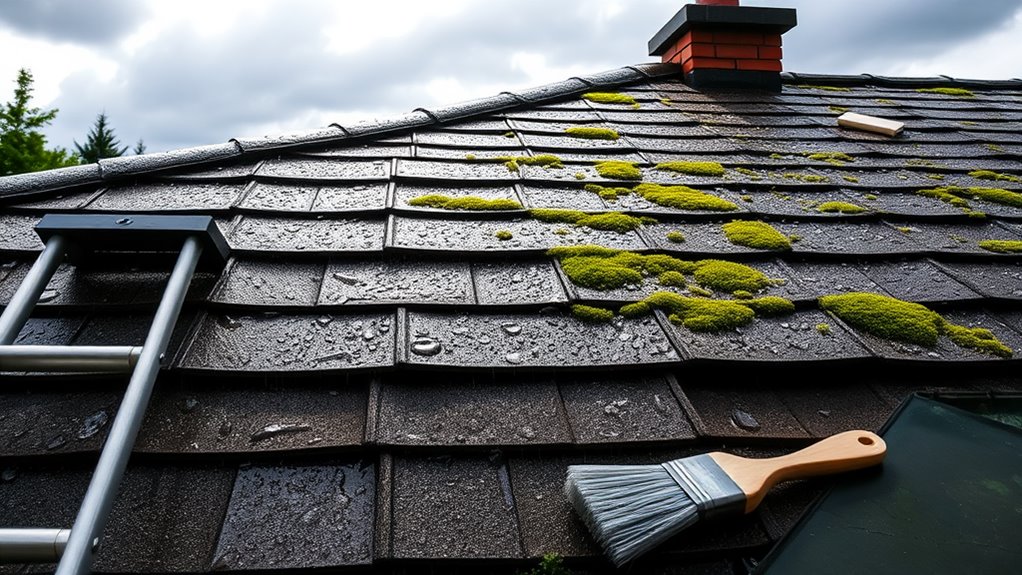
Routine maintenance is crucial for ensuring the longevity and performance of your weather-resistant roof. By adopting effective strategies, you can prevent minor issues from escalating and maintain your roof's integrity.
Here are four key maintenance strategies to consider:
- Regular Inspections: Inspect your roof at least twice a year, ideally in spring and autumn. Use binoculars for a quick look or hire professionals for a thorough evaluation.
- Gutter Maintenance: Keep your gutters and downspouts clean to prevent water accumulation. Regularly remove leaves, branches, and debris to ensure proper drainage and avoid structural damage.
- Post-Storm Checks: After a storm, check your roof for any signs of damage, such as dents, broken seals, or missing tiles. Address any issues promptly to prevent further complications.
- Documentation: Maintain records of all inspections and maintenance work. This will help you monitor your roof's condition and identify potential problem areas over time.
Protective Measures Against Elements
To protect your business from harsh weather, it's essential to implement effective snow removal methods, strategies to prevent ice dams, and practices that enhance wind resistance.
These measures help preserve the integrity of your roof and extend its lifespan. By tackling these elements proactively, you safeguard your investment and ensure smooth operations.
For instance, regularly clearing snow from your roof can prevent heavy build-up that might lead to leaks.
Snow Removal Techniques
Removing snow effectively is essential for preserving your roof's integrity and ensuring safety during winter. Here are some important snow removal safety tips:
- Clear Regularly: Remove snow often to prevent large accumulations and minimise hazards.
- Dress Appropriately: Wear insulated boots and multiple layers to avoid hypothermia.
- Use Fall Prevention Systems: Install guardrails or anchors for additional safety.
- Equip Yourself: Use harnesses and warning lines to reduce the risk of falls.
When choosing snow clearing tools, opt for ones that won't damage your roof. Consider using plastic-bladed shovels and roof rakes with telescopic handles and rubber squeegee blades for effective snow removal.
Steamers can safely melt snow and ice without harming your roof, while eco-friendly ice melters dissolve ice without causing corrosion.
When manually removing snow, work in pairs and tackle small areas at a time to ensure safety.
If the task seems daunting, don't hesitate to hire professional services. They've the right equipment and expertise to handle snow removal safely and efficiently, helping protect your property from winter weather challenges.
Ice Dam Prevention
Ice dam formation can cause significant damage if not managed properly, making prevention a vital part of roof maintenance. By implementing effective ice dam prevention strategies, you can ensure your roof remains robust against winter weather. Begin with sufficient insulation to retain heat and maintain consistent attic temperatures. Conducting energy audits will help identify air leaks, improving your building's energy efficiency.
Here's a summary of essential measures:
| Preventative Measure | Description | Benefit |
|---|---|---|
| Sufficient Insulation | Use materials like fibreglass, cellulose, or foam. | Minimises heat loss. |
| Heating Cables Installation | Fit heating cables along the roof's edge. | Stops ice from building up. |
| Regular Inspections | Carry out inspections before and after winter. | Spot vulnerabilities early. |
| Gutter Maintenance | Clear gutters of debris regularly. | Prevents blockages and ice dams. |
| IDPS Systems | Install heating cables in roof edges. | Melts snow before it refreezes. |
Taking these steps will help protect your home from the damaging effects of ice dams.
Wind-Resistant Strategies
When dealing with severe weather, implementing wind-resistant strategies is crucial for protecting your business and ensuring the longevity of your roof.
Here are four essential considerations:
- Select Robust Roofing Materials: Choose wind-resistant options like metal, tile, or slate roofing. Each type offers advantages, such as durability and low maintenance.
- Improve Installation Techniques: Reinforce roof decking and secure the edges to strengthen your roof against wind uplift. These methods enhance structural integrity and resilience.
- Incorporate Storm Clips and Straps: These fixtures secure trusses to wall plates, boosting wind resistance, especially in areas prone to hurricanes.
- Commit to Regular Maintenance: Arrange inspections to spot vulnerabilities and ensure all roofing components are secure.
This proactive approach can prevent minor issues from turning into costly repairs.
Evaluating Material Options

When evaluating materials for a weather-resistant roof, consider how each option performs in various conditions.
Start with metal roofs, which are highly durable against strong winds and hail. Slate roofs are also a long-lasting choice, offering excellent resistance to harsh weather and hail damage.
Asphalt shingle roofs work well in moderate conditions but may struggle during extreme weather.
Clay and concrete tile roofs are robust against wind and debris but need adequate structural support. Euroshield rubber shingles are notable for their impact resistance and eco-friendliness, being made from recycled materials.
Don't forget the environmental impact of each option. Metal and slate roofs can be made from recycled materials, promoting sustainability. Modern asphalt shingles have improved recyclability too.
Ultimately, your choice should balance weather resistance with sustainability, ensuring your property is protected while reducing environmental impact.
Regular inspections and maintenance will also extend the life of whichever roofing material you select.
Long-Term Benefits for Businesses
Businesses can gain significant advantages from investing in a weather-resistant roof, leading to notable cost savings and improved operational efficiency over time.
Here are four key long-term benefits to consider:
- Reduced Repair Costs: Less weather-related damage results in lower repair bills.
- Lower Energy Bills: Energy-efficient materials help cut heating and cooling expenses, leading to substantial savings.
- Extended Roof Lifespan: Quality materials prolong the life of the roof, delaying expensive replacements.
- Decreased Maintenance: Sturdy construction requires less frequent upkeep, saving on both labour and materials.
In short, a weather-resistant roof is a smart investment that pays off in the long run.
Planning for Future Weather Events

Planning for future weather events is crucial for protecting your business from potential disruptions. With climate change leading to more frequent and severe weather, it's important to assess the risks and impacts on your operations.
Start by identifying key business activities and prioritising their protection. Look at vulnerabilities in your supply chain and create contingency plans to minimise disruptions.
Establish a comprehensive business continuity plan. Appoint a senior executive to oversee it and set clear criteria for when to activate the plan. Regularly test and update it to ensure it remains effective in various scenarios.
Employee safety is paramount. Develop emergency communication plans to keep your team informed during severe weather events. Prepare your facilities by conducting inspections, maintaining them, and considering weather-resistant roofing. You may also need to explore alternative work arrangements.
Stay informed by monitoring weather forecasts and proactively adjusting operations based on trends.
Frequently Asked Questions
How Do I Know if My Roof Needs Replacement?
To determine if your roof needs replacing, consider its age and look for signs such as missing tiles, sagging areas, or water stains inside your home. Regular inspections can help spot these issues early on, allowing you to take action before more extensive damage occurs.
What Are the Signs of Roof Damage After a Storm?
After a storm, check for water stains on ceilings, missing or damaged tiles, and bent gutters. These indicate potential roof damage that needs urgent attention. Regular roof inspections help you spot problems early, safeguarding your property and providing peace of mind.
Can I Install a Weather-Resistant Roof Myself?
You can try installing a weather-resistant roof yourself, but it's important to grasp the complexity and choose the right materials. For instance, using the correct underlayment can significantly improve your roof's durability. Seeking professional advice can help you dodge expensive errors and ensure you meet local building regulations.
How Often Should I Inspect My Roof?
Think of roof maintenance like checking your climbing gear before a hike. Inspect your flat roof at least twice a year and your sloped roof annually. If you live in an area prone to extreme weather, consider inspecting more frequently to avoid expensive repairs later.
What Warranties Are Available for Weather-Resistant Roofing Materials?
When looking at warranty options for weather-resistant roofing materials, you'll typically find limited weathertight, material, and workmanship warranties. Each type offers specific coverage to protect your investment against defects and installation issues. For example, a weathertight warranty covers leaks, while a material warranty ensures that the roofing materials meet quality standards. Workmanship warranties, on the other hand, protect you from installation errors. Understanding these options can help you make an informed choice for your roofing needs.
Conclusion
If you think a flimsy roof will protect your business, think again. Investing in a sturdy, weather-resistant roof is not just wise; it's crucial. Using the right materials and installation techniques can help you withstand any storm. Don't leave your business's fate to chance; take action before severe weather strikes. After all, it's much better to be well-prepared than to discover your roof has turned into a makeshift swimming pool!


