
Fire-Rated Roofing Options for Commercial Buildings
When choosing fire-rated roofing options for your commercial building, it’s crucial to ensure compliance with safety regulations and performance standards. Consider Class A materials like metal roofing, clay tiles, or modified bitumen, which provide excellent fire resistance. For low-slope roofs, single-ply systems such as EPDM or PVC are effective, while multi-layered options excel at waterproofing. Professional installation is vital to meet building codes and uphold warranties. Regular inspections will help maintain the roof’s integrity and extend its lifespan. Each choice you make affects safety and efficiency, so take the time to weigh all factors for an informed decision.
Key Takeaways
- Class A fire-rated materials, such as metal roofing and clay tiles, offer excellent fire resistance for commercial buildings.
- Single-ply roofing systems like EPDM, PVC, and TPO are straightforward to install and maintain, providing good fire safety compliance.
- Multi-layered systems, including built-up roofing (BUR) and modified bitumen, are effective in waterproofing and can improve fire resistance.
- Proper installation is crucial for meeting fire safety regulations and ensuring warranty compliance.
- Regular inspections and maintenance of roofing systems are vital for identifying risks and ensuring long-lasting fire safety performance.
Understanding Fire Resistance Ratings
Understanding fire resistance ratings is crucial for ensuring the safety and compliance of commercial buildings in the UK. These ratings are based on how well different building materials can endure exposure to fire.
You’ll come across classifications such as Type 1 for high-rise buildings that must withstand extreme temperatures, and Type 5 for wooden frame structures, which are more combustible.
Each classification is linked to specific performance metrics, including the flame spread index and smoke development rating. For instance, Class A materials offer excellent performance with a flame spread index of 25 or less, while Class C materials have a higher spread index, ranging from 76 to 200. Additionally, understanding fire ratings is essential for compliance with safety regulations that protect building occupants.
Material performance plays a vital role, as it determines how individual materials contribute to the overall fire resistance of the building assembly.
Approaches like the Component Additive Method (CAM) help assess these contributions, ensuring compliance with testing standards such as BS 476 or EN 13501-2.
Overview of Fire-Resistant Materials
Fire-resistant materials are crucial for improving the safety and compliance of commercial roofing systems. These materials are non-combustible, meaning they resist ignition and don’t aid in the spread of fire. With their high resistance to heat, they can endure extreme conditions, ensuring long-lasting performance. This durability reduces the need for frequent replacements, which in turn decreases potential fire hazards.
Recent innovations have produced a variety of fire-resistant options, including metal roofing, clay tiles, and modified bitumen roofing. Each of these materials adheres to rigorous fire safety standards, often achieving Class A fire ratings thanks to their unique properties. Additionally, many of these materials, such as metal roofing, provide excellent protection against fire while being low maintenance.
For example, gypsum cover boards and fibreglass asphalt shingles offer excellent thermal barriers while requiring minimal maintenance.
When choosing fire-resistant roofing materials, it’s important to consider the environmental factors and specific fire risks in your area. Proper installation, including the right underlay and flashing, is vital to ensure maximum fire safety.
Types of Commercial Roofing Systems
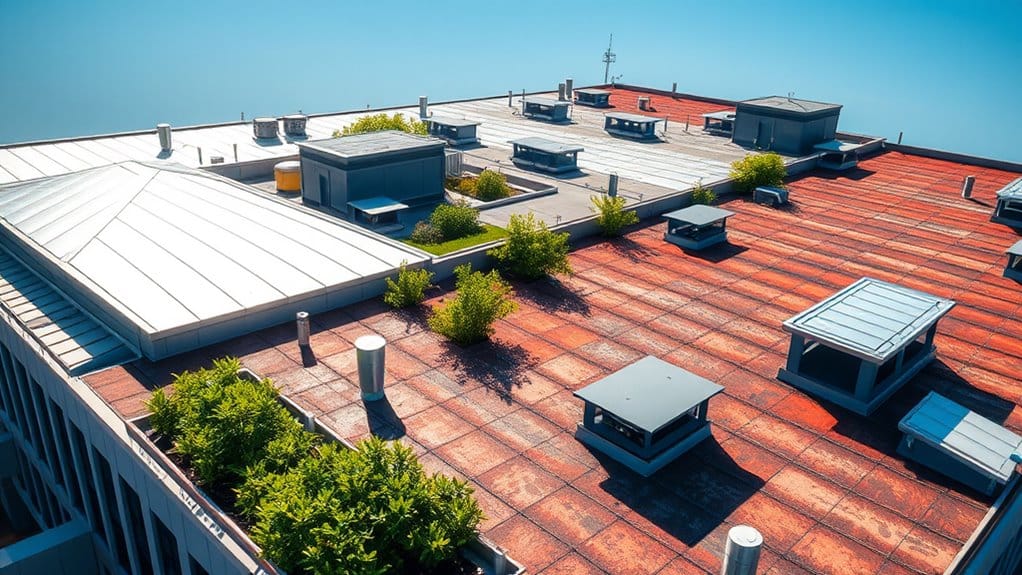
When choosing a commercial roofing system, you’ll mainly come across two types: single-ply and multi-layered options.
Single-ply systems like EPDM, PVC, and TPO are known for their straightforward installation and low maintenance. Durable roofing systems are designed to withstand various environmental challenges, ensuring long-lasting performance. These systems often comply with Class A fire safety standards, providing essential protection against flames.
In contrast, multi-layered systems such as Built-Up Roofing and Modified Bitumen excel in waterproofing and insulation. It’s crucial to understand the features of each type to comply with fire safety regulations and ensure lasting performance.
Single-Ply Roofing Options
In recent years, single-ply roofing has become a popular choice for low-slope commercial buildings. It offers a straightforward solution that reduces seams and increases durability. Materials such as EPDM, TPO, and PVC provide flexibility and strength, making them suitable for various climates and applications. Single-ply roofing systems are particularly effective in minimizing seams, which enhances performance.
Here’s a quick comparison of these materials:
| Material | Characteristics | Benefits |
|---|---|---|
| EPDM | Thermoset, low maintenance | Cost-effective, best for cooler climates |
| TPO | Thermoplastic, UV resistant | Energy-efficient, lowers cooling expenses |
| PVC | Thermoplastic, chemical-resistant | Ideal for environments with chemical exposure, low maintenance |
The advantages of single-ply roofing include energy efficiency, durability, and ease of installation. Different installation techniques apply to each material; for example, EPDM is typically installed using adhesives, while TPO and PVC rely on hot air welding for seams. Engaging authorised installers is crucial to maintain warranty eligibility, which can last up to 30 years. By consulting a qualified roofing contractor, you can choose the most appropriate material for your building’s requirements and budget, ensuring lasting performance and satisfaction.
Multi-Layered Roofing Systems
Multi-layered roofing systems provide a robust solution for commercial buildings that need enhanced durability and weather resistance. These systems include modified bitumen roofing and built-up roofing (BUR), both designed to endure tough environmental conditions.
Modified bitumen combines asphalt with polymerised rubber or plastic, offering flexibility and temperature resilience, while BUR systems utilise layers of asphalt, tar, and gravel for exceptional durability and fire resistance. Additionally, knowledgeable contractors ensure the best material selection based on project needs, which is crucial for maximizing the benefits of these systems. Regular maintenance is vital to ensure long-term performance and safety.
The advantages of multi-layered roofing are considerable. With several layers, you gain improved waterproofing and weather resistance, making them ideal for various commercial and industrial uses.
Additionally, BUR systems are highly fire-resistant, which is crucial for safety regulations. Regular inspections help identify any issues early, ensuring ongoing roof integrity.
Installation methods differ; modified bitumen can be applied using torch-down or peel-and-stick techniques, whereas BUR systems can be installed on various roof decks.
Some systems even feature reflective coatings, boosting energy efficiency, particularly in warmer climates. Regular upkeep can significantly reduce repair costs over time.
Key Factors in Material Selection
Choosing the right roofing material for commercial buildings is crucial for fire safety and durability. Start by understanding fire ratings: materials are classified into Classes A, B, and C based on their fire resistance. For the best protection, opt for Class A materials such as metal roofing or slate, which are both durable and fire-resistant.
Next, sustainability is important. Materials like concrete or clay tiles not only improve fire safety but also show a commitment to environmental responsibility.
Don’t forget to consider costs; while some options may have higher initial prices, their longevity and energy efficiency—like TPO with fire retardants—can save money in the long run. Additionally, metal roofs provide excellent fire resistance and can last over 50 years, making them a smart investment.
Finally, check for thermal and puncture resistance to ensure the material performs well under extreme conditions. Adding flame-retardant additives can further boost fire safety.
Importance of Professional Installation

When you choose professional installation for fire-rated roofing, you ensure compliance with vital building regulations.
This expertise not only guarantees the effectiveness of fire-resistant materials but also significantly boosts the safety of your commercial property.
By opting for professional installation, you reduce risks and secure long-term dependability.
For example, a well-installed fire-rated roof can prevent the spread of fire, protecting both your premises and occupants.
Ensures Compliance Standards
Ensuring compliance with fire safety standards is essential for the safety and integrity of your commercial building, and professional installation is key to this process. Following the International Building Code (IBC) and local regulations is vital when installing fire-resistant roofing.
These codes require roofing materials to be tested in accordance with ASTM E 108 or UL 790 to confirm their fire safety performance. By employing certified installation professionals, you can ensure your roofing system meets NFPA standards, thereby reducing liability.
Insured and licensed contractors are trained to adhere to installation guidelines that comply with stringent building codes, enhancing the safety of your property. Proper installation not only safeguards your assets but also aligns with FM Global 4470 approval criteria, ensuring top-level fire resistance.
This compliance gives you peace of mind, knowing your roofing system has been correctly installed. Ultimately, meeting fire safety regulations and building codes goes beyond legal obligations; it’s about protecting lives and property in your community.
Prioritising professional installation is a proactive step to ensure your building meets these critical standards.
Guarantees Material Performance
Proper installation of fire-resistant roofing materials is crucial for ensuring their effectiveness and durability. By hiring certified professionals, you can be confident that your roofing system complies with industry standards and local building regulations.
Their expertise in installation techniques enhances the fire-resistant qualities of the materials, which is vital for passing fire resistance tests.
Poor installation can significantly undermine the lifespan and effectiveness of your roofing system. Qualified professionals will ensure that specialised underlayments and appropriate fastening methods are used correctly, guaranteeing that your roof meets fire resistance standards and performs reliably over time.
Regular maintenance and inspections by licensed professionals are essential to maintain fire resistance capabilities. Many insurance companies recognise the reduced risk associated with professionally installed fire-resistant materials, often offering discounts that can help offset initial costs.
Ultimately, investing in professional installation not only saves money in the long run due to increased durability and extended lifespan but can also lower your insurance premiums.
Prioritising expert installation ensures that your roofing system functions effectively and efficiently for years to come.
Enhances Safety Measures
Prioritising professional installation of fire-rated roofing systems significantly enhances safety within your commercial building. Proper installation ensures that your fire-rated materials retain their fire safety capabilities. For instance, using Class A materials, which offer the highest level of fire resistance, greatly reduces the risk of a fire spreading from the roof to the interior.
Engaging professionals guarantees compliance with local building codes and regulations, which often require specific fire-rated materials. Incorrect installation can nullify these ratings, increasing fire hazards.
Professionals carry out thorough risk assessments and adhere to strict fire tests, such as spread-of-flame and intermittent-flame exposure tests, to confirm the effectiveness of the materials used.
In addition, ongoing maintenance provided by professionals is crucial for maintaining fire safety. Regular inspections can spot potential issues before they become serious, thus protecting your roofing system’s integrity.
Ultimately, investing in professional installation and maintenance not only meets regulatory requirements but also prioritises the safety of your building and its occupants, reinforcing your commitment to fire safety.
Compliance With Safety Regulations
Compliance with safety regulations in commercial roofing isn’t merely a best practice; it’s a legal obligation that significantly affects your building’s safety and durability.
To ensure your roofing adheres to these standards, it’s essential to stay updated on regulatory changes and conduct thorough safety audits.
Here are some key points to consider:
- The Building Regulations in the UK require the use of approved fire-resistant materials, classified by their respective ratings.
- Adhering to local fire safety codes is crucial, as they often outline specific requirements based on your building’s use and construction type.
- Regular inspections and maintenance are vital to maintain compliance and mitigate potential hazards.
Not complying with these regulations can lead to hefty fines and serious safety risks.
Ensure your roofing materials meet the standards set by the Building Regulations and the National Fire Protection Association (NFPA) to reduce the risk of fire damage.
Remember, following proper installation methods and conducting periodic safety audits can help identify areas for improvement.
Regular Maintenance and Inspections

Regular maintenance and inspections are vital for ensuring your commercial roof maintains its fire resistance over time. Aim to conduct thorough evaluations at least once a year. Your maintenance checklist should cover both the exterior and interior elements, including chimneys, vents, and any penetrations.
When conducting inspections, use the right equipment, such as ladders, hard hats, and torches to ensure safety. Pay attention to signs of damage, wear, or alterations that could affect fire resistance. Look for water stains, discolouration, or peeling paint on ceilings and walls, which may signal underlying issues.
It’s crucial to engage qualified commercial roofing contractors. Their expertise ensures compliance with fire safety regulations and helps identify high-risk areas that require attention. Regular professional maintenance not only extends the lifespan of your roof but also reduces the likelihood of costly repairs. Additionally, regular inspections can help in early detection of hidden problems that may compromise the roof’s integrity.
Make sure to document your findings carefully. This practice helps track maintenance needs, ensures legal compliance, and reinforces your commitment to safety.
Frequently Asked Questions
How Do I Determine My Building’s Fire Risk Level?
To assess your building’s fire risk level, carry out a comprehensive fire risk assessment. Examine your building materials and storage methods to ensure they comply with regulations. Look for any weaknesses that could heighten fire hazards, such as cluttered escape routes or flammable materials stored improperly. For example, if you have old furniture or piles of paperwork near heat sources, these could pose significant risks.
What Is the Lifespan of Fire-Resistant Roofing Materials?
Fire-resistant roofing materials are built to last. Metal roofs can endure for 40 to 70 years, while slate roofs can last over 50 to 100 years. Concrete tiles have a similar lifespan of 50 to 100 years. These materials provide excellent durability and protection, ensuring the safety and longevity of your building.
Can I Mix Different Roofing Materials on One Building?
Yes, you can mix different roofing materials on one building, but it’s essential to ensure they are compatible. Choose materials that won’t react adversely with each other. For instance, combining slate with felt roofing can work well if installed correctly. It’s wise to consult professionals to navigate any installation complexities and maintenance issues for the best results.
Are Fire-Rated Roofing Materials More Expensive Than Standard Options?
Are you wondering about the cost differences? Fire-rated roofing materials generally have a higher initial cost, but they can save you money in the long run by reducing maintenance and lowering insurance premiums. This not only enhances safety but also protects your investment. For instance, while a standard roof may need repairs every few years, a fire-rated option could last much longer, making it a smart choice overall.
How Often Should I Replace Fire-Rated Roofing Materials?
Fire-rated roofing materials should be replaced according to a regular maintenance schedule. Generally, this is every 15 to 50 years, depending on the type of material. This helps ensure compliance with fire safety regulations and maximises the lifespan of your roofing investment. For example, a slate roof may last longer than a thatched one, so it’s important to consider the specific material when planning replacements.
Conclusion
In summary, selecting the right fire-rated roofing option is essential for your building’s safety. Understanding fire resistance ratings and choosing quality materials can help protect your investment and ensure compliance with safety regulations. Regular maintenance and professional installation are crucial for keeping your roof strong. As the saying goes, “A stitch in time saves nine”—don’t wait until it’s too late.


