

DIY Roof Repairs: When to Fix and When to Call a Pro
When it comes to roof repairs, it's crucial to know when to tackle the job yourself and when to call in a professional. Minor issues, such as replacing missing tiles or sealing small cracks, are often manageable without expert help. However, if you spot serious leaks, sagging areas, or signs of structural damage, it's wise to bring in a professional.
Adverse weather conditions, like heavy rain or strong winds, can make repairs more challenging, so always prioritise safety. Regular inspections can help identify problems early, making DIY repairs more feasible. For detailed advice on recognising issues, repair techniques, and suitable materials, there's plenty of information available to ensure your repairs are effective.
Key Takeaways
- Check for minor issues like missing tiles or small cracks before attempting DIY repairs to avoid bigger problems later on.
- If you spot significant leaks, extensive water damage, or sagging areas, it's wise to call in a professional.
- DIY repairs can be a good option for straightforward tasks such as replacing tiles or sealing minor leaks, as long as you have the proper tools and safety gear.
- After a storm, conduct an inspection to uncover any hidden damage; for complex issues, it's better to seek professional assistance.
- Professionals ensure adherence to safety standards, use quality materials, and often provide warranties for their work, giving you added peace of mind.
Recognizing DIY Repair Signs
When it comes to DIY roof repairs, spotting signs of damage is crucial. Start with a thorough inspection of your roof. Look for shingles that are curled, cracked, or missing—these indicate they're nearing the end of their lifespan. Regular inspections can help identify these issues early and prevent costly repairs.
Dark or wet shingles suggest moisture retention, which can lead to further problems. Also, check your gutters for an excessive amount of shingle granules; this means your shingles are wearing out. Excessive granules can be a key indicator of significant shingle deterioration.
Next, look for potential leaks. Water stains on ceilings or leaks in the attic after rain are strong indicators that your roof needs urgent attention.
Sagging roof sections or visible light in the attic suggest gaps that allow moisture in. Addressing flashing issues promptly can prevent further water damage.
Finally, check around roof features like chimneys and vents for wear. Damaged flashing can cause significant leaks, so inspect these areas closely.
When to Seek Professional Help
Knowing when to seek professional help for roof repairs is essential for maintaining your home's structure. If you notice significant leaks or extensive water damage, it's time to call in the experts. They can help prevent further structural issues that DIY methods might miss.
After severe storms, hidden damage like loose tiles or broken flashing may require a professional's assessment. Additionally, professionals can conduct safe and thorough inspections to identify hidden damage that may not be visible from the ground.
Watch for signs such as sagging roof sections or large areas of missing tiles—these suggest serious problems needing immediate attention. If you're unsure about the source of a leak, don't hesitate to consult a professional. Complex issues involving chimneys or skylights often require specialised knowledge to ensure safe and effective repairs.
Professional repairs are also crucial for roof insurance claims, especially after storm damage. Many insurance policies stipulate that licensed contractors must carry out repairs for coverage to apply.
Furthermore, quality repairs usually come with warranties, giving you added peace of mind. Ultimately, investing in professional help not only ensures safety and quality but can also save you money in the long term by addressing issues before they worsen.
Essential Safety Precautions
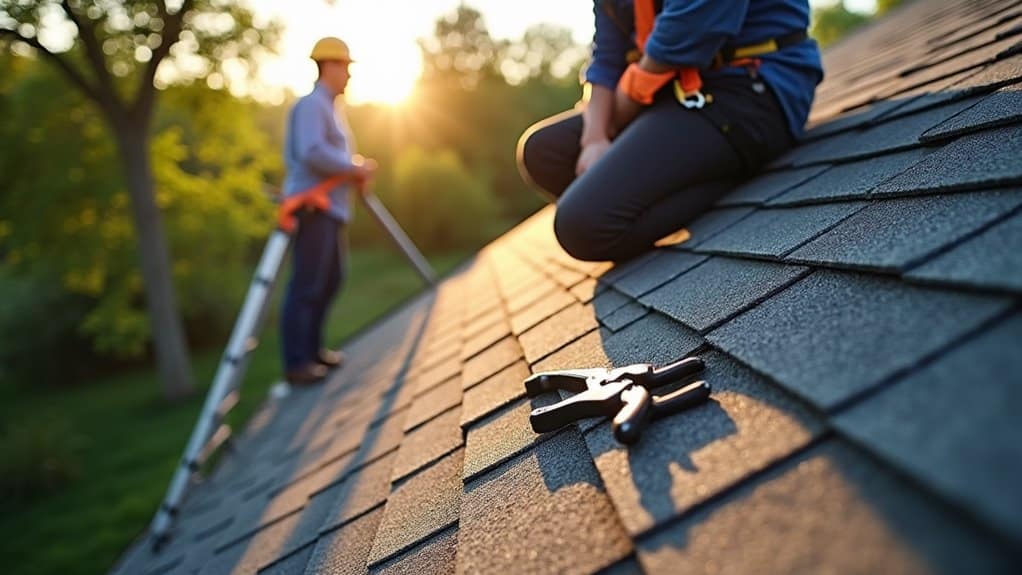
Before starting your roof repairs, it's crucial to prioritise safety by adhering to ladder guidelines and checking the weather.
Ensure your ladder is securely positioned and extends at least one metre above the roof edge. Additionally, always use proper equipment when working on the roof to minimise hazards. Avoid working in wet or extreme temperatures to minimise the risk of slips and falls.
Ladder Safety Guidelines
Ladder safety is crucial for anyone undertaking DIY roof repairs. Begin by selecting an extension ladder that extends at least one metre above the roof. Before climbing, inspect your ladder for any damage, ensuring each rung is intact and secure. Confirm the ground is level and stable; use plywood or ladder levelers if necessary.
When positioning the ladder, set it at a 4-to-1 angle—one foot away from the wall for every four feet of height. Proper angle ensures stability and reduces sliding risk, so be sure to secure the ladder at both the top and bottom to prevent movement.
Always maintain three points of contact while climbing, and avoid carrying tools; instead, use a tool belt. It's advisable to have someone on the ground to assist you.
Keep the ladder at least three metres away from live electrical lines, and remember that only one person should be on the ladder at a time. Regularly check your ladder for maintenance to ensure safety.
Weather Condition Considerations
When you're ready to tackle roof repairs, weather conditions can significantly affect your safety and the success of your work. It's crucial to check the weather forecast and plan your repairs accordingly. Here's a straightforward guide to help you:
| Weather Condition | Recommended Action | Safety Precautions |
|---|---|---|
| Heavy Rain | Delay repairs | Use tarps to cover damaged areas |
| High Winds | Avoid working on the roof | Ensure proper fall protection |
| Ice and Snow | Use appropriate equipment | Wear non-slip footwear |
Severe weather can reduce visibility and increase the risk of slips and falls. Always exercise caution on wet surfaces. If lightning or severe storms are forecasted, stop work immediately and seek shelter. In extreme conditions, it's wiser to call a professional. They possess the expertise and equipment needed to carry out repairs effectively, ensuring your roof is protected against water damage and other hazards. Additionally, regular cleaning can prevent issues that may arise from moss or algae buildup, which can contribute to long-term damage. By considering the weather's impact on your repairs, you can safeguard both your safety and your home's integrity.
Step-by-Step Repair Process
Having assessed the damage, it's time to get on with the repairs.
Start by addressing any issues with the roof tiles, making sure they're properly aligned and securely fastened.
Once that's sorted, seal any holes and cracks to prevent leaks and protect your roof from the weather. Additionally, consider scheduling regular maintenance to identify potential issues before they escalate into costly repairs, enhancing your roof's longevity and preventing common roof issues.
Assessing Roof Damage
Assessing roof damage is crucial for the safety and integrity of your home. Begin with a visual inspection from the ground. Check for broken or missing tiles, sagging areas, and debris in the gutters. Using binoculars can help you identify issues without needing to climb up.
If you feel confident, consider getting onto the roof for a closer examination. Look for cracks or curling in the tiles, and inspect the flashing around chimneys and vents for any gaps or rust. Ensure that nails are secure and that vents aren't blocked. Pay special attention to any sagging spots, as these may indicate deeper structural problems.
Don't overlook the interior of your home. In the loft, search for any leaks or dark patches, and check the ceilings for stains or drafts. Be mindful of any rays of light penetrating through holes, as this could suggest damage.
It's wise to document your findings with photographs and notes for insurance claims or repair discussions. Additionally, keeping a record of your roof's age and any prior inspections can help you assess its current condition more accurately, especially if it exceeds 15 to 20 years as recommended for shingle roofs.
And remember to prioritise safety: use a sturdy ladder, wear non-slip shoes, and have someone assist you during your inspection.
Repairing Shingle Issues
Addressing shingle issues promptly can prevent more extensive damage to your roof. Here's a straightforward overview of some repair techniques to help extend the life of your shingles.
| Repair Type | Steps | Tools Needed |
|---|---|---|
| Replacing Missing | 1. Break the seals on the damaged and neighbouring shingles. 2. Remove nails using a pry bar. 3. Fit the new shingle in place. |
Pry bar, new shingles |
| Repairing Cracked | 1. Apply roofing sealant beneath the crack. 2. Firmly press down and add a second bead of sealant. 3. Spread the sealant evenly. |
Roofing sealant, putty knife |
| Repairing Curled | 1. Clear debris from the curled area. 2. Apply sealant and press down. 3. Place a weight on top for 24 hours to secure it. |
Roofing sealant, weight |
Regular inspections are essential for identifying early detection of issues, ensuring that minor repairs do not escalate into costly problems. Choose these techniques based on the extent of the damage. Minor issues can often be tackled yourself, but ensure you have the right materials and safety equipment. For severe leaks or significant damage, it's best to call a professional. Your roof deserves proper care!
Sealing Holes and Cracks
Sealing holes and cracks in your roof is crucial for preventing leaks and prolonging the life of your roofing system.
Begin by removing any debris to ensure a clean working area. Locate the exact points of leaks or water damage, then select the right sealants—such as caulk, roofing cement, or waterproof sealant. Gather your tools, including a caulk gun, trowel, and utility knife, and make sure to take safety precautions.
When sealing, apply your chosen sealant directly to small holes and cracks using the caulk gun or trowel. For larger issues, use fibreglass mesh with roofing cement to strengthen the repair.
If you find any blisters or bubbles, cut them open, remove the damaged material, and apply sealant and mesh. Ensure that you layer the sealant properly for a watertight finish and allow sufficient curing time.
Finally, inspect the repaired areas thoroughly for any remaining leaks. Regular maintenance is vital; keep a record of your repairs and consider professional assistance for complex issues to ensure your roof stays in excellent condition.
Common Roof Issues Explained
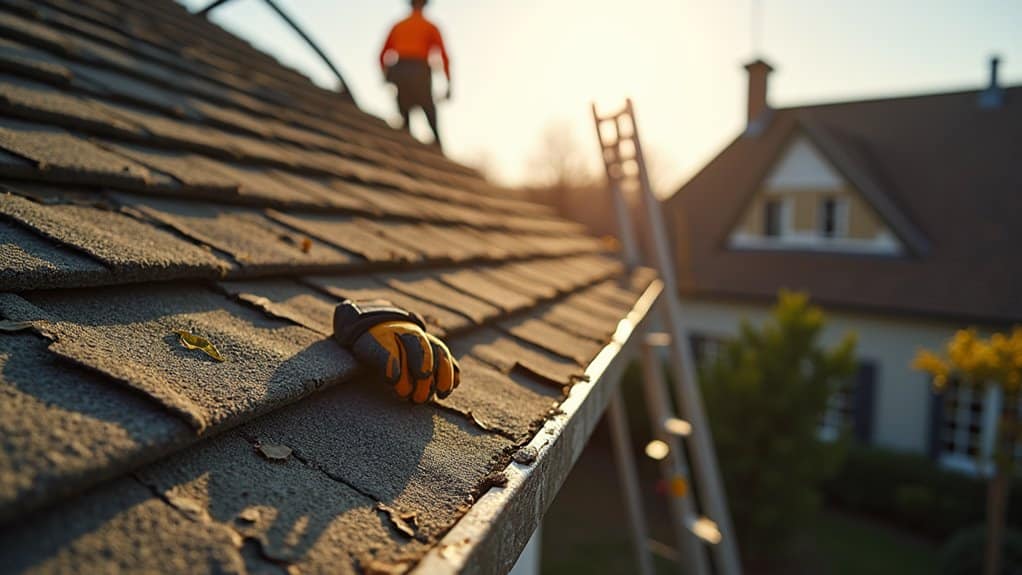
Understanding common roof issues can save you time, money, and hassle in the long run. One major concern is roof leaks, often caused by damaged or missing tiles and cracked flashing. These leaks usually occur around chimneys, beneath damaged tiles, and near skylights and vents.
Look out for dark patches on your ceiling or water stains on your walls, as these can indicate a problem.
You may also encounter structural issues, such as raised areas on tiles or mould growth. Regular inspections are key to catching these problems early. Ensure all flashings are secure and replace any damaged tiles promptly.
Pay particular attention to vulnerable spots like roof valleys, gutters, and low areas where water can collect.
When tackling these issues, it's essential to know your tile types and the right materials for repairs. While you can handle minor fixes yourself, be aware of your limits.
Extensive damage or uncertainty about repairs may necessitate calling in a professional. Regular maintenance and vigilance regarding these common roof issues will help keep your roof strong and secure, protecting your home.
Importance of Regular Maintenance
Regular roof maintenance is your best defence against expensive repairs.
By identifying minor issues early, you can save money and prolong the lifespan of your roof. Investing in preventative care not only safeguards your home but also ensures you avoid unexpected costs in the future.
For instance, a small leak can lead to significant damage if left unchecked, costing you much more in the long run.
Preventative Care Benefits
While you may not think about your roof often, regular maintenance is crucial to avoid costly repairs and extensive damage. Engaging in preventative maintenance can significantly extend your roof's lifespan. By routinely inspecting the roof's exterior elements, such as flashing, gutters, and downpipes, you can identify potential issues early and prevent them from becoming major problems.
Cleaning the roof's surface is essential; it helps prevent clogged gutters and ensures proper water drainage. Addressing minor issues, like patching holes or replacing worn-out tiles promptly, can save you from larger expenses later on. Each of these tasks contributes to your roof's overall integrity, ensuring it remains robust and effective.
Proactive roof care also enhances your home's energy efficiency and boosts its curb appeal, ultimately increasing its value. Regular maintenance minimises hazards that could lead to falls or injuries during work on the roof.
Cost-Effective Solutions
Maintaining your roof isn't just about aesthetics; it's a wise financial choice that can save you money over time. Regular upkeep helps you spot leaks and damage early, reducing repair costs significantly. Simple tasks like checking shingles and clearing gutters can help avoid costly repairs later on.
Promptly replacing worn or missing shingles secures your roof's integrity.
Consider cost-effective roofing options such as asphalt shingles or felt roofing, which typically range from £10 to £30 per square metre. Additionally, applying roof coatings can prolong your roof's lifespan at a fraction of the cost of a complete replacement. Effective repair techniques ensure that each fix is both safe and durable.
While DIY repairs can save on labour costs, don't hesitate to call in a professional for more complex issues. They possess the training, safety gear, and access to high-quality materials that ensure long-lasting results.
Tools Needed for DIY Repairs

When undertaking DIY roof repairs, having the right tools is crucial for a successful outcome. Gather both safety gear and essential roofing tools before you start. Investing in quality tools simplifies the job and improves your repair techniques.
Here's a quick reference table to guide you:
| Tool Type | Essential Tools | Purpose |
|---|---|---|
| Safety Equipment | Hard hats, safety goggles, steel-toed boots | Protect against falls and flying debris |
| Basic Roofing Tools | Roofing nail gun, utility knife, tape measure | Install shingles and measure materials |
| Specialist Tools | Air compressor, pry bars, tarpaulins | Power tools and remove old roofing materials |
Ensure you have a sturdy ladder for safe access to the roof, and don't forget a tarpaulin to cover any exposed areas. These tools will enable you to work effectively with your roofing materials, making it easier to tackle issues and maintain your home. Always prioritise safety and use the appropriate equipment for each task!
Cost Considerations for Repairs
Having the right tools is crucial for a successful DIY roof repair, but understanding the associated costs is equally important. Creating a repair budget can help you avoid unexpected financial strain.
Start by assessing your roof's size and pitch; larger and steeper roofs will require more materials and possibly specialised equipment.
When breaking down costs, consider the materials you'll use. Asphalt shingles are generally more affordable, whereas metal and wood can be more expensive.
DIY repairs typically range from £2,000 to £4,000, which is significantly less than hiring professionals, who may charge between £4,000 and £10,000.
Don't forget to factor in labour costs if you need assistance. Professional rates can vary from £40 to £80 per hour.
Additional expenses, such as removing old materials, repairing the decking, and installing new flashing or gutters, can also add up quickly.
Evaluating Roof Damage Severity
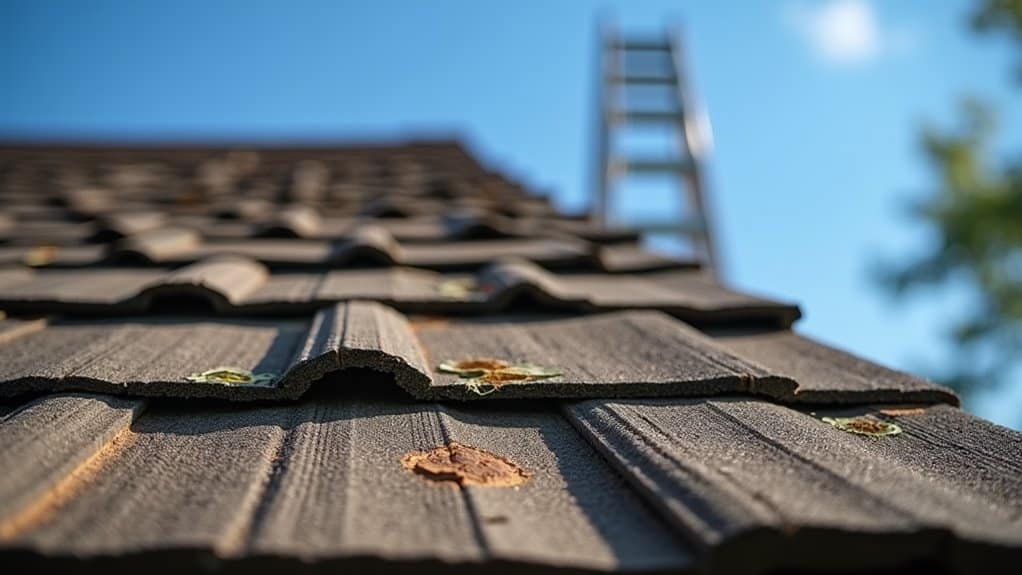
Assessing the severity of roof damage is crucial for deciding on the necessary repairs. Start with a thorough inspection for visible signs like missing tiles or sagging sections.
Look for structural issues, such as a bouncy roof deck or significant mould in the loft, which could indicate compromised stability. Be aware of hidden damage too; leaks mightn't be apparent from outside and may require professional detection methods.
If you see curling tiles or granule build-up in your gutters, it suggests that repairs may be needed soon. Also, check the flashing for tears or buckling, as these can lead to leaks.
If you're comfortable with DIY, you could tackle minor jobs like replacing a few tiles or sealing small leaks.
However, for extensive damage or complex problems, such as major leaks following a storm, it's best to consult a professional. They can use advanced tools like thermal imaging to accurately assess hidden damage.
Always prioritise safety and know your limits to ensure the best outcome for your home.
Understanding Roof Materials
After assessing the extent of roof damage, it's important to understand the various roofing materials available to help inform your repair choices.
Each type of roofing material has its own advantages, so consider durability and your specific requirements.
Here are three popular options:
- Asphalt Shingles: These are cost-effective and versatile, typically lasting between 15-30 years. They perform well in different climates but can be vulnerable to severe weather.
- Metal Roofing: Renowned for its durability, metal roofs can last 40-60 years with minimal upkeep. They're energy-efficient and offer a modern look, making them a popular choice for many homeowners.
- Slate Tiles: Although the priciest option, slate roofs are extremely durable and can last over 100 years. However, they're prone to cracking, so proper installation is crucial.
Preventive Maintenance Strategies
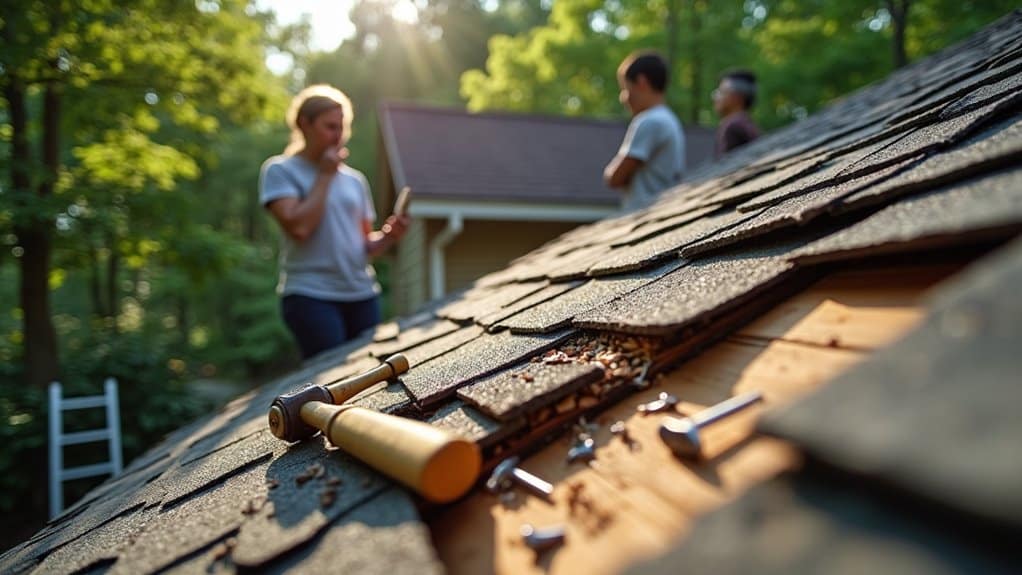
Regular maintenance is essential for prolonging the life of your roof and avoiding hefty repair bills later on. Begin by creating a preventive maintenance checklist. Schedule inspections monthly or seasonally to identify any early signs of damage, such as missing tiles or rust.
Ensure your gutters and downpipes are clear of debris to allow for proper drainage, particularly in autumn and spring. This will help prevent water pooling, which can lead to significant problems.
During your inspections, check for any sagging areas that may signal structural issues, and examine the flashing around vents and chimneys for signs of wear. If you spot water stains inside your home, inspect the roof immediately for leaks.
Proper insulation and ventilation are crucial to prevent ice dams and overheating.
Always prioritise safety when carrying out maintenance. Use a sturdy ladder, wear non-slip footwear, and avoid working on a wet or icy roof.
Benefits of Professional Services
When it comes to roof repairs, many homeowners discover that hiring professional services can make a significant difference. Professionals offer a level of expertise that DIY efforts often lack, ensuring repairs are carried out correctly and in line with compliance standards.
Here are three key benefits of opting for professional help:
- Quality Materials: Professionals have access to high-quality materials, ensuring repairs are durable and long-lasting.
- Safety Training: They're trained in safety protocols, reducing the risks associated with working at heights and providing you with peace of mind.
- Time Efficiency: Their experience allows for quick resolutions, saving you time and letting you focus on other priorities.
Moreover, many professional roofers provide warranties on their work, offering you additional reassurance.
They can identify complex issues such as structural integrity and significant storm damage, which can be overlooked by less experienced individuals.
Investing in timely repairs can also save you money in the long run by extending your roof's lifespan and preventing costly future repairs.
In emergencies, local contractors are on hand for rapid response, ensuring your home remains protected.
Knowing Your Limitations
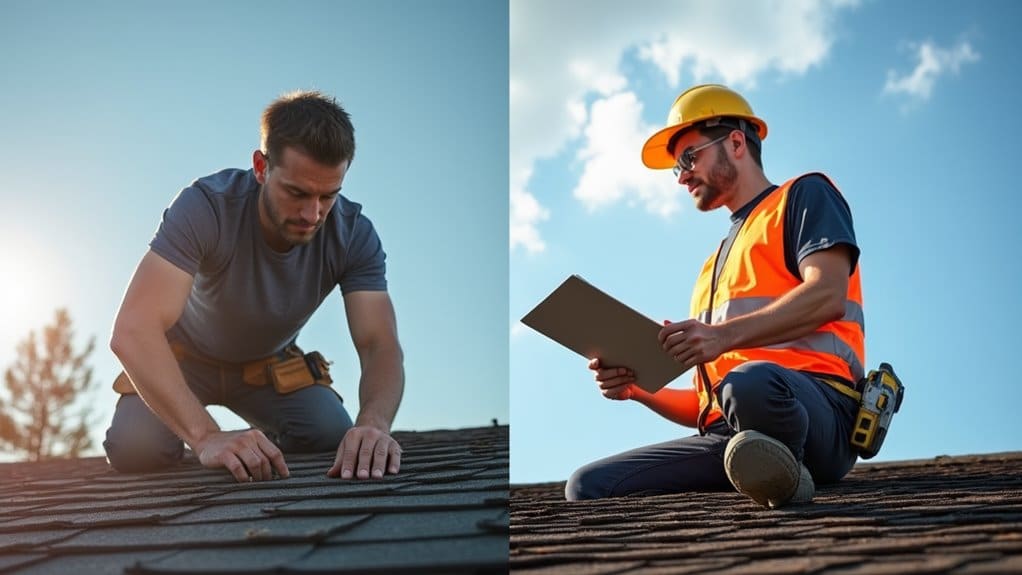
Understanding your limitations is crucial before attempting any roof repairs. Assess your skills honestly to recognise when it's time to call in a professional. If you struggle to identify the source of leaks or assess structural damage, it's a clear indication that you may need assistance.
Safety should always come first. Working at height carries significant risks, particularly if you're not familiar with safety procedures or lack the right equipment, such as harnesses.
Also, be mindful of weather conditions; wet and slippery surfaces can lead to serious accidents.
Consider the complexity of the repair as well. Major leaks, structural issues, or challenging areas like chimneys and skylights typically require professional expertise.
Using inadequate tools or unsuitable materials can exacerbate the problem and may void warranties, resulting in higher costs later on.
Recognising when a task exceeds your abilities isn't a failure; it's a sensible choice that safeguards both your home and your well-being.
Sometimes, the best way to take care of things is to know when to seek professional help.
Frequently Asked Questions
How Can I Tell if My Roof Needs Replacement Instead of Repair?
To find out if your roof needs replacing rather than just repairing, carry out a thorough inspection. Look for clear signs of damage such as curled or missing tiles, leaks, sagging areas, or damp patches on the ceiling. If you notice any of these issues, it may be time to consider a complete roof replacement.
What Types of Roofing Materials Are Best for DIY Repairs?
For DIY repairs, asphalt shingles need asphalt cement and replacement shingles, whereas metal roofing requires sealants and metal patches. These materials will help you tackle common issues and keep your roof in good condition.
Can I Repair My Roof in Winter or During Cold Weather?
Yes, you can carry out roof repairs in winter, but be careful. Cold weather can make materials difficult to work with. Ensure surfaces are dry, wear appropriate safety gear, and honestly assess your skills before taking on any icy tasks. For example, if the roof is slippery with frost, it might be wiser to wait for a milder day.
Are There Any Local Regulations for DIY Roof Repairs?
Yes, there are local regulations for DIY roof repairs in the UK. You should check your local building regulations and whether you need any permits, as these can differ by council. For instance, if you're replacing tiles or making significant alterations, you may need to apply for permission. Always ensure you have the necessary approvals before starting your roofing project.
How Do I Dispose of Old Shingles and Roofing Materials Safely?
Consider old shingles as puzzle pieces that no longer fit. To dispose of them safely, look into shingle recycling options, ensure any hazardous materials are managed correctly, and adhere to local regulations to safeguard the environment and your community.
Conclusion
Knowing when to tackle a roof repair yourself or call in a professional can save you both time and money. Have you ever found yourself under a leaking roof, unsure whether to reach for your tools or pick up the phone? By recognising the signs, understanding materials, and following safety precautions, you can make informed choices. For instance, minor leaks or missing shingles may be manageable for a DIY enthusiast, while significant structural issues are best left to the experts. Regardless of your approach, regular maintenance is essential to keep your roof in good condition and protect your home for years to come.


