How to Keep Squirrels Off Your Roof and Out of Soffits
To keep squirrels off your roof and out of soffits:
- Trim overhanging branches to block easy access.
- Install metal mesh or squirrel guards around vulnerable areas, like vents and chimneys.
- Use natural deterrents such as essential oils or pepper spray.
- Remove food sources by securing bins and moving bird feeders away from the house.
- Regularly inspect your roof to spot and fix potential entry points.
Combining these methods offers the best chance of success.
Many homeowners find that persistence is key – you might need to try a few approaches before finding what works best for your situation.
Remember, it’s easier to prevent squirrels from settling in than to evict them once they’ve made themselves at home.
Key Takeaways
- Trim overhanging branches at least 3 metres from your roof to stop squirrels getting access.
- Fit metal sheets or mesh with holes no larger than 2.5 cm around vulnerable spots.
- Use natural deterrents like peppermint oil or chilli spray near entry points. Reapply often.
- Cover vents and chimneys with metal mesh or wire grates to keep squirrels out but let air flow.
- Fix damaged soffits and fascia boards quickly. Use sturdy materials and seal all gaps properly.
Understanding Squirrel Behavior
Squirrels are craftier than many homeowners realise when it comes to accessing roofs. These agile creatures excel at climbing, seeking high spots for safety and nesting. Your roof offers them an ideal lookout to dodge predators and set up home.
Grasping squirrel behaviour is key for effective prevention and removal. These persistent animals can squeeze through gaps as small as 4 centimetres. Once inside, they’ll gnaw through fascia boards and soffits with their sharp teeth, creating larger openings to your loft.
Squirrels are creatures of habit, often returning to old nests if entry points aren’t properly sealed after removal. They’ll gather various bits for nesting, including leaves, insulation, and even household items. This can cause significant damage and suggest an infestation.
To safeguard your property, regularly check vulnerable areas for signs of squirrel activity. Look for chew marks, droppings, or nesting materials around potential entry points.
Understanding their behaviour helps you take proactive steps to keep these determined climbers off your roof and out of your home.
Identifying Entry Points

To keep squirrels off your roof, spot their usual access points.
Check for gaps in fascia boards, loose soffit panels and unsecured roof vents – these crafty creatures love such spots.
Give your roof a thorough once-over, looking for brown smear marks and openings as small as 4 cm.
These signs often point to squirrel activity and their favoured routes.
It’s crucial to be thorough; even a tiny gap can be an open invitation for these nimble pests.
Common Access Areas
Common Access Points for Squirrels
Spotting common access areas is crucial to prevent squirrels from invading your roof. These nimble creatures can squeeze through gaps as small as 4 cm, so a thorough inspection of potential entry points is essential.
Pay close attention to fascia boards, soffits and roof vents, as squirrels often target these areas. They’re quick to exploit loose materials or construction flaws.
Soffits are particularly appealing, offering cosy nesting spots and easy attic access. Once inside, squirrels can wreak havoc by gnawing on wiring and insulation, posing fire risks and damaging your home’s structure.
To stay on top of potential infestations, regularly check your roof’s fascia and soffit areas. Look for chew marks, scratches or any gaps that could serve as entry points.
Signs of Squirrel Entry
To keep squirrels out, you’ll need to spot their entry attempts. Check your house’s exterior for gaps, remembering squirrels can squeeze through 1.5-inch spaces. Focus on fascia boards, soffits and roof vents – common entry points.
Look for gnaw marks on wooden structures, especially soffits and fascia. These show squirrels trying to create or widen holes. Brown smears on soffit panels are another sign, as squirrels use these for climbing and attic access.
Check your loft and potential entry areas for droppings, a clear sign of squirrel presence. Regularly inspect roof vents, soffits and eaves for damage or loose materials that could let these pesky rodents in.
In my experience, staying vigilant and addressing these signs quickly can save you a lot of hassle in the long run. It’s much easier to prevent squirrels from entering than to remove them once they’ve settled in.
Inspection Techniques
Now you’re aware of the signs, it’s time to hone your inspection skills. To squirrel-proof your home effectively, thoroughly examine potential entry points.
Start by checking your roofline for gaps of 4 cm or larger, focusing on fascia boards and soffits. These areas are prime targets for squirrels trying to access your roof.
Look for signs of squirrel activity, such as gnaw marks, droppings, and brown smears on soffits. These indicate frequent visits and potential entry points.
Don’t forget to check roof vents, both ridge and gable types, for damage or openings.
Survey the surrounding landscape. Spot any overhanging tree branches within 3 metres of your roof, as these provide easy access for squirrels.
Consider trimming these branches to limit their ability to reach your roof.
Trimming Overhanging Branches
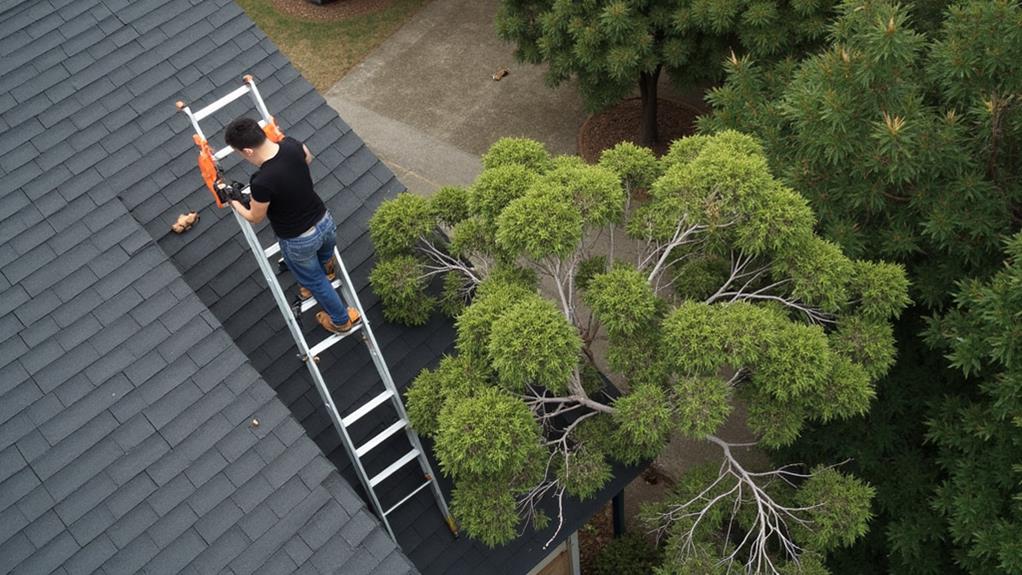
To keep squirrels off your roof, master proper pruning techniques for overhanging branches.
Maintain a distance of at least three metres between tree limbs and your roof to reduce access points.
Set up a regular schedule to check tree growth and promptly trim new branches that might provide paths for these nimble climbers.
Regular maintenance is key to preventing unwanted roof visitors.
Proper Pruning Techniques
Keeping squirrels off your roof requires proper pruning. Trim overhanging tree branches at least three metres away from the roof to eliminate direct access points and reduce the risk of infestations.
Keep an eye on tree growth, as limbs can quickly encroach on safe distances. Schedule pruning as needed. For large trees or extensive pruning, hire professional tree services to ensure safety and effectively remove potential squirrel pathways.
When cutting branches, aim for a 45-degree angle to promote healthy growth and reduce disease risk. Weak or diseased trees attract squirrels, so maintain tree health. Remove dead or decaying branches, as these can provide easy roof access for squirrels if close enough.
Regular tree maintenance is key to preventing squirrel problems. By keeping trees well-trimmed and healthy, you’ll make your home less appealing to these pesky rodents.
Ideal Branch Distance
Keep squirrels off your roof by trimming nearby tree branches. Maintain a gap of at least 3 metres between branches and your house. Squirrels can jump up to 3 metres, so regular pruning is crucial.
Even small branches that grow closer over time can become a squirrel highway. Monitor tree growth regularly and prune as needed.
For tall trees or extensive work, consider hiring a professional tree surgeon.
By keeping trees at a safe distance, you’ll reduce the chances of squirrels accessing your roof and potentially entering your loft.
This simple maintenance task can save you from costly damage and unwanted house guests.
Regular Maintenance Schedule
Keeping squirrels away requires consistent tree maintenance. To manage squirrel access to your roof, implement a regular schedule for trimming overhanging branches. Aim to trim trees at least twice a year, ensuring branches are at least three metres from your roof’s edge. This practice deters squirrels and protects your home from storm damage.
For your maintenance routine, follow these steps:
- Check trees near your home for branches close to the roof
- Mark branches needing trimming
- Prune to maintain the three-metre clearance
- Clear debris and fallen leaves that might attract squirrels
Regular upkeep is key to preventing squirrel problems and maintaining your property’s safety.
Installing Physical Barriers
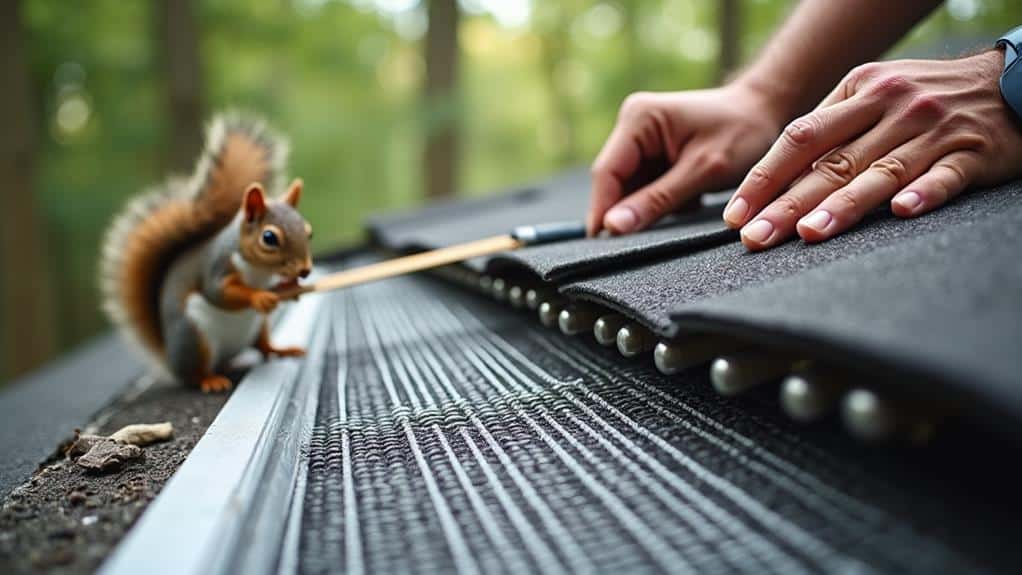
Installing physical barriers is key to keeping squirrels off your roof. Use metal sheets or mesh as squirrel guards around vulnerable areas like fascia boards and soffits. These barriers effectively block squirrels from accessing your roof and nesting.
When installing these deterrents, use wire mesh with openings no larger than 2.5 cm. This ensures even determined squirrels can’t squeeze through. For extra protection, consider using sturdy materials like steel plates or hardware cloth.
Make sure to securely fasten all barriers. Squirrels are clever and can exploit loose or poorly installed materials.
Once in place, regularly inspect and maintain your barriers to keep them effective. This ongoing attention will help keep your roof and home safe from these persistent pests.
Using Natural Repellents

Several natural repellents can effectively deter squirrels from your roof.
Try dabbing peppermint oil on cotton balls and placing them strategically. Alternatively, a homemade cayenne pepper spray can create an unpleasant barrier for squirrels’ sensitive paws and noses.
For a stronger approach, predator urine can mimic the presence of natural enemies, making your property less appealing to these pesky rodents.
These methods are simple, cost-effective solutions that many UK homeowners find useful in managing squirrel problems.
Essential Oils as Deterrents
Essential oils offer a natural solution to squirrel problems, effectively keeping them away from roofs and soffits. Peppermint, citronella, and eucalyptus oils are particularly useful due to squirrels’ sensitivity to strong scents.
To make a DIY squirrel repellent:
- Mix a few drops of essential oil with water in a spray bottle
- Apply to areas where squirrels are active
- Reapply regularly, especially after rain or strong winds
For better results, place cotton balls soaked in essential oils in soffits or potential nesting spots.
Peppermint oil has shown promise in repelling squirrels by disrupting their sense of smell and navigation.
Using these natural deterrents consistently can help keep squirrels off your roof and out of your soffits. It’s a simple, cost-effective method that avoids harsh chemicals and is easy to implement in any home.
Spicy Pepper Spray Solutions
Spicy pepper sprays offer a potent solution for deterring squirrels. To make your own, mix two tablespoons of crushed red pepper or hot chilli flakes with a litre of water. Let it steep overnight, then strain before use.
Apply the spray around potential entry points on your roof, such as soffits and fascia boards, and nearby tree branches. This creates a barrier that discourages squirrels from accessing your loft.
Remember to reapply regularly, especially after rainfall, as water reduces its effectiveness.
For best results, combine this method with other deterrents. Trim tree branches near your roof and block existing entry points.
This multi-pronged approach will significantly improve your efforts to keep squirrels at bay. Consistent application of these techniques will make your property far less appealing to these persistent pests.
Predator Urine Applications
Predator urine is a highly effective natural deterrent for squirrels. It mimics the presence of threats like foxes or badgers, reducing squirrel activity on your roof and in your soffits.
To get the best results:
- Use high-quality, concentrated products
- Apply near potential entry points
- Reapply often, especially after rain
- Combine with other preventive measures
Focus on areas like tree bases, eaves, and roof access points. This creates a barrier that puts squirrels off approaching your home.
Remember, the scent fades quickly, so regular reapplication is crucial.
While predator urine is a powerful tool, it works best alongside other methods. Pair it with physical barriers and habitat changes for a thorough approach to keeping squirrels at bay.
For the best outcome, use predator urine as part of a wider strategy. This natural repellent, combined with other tactics, can significantly reduce squirrel problems around your property.
Securing Vents and Chimneys
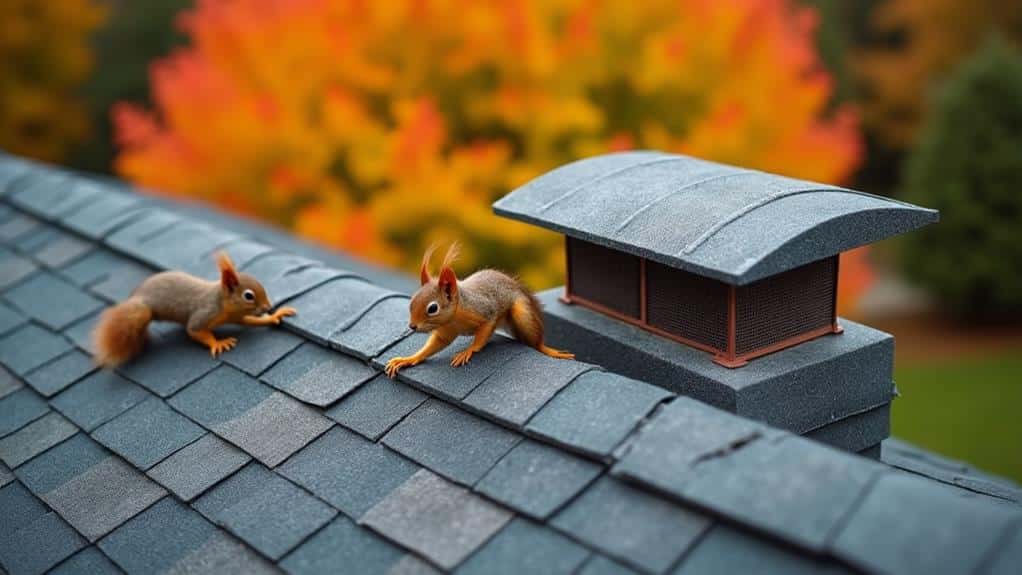
Securing vents and chimneys is crucial in deterring roof-dwelling squirrels. These openings can be easy access points, so take preventive measures. Fit metal mesh or wire grates over chimney tops and vent openings to create a barrier whilst maintaining proper ventilation.
When securing vents, ensure all covers are tightly fastened and made of sturdy materials. Loose or damaged covers are an open invitation for squirrels. Consider using specialised squirrel-proof chimney caps that keep animals out but allow airflow. For added protection, install flue caps with screens on your chimneys.
Regular checks are key. Inspect your vents and chimneys often for signs of wear or damage. Even small gaps can be exploited by determined squirrels looking for nesting spots.
Repairing Damaged Soffits

Repairing damaged soffits is crucial to keep squirrels out of your loft. Start by thoroughly checking your soffits for gaps or damage that squirrels might use to get in. Even small openings can be an issue.
When fixing soffits, choose sturdy materials like HardiePlank cladding or Hardie soffit. These are tough against weather and pests, and come in different widths with or without vent holes. Remember to prime all sides of new soffit materials to boost durability and prevent damp.
To make your new soffits squirrel-proof:
- Use screws around the edges
- Ensure a tight fit
- Seal all gaps
- Consider getting a pro for tricky spots
Reinforcing Fascia Boards

Fascia boards are crucial for keeping squirrels off your roof. To deter these pests effectively, reinforce and maintain your fascia properly. Regularly check for gaps or damage, as squirrels can squeeze through holes as small as 4 cm.
UPVC fascias are ideal for long-lasting protection against squirrels and other pests, as they resist rot and offer excellent durability.
To bolster your fascia boards, add metal flashing or hardie boards. These create a chew-resistant barrier that squirrels can’t easily breach. When fitting fascia boards, ensure they’re properly sealed to eliminate gaps. Use screws instead of nails around the edges for a stronger attachment that won’t loosen over time.
Don’t overlook your gutters, as they can be a squirrel highway to your fascia. Keep them securely attached and clear of debris.
Removing Food Sources
Removing Food Sources
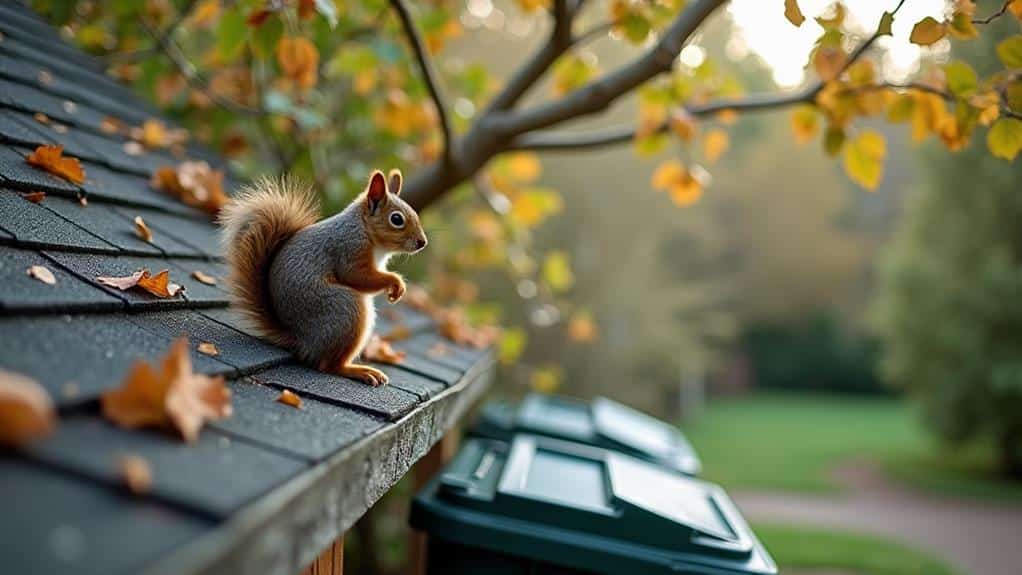
Getting rid of food sources is one of the best ways to keep squirrels off your roof. This reduces their attraction to your property and keeps them away from your home. Focus on securing potential food sources and keeping your garden tidy.
Four key steps to remove food sources and deter squirrels:
- Use bins with tight-fitting lids
- Position bird feeders at least 3 metres from your house
- Keep pet food indoors and feed pets in controlled amounts
- Clear fallen fruits, nuts, and seeds from your garden
Ensure your bins have secure lids that squirrels can’t easily open. Move bird feeders away from your house and choose squirrel-proof designs.
Keep pet food indoors and only offer what your pets can eat in one sitting. Regularly clean up any fallen fruits, nuts, or seeds in your garden.
Don’t forget to manage your compost heap properly, sealing or enclosing it to stop squirrels from accessing food scraps.
These strategies will effectively remove food sources and keep pests away from your roof and property.
Implementing Squirrel Guards

Implementing squirrel guards is an effective way to keep these nimble pests off your roof. These barriers, made from sheet metal or sturdy wire mesh, create an obstacle squirrels can’t easily climb. Install them at the bases of trees and poles near your home to block the main routes to your roof and soffits.
For best results, mount squirrel guards at least 1.2-1.5 metres above the ground and extend them 60-90 centimetres from the trunk or pole. This stops squirrels from jumping over. Be persistent, as these creatures are determined. Regularly check and maintain your guards to keep them working properly.
Combine squirrel guards with other preventive measures for a thorough defence. Trim tree branches away from your roof and seal potential entry points.
Regular Roof Inspections

Regular roof inspections are vital for keeping squirrels out. Conduct these checks twice yearly to spot potential entry points and signs of squirrel activity. Focus on key areas like fascia boards, soffits, roof vents and eaves.
Look for gaps, loose panels and damage, remembering that squirrels can squeeze through 1.5-inch openings. These inspections usually take 30-60 minutes and involve examining all roofing components, including tiles and gutters.
For a thorough inspection:
- Check for gnaw marks and droppings near potential entry points
- Examine fascia boards and soffits for gaps or loose panels
- Inspect roof vents and eaves for damage or wear
- Monitor and trim overhanging tree branches
Document your findings each time. This helps track changes and informs necessary repairs.
Regular checks make it easier to spot and address potential squirrel entry points before they become a problem. It’s far simpler to prevent squirrels from getting in than to deal with an infestation once they’ve made your roof their home.
Professional Pest Control Options

Professional pest control services offer a robust solution for persistent squirrel issues. Experienced companies bring decades of expertise, developing effective strategies tailored to squirrel behaviour and entry points.
These experts conduct thorough inspections of your roof and soffits, spotting vulnerabilities you might miss.
Hiring professionals isn’t just a one-off fix. Many firms offer comprehensive services including sealing gaps to prevent future access, humane live-trapping for safe removal, and ongoing monitoring plans. This approach ensures squirrels don’t return to damage your roof after initial removal.
For example, a pest control expert might notice tiny gaps in your roof tiles that you’d overlook, but which provide perfect entry points for squirrels. By sealing these and setting up humane traps, they can solve your squirrel problem for good.
Frequently Asked Questions
How Do I Keep Squirrels off My Roof and Soffits?
Keeping squirrels off your roof and soffits requires a few practical steps. Trim nearby tree branches and fit guards on trunks to prevent access. Seal any potential entry points around your home. Regular roof maintenance is crucial. Try natural repellents like peppermint oil, which squirrels dislike. If you’ve already got intruders, humane live traps can help remove them. These methods should keep your roof squirrel-free and protect your property from damage.
How Do I Get Rid of Squirrels on My Roof?
Imagine a tranquil roof without the pitter-patter of tiny feet. To deter squirrels, try these practical steps:
- Trim nearby branches
- Install roof guards
- Seal potential entry points
- Maintain your roof regularly
These methods will help keep those nimble rascals at bay. Remember, prevention is key when dealing with squirrels on your roof. A well-maintained home is less inviting to unwanted guests.
What Do Squirrels Hate the Most?
Squirrels loathe strong odours and signs of predators. Effective repellents include peppermint oil and predator urine. Natural deterrents like chilli-based sprays and loud noises work well too. They’ll steer clear of rough textures and sticky surfaces. For best results, try a mix of these tactics to keep the pesky critters at bay in your garden.
Why Are Squirrels Running on My Roof?
Squirrels scampering about on your roof is typical behaviour. They’re after safety, easy tree access, and possible food. Watch out, though – if left unchecked, these furry visitors can damage your tiles or guttering. It’s a bit like having uninvited guests who don’t mind making a mess of your front garden. Best to nip it in the bud before they decide your loft’s a cosy spot for winter.
Conclusion
By using these tactics, you’ll significantly reduce squirrel invasions on your roof and in your soffits. Bear in mind that squirrels can leap up to 3 metres horizontally, so maintaining a clear perimeter is crucial. Stay alert with regular checks and upkeep. If issues continue, don’t hesitate to ring a professional. With consistent effort, you’ll create a squirrel-proof home that safeguards your property and peace of mind for years to come.