

Solar Reflective Roof Coatings: Energy Benefits for Flat Roofs
Solar reflective roof coatings can significantly enhance energy efficiency for flat roofs by reflecting sunlight and minimising heat absorption. You could see energy savings of up to 20%, particularly during peak cooling periods, leading to reduced cooling costs. These coatings also help alleviate the urban heat island effect, which benefits local communities. If you look into it further, you’ll find a variety of coatings available, details on their application process, and the long-term benefits of these environmentally friendly solutions.
Key Takeaways
- Solar reflective roof coatings can lower energy consumption by up to 20%, which significantly reduces cooling costs for flat roofs.
- In warmer climates, peak cooling demand can fall by as much as 27%, improving energy efficiency.
- These reflective coatings help mitigate the urban heat island effect, creating cooler, more comfortable urban areas.
- By reflecting 70-80% of solar radiation, they contribute to lower energy bills and decreased reliance on air conditioning systems.
- To maximise energy-saving benefits and prolong the lifespan of reflective coatings on flat roofs, regular maintenance is essential.
Understanding Solar Reflective Roof Coatings

When considering the benefits of solar reflective roof coatings, it’s important to understand their make-up and purpose.
These liquid-applied coatings form continuous membranes, usually around 20 mils thick, made from acrylic latex binders and reflective pigments. Their main functions are to reflect sunlight and emit absorbed heat, which boosts your building’s energy efficiency.
Using proper application techniques ensures good adhesion and long-lasting performance. A higher Solar Reflective Index (SRI) means better cooling properties, which can reduce energy bills and prolong your roof’s life.
Moreover, these coatings help reduce the urban heat island effect, creating a more pleasant environment. By grasping these details, you can make informed decisions that benefit both your property and the wider community.
Types of Reflective Roof Coatings for Flat Roofs
There are several types of reflective roof coatings suitable for flat roofs, each with distinct advantages.
For example, acrylic cool roof coatings offer flexibility and long-lasting reflectivity, while polyurethane coatings improve waterproofing.
Elastomeric coatings are highly flexible and resistant to UV rays, making them ideal for low-slope roofs. Regular maintenance is essential to ensure the longevity and effectiveness of the reflective coatings applied.
Silicone coatings are particularly durable and work well on roofs that experience ponding water. Higher coverage rates are typically associated with higher quality coatings, which can enhance the effectiveness of the chosen coating.
SEBS-based copolymer coatings provide excellent tensile strength and UV resistance.
When it comes to application, both paint-on and spray methods are commonly used for their ease of application.
In comparing coatings, acrylics and silicones are noted for their durability, while polyurethane coatings excel in waterproofing capabilities.
Selecting the appropriate coating can significantly enhance your building’s energy efficiency and lifespan.
Energy Savings From Reflective Roof Coatings

Choosing reflective roof coatings can significantly lower your cooling costs and enhance energy efficiency. These coatings can reduce your building’s energy consumption by up to 20%, leading to considerable savings on your utility bills. In areas with warmer climates, you could even see peak cooling demand decrease by as much as 27%. This makes it a wise investment for both your finances and the environment. Additionally, higher solar reflectance and thermal emittance of these coatings correlate with lower rooftop temperatures, further improving energy performance.
Reduced Cooling Costs
Reflective roof coatings can significantly lower your cooling costs. Research indicates that homes in Florida can save an average of 19% on energy consumption.
These coatings enhance cooling efficiency by reflecting sunlight, which reduces heat absorption and leads to notable energy savings. During peak demand periods, residential buildings have seen reductions of up to 22% in energy use.
In hotter areas like Phoenix, savings on HVAC systems can be as high as 23%. When your roof reflects 70-80% of solar radiation, you not only cut your cooling bills but also help the environment.
Investing in reflective coatings is a wise choice for your finances and the planet.
Increased Energy Efficiency
Investing in reflective roof coatings enhances your roof’s performance and boosts your home’s energy efficiency.
These coatings reflect a significant amount of solar radiation, reducing heat absorption. In areas with hot climates, you could save up to 25.5 kWh/m² on your HVAC energy usage, which can lead to lower utility bills.
The high thermal emittance ensures that any absorbed heat is quickly released, further improving energy efficiency. Additionally, the use of energy-efficient roofing materials can complement reflective coatings, maximizing overall energy savings.
By adopting these sustainable practices, you contribute to a greener future and enjoy long-term savings.
Installing reflective coatings not only increases your comfort but also supports local economies and reduces greenhouse gas emissions, making you a responsible environmental steward.
Environmental Benefits of Using Reflective Coatings
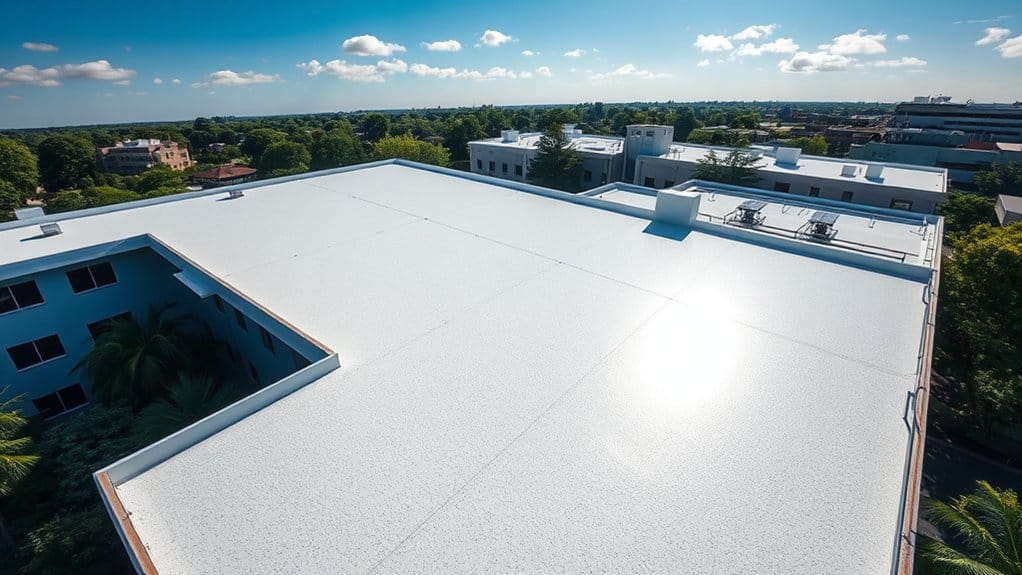
As urban areas face increasing temperatures and energy demands, solar reflective roof coatings offer a practical way to address these issues.
By reducing heat absorption, these coatings significantly lower the need for extensive cooling systems, which in turn decreases energy consumption. This not only shrinks your building’s environmental footprint but also supports sustainable practices that improve air quality.
Reflective coatings help tackle the urban heat island effect, making cities more pleasant and comfortable. Furthermore, they cut down on greenhouse gas emissions by reducing reliance on mechanical cooling.
With advantages like a longer roof lifespan and compliance with eco-friendly regulations, opting for solar reflective coatings is a sensible choice for a healthier environment for all.
Performance Metrics for Evaluating Coatings

To effectively evaluate solar reflective roof coatings, focus on key metrics that indicate their efficiency and durability.
Start with Solar Reflectance (SR) and Thermal Emissivity (TE), which measure how well a surface reflects sunlight and releases heat. The Solar Reflective Index (SRI) combines these figures for a complete assessment of cooling performance.
Durability testing is also crucial, ensuring the coating can endure UV exposure and moisture, which affects its lifespan.
Regularly reviewing these performance metrics will help you select the right materials, ensuring they meet cool roof standards.
Regulatory Incentives for Reflective Roof Solutions
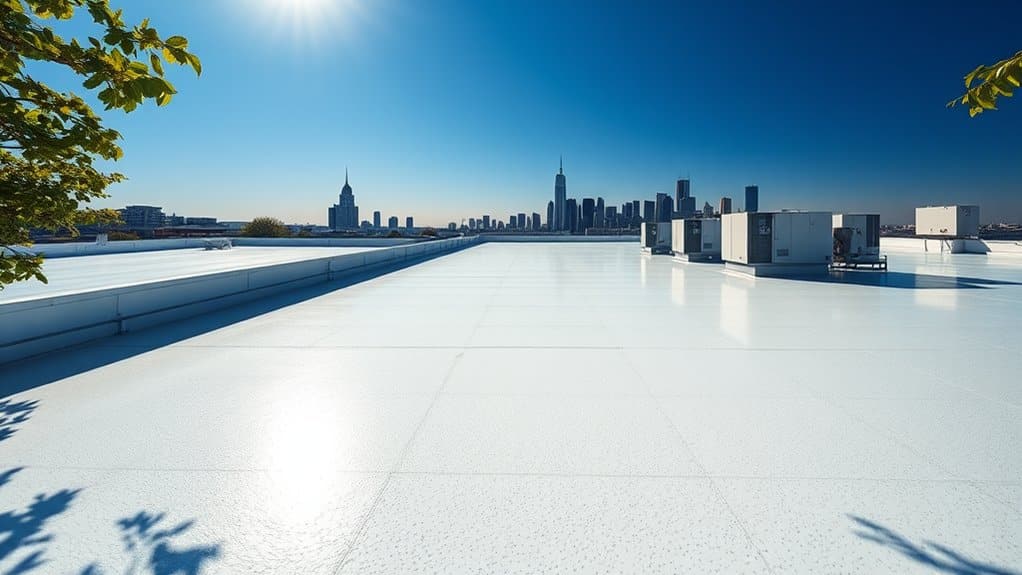
With the growing focus on energy efficiency and environmental sustainability, regulatory incentives for reflective roof solutions are increasingly important.
Many local councils and government bodies offer rebates and tax credits for such initiatives. To benefit, it’s crucial to understand the eligibility criteria outlined in your local guidelines.
The RCMA database is a valuable resource for identifying financial support specific to your area.
By using sustainable materials in your projects, you not only comply with regulations but also contribute to wider environmental objectives.
Taking advantage of these incentives can lead to considerable cost savings and promote a culture of sustainability within your community, encouraging more people to consider reflective roofing solutions.
Installation Process of Reflective Roof Coatings
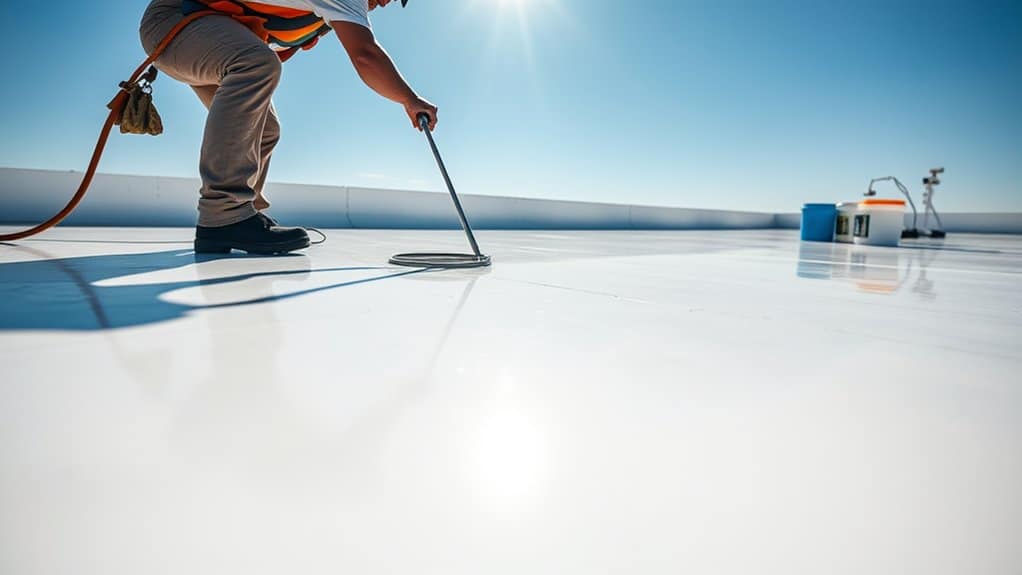
Understanding the regulatory incentives for reflective roof solutions is crucial for a successful installation.
Start by ensuring your roof is clean, dry, and free from debris. You can achieve this with pressure washing or wire brushing, allowing 2-4 hours for it to dry.
When applying the coating, choose the right tools: use 14 mm polyamide rollers for thick coatings like RD-Elastodeck and short-haired rollers for thinner options like RD-Sunguard.
Apply the first coat with cross-directional strokes to ensure an even finish. After 2-4 hours, apply a second coat perpendicularly.
Keep an eye on the conditions—ideally, temperatures should be above 24°C, and try to avoid high humidity.
Finally, check your work with reflectance testing to confirm its effectiveness, ensuring your efforts benefit both the environment and your community.
Maintenance and Repair of Reflective Roof Coatings

Maintaining and repairing your reflective roof coatings is crucial for their longevity and energy efficiency.
Regular inspections allow you to identify potential issues early on, while proper surface preparation ensures effective repairs.
Surface Preparation Importance
Proper surface preparation is crucial for the durability and effectiveness of reflective roof coatings.
Start by thoroughly cleaning the roof with a pressure washer and a suitable degreaser to remove dirt, oils, and loose debris.
Then, lightly sand the surface to create a “key” that improves adhesion for a stronger bond.
After this, apply a fungicidal treatment to eliminate any algae or mould that could affect long-term performance.
Don’t forget to fill any cracks with appropriate compounds before applying the coating.
A well-prepared surface ensures secure adhesion and maximises the energy efficiency benefits of your reflective roof, helping both your needs and the environment. Additionally, consider regular roof inspections to identify any underlying issues that may compromise the coating’s effectiveness.
Regular Inspection Schedule
While a reflective roof coating may seem like a low-maintenance option, regular inspections are essential to maintain its effectiveness and lifespan.
Depending on your roof’s age, your inspection schedule should vary. For roofs less than ten years old, conduct a comprehensive inspection each year and check after storms.
For roofs older than ten years, aim for inspections twice a year, in spring and autumn, along with additional checks following severe weather.
Carry out your own inspections twice a year to look for debris, standing water, or cracks. Keep a detailed record of your observations to ensure compliance with warranty conditions and enhance your roof’s energy efficiency.
Proactive maintenance now can protect your investment in the future!
Repair Techniques Overview
When you spot wear on your reflective roof coating, it’s crucial to act quickly to maintain its effectiveness.
Using elastomeric coatings can effectively seal leaks while providing flexibility and durability. Before applying these coatings, reinforce any damaged areas with mesh fibreglass tape to ensure better adhesion.
Regularly check for issues such as blistering and cracking. If you find any, cut out the damaged sections and fill them with elastomeric compounds.
To prolong the life of your coating, establish a recoating schedule that includes preventive treatments and routine inspections.
These proactive steps not only safeguard your roof but also enhance its solar reflective properties, leading to energy savings and a longer lifespan.
Frequently Asked Questions
How Long Do Solar Reflective Roof Coatings Typically Last?
Solar reflective roof coatings typically last between 5 to 20 years, influenced by factors such as UV exposure and thermal stress. Regular maintenance, like inspections and cleaning, can significantly enhance their lifespan and effectiveness. For example, a well-maintained roof coating can perform better and last longer than one that is neglected.
Can Reflective Coatings Be Applied to Existing Roofs?
Yes, you can apply reflective coatings to existing roofs. Ensuring the roof is properly prepared is essential for good adhesion during the application, which enhances performance. By checking compatibility, you maintain the roof’s integrity while benefiting from improved energy efficiency and a longer lifespan. For example, if you have a flat roof, a reflective coating can help keep your home cooler in summer, potentially reducing energy bills.
Are There Color Options for Reflective Roof Coatings?
Yes, there are various colour options for reflective roof coatings, which enhance both durability and appearance. Opting for lighter shades can improve energy efficiency, while darker colours now use advanced pigments that offer better performance without compromising style.
How Do I Choose the Right Coating for My Roof?
“Measure twice, cut once.” To select the right roof coating, assess materials for durability and compatibility. Think about installation methods that ensure a proper fit. Aim for efficiency and longevity to meet your needs effectively. For example, if you live in an area with heavy rainfall, opt for a waterproof coating to prevent leaks.
What Is the Average Cost of Installing Reflective Roof Coatings?
The average cost of installing reflective roof coatings in the UK typically ranges from £400 to £1,800. Your total expenses will depend on factors such as the size of your roof, the type of materials used, and local labour rates. For instance, a larger roof may require more materials and time, which can increase costs. Keep these factors in mind when budgeting for your project.
Conclusion
Using solar reflective roof coatings can significantly improve the energy efficiency of your flat roof. These coatings can help reduce cooling costs by as much as 30% during the hottest summer months. By reflecting sunlight instead of absorbing it, you not only save money but also help keep the environment cooler. With a range of options available and the possibility of regulatory incentives, investing in reflective coatings is a sensible choice for your finances and the planet. Don’t miss out on these advantages!


