
Heavy Rainfall Roof Solutions: Preventing Water Ingress
To prevent water ingress during heavy rainfall, assess your roof type for weaknesses—gable roofs can lose shingles easily, while hip roofs are generally more stable. Use effective waterproofing membranes like EPDM or PVC for optimal protection. Liquid coatings can provide seamless waterproofing, and ensure your drainage systems are efficient with well-installed gutters and appropriately designed slopes. Regular maintenance, including inspections and clearing debris, is essential to keep your roof strong. Explore additional strategies to enhance your roof’s resilience against rain.
Key Takeaways
- Install a well-maintained drainage system with properly sized gutters to effectively channel rainwater away from the roof and building.
- Use durable waterproofing membranes like PVC or EPDM to prevent leaks at seams and ensure long-lasting protection against heavy rainfall.
- Consider elastomeric liquid coatings for a seamless finish that accommodates roof expansion and contraction, minimising the risk of water ingress.
- Regularly inspect and clear gutters of debris to ensure optimal flow and prevent water pooling on the roof.
- Opt for roof types, such as hip roofs, that efficiently direct water away, reducing the likelihood of shingle displacement during storms.
Understanding Roof Types and Their Vulnerabilities to Heavy Rainfall
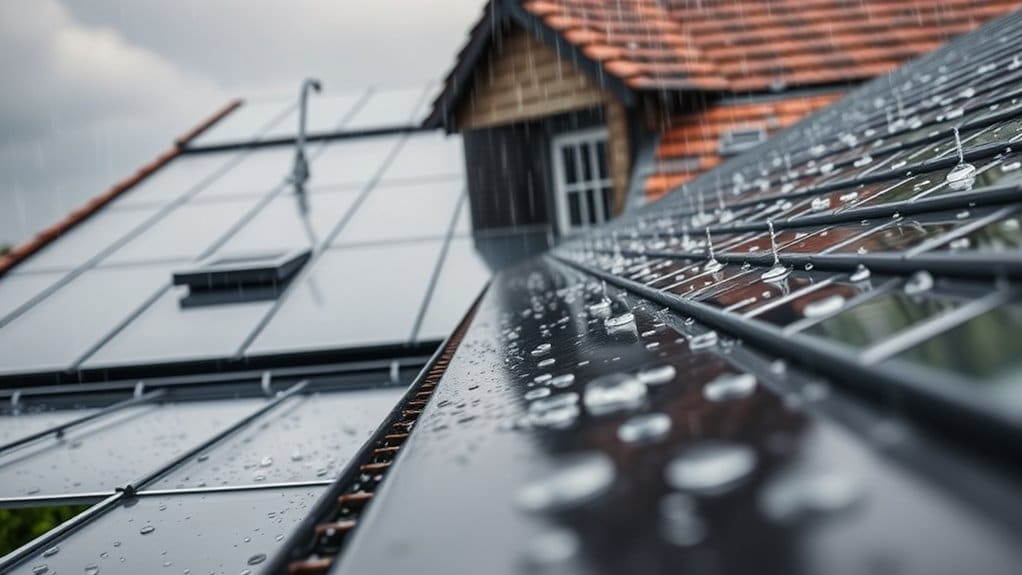
When considering roof types, it’s important to understand how they respond to heavy rainfall, as each design has its strengths and weaknesses.
Gable roofs, with their steep angles, allow for efficient water runoff, reducing the risk of water pooling. However, they can experience shingle displacement during severe storms. Different roofing materials show varying vulnerabilities; for instance, asphalt roofs are less effective than metal or composite tiles, which highlights the need for careful consideration of material choice in preventing potential damage. Additionally, ensuring proper roof ventilation can mitigate overheating and moisture issues that may arise from heavy rain.
On the other hand, hip roofs are more stable due to their sloped design on all sides, which helps prevent wind uplift and directs water away effectively.
Both styles, however, require well-maintained gutter systems to avoid water buildup that can cause leaks or structural damage.
Knowing these factors can help you make informed choices that enhance the durability and performance of roofs in heavy rain, ultimately benefiting the community.
Effective Membrane Technologies for Waterproofing
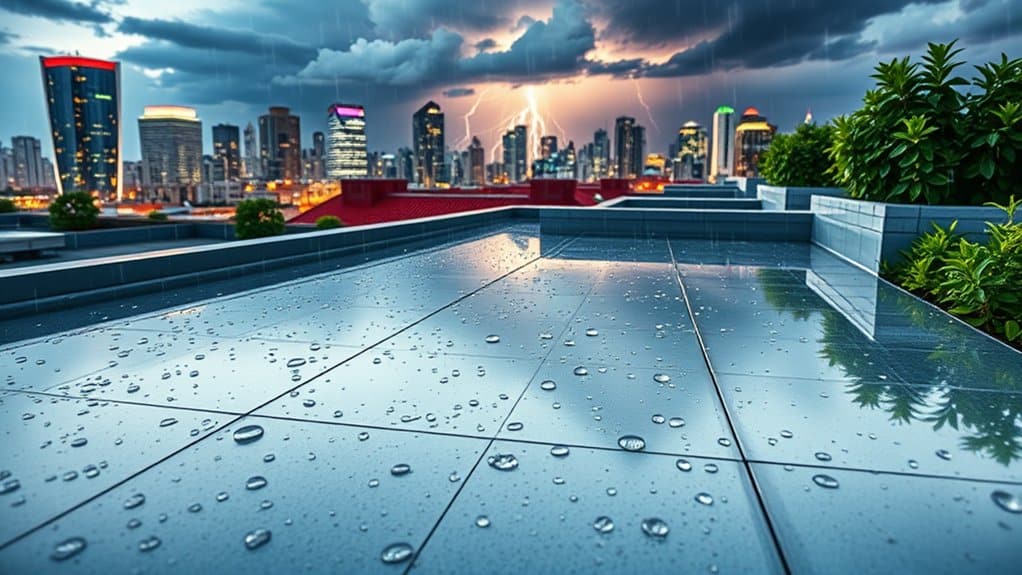
Roof design is only one aspect of managing heavy rainfall; effective waterproofing technologies are crucial for protecting structures from water damage.
To ensure membrane longevity, consider these options:
- Bituminous membranes: Very durable and suitable for roofing and basements.
- PVC membranes: Flexible and resistant to chemicals, ideal for minimising seam leaks. Proper installation is key to preventing further damage during heavy rainfall events.
- EPDM membranes: Excellent UV resistance, perfect for long-term use.
- Liquid-applied membranes: Seamless application for irregular surfaces, offering high flexibility. These membranes provide seamless coverage ideal for complex shapes and areas with many penetrations, eliminating seam-related failure points.
Pay close attention to seams to prevent water ingress, as poor sealing can compromise performance.
The Role of Liquid Coatings and Sealants in Rain Protection

Liquid coatings and sealants are essential for improving rain protection in roofing systems, particularly during heavy rainfall.
These coatings have elastomeric properties that allow them to expand and contract with temperature changes, ensuring a tight seal. The seamless application process removes weak points, while bonding agents help prevent water from penetrating beneath layers. Additionally, effective waterproofing improves the energy efficiency of buildings, leading to lower energy bills and maintaining stable indoor temperatures.
Key advantages of these sealants include quick curing times and a self-flashing design that effectively seals complex areas without the need for metal components. Additionally, these coatings are a cost-effective alternative to complete roof tear-offs, extending the lifespan of roofs and enhancing their durability.
They can also resist hydrostatic pressure, meaning they can handle standing water, and their crack-bridging ability accommodates movement in the substrate.
With proper maintenance, these systems can last over 25 years, providing reliable long-term protection for your roof against the elements.
Enhancing Drainage Systems to Prevent Water Accumulation
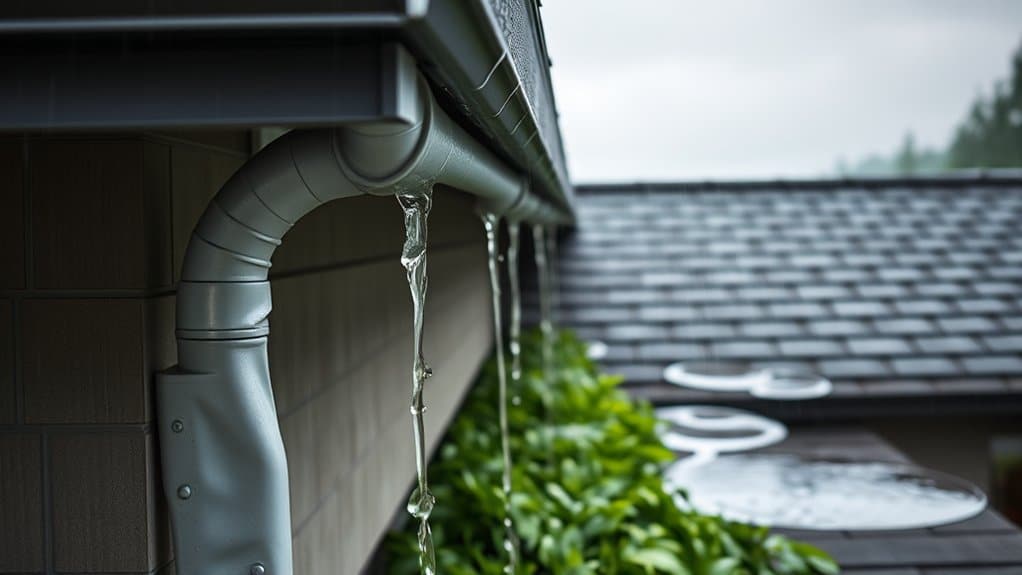
To prevent water accumulation on roofs effectively, it’s crucial to enhance drainage systems through careful design and modern technology.
Focusing on drainage improvement can significantly reduce the risk of water-related problems. Here are four essential strategies:
- Slope Design: Ensure your roof has a sufficient slope to direct water towards the drains.
- Gutter Installation: Well-installed gutters channel water away from your building, preventing overflow.
- Pipe Diameter: Choose the right pipe sizes to maintain optimal flow rates and reduce energy loss.
- Siphonic Systems: Consider siphonic systems for increased flow rates in compact designs.
Implementing these techniques not only enhances your drainage systems but also facilitates easier maintenance, ensuring long-term reliability and performance.
Maintenance Strategies for Long-Term Roof Protection Against Heavy Rain
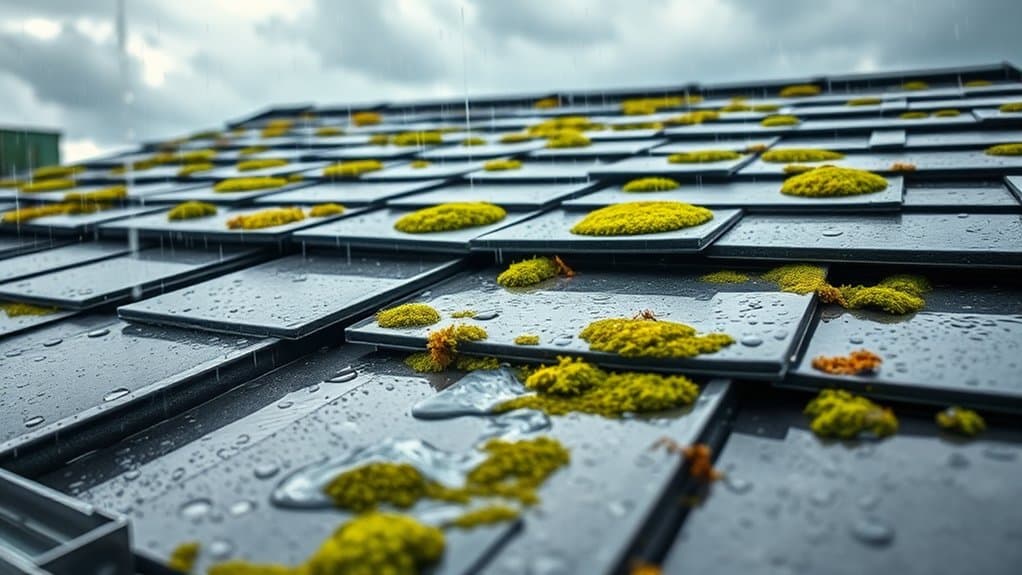
Heavy rainfall can be a serious threat to buildings, but implementing proper maintenance strategies is crucial for long-term roof protection.
Regular inspections are key; check the roof’s condition to spot any potential damage or leaks early. Make sure to maintain your gutters by removing debris, inspecting downspouts, and ensuring they’re correctly aligned to allow for efficient water drainage.
Consider applying roof coatings to create a waterproof layer that prevents moisture from seeping in. Additionally, manage vegetation by trimming back branches that could drop debris or cause damage in storms.
Frequently Asked Questions
How Do I Choose the Right Waterproofing Material for My Roof?
To select the right waterproofing materials for your roof, start by considering your local climate and environmental factors. Assess various roofing options based on their durability, ease of installation, and ongoing maintenance costs. For instance, in areas with heavy rainfall, materials like EPDM or bitumen are often more effective. Prioritise proven waterproofing methods to avoid future issues and keep your roof in good condition.
What Are the Signs My Roof Needs Immediate Repair After Heavy Rainfall?
After heavy rainfall, it’s essential to inspect your roof promptly. Look out for signs such as discoloured ceilings, sagging areas, and cracked flashing. Addressing leaks quickly can prevent further damage and ensure your roof effectively protects your home.
Can Roof Design Affect Water Drainage Efficiency During Storms?
Did you know that drains are three times more effective than scuppers? The pitch of your roof and its drainage systems play a crucial role in how efficiently water flows off during storms. This ensures optimal performance and helps prevent water build-up, which can jeopardise the structural integrity of your property.
How Often Should I Perform Maintenance on My Roof in Rainy Climates?
In rainy climates, it’s advisable to inspect your roof at least twice a year. Pay particular attention after heavy storms; it’s crucial to check for any damage to ensure your roof remains in good condition. For instance, look for missing tiles or signs of water pooling. Regular checks help prolong the life of your roof and prevent costly repairs down the line.
Are There Eco-Friendly Options for Waterproofing Roofs Exposed to Heavy Rain?
You’ll be impressed by eco-friendly waterproofing options! Green roofing offers excellent protection for your home using sustainable materials. Additionally, recycled rubber membranes and liquid coatings deliver outstanding durability, ensuring your roof can cope with even the heaviest rain.
Conclusion
In summary, by recognising your roof’s weaknesses and implementing effective waterproofing measures, you can turn your roof into a strong barrier against heavy rain. It’s essential to prioritise drainage systems and perform regular maintenance for lasting protection. A well-sealed roof is not just a precaution; it’s your home’s primary defence against the elements. By taking these steps, you can keep water out and ensure a dry, secure living space for years to come.