

How to Patch Up a Flat Roof: A Simple Guide
To patch a flat roof, begin by checking for cracks or blisters. Remove any debris and standing water to ensure a clean working surface. Gather the necessary tools, such as a utility knife and roofing cement. To locate leaks, you can perform a water test or use infrared scanning. Once you've identified the damaged spots, clean them thoroughly, apply a patch, and secure the edges with roofing cement. Finally, seal the repairs and conduct a thorough inspection. Stay tuned for more maintenance tips to keep your roof in top condition.
Key Takeaways
- Before starting any repairs, check the flat roof for damage such as cracks, blisters, or leaks.
- Remove any debris and standing water to ensure the surface is dry for better adhesion of materials.
- Apply roofing cement to the damaged area, then place the right patch (EPDM or TPO) on top.
- Seal all edges of the patch properly to stop water from getting through.
- Regularly inspect and maintain the roof to extend its lifespan and prevent further issues.
Preparing the Roof for Repair

Preparing the Roof for Repair
Before starting any repairs on a flat roof, it's crucial to prepare the area properly for the best results. Begin with a thorough inspection of the roof, looking for signs of damage such as cracks, blisters, or pooling water. Pay close attention to the flashing around vents, chimneys, and edges. Use a moisture meter to identify any hidden moisture within the roofing layers. Take photographs and notes to document your findings for future reference.
Next, clear away all debris and standing water to create a clean, dry surface. Remove any damaged materials, strip away old sealants, and reinforce any weak areas. It's important to note that common problems with flat roofs often include leaks and moisture accumulation. Proper maintenance of flat roofing systems is essential to prolong their lifespan and prevent further issues.
Lastly, prioritise safety by using stable ladders, wearing appropriate safety gear, and ensuring the weather is clear for your work.
Essential Tools and Materials
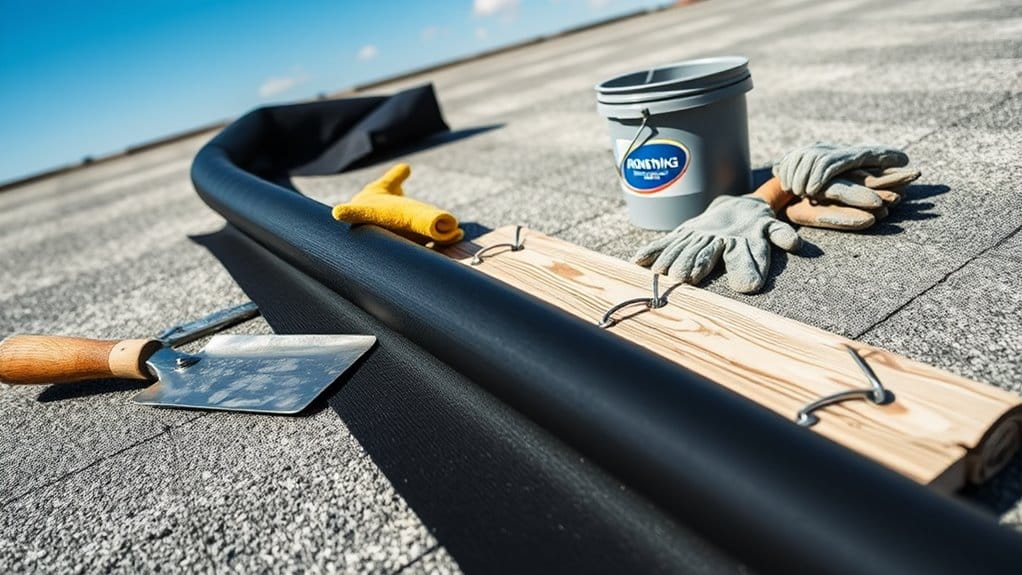
To effectively repair a flat roof, you'll need some essential tools and materials.
Start with safety equipment, such as hard hats and harnesses. Ensuring your safety is paramount when working on flat roofing projects.
Make sure you have specific tools like a utility knife and a caulking gun ready.
Familiarise yourself with key repair materials, including EPDM patches and roofing cement, to make the repair process smoother. Regular inspections can help identify potential issues before they escalate.
Necessary Tools Overview
When it comes to repairing a flat roof, having the right tools and materials is crucial for a successful job. Begin with essential hand tools such as a utility knife for cutting materials, a trowel for applying roofing cement, and a garden fork for clearing debris. Additionally, having the right tools enhances safety when working on the roof, ensuring that you can carry out repairs efficiently and effectively. Regular inspections are crucial for roof condition and should be part of your maintenance routine to identify any potential issues before they escalate. Don't forget about safety gear: a sturdy ladder, a safety harness, and goggles are vital for your protection. Choose your tools carefully, as each serves a specific purpose that impacts the repair's effectiveness. Keep your tools well-maintained to ensure they last and remain reliable. Regularly check for any signs of wear and replace items as necessary.
Key Repair Materials
Repairing a flat roof effectively requires specific materials suited to the roofing system. For rubber roofing, use durable EPDM patches. For TPO and PVC roofs, welding with a heat gun is necessary to create secure bonds.
Roofing cement is vital for sealing blisters and securing patches, while modified bitumen offers layered protection. Don't overlook flashings; they're essential for sealing edges and penetrations.
Preparing the surface is crucial. Clear debris with a broom or leaf blower, and use a wet/dry vacuum to remove any standing water. A utility knife will help you cut away damaged materials. Implementing proper installation techniques will greatly influence the success of your repairs, ensuring long-lasting results and satisfaction for everyone involved.
Safety Equipment Essentials
Successful flat roof repairs depend not just on the right materials but also on essential safety gear.
Safety harnesses are vital fall protection tools that spread the impact of a fall across the body, reducing the risk of injury. Ensure each harness is properly fitted, regularly checked, and compatible with lanyards and anchors.
Personal protective equipment (PPE) is equally important; hard hats protect against falling debris, while robust boots help prevent slips. Protective gloves are necessary for handling materials, and eye and ear protection is crucial for shielding against flying debris and loud machinery.
To further enhance safety on site, consider installing guardrails and toe boards, which help prevent falls and keep tools secure. Additionally, proper risk assessment before beginning work is essential to identify potential hazards and implement appropriate safety measures.
Regularly check all equipment to uphold safety standards during work.
Identifying and Assessing Leaks
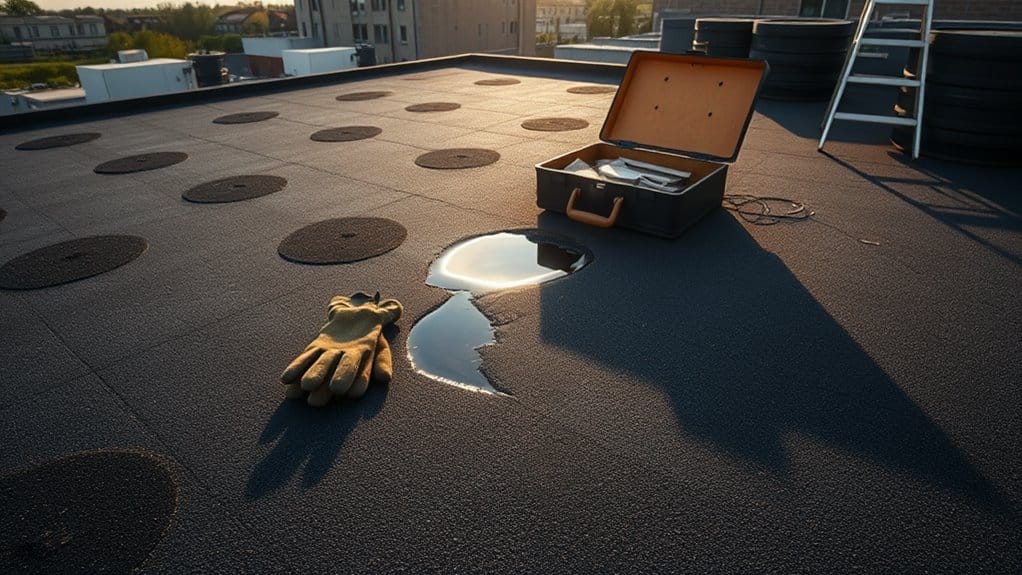
How can you effectively identify and assess leaks in a flat roof? Start with a thorough visual inspection, checking for cracks, gaps, or missing flashing.
Then, conduct a water test by wetting sections of the roof and monitoring for leaks indoors. Advanced methods like infrared scanning can help detect trapped moisture by revealing temperature differences.
To evaluate the severity of the leak, trace the leak path and inspect for any damage to the membrane or moisture build-up.
Pay particular attention to common leak spots such as skylights, vents, and HVAC units.
For precise moisture assessment, consider using electronic leak detection or core sampling to examine the roof layers.
Cleaning the Roof Surface

Before carrying out any repairs on your flat roof, it's crucial to thoroughly remove any debris to prevent future water damage.
Use a roof brush and a leaf blower to clear away loose materials, particularly around drains and edges.
Once the surface is clean, ensure it's completely dry to achieve the best adhesion for your repair materials.
Remove Debris Thoroughly
A thorough clean of the roof is crucial to maintain its integrity and prevent damage.
Begin with a roof inspection to spot debris, especially around drains and edges. Use tools like leaf blowers, soft-bristled brooms, and telescoping rakes, and choose a calm day for better visibility.
Always wear appropriate safety gear and ensure your ladders are stable while working. When clearing debris, use gentle sweeping to avoid harming the roofing material.
Clear drainage systems to stop water pooling, which can cause further problems. Regularly trim overhanging branches and aim to remove debris at least twice a year to keep your roof in top shape and prolong its lifespan.
Ensure Dryness Before Repair
Before starting any roof repairs, it's crucial to ensure the surface is completely dry. This helps achieve a durable fix. Begin with a comprehensive inspection to identify any moisture. Clean the roof using a solution of water and mild detergent, steering clear of harsh chemicals. For tougher stains, use soft-bristle brushes and low-pressure washing. Here's a quick overview of cleaning methods:
| Method | Purpose |
|---|---|
| Mild Detergent Solution | General cleaning |
| Low-Pressure Washing | Gently removes debris |
| Soft-Bristle Brush | Tackles stubborn stains |
| Roof-Safe Agents | Prevents damage to materials |
Taking these steps will set the stage for effective repairs.
Applying Roof Patches

Applying roofing patches requires precision to ensure a long-lasting and watertight repair.
Begin by using a trowel to spread a layer of roofing cement over the cleaned damaged area. Choose the right patch type, such as EPDM or TPO, and place it snugly over the cement.
Press the patch down firmly to secure it, ensuring complete adhesion. To boost durability, you might want to add extra layers of roofing cement or patches.
Make sure to secure all edges well to prevent water from seeping in. Lastly, apply a final layer of roofing cement over the patch and check for any weak spots.
Following these steps will help maintain the integrity of your flat roof.
Sealing and Inspecting Repairs

Once you've applied roofing patches, the next step is to seal and inspect those repairs to ensure they're effective.
Start by preparing the surface—remove any debris or standing water to ensure the sealant adheres properly. Depending on your roof's material, select a suitable sealant, such as roofer's caulking, silicone, or liquid rubber. Apply a primer to improve adhesion, then use a trowel or brush to spread the sealant evenly.
After sealing, inspect for potential leaks. Look for visible signs like water pooling or cracks, and check for damp patches on ceilings as internal indicators.
Regular inspections help ensure your repairs hold up, giving you peace of mind and extending the life of your flat roof.
Preventing Future Damage
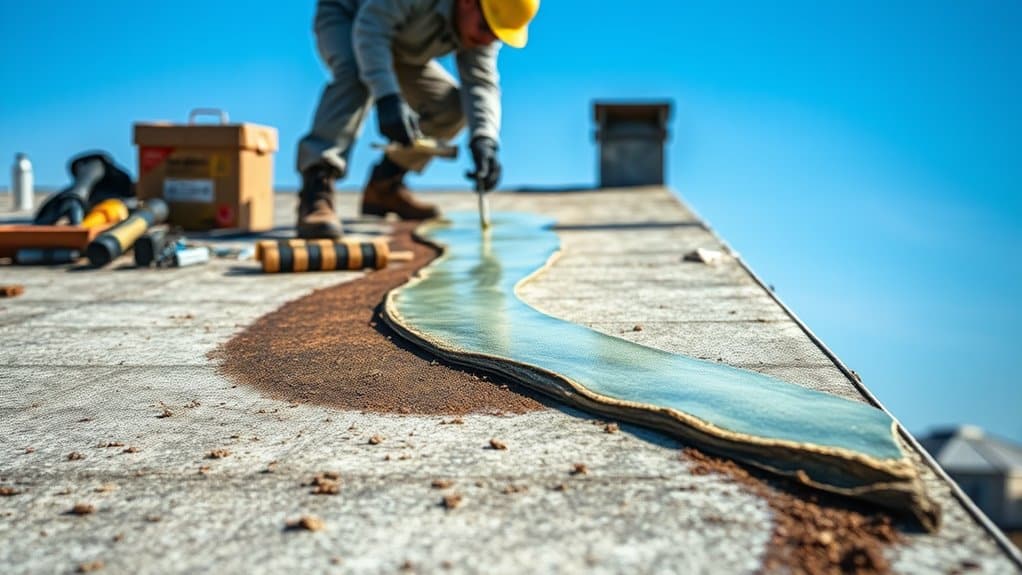
To effectively prevent future damage to your flat roof, it's important to take a proactive maintenance approach. This includes using high-quality materials and ensuring proper drainage. Implementing these measures can save you significant costs in the long run.
| Preventative Measure | Description |
|---|---|
| Choose UV-resistant materials | Protects against sun damage, extending the roof's lifespan. |
| Ensure proper drainage | Regularly clear debris from gutters and maintain drainage systems. |
| Secure roofing components | Inspect flashings and ensure materials are fastened correctly. |
| Conduct annual inspections | Spot potential issues before they become serious problems. |
Regular Maintenance Tips
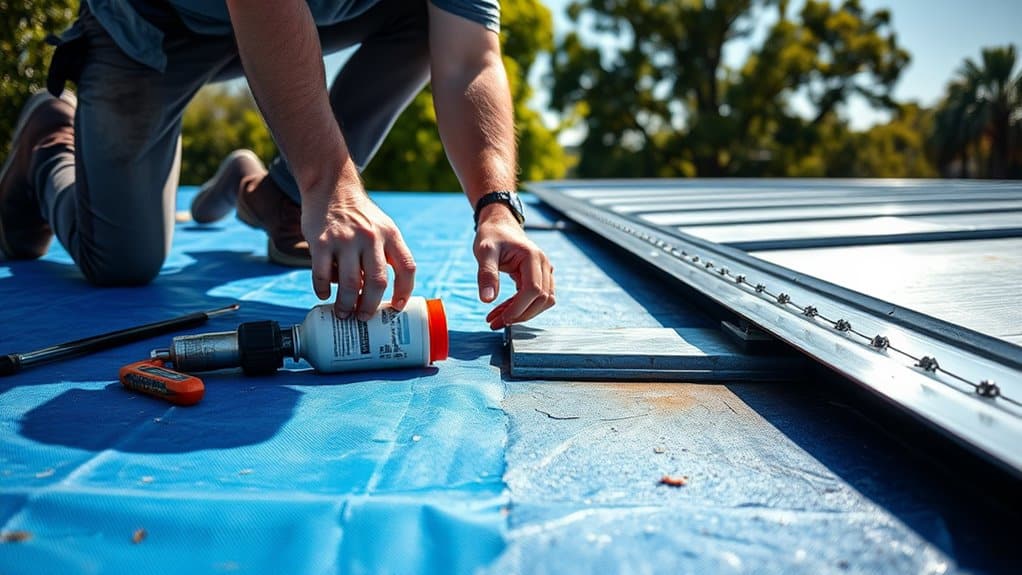
Maintaining a flat roof requires careful attention, as neglect can lead to serious problems.
It's wise to schedule roof inspections at least twice a year—preferably in spring and autumn—to spot any damage, particularly around flashing, seals, and signs of wear. During these inspections, ensure that drains and gutters are clear and functioning properly to prevent water pooling.
Regularly clear away debris and trim any overhanging branches to safeguard your roof from potential harm.
It's also important to address blisters and cracks promptly using suitable repair techniques.
Frequently Asked Questions
How Often Should I Inspect My Flat Roof?
You should inspect your flat roof at least twice a year, paying attention to common issues like ponding water, cracks, and blistering. A simple checklist can help you spot problems early, which is essential for maintaining the roof's integrity and prolonging its lifespan. For instance, check for debris accumulation that can trap moisture or inspect seams for signs of wear. Regular checks can save you from costly repairs down the line.
Can I Patch a Flat Roof in Rainy Weather?
Patching a flat roof in rainy weather is not advisable. Adhesive bonding is significantly reduced when surfaces are wet. Instead, consider using all-weather sealants or delay repairs to ensure effectiveness and safety. For instance, if your roof has a small leak, it's better to wait for drier conditions before attempting a fix.
What Safety Gear Do I Need for Roof Repairs?
For roof repairs, ensure you have safety goggles to shield your eyes from falling debris and slip-resistant boots to minimise the risk of slips and falls. It's essential to have a comprehensive safety kit to maintain a secure and efficient working environment.
How Do I Choose the Right Roof Patch Material?
When selecting the right roof patching material, it's essential to consider the type of roofing you have. For instance, EPDM patches are ideal for synthetic membrane roofs, while TPO patches can improve energy efficiency. Evaluate the specific damage to choose the most effective patch for a reliable seal.
Is Professional Help Necessary for Large Flat Roof Repairs?
When dealing with large flat roof repairs, it's advisable to seek professional assistance. Experts can identify different types of flat roofs and provide accurate cost assessments. They'll ensure that all work complies with building regulations and tackle any underlying issues, leading to durable solutions. For instance, if you notice persistent leaks or sagging, a professional can pinpoint the cause and implement the right fix, saving you time and money in the long run.
Conclusion
By following this straightforward guide, you can rejuvenate your flat roof and protect your home from the weather. A well-maintained roof acts as a reliable barrier, keeping your home safe from leaks and damage. Regular checks and prompt repairs can extend the roof's life and give you peace of mind. Stay vigilant, and your roof will withstand the elements, ensuring your home remains a safe haven for years to come.


