

How to Apply for Roofing Permits in the UK
To apply for roofing permits in the UK, first, identify the necessary permits, such as Building Regulations Approval or Planning Permission. Get in touch with your local council’s building control department to find out what permits you need and the documents required. Prepare the necessary paperwork, ensuring it complies with building regulations, particularly regarding structural changes and fire safety. Keep in mind that fees may vary from one council to another. By following these steps, you’ll lay the foundation for a smooth application process. For more guidance, check your local council’s website.
Key Takeaways
- Get in touch with your local council’s building control department to find out what permits you’ll need for your roofing project.
- Select the right type of application based on your roofing work and seek advice from local authorities if unsure.
- Gather and submit all required documents to comply with building regulations and prevent any delays.
- Be prepared for fees, which can vary from £250 to £800 depending on the size and complexity of your project.
- Consider using Competent Person Schemes to self-certify compliance, which can save you money on local authority inspections.
Understanding the Types of Roofing Permits
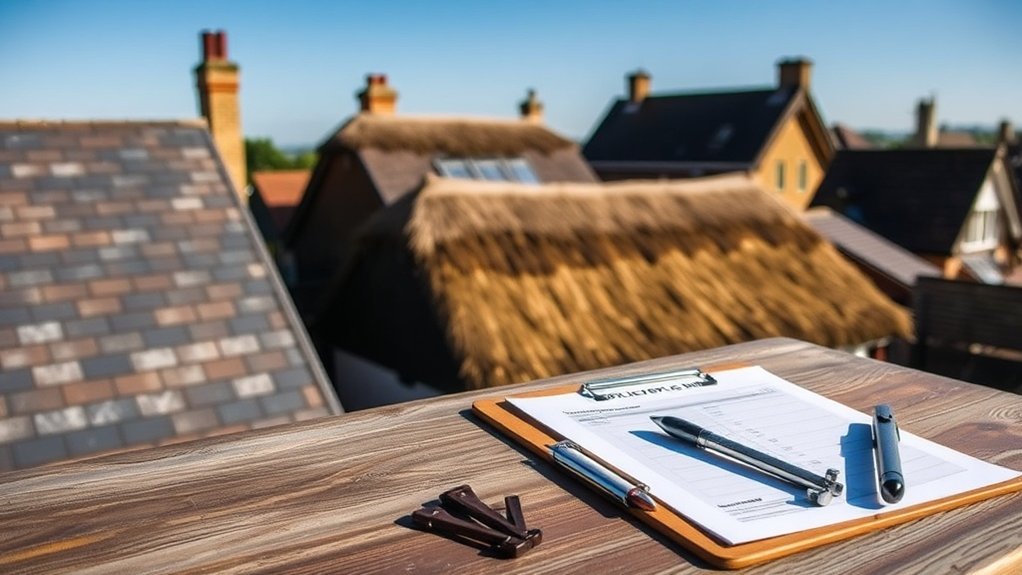
When embarking on a roofing project, it’s essential to understand the types of permits you may require. Different roofing styles necessitate specific permit categories to ensure compliance with regulations.
For significant renovations or structural changes, you’ll need Building Regulations Approval to adhere to safety standards. Understanding single ply roofing types is crucial as it may influence the type of permit required.
If you’re extending the roof or changing the building’s appearance, Planning Permission is required. In conservation areas, you must obtain Conservation Area Consent to maintain historical integrity, while Listed Building Consent is necessary for work on heritage sites.
Furthermore, if your project could affect protected species, such as bats, ensure you secure Environmental Permits. Being familiar with these permits simplifies the process of managing your roofing project effectively.
The Permit Application Process

To begin the permit application process, contact your local authority’s building control department or a private approved inspector. Choose the right application type based on your project’s needs. Then, prepare and submit the necessary documents to ensure compliance with building regulations. For example, if you’re adding an extension, you’ll need to provide detailed plans and specifications. It is important to note that consultation with local authorities is crucial to confirm the required permits for your project.
Contact Local Authority
How can you ensure a hassle-free roofing permit application process? Start by reaching out to your local authority.
Follow these three steps:
- Identify the relevant building control body for roofing permits in your area. Visit their official website to find application guidelines.
- Confirm the specific permit requirements and regulations for your roofing project. Be sure to check if additional approvals, such as those for conservation areas, are needed. Remember that building regulations approval is typically necessary for residential re-roofing projects.
- Inquire about the best way to communicate with your local authority. Find out if they prefer online submissions, face-to-face meetings, or postal applications.
Choose Application Type
Which application type is best for your roofing project? Start by assessing the scope of your work.
For larger, more complex projects, a full plans application is advisable. This ensures compliance with regulations and typically takes around five weeks for approval.
If your project is smaller, a building notice application allows you to start work within two days, but be aware of potential compliance risks.
For any existing work done without prior permission, a regularisation application may be necessary, though you might need to rectify issues to meet current standards.
Keep in mind that your geographic location can affect permit eligibility, particularly if you’re in a conservation area.
Understanding these options will help you choose the right application type and ensure a smoother roofing process.
Submit Required Documentation
Submitting the required documentation is a vital part of the roofing permit application process.
To ensure you meet submission deadlines and keep your documents clear, follow these important steps:
- Prepare detailed architectural plans and a site location plan: These should clearly show the roof design and property boundaries.
- Include material specifications and proof of compliance: Provide evidence that your materials meet Building Regulations for energy efficiency and safety.
- Submit both digital and physical copies: Check with your local authority to confirm their preferred submission method. Additionally, ensure that your application includes comprehensive project plans to expedite the approval process.
Specific Building Regulations for Roofing Work

When planning roofing work, it’s important to be aware of specific thresholds for approval and structural integrity requirements.
If your project involves more than 25% of the roof or includes structural changes, you must secure building control approval.
For instance, if you’re replacing a large section of your roof or adding dormer windows, this applies to you.
Adhering to these regulations is crucial for ensuring safety and legality in your roofing project.
Thresholds for Approval
Understanding the thresholds for roofing work is crucial for compliance with building regulations. Here’s a simple breakdown:
- Area Limits: If your work affects less than 25% of the total building envelope and under 50% of the roof area, you typically won’t need a building control application.
- Weight Increases: If new roof coverings add 15% or more to the weight, you must get approval to ensure roof stability.
- Structural Changes: Any alterations that exceed these thresholds require verification by your local authority under Building Regulations Parts A to P.
Staying aware of these thresholds can help you avoid costly fines or enforcement actions. Additionally, it is important to ensure that your roofing materials meet fire safety regulations to maintain safety standards.
Following these guidelines ensures your roofing project meets legal requirements and benefits the community.
Structural Integrity Requirements
Ensuring structural integrity is crucial for any roofing project. You need to verify that the roof can safely bear various loads, such as its own weight and wind pressure, while effectively transferring these loads to the ground without excessive bending.
Conduct thorough structural calculations to assess load capacities and ensure compliance with relevant British Standards, like BS EN 1995-1 and BS 8103-3.
It’s also important to install horizontal ties at specified intervals to enhance stability and prevent spreading.
Make sure your roofing work complies with Building Regulations, particularly Approved Document A, which sets out minimum standards for structural safety.
Types of Building Control Applications

Navigating the different types of building control applications is crucial if you’re planning roofing work. Here are the three main types you need to know:
- Building Notice: This is suitable for smaller projects. With a Building Notice, you can start work within two days without needing detailed plans approved beforehand. A building control surveyor will check your work as it progresses.
- Full Plans Application: This option involves submitting detailed plans before you start. It ensures that your project complies with local regulations. You’ll receive formal approval within five weeks and a completion certificate once the work has been inspected.
- Regularisation Application: If you’ve already completed work without the necessary consent, this application allows you to seek retrospective approval. It assesses compliance and could require you to make changes before you get the green light.
Understanding these options is vital for ensuring compliance and successfully completing your project.
Fees and Costs Associated With Roofing Permits

When planning roofing work, it’s crucial to understand the fees and costs for obtaining the necessary permits.
Application fees can vary significantly based on your project. For household planning applications, you should budget around £598. If you’re seeking prior approval, fees typically range from £310 to £586.
Building regulations fees generally fall between £250 and £800, depending on the scope of your project. For larger structures, expect higher fees based on gross floor space.
If you hire tradespeople registered under Competent Person Schemes, you may benefit from fee exemptions, as they can self-certify compliance and potentially reduce your overall costs.
Always consult your local planning authority for the most accurate fee information.
Additional Considerations for Roofing Permits

Understanding the additional considerations for roofing permits is crucial to ensure your project adheres to legal and safety standards. Here are some key points to consider:
- Wildlife Surveys: If your project is in an area that may impact protected species, such as bats, you’ll need to conduct a survey and obtain the necessary licences before starting work.
- Environmental Impact: Ensure that your roofing materials and methods comply with environmental regulations, particularly in conservation areas. This includes proper waste disposal to prevent contamination.
- Timing Restrictions: Be mindful that roofing work may need to be scheduled around breeding seasons to protect local wildlife, which could influence your project timeline. Additionally, it is important to consider risk assessments to evaluate any potential safety hazards associated with your roofing project.
Importance of Compliance With Building Regulations

Compliance with building regulations is crucial for any roofing project, ensuring safety, structural integrity, and legal requirements are met. By following these regulations, you align with UK safety standards that protect both workers and residents.
For instance, adhering to thermal performance criteria and fire safety protocols is vital, especially when using new materials. Additionally, implementing health and safety laws, such as proper use of personal protective equipment (PPE) and fall protection systems, helps prevent accidents on site.
Ignoring these regulations can result in hefty fines, enforcement notices, and complications in property transactions. Therefore, it’s essential to understand and comply with these regulations to create a safe environment and maintain your professional reputation in the roofing industry.
Consultation With Local Authorities

Consultation with local authorities is a crucial step in the roofing permit application process in the UK. Engaging in pre-application discussions helps identify potential issues and ensures adherence to regulations.
Here are three key points to consider:
- Understand Permit Requirements: Different roofing projects may need specific permits, so it’s vital to clarify these with your local council. For instance, a flat roof might’ve different requirements compared to a pitched roof.
- Stakeholder Engagement: Involve relevant parties early on, such as neighbours or local businesses, to gather their feedback. This can help prevent objections later in the process.
- Fees and Costs: Be mindful of application fees, which can vary depending on the scope of your project and the policies of your local authority. For example, a simple repair may incur lower fees than a complete roof replacement.
Utilizing Competent Person Schemes

When planning a roofing project, using a Competent Person Scheme (CPS) can simplify the process. One key benefit is that registered contractors can self-certify their work as compliant with Building Regulations, meaning you won’t need local authority inspections. This saves time and cuts costs while ensuring your project meets necessary standards.
When choosing a contractor, look for one accredited by a recognised CPS, such as the NFRC. This helps reduce the risks of hiring unqualified builders, as these contractors undergo regular audits to verify their skills.
Upon completion of your project, you’ll receive a Building Regulations Compliance Certificate, which can enhance your property’s value and give you peace of mind, thanks to insurance-backed guarantees for the work done.
Frequently Asked Questions
What Documents Are Typically Required for Roofing Permit Applications?
For roofing permit applications in the UK, you will usually require detailed architectural plans, structural calculations, and information on insulation and ventilation. It’s also important to familiarise yourself with local roofing regulations and be prepared for any applicable permit fees during the application process.
How Long Does the Permit Approval Process Take?
The approval timeline differs; Building Notice applications typically take around 48 hours, while Full Plans can take up to five weeks. It’s important to grasp the application process to prevent any delays in your roofing project. For instance, if you need a quick turnaround, opting for a Building Notice might be the better choice.
Can I Start Work Before Receiving Permit Approval?
No, you cannot start work before receiving permit approval. Doing so may lead to delays in your construction schedule, and you could face fines or even a halt to your project. Always ensure your permit application is approved before beginning any roofing work.
What Happens if My Application Is Denied?
If your application is denied, you can appeal the decision. It’s essential to review the permit requirements closely, as addressing the reasons for denial can boost your chances of success. Engaging with local officials may also be beneficial when resubmitting your proposal.
Is There a Deadline for Submitting Permit Applications?
Submitting permit applications is a bit like navigating a winding road; there isn’t a strict deadline. However, it’s crucial to adhere to the application timeline and submission guidelines to keep your project on schedule and avoid unnecessary delays or fines. For instance, if you’re planning a home renovation, ensure you submit your application in good time to prevent any hold-ups in your plans.
Conclusion
In conclusion, navigating the roofing permit process in the UK is essential for a successful project. It involves understanding the different types of permits required, engaging with your local council, and ensuring compliance with regulations. For instance, if you’re replacing your roof, you may need a building regulation approval. By getting these steps right, you protect your investment and contribute to the safety of your community. Remember, a thorough approach from the beginning will help your roofing project go smoothly.


