

Finding Specialist Roofers for UK Listed Buildings: Credentials to Look For
When searching for roofers who specialise in UK listed buildings, prioritise their experience in heritage restoration and the use of traditional materials. Look for key certifications such as the NFRC CPS Scheme or Heritage Skills CSCS cards; these indicate their level of expertise. It’s essential that they are familiar with legal requirements, including Listed Building Consent, and can source authentic materials for your project. Additionally, their project management skills should support preservation goals, ensuring the building’s historical significance is maintained. Understanding these credentials will help you make the right choice for your restoration project.
Key Takeaways
- Look for roofers with NFRC CPS Scheme certification to ensure they meet modern standards for listed buildings.
- Check that they hold Heritage Skills CSCS cards, which demonstrate their training in traditional roofing techniques.
- Verify if they are members of the NFRC Heritage Register, showcasing their expertise in heritage restoration.
- Ensure they have experience with authentic materials, such as natural slate and handmade clay tiles.
- Confirm their understanding of Listed Building Consent requirements and local conservation regulations.
Essential Experience in Heritage Restoration
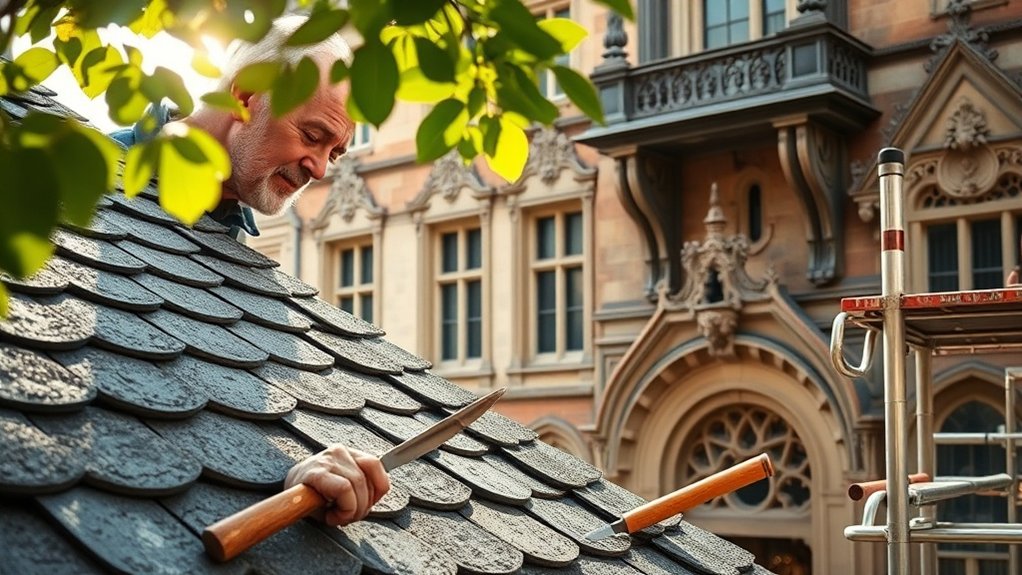
When looking for roofers for listed buildings in the UK, it’s crucial to choose those with substantial experience in heritage restoration.
Opt for professionals who specialise in heritage craftsmanship, utilising authentic materials such as reclaimed slate and clay tiles for lasting durability. Their skills in specialist lead work techniques are vital for effectively weatherproofing historic roofs. Additionally, they should be familiar with preservation of authenticity to ensure that the restoration aligns with the building’s historical significance. Compliance with Listed Building Consent is essential to protect the property’s character.
Seek roofers who are adept at assessing and conserving original timber structures to prevent rot while preserving their integrity. They should carry out thorough roof condition surveys to spot potential issues early, ensuring proper conservation.
A good roofer will know how to balance the preservation of character-defining features with structural stability. Ultimately, those who successfully blend traditional methods with modern solutions will be best equipped to meet your heritage restoration needs.
Important Certifications and Accreditations
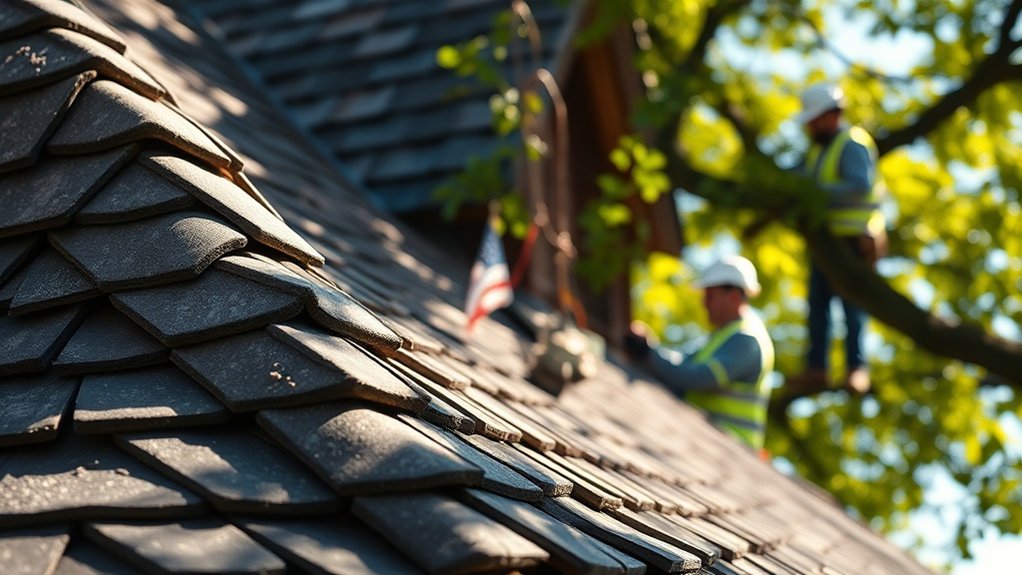
When looking for qualified roofers for listed buildings, their certifications and accreditations are crucial indicators of their expertise in heritage restoration.
For example, contractors certified under the NFRC CPS Scheme can self-certify that their roofing work complies with modern standards while preserving the building’s historic character. Additionally, all roofing projects on listed buildings must still comply with Building Regulations to ensure safety and integrity.
Accreditations like the Competent Roofer Scheme allow roofers to sign off on work that meets Building Regulations, which is particularly important for listed properties. Furthermore, Heritage Skills CSCS cards and membership in the NFRC Heritage Register demonstrate that roofers have received specialised training in traditional methods.
These credentials ensure your chosen roofer has the skills and knowledge needed to protect and enhance your historic building.
Legal Knowledge and Regulatory Compliance

Understanding the legal requirements for roofing projects on listed buildings is crucial, as failing to obtain the necessary consents can result in hefty penalties.
Here are the key obligations to keep in mind:
- Listed Building Consent (LBC) is required for most alterations to roofs.
- Planning Permission may be necessary for significant changes or works in conservation areas.
- Emergency repairs typically don’t need consent, but it’s best to check beforehand to avoid any complications.
- Non-compliance can lead to enforcement actions, including fines and orders to reverse changes.
Engaging with local authority conservation officers and professionals early in the process can clarify these regulations. Additionally, working with specialists who have heritage roofing experience ensures that all legal nuances are addressed.
Sourcing Authentic Materials and Techniques

After understanding the legal requirements for roofing projects on listed buildings, the next vital step is sourcing authentic materials and techniques.
Prioritise traditional materials like natural slate, handmade clay tiles, and thatch, as these ensure authenticity. Steer clear of modern synthetic alternatives that could undermine the building’s historical integrity.
Seek out suppliers who can provide documented provenance from reputable quarries or artisans, ensuring that the materials are suitable for the region and historically accurate.
It’s also essential to hire craftsmen experienced in traditional methods, as they’re familiar with the specific laying patterns and techniques that promote durability. Additionally, ensure that the craftsmen adhere to local planning regulations to maintain compliance with heritage guidelines.
Effective Project Management and Coordination

When embarking on a roofing project for a listed building in the UK, effective project management and coordination are crucial due to the complexities involved.
Here are key priorities to consider:
- Create detailed project timelines that take into account heritage-specific restrictions.
- Engage with stakeholders, such as conservation authorities and building owners, to ensure transparency throughout the process.
- Use phased scheduling to reduce disruption and ensure compliance with local regulations.
- Develop contingency plans for unexpected delays, such as adverse weather or the discovery of heritage assets.
These steps will help keep your project on track, align with preservation goals, and honour the historical significance of the building.
Frequently Asked Questions
How Long Does the Restoration Process Typically Take for Listed Buildings?
Restoration timelines for listed buildings usually span from six months to several years. The duration depends on the building’s size, condition, and complexity. For instance, a small cottage might take less time than a large manor house. Factors like obtaining necessary permissions and sourcing traditional materials can significantly affect completion dates.
What Insurance Should Heritage Roofers Carry for Their Work?
Heritage roofers must carry essential insurance to safeguard their work and protect against potential risks. Key policies include roofing liability, public liability, and employer’s liability coverage. For instance, roofing liability covers damages that may occur during a project, while public liability protects against claims from third parties, such as property damage or injury. Employer’s liability is crucial if you have staff, as it covers workplace injuries. Having the right insurance is vital for ensuring both your business and the heritage structures you work on are well protected.
Are There Specific Warranties for Heritage Roofing Materials Used?
Yes, there are specific warranty types for heritage roofing materials, focusing on the longevity of the materials. These warranties cover defects and the quality of installation, ensuring your investment in authentic materials is safeguarded against future issues while maintaining historical integrity. For instance, if you choose traditional slate tiles, the warranty might protect you against any cracking or fading over time, giving you peace of mind for your period property.
How Do Roofers Handle Unexpected Structural Issues During Restoration?
When unexpected structural issues occur, roofers carry out comprehensive assessments to identify hidden problems. They use proven restoration techniques to tackle these defects, prioritising the building’s integrity while adhering to heritage conservation guidelines. For instance, if they discover rotting timber, they will replace it with suitable materials that match the original structure. This approach ensures that the restoration is both effective and respectful of the building’s history.
What Are the Common Costs Associated With Heritage Roofing Projects?
Heritage roofing projects can be quite costly due to the need for specialised materials and skilled tradespeople. When budgeting, consider the expense of high-quality materials, detailed installation processes, compliance fees, and any necessary structural repairs. For example, using authentic slate tiles or reclaimed timber can significantly increase costs. It’s essential to estimate these expenses accurately to ensure a successful restoration.
Conclusion
When restoring a listed building, finding the right specialist roofers is essential to preserving its history. Look for experienced professionals who have the necessary credentials to ensure that the work is done correctly. This isn’t just about structural integrity; it’s about maintaining the stories behind the materials used. Each slate and beam has its own history, and choosing the right roofer can help keep those stories alive for future generations.


