
DIY Roof Cleaning Tips: What to Use and Avoid
To clean your roof effectively, use a DIY soft wash system with a diluted sodium hypochlorite solution. Avoid high-pressure washing, as it can damage tiles, and steer clear of undiluted bleach, which can harm your roof materials and any surrounding plants. Always wear safety gear, ensure your ladder is set up correctly, and inspect the roof for any damage before you begin. Cleaning in spring or autumn often yields the best results. Keep these tips in mind for a safe and efficient cleaning process.
Key Takeaways
- Use a diluted sodium hypochlorite solution (1:3 bleach to water) for effective cleaning, and consider adding surfactants for improved results.
- Avoid high-pressure washing, as it can damage roofing materials and may void your warranty.
- Consider investing in a DIY soft wash system, which offers a safe and effective way to clean your roof without harsh methods.
- Regularly check your roof for issues like missing or cracked tiles before cleaning to avoid causing further damage.
- Clean your roof during optimal weather conditions, preferably in spring or autumn, to maximise the effectiveness of your efforts.
Essential Safety Gear for Roof Cleaning
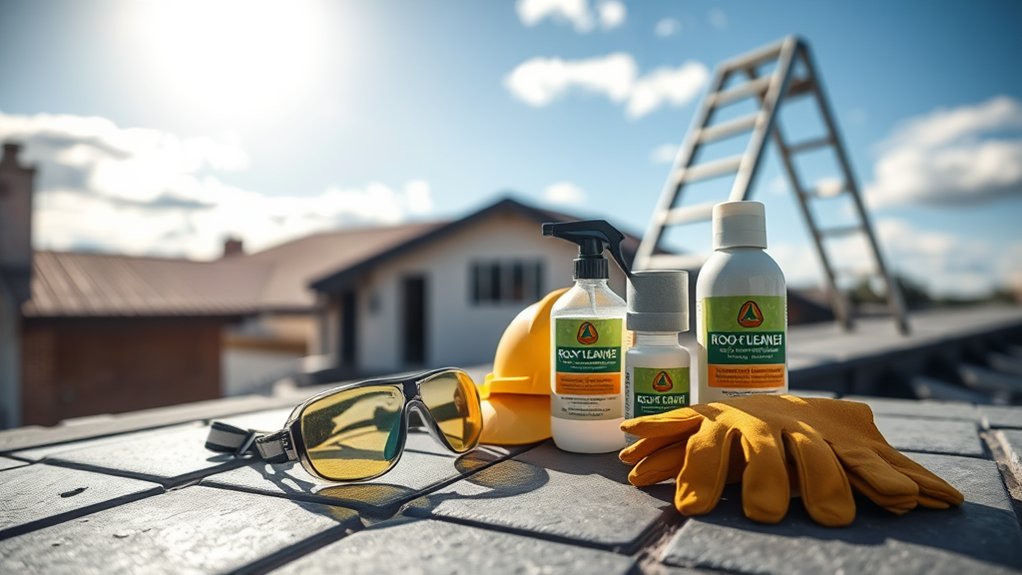
When cleaning roofs, wearing the right safety gear is crucial to protect yourself from hazards.
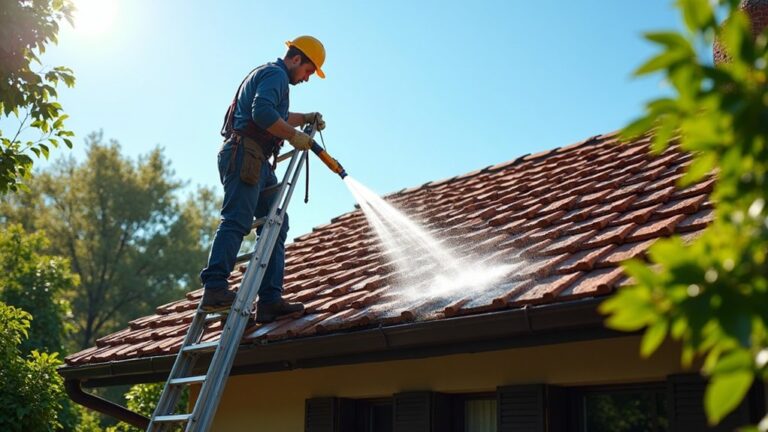
Start with fall protection systems, such as safety harnesses, lanyards, and carabiners, to prevent falls from steep or slippery roofs. Personal protective equipment (PPE) is also important; ensure you have hard hats, gloves, and non-slip footwear. It’s vital that your gear is resistant to chemicals, as you’ll be using various cleaning solutions. Additionally, consider investing in a safety kit designed for fall prevention to enhance your overall safety measures. Proper installation, as highlighted in professional roofing practices, includes adhering to safety protocols to minimize risks during maintenance tasks.
Regularly check your equipment for wear and tear before each job. Incorporating safety training into your routine will help you understand proper procedures. Always ensure you have secure anchor points—this is non-negotiable. By prioritising safety gear, you protect yourself and ensure a successful roof cleaning job.
Proper Ladder Setup and Safety
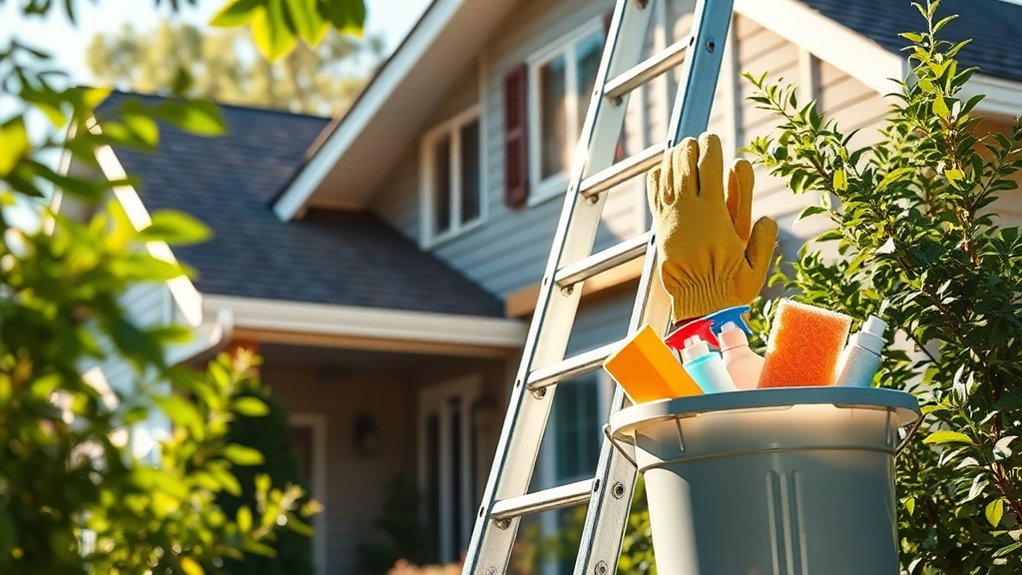
When setting up your ladder, ensure it’s positioned on a stable and level surface to avoid slips or falls. Follow the 4-to-1 rule for the correct angle: place the base one foot away from the wall for every four feet of height. Additionally, extend the ladder at least three feet above the roof edge for added safety when climbing. Regular ladder inspections are essential to ensure there are no damages that could lead to accidents during use.
Ladder Placement Stability
For a safe and effective roof cleaning experience, proper ladder placement is crucial. Follow these techniques to ensure stability:
| Tip | Details |
|---|---|
| Stable Base | Position the ladder on level ground. |
| Clear Area | Ensure the area is free of debris. |
| Assistance | Have someone steady the ladder if necessary. |
| Avoid Gutters | Never lean against gutters for support. |
| Three Feet Rule | Extend the ladder at least three feet above the roofline. |
Before using your ladder, conduct a thorough inspection for any damage. By following these guidelines, you’ll create a safer environment for yourself and others while cleaning your roof. Remember to inspect the ladder for wear, damage, or instability before use to further enhance safety.
Proper Ladder Extension
Proper ladder extension is crucial for ensuring safety and stability when cleaning your roof. When choosing a ladder, opt for extension ladders due to their adjustability.
Measure the height of your roof and ensure the ladder extends at least three feet above the gutter to avoid overreaching. Adjust the sections carefully for better stability and select a ladder with the right duty rating for your weight and equipment.
Consider using stabilisers or standoff devices for added security. Always inspect the ladder for damage before use, and maintain three points of contact while climbing.
If possible, enlist someone to assist you during setup for extra safety. Paying attention to these details will help ensure a safer roof cleaning experience.
Evaluating Weather Conditions
Before cleaning your roof, check the weather to ensure it’s suitable.
Aim for temperatures above freezing for at least four hours, and steer clear of extreme heat that can make cleaning products evaporate too quickly.
Keeping an eye on the forecast not only improves effectiveness but also ensures your safety while you work.
Ideal Weather Conditions
When it comes to roof cleaning, picking the right weather is essential for the best results. Ideally, aim for temperatures between 10°C and 30°C to ensure your cleaning products perform well. Avoid cleaning during rain or high humidity, as these conditions can dilute your chemicals and prolong drying time. Wind speeds should be kept below 16 km/h for precise application.
| Weather Factor | Ideal Conditions | Avoid Conditions |
|---|---|---|
| Temperature | 10°C – 30°C | Below 0°C or above 30°C |
| Humidity | Low humidity | High humidity |
| Wind Speed | Less than 16 km/h | Strong winds |
| Sun Exposure | Moderate (UV index 5-7) | Direct midday sun |
| Precipitation | No rain forecast for 24 hours | Rain or approaching storms |
Choose your day wisely for the best outcome!
Avoid Extreme Temperatures
To protect your roof from damage, it’s vital to avoid extreme temperatures during cleaning and maintenance. Sudden changes in temperature can lead to thermal shock, resulting in cracks and leaks. High humidity can worsen these problems, causing wood to warp and encouraging mould growth.
Here are some tips for effective roof care:
- Schedule cleanings during mild weather, preferably in the early morning or late afternoon.
- Avoid working in the heat of the day to lessen stress on roofing materials.
- Don’t clean immediately after a cold night, as this can cause thermal shock.
- Keep an eye on weather forecasts to steer clear of sudden temperature spikes that could harm your roof.
- Consider the impact of moisture and drainage management on your roof’s longevity, as proper care can prevent further issues.
Inspecting Your Roof Before Cleaning

Before cleaning your roof, it’s crucial to carry out a thorough inspection to ensure safety and spot any potential issues.
Start with a checklist to assess the condition of the roof. Look for any missing, cracked, or curling tiles that might expose the underlayment. Check for moss or debris that could cause rot.
Be on the lookout for sagging areas, which may indicate structural problems. Inspect the gutters for blockages and ensure they’re securely attached.
Take note of any rust or corrosion on flashing and fasteners. Finally, check the seals around roof penetrations for any gaps. Ensuring you’re aware of contractor licensing status can also help you identify if professional assistance is required for any found issues.
Addressing these issues beforehand will help avoid complications during cleaning and keep your roof in good condition.
Recommended Cleaning Tools and Equipment

When preparing for a roof cleaning project, having the right tools and equipment is essential.
Investing in a DIY soft wash system ensures a gentle yet effective clean. Here are the key items you’ll need:
- 12V pump: Efficiently powers your cleaning system.
- Polybraid hose: Ideal for delivering cleaning solutions over longer distances.
- Ball valve gun: Allows precise control over spray pressure.
- 55-gallon drum: Suitable for mixing and storing eco-friendly cleaning solutions.
These tools not only enhance cleaning effectiveness but also help maintain your roof’s integrity.
Always prioritise safety and opt for biodegradable solutions to protect both your home and the environment during your project.
Choosing the Right Cleaning Solutions
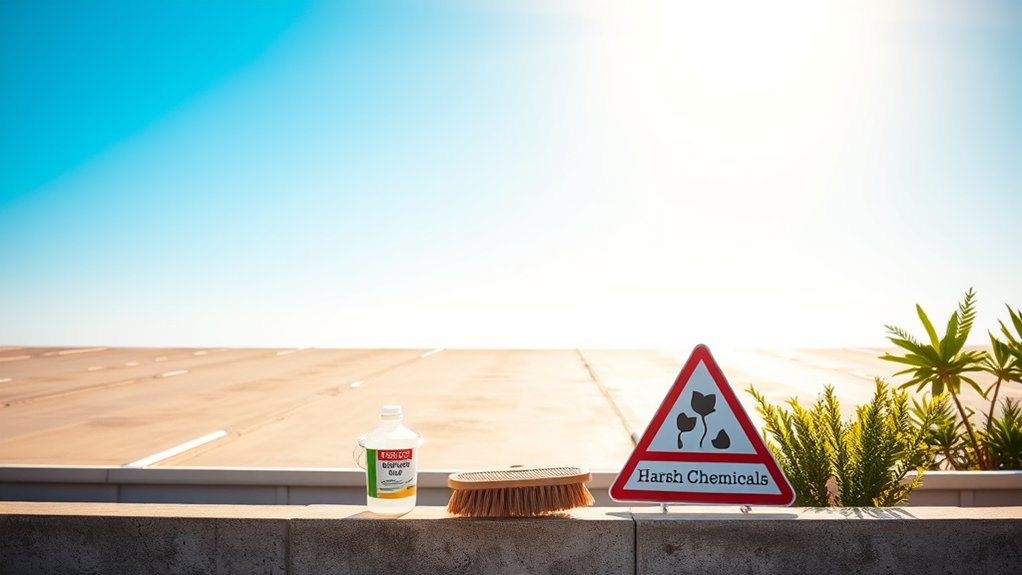
Choosing the right cleaning solutions is crucial for maintaining your roof without causing damage. Start with a diluted sodium hypochlorite solution by mixing one part bleach with three parts water. This ratio provides effective cleaning while reducing the risk of harm to your roof.
Adding surfactants can improve the solution’s efficacy, but ensure you store it in a cool, dark place to keep it potent.
Consider eco-friendly options like oxygen-based cleaners, which are safer to use around plants and pets. Depending on the state of your roof, adjust your cleaning frequency to avoid excessive algae and moss buildup.
Always rinse thoroughly after cleaning to protect your plants and soil from chemical residues. Careful preparation and ingredient selection lead to a safer and more effective roof cleaning process.
Cleaning Methods to Avoid
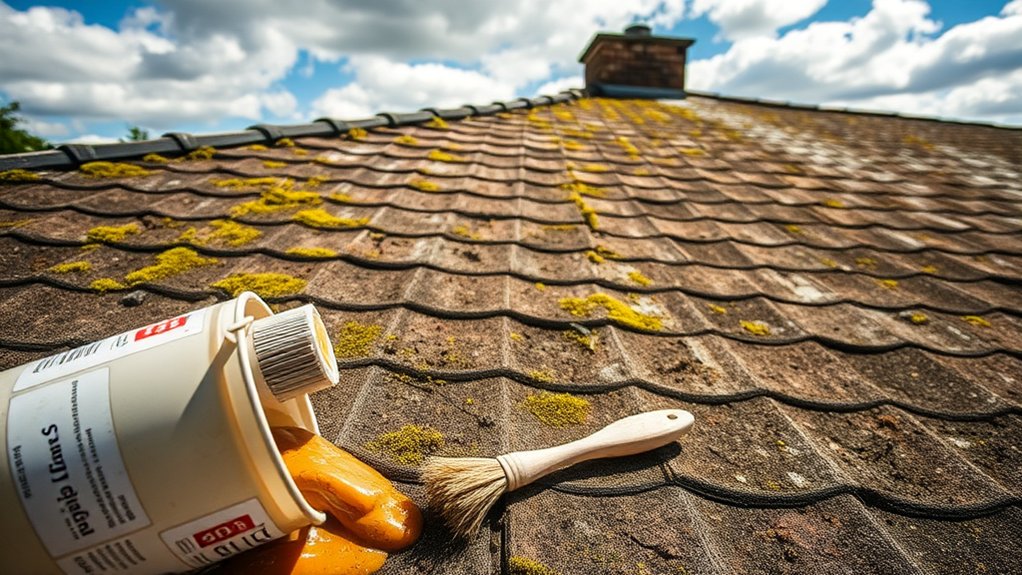
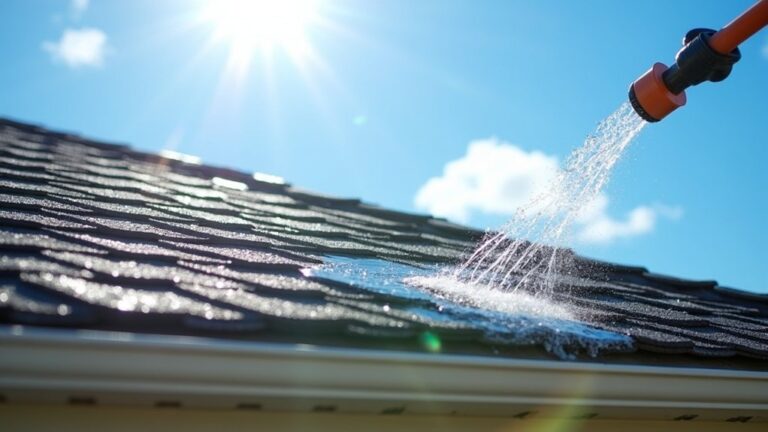
When cleaning your roof, avoid high-pressure washing as it can damage your tiles and potentially void warranties.
Undiluted bleach can harm your roofing materials and surrounding plants, while abrasive metal tools may loosen tiles or cause other unintended damage.
High-Pressure Washing Risks
High-pressure washing may seem like an effective way to clean your roof, but it carries significant risks that could lead to expensive damage.
- High pressure can dislodge or crack tiles, creating openings for leaks.
- Water can be forced beneath roofing materials, increasing the likelihood of water intrusion.
- Fragile materials like cedar shingles and slate are especially vulnerable to pressure damage.
- While it might improve appearances temporarily, pressure washing can mask serious issues like mould growth and accelerated wear.
Rather than jeopardising your roof’s integrity, consider gentler cleaning methods that safeguard your investment.
Remember, maintaining your roof isn’t just about looks; it’s crucial for the safety and longevity of your home.
Make informed choices to benefit both your roof and your entire property.
Undiluted Bleach Damage
Using undiluted bleach for cleaning roofs can cause significant and expensive damage. Its harsh chemicals can penetrate cracks and exacerbate existing structural problems. It can strip protective granules from tiles, leading to discolouration and increased vulnerability to leaks. Consider safer alternatives, such as eco-friendly cleaning solutions, to reduce these risks. Regular roof inspections are crucial to identify any damage early and maintain the roof’s integrity.
| Damage Type | Impact | Recommended Action |
|---|---|---|
| Chemical Impact | Weakens tiles | Use diluted solutions |
| Granule Stripping | Exposes tiles to damage | Opt for gentle cleaners |
| Discolouration | Affects appearance | Choose eco-friendly methods |
| Health Risks | Irritates skin and lungs | Wear protective gear |
| Environmental Concerns | Harms soil and water sources | Control runoff |
Abrasive Metal Tool Hazards
Many homeowners underestimate the risks of using abrasive metal tools when cleaning their roofs, particularly when they’ve already recognised the dangers of harsh chemicals like undiluted bleach.
Using abrasive tools can cause significant damage, resulting in ruined roofs and voided warranties.
Avoid these methods:
- Wire brushes that create deep scratches
- Sandpaper that removes finishes
- Steel wool that leaves rust-inducing residue
- Cleaning powders that can etch surfaces
Instead, choose safer cleaning options.
Use soft-bristle brushes, microfiber cloths, and gentle cleaning solutions to maintain your roof’s integrity.
Proper roof maintenance with the right tools not only extends its lifespan but also helps you avoid costly repairs in the future.
Make informed choices for a safe and effective cleaning experience.
Effective Application Techniques

To clean your roof effectively, it’s crucial to apply the cleaning solution properly for even coverage and to minimise damage.
Begin by assessing your roofing material and gathering safe access equipment. Remove larger debris using a soft-bristle brush to prepare the surface.
Work in small sections, applying the solution evenly and avoiding puddles. Let it sit for 15-20 minutes to loosen stains, gently scrubbing any stubborn spots as necessary.
Rinse with low water pressure, being particularly careful around delicate areas. Keep an eye on the weather and don’t rush the job.
This careful method will improve results while protecting your roof and the environment.
Timing Your Roof Cleaning
When’s the best time to clean your roof? It mainly hinges on the seasons.
Spring and autumn are ideal, but keep these tips in mind:
- Clean in spring to tackle winter debris and moss growth.
- Autumn is perfect for clearing leaves before frost sets in.
- Opt for dry, clear days for effective cleaning; avoid rain or snow.
- Be mindful of local climate; wetter areas may require more frequent cleanings.
Benefits of Regular Roof Maintenance

Regularly cleaning your roof not only keeps it looking smart but also offers significant benefits that can improve your property’s overall condition.
By investing in roof maintenance, you can spot and fix minor issues before they turn into expensive repairs. This proactive approach can save you over £8,000 annually compared to waiting until problems arise.
A well-maintained roof enhances energy efficiency, lowering your heating and cooling bills and promoting sustainability.
Moreover, routine upkeep can extend your roof’s lifespan, helping it last an average of 21 years instead of just 13.
Regular maintenance also deters pests and mould, creating a healthier living environment.
Ultimately, these savings and advantages lead to a safer, more efficient property for you and your occupants.
Eco-Friendly Cleaning Alternatives

Eco-friendly cleaning alternatives for your roof not only safeguard the environment but also extend the lifespan of your roofing materials.
By opting for eco-friendly products and sustainable methods, you contribute positively. Here are some effective options:
- Soft Washing: This method uses low-pressure water along with biodegradable cleaners to safely eliminate grime without harming your roof shingles.
- Vinegar Solutions: A natural, non-toxic cleaner that effectively tackles algae and mould, and it’s easy on the wallet.
- Hydrogen Peroxide: A potent stain remover that leaves no harmful residues, making it safe for your garden.
- Manual Scrubbing: The truly chemical-free approach that relies on elbow grease, ensuring no harmful runoff affects your surroundings.
Common Mistakes to Avoid During Roof Cleaning

Roof cleaning may seem simple, but there are common mistakes that can lead to costly damage and safety risks. One major issue is using the wrong tools; high-pressure washers can strip protective granules from shingles, leading to cracks and potentially voiding your warranty.
Instead, consider using soft washing or manual cleaning methods.
Another pitfall is misapplying cleaning techniques; not all roofs need the same treatment, and taking shortcuts could overlook serious problems.
Additionally, harsh chemicals can damage your roof and harm surrounding plants, so it’s best to use gentle, eco-friendly options.
Safety is paramount—working on unstable ladders or on your own increases the risk of falls.
Regular roof inspections and customised cleaning schedules can help maintain your roof’s integrity and prolong its lifespan, helping you avoid these common cleaning mistakes.
Frequently Asked Questions
How Often Should I Clean My Roof?
Aim for an annual roof cleaning to ensure proper maintenance. It’s particularly important in damp areas where moss and algae can flourish, so regularly check for debris and any signs of growth.
Can I Use Vinegar Instead of Bleach?
Yes, you can use vinegar as a substitute for bleach. It’s safer for your roof and better for the environment, making it a great choice for cleaning without the risk of damage or harmful chemicals. For instance, if you’re tackling mould on your patio, a vinegar solution can effectively do the job without the harshness of bleach.
What if My Roof Has Pre-Existing Leaks?
If your roof has pre-existing leaks, it’s essential to first inspect for any damage. Address necessary repairs before proceeding with any cleaning. Taking this proactive approach will help you avoid further complications and protect your home effectively. For instance, if you notice damp patches on your ceiling, it’s a sign that immediate action is needed.
Is It Safe to Walk on My Roof?
Walking on your roof is like walking a tightrope; safety is crucial. Always take precautions—check for hazards, use proper fall protection, and keep three points of contact to ensure your safety while working at height.
How Can I Tell if My Roof Needs Cleaning?
To determine if your roof needs cleaning, check for moss growth and algae stains. These signs can indicate potential damage. Look for any discolouration, debris build-up, or cracked tiles, as these issues can worsen if left unattended.
Conclusion
With the right precautions and tools, you can keep your roof clean and in good condition. Regular roof cleaning can extend the life of your shingles by up to 20%, saving you money and improving your home’s appearance. So, get equipped, prioritise safety, and make roof cleaning a regular part of your home maintenance to enjoy these benefits.