

Moss Prevention Strategies for Long-Lasting Roofs
To prevent moss from damaging your roof, start by trimming back overhanging branches to allow more sunlight to reach the surface. Opt for moss-resistant roofing materials, such as metal or specially treated asphalt shingles. Consider installing copper or zinc strips along the roof’s ridge, as these can effectively deter moss growth.
Establish a regular maintenance routine, including inspections and clearing debris, particularly in autumn and spring. If you live in a wet climate, ensure proper ventilation and drainage to help keep your roof dry. For more tips on extending your roof’s lifespan, explore additional effective techniques.
Key Takeaways
- Opt for roofing materials like metal or asphalt shingles that come with moss-resistant coatings to help reduce moisture retention and discourage moss growth.
- Regularly trim overhanging trees and remove debris to improve sunlight exposure and decrease moisture build-up on your roof.
- Consider installing copper or zinc strips along the ridges of your roof. These metals release ions when it rains, which can effectively prevent moss.
- Schedule regular inspections and maintenance, including clearing gutters and drainage systems, to catch any moss issues early on.
- Employ seasonal strategies, like tidying up fallen leaves in autumn and conducting thorough inspections in spring, to stay ahead of moss growth.
Environmental Control Measures
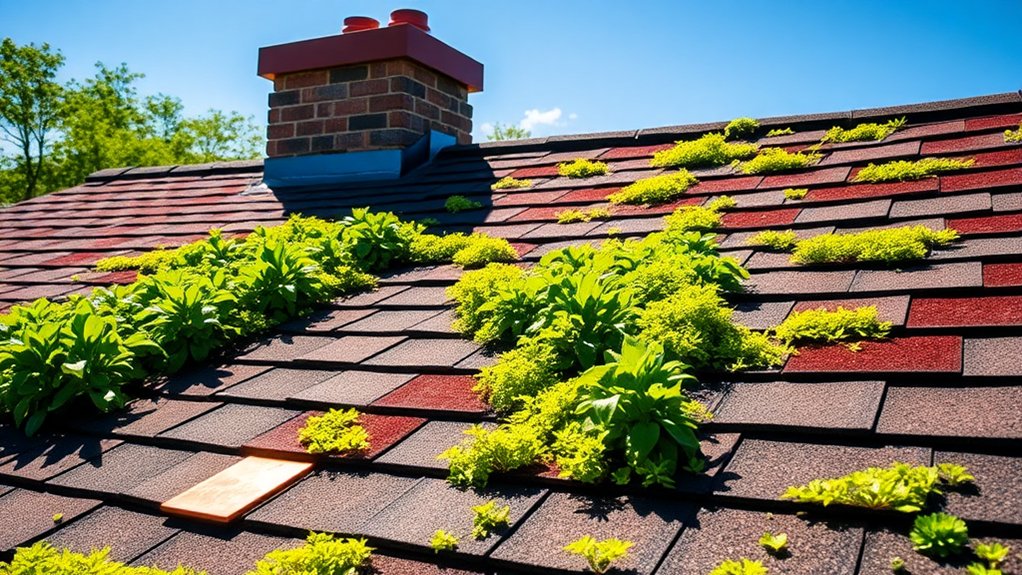
To effectively prevent moss growth on roofs, implement several environmental control measures that increase sunlight exposure and reduce moisture retention.
Start by managing shade; prune overhanging branches to allow sunlight to reach the roof. Thinning trees, rather than removing them entirely, helps maintain the ecosystem while reducing leaf debris that can retain moisture. Additionally, moss thrives in damp environments, making it essential to minimize moisture retention on your roof. Regularly schedule inspections to identify and address any damp areas that could foster moss growth.
Regularly clear away leaves and organic debris to minimise moisture issues. Ensure your landscaping directs water runoff away from roofs to prevent dampness.
Avoid dense plantings near buildings that can create humid microclimates, which promote moss growth.
Roofing Material Selection

Choosing the right roofing materials is vital for preventing moss growth and ensuring your roof lasts. Here are some options to consider:
- Metal Roofing: Materials like galvanised steel and aluminium are non-porous and resist moss due to their durability and low moisture retention. Additionally, roof moss thrives in damp, shaded environments, making metal roofing an excellent choice for such conditions. Metal roofing can last 50+ years with proper installation and maintenance, offering exceptional weather resistance against various elements.
- Asphalt Shingles: Opt for those treated with 3M™ Copper Granules for extra protection against moss and algae.
- Modern Shingles: Look for options with moss-resistant coatings to boost compatibility and defence against growth.
- Clay and Concrete Tiles: These can encourage moss growth in damp conditions, so regular cleaning is necessary.
Metallic Preventative Installations
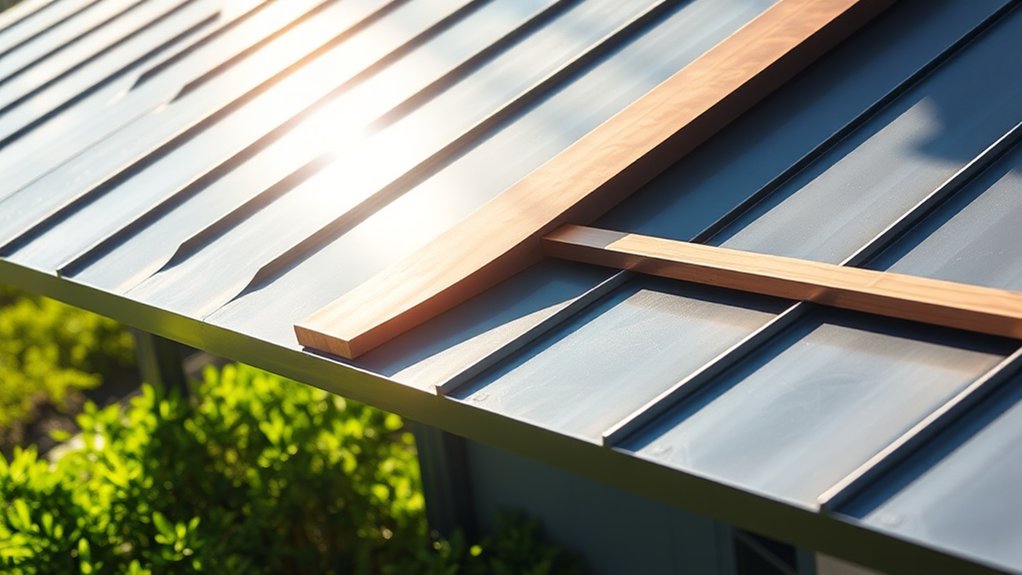
Many homeowners turn to traditional methods for moss prevention, but metallic installations provide an effective and long-lasting solution.
Copper strips and zinc are particularly effective at inhibiting moss growth. When placed along your roof’s ridges, these metals release ions during rainfall, creating an unfavourable environment for moss and algae spores. This natural defence slows down moss growth and prevents colonisation without the need for chemicals. Additionally, trimming trees around your home can further enhance the effectiveness of metal strips by allowing more sunlight to reach your roof, reducing the likelihood of moss growth. Regular roof inspections can help detect early signs of moss and ensure continued effectiveness of your preventative measures.
For the best results, ensure the strips are securely attached and cover the entire ridge. While galvanised steel is a more affordable option, copper and zinc offer better protection.
Regular inspections will help maintain their effectiveness, enhancing your roof’s durability and appearance while being kind to the environment.
Regular Maintenance and Cleaning
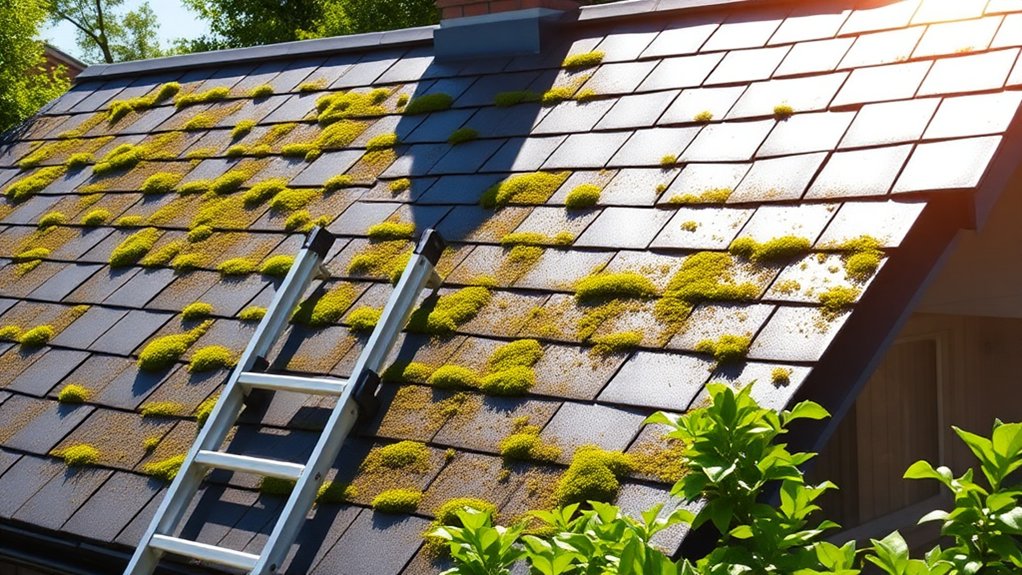
To keep your roof free from moss, establish a regular maintenance routine that includes periodic inspections and gentle moss removal methods.
It’s crucial to clear away organic debris, such as leaves and twigs, to prevent moisture accumulation that encourages moss growth.
Periodic Roof Inspections
Regular roof inspections are crucial for maintaining the strength and lifespan of your roofing system.
To make the most of your inspections, consider these straightforward tips:
- Inspect your roof at least once a year, or twice a year if it’s over ten years old.
- Arrange for additional inspections after significant weather events to identify any potential damage.
- Check drainage systems and gutters regularly to avoid blockages that can lead to moss growth.
- Keep a record of your roof’s condition; this can be invaluable for insurance claims or if you decide to sell your property.
Gentle Moss Removal Techniques
Moss removal is a crucial aspect of roof maintenance, ensuring your roof stays intact and lasts longer.
Choose a cloudy day for your task to prevent cleaning solutions from drying too quickly. Wear gloves and sturdy, slip-resistant shoes, and use a secure ladder for safety.
Prepare your cleaning solution—either a store-bought moss killer or a simple DIY mix of bleach and water.
Begin by gently wetting the mossy areas with low-pressure water to loosen it up. Use a soft bristle brush to scrub the moss away, working from the top of the roof down to avoid dislodging any shingles.
Finally, rinse the area thoroughly to remove any remaining moss and cleaning solution.
Regular maintenance every 1 to 2 years will help keep your roof in good condition.
Organic Debris Clearance Routine
A regular organic debris clearance routine is vital for preserving the integrity and lifespan of your roof.
To effectively manage debris removal, incorporate the following steps into your maintenance schedule:
- Inspect your roof twice a year for any debris build-up, especially in valleys and around chimneys.
- Clear gutters every month during peak seasons to avoid clogs that can lead to moisture retention.
- Use the right tools, such as leaf blowers and soft-bristle brooms, to safely remove debris without causing damage to roofing materials.
- Schedule a thorough roof wash every 2 to 3 years, increasing the frequency if your home is in a heavily wooded area.
Seasonal and Climate-Specific Strategies
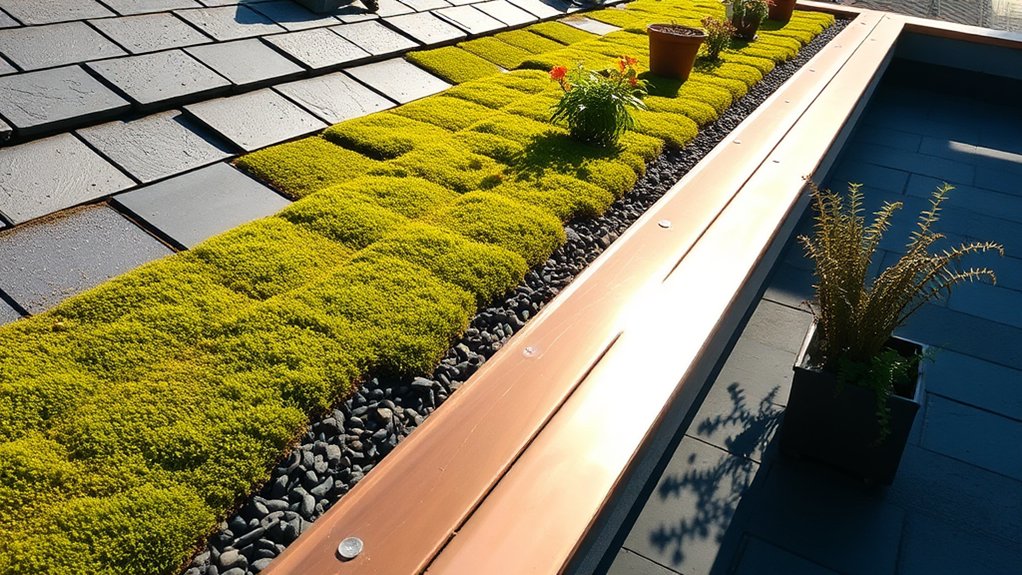
Adopting seasonal and climate-specific strategies for moss prevention can significantly improve the appearance and lifespan of your roof.
In autumn, clear leaves and debris to minimise moisture, which encourages moss growth. Perform regular inspections in spring to catch early signs of moss, allowing for prompt action.
During summer, remove any existing moss while it’s dormant, making it easier to treat.
In shady areas, trim overhanging branches to increase sunlight exposure. For regions with high humidity, ensure regular cleaning and consider installing zinc strips to deter moss.
In rainy climates, prioritise proper ventilation and drainage. In warmer areas, apply preventative treatments consistently.
Tailoring your approach to the season and climate can greatly reduce the risk of moss on your roof.
Professional Consultation and Inspection
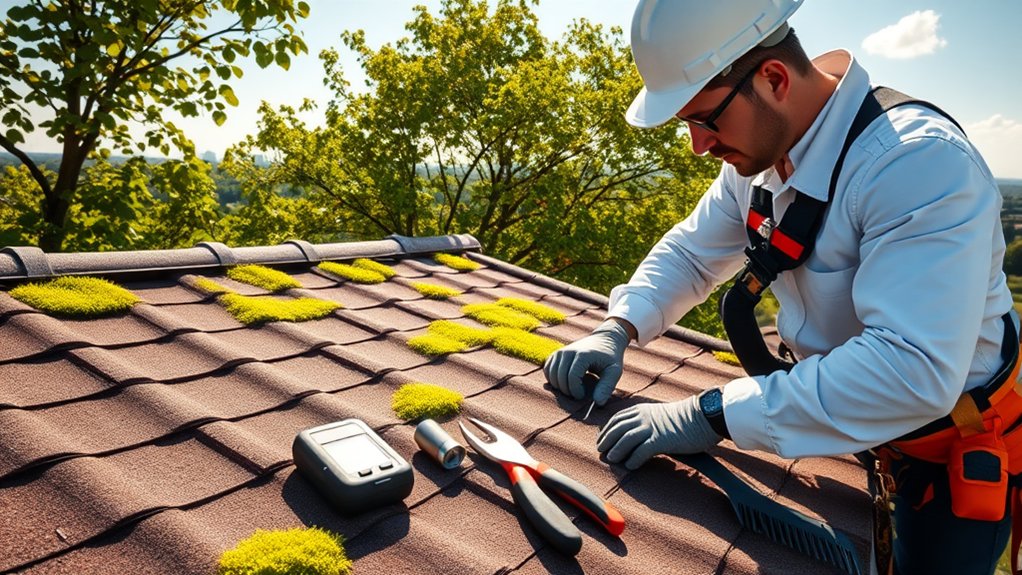
Engaging a professional for consultation and inspection can significantly improve the health and longevity of your roof. Their expertise offers several key benefits:
- Expert Assessments: Professionals can pinpoint areas prone to moss growth, ensuring a comprehensive evaluation.
- Tailored Strategies: They provide bespoke solutions tailored to your roof’s specific condition and moss prevention requirements.
- Long-Term Planning: Experts can help you set up a regular maintenance schedule to keep your roof free from moss.
- Risk Assessment: They assess potential risks and recommend preventative measures to avoid expensive damage.
Frequently Asked Questions
How Often Should I Inspect My Roof for Moss?
You should inspect your roof at least twice a year, paying particular attention to moss growth. Here are some key tips for your inspection: check after severe weather conditions, and keep an eye on older roofs more frequently to avoid major problems down the line. Regular checks can help you catch any issues before they escalate.
Can Moss Damage My Roof Structure Over Time?
Moss can pose a serious threat to your roof over time. If left unchecked, it can lead to moisture build-up, wood rot, and ultimately, significant damage. For instance, if moss traps water against your roof, it can accelerate deterioration, especially in older structures. Regular inspections and prompt action are essential to maintain your roof’s integrity and ensure its longevity.
What Are the Signs of Moss Infestation on Roofs?
Signs of moss growth on your roof include green or brown stains, fuzzy textures, and dark patches. Regular maintenance is key to spotting these issues early, helping to prevent structural damage and prolonging your roof’s lifespan.
Is It Safe to Remove Moss Myself?
While removing moss yourself might seem appealing, it’s crucial to prioritise safety. Falls and injuries are common hazards. For example, using ladders can be risky if not done properly. It may be wiser to hire professionals who can safely manage moss removal and ensure your roof lasts longer without putting your safety at risk.
How Do I Choose a Reliable Roofing Contractor?
To select a reliable roofing contractor, start by checking their credentials, including relevant licences and insurance. Look for someone with experience in different roofing materials. Reading customer reviews can also help ensure you receive quality service and workmanship for your roofing project. For instance, if you’re considering slate roofing, make sure the contractor has a proven track record with that specific material.
Conclusion
To keep your roof free from moss and extend its lifespan, it’s important to adopt a mix of strategies. Think of your roof as a protective barrier; when it’s well-maintained and made from the right materials, it effectively repels moisture, reducing the chances of moss growth. Regular inspections and seasonal maintenance act like a robust defence, ensuring your roof remains in good condition. By taking these proactive steps, you can enjoy a durable roof that withstands the elements and keeps moss at bay.