
How to Verify the Credentials of a Roofing Contractor
To verify a roofing contractor’s credentials, start by checking their licensing through local council databases to ensure it’s valid and up-to-date. Request a Certificate of Insurance to confirm they have sufficient coverage. Gather references and read online reviews to assess their work quality. Always insist on a written contract that clearly outlines the project details and terms. Be wary of red flags like demands for large upfront payments or vague estimates. Taking these steps will help ensure you make an informed choice.
Key Takeaways
- Check the contractor’s licensing by looking up their business name, address, and licence number through local authority databases.
- Ask for a Certificate of Insurance to ensure they have sufficient coverage, including public and employers’ liability insurance.
- Gather testimonials and online reviews to evaluate the contractor’s reputation and quality of work from previous clients.
- Make sure there’s a written contract that clearly outlines the scope of work, timelines, costs, and payment terms to safeguard your interests.
- Watch out for red flags like vague estimates, requests for full payment upfront, or poor communication from the contractor.
Licensing Verification

When hiring a roofing contractor, it’s crucial to verify their licensing to ensure you’re making a safe and informed decision. Each region in the UK has its own regulations, so it’s important to understand the requirements in your area. Start by asking for the contractor’s business name, address, and licence number. Use these details to check the appropriate online portal or local authority database. Make sure the licence is valid, current, and specifically covers roofing work. Additionally, remember that each state manages its own business licenses, requiring you to consult state-specific websites for verification. Don’t just rely on the contractor’s claims; verify independently through official sources. Keep a record of your findings and look for any history of complaints or violations. This diligence helps protect you from unlicensed work and confirms that you’re hiring a qualified professional for your roofing project.
Insurance Verification
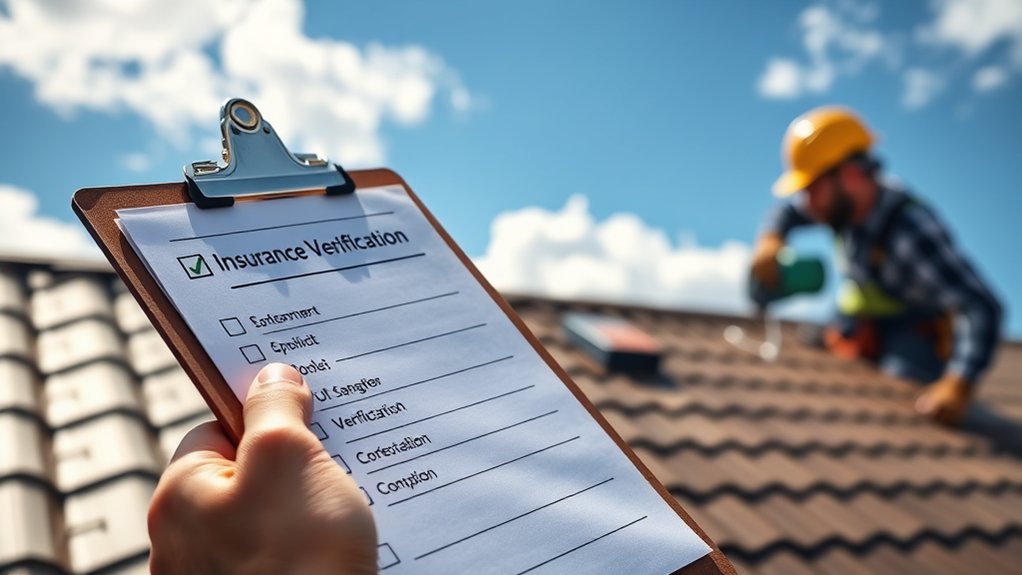
When hiring a roofing contractor, it’s crucial to verify their insurance for your own protection. Request their Certificate of Insurance to ensure they’ve sufficient cover for the job, including public liability and employers’ liability insurance. Checking these details not only protects your investment but also gives you peace of mind throughout the project. Valid insurance coverage is essential in safeguarding against potential mishaps that may occur during the roofing process.
Proof of Insurance
Proof of insurance is crucial for protecting your investment when hiring a roofing contractor. Before making any commitments, always ask for a current Certificate of Insurance (COI) to ensure adequate coverage.
Here’s what to look out for:
- Check that the contractor’s business name matches the policy details.
- Ensure the coverage period fits your project timeline.
- Confirm that both general liability and employers’ liability insurance are included.
- Be wary if the contractor hesitates to provide a COI; it’s a red flag.
- Contact the insurance provider to verify the policy’s validity and coverage limits. Additionally, it’s important to confirm the contractor’s insurance coverage with the insurance company to assess risk levels and ensure comprehensive protection.
Coverage Verification
Once you have verified a roofing contractor’s proof of insurance, the next step is to check the coverage. Ensure that the coverage types—such as public liability and employers’ liability—are suitable for your project. Contact the insurance provider listed on the certificate to confirm the policy’s current status, coverage limits, and any exclusions. Additionally, it’s crucial to confirm that the contractor has sufficient insurance coverage to mitigate risk during the roofing project.
Here’s a reference table for your convenience:
| Coverage Type | Recommended Limit |
|---|---|
| Public Liability | £1 million (residential) |
| Employers’ Liability | £500,000 |
Understanding these details will help you determine if the contractor’s insurance is fit for your needs and protects your project. Don’t hesitate to ask questions; clear communication ensures everyone is aligned.
Liability Protection Assurance
Securing liability protection is crucial for protecting your interests when hiring a roofing contractor.
Follow these key steps to ensure comprehensive insurance coverage:
- Request a Certificate of Insurance (COI) before any work begins.
- Check that the COI includes the contractor’s business name, active policy numbers, and the insurer’s contact information.
- Ensure the contractor has both Public Liability and Employers’ Liability insurance to avoid potential gaps in coverage.
- Contact the insurer directly to verify the policy status and details of the coverage.
- Review the contractor’s claims history to gauge their reliability and any associated risks.
By taking these steps, you can effectively assess risks and protect yourself from unexpected liabilities, creating a safer working environment.
Your peace of mind is worth it!
References and Reviews

When selecting a roofing contractor, references and reviews are invaluable in helping you make a sound choice. Testimonials from previous clients can confirm a contractor’s reputation and quality of work, fostering trust.
Given that 84% of people trust online reviews as much as personal recommendations, it’s essential to check multiple platforms like Google and Trustpilot. Contact recent clients to gather detailed feedback and ask specific questions about their experiences.
Look for common themes in reviews to assess reliability and professionalism. This approach reduces the risk of scams and increases the likelihood of a successful roofing project, providing you with peace of mind knowing others have had positive experiences. Additionally, prioritize client references to evaluate the contractor’s past performance and reliability.
Certifications and Industry Memberships
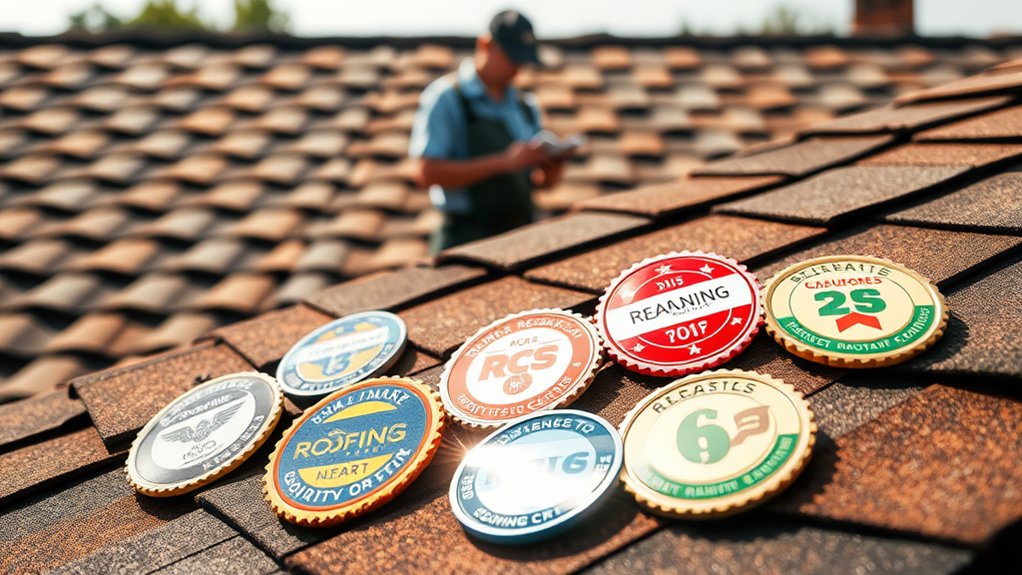
Certifications and industry memberships are essential indicators of a roofing contractor’s professionalism and expertise. Understanding their significance can help you select the right contractor for your project.
Here are some key indicators to consider:
- OSHA Safety Certificate: This shows a commitment to safe working practices.
- NRCA Pro Certification: This demonstrates knowledge of low-slope roofing systems.
- Memberships: Being part of organisations like the NRCA or RCAT ensures compliance with industry regulations.
- Ongoing Education: Memberships provide access to continual learning and updates on industry standards.
- Networking Opportunities: These promote best practices and innovations in roofing.
These credentials not only validate a contractor’s skills but also ensure they adhere to high standards of safety and quality. Additionally, verifying a contractor’s workmanship warranty terms can protect you against installation issues that may arise.
Contract and Documentation
When hiring a roofing contractor, a written contract is crucial to safeguard your interests and set clear expectations.
Ensure it includes warranty and liability details, so you know what’s covered should issues arise.
For example, if a leak occurs after the work is completed, having these details outlined can prevent misunderstandings and potential disputes later on.
Written Contract Requirements
A well-structured written contract is crucial for any roofing project, as it establishes clear expectations and safeguards both you and the contractor.
To ensure legal compliance and cover all necessary aspects, include the following elements:
- Contractor details, including their licence number and contact information
- A clear scope of work with timelines and costs outlined
- Payment terms to prevent misunderstandings
- Conditions for termination and processes for resolving disputes
- Proof of insurance and adherence to local regulations
Warranty and Liability Details
Understanding warranty and liability details is crucial for safeguarding your investment in a roofing project.
Begin by examining the types of warranties available, such as manufacturer and workmanship warranties. Be mindful of exclusions, like damage from storms or unapproved repairs, as these can significantly affect your coverage.
Next, check the contractor’s liability limits. Ensure they possess general liability insurance to cover property damage and workers’ compensation for employee injuries.
It’s wise to request proof of compliance with UK regulations, including a Certificate of Insurance. Additionally, look for surety bonds and any endorsements that name you as an additional insured, which can further protect your interests.
Red Flags and Warning Signs
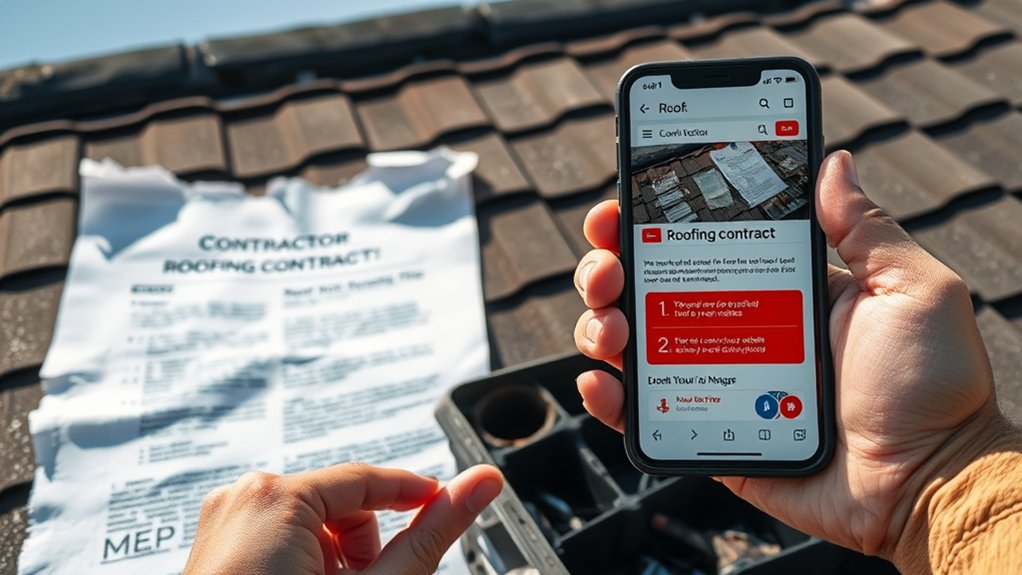
When searching for a roofing contractor, it’s essential to watch out for red flags and warning signs that may indicate unreliable or substandard service.
Spotting these indicators can save you time, money, and hassle.
- Lack of proper licensing: Always check their credentials.
- Vague estimates: If the details are unclear, it often means hidden costs.
- Demanding full payment upfront: This could signal financial issues.
- Poor communication: If your calls go unanswered, it reflects a lack of professionalism.
- Extremely low bids: Prices that are too good to be true often mean inferior materials.
Frequently Asked Questions
How Long Does the Credential Verification Process Typically Take?
The credential verification process usually takes anywhere from a few hours to a week. The duration depends on the type of credentials and the verification methods you select, as well as how quickly the relevant agencies and contractors respond. For instance, verifying a professional qualification might take longer than checking educational credentials.
What Should I Do if I Find Discrepancies in Credentials?
If you discover discrepancies in credentials, it’s crucial to act quickly. First, stop any ongoing work related to the issue. Next, reach out to the relevant authorities for guidance, and consider seeking legal advice if necessary. For instance, if you’re hiring a contractor and their qualifications don’t match what they claimed, it’s essential to address this before proceeding. Ensuring trustworthiness is key; tackling these discrepancies helps maintain your project’s integrity and shields you from potential liabilities or disputes down the line.
Can I Verify a Contractor’S Credentials Online?
Yes, you can verify a contractor’s credentials online through several resources. Various databases provide official details, such as licence status and any disciplinary records. This ensures that the contractor you are considering is legitimate and trustworthy. For instance, you can check the National Federation of Builders (NFB) or the Construction Industry Training Board (CITB) websites for reliable information.
What if a Contractor Refuses to Provide Their Credentials?
If a contractor refuses to provide their credentials, it raises serious concerns about their reliability. To protect yourself, do not proceed with any agreements. Always ensure you have verified documentation to ensure safety and accountability in your project. For instance, if a builder hesitates to show their qualifications, consider it a warning sign and look for someone who is transparent about their credentials.
How Often Should I Verify a Contractor’s Credentials?
“An ounce of prevention is worth a pound of cure.” It’s essential to verify a contractor’s credentials before each project, during contract renewals, and at least once a year. This ensures you receive quality service and peace of mind. For instance, if you’re hiring a builder for an extension, checking their qualifications and past work can save you from costly mistakes down the line.
Conclusion
When searching for a trustworthy roofing contractor, approach it like a detective on a case. Start by checking their licensing and insurance—these are essential credentials. Look into references and online reviews to gather insights, much like an investigator would. Don’t forget to verify any relevant certifications and industry memberships; these indicate a commitment to quality in the trade. Stay alert for any red flags to ensure your roof offers reliable protection. Trust your instincts, and your home will be all the better for it.