

Temporary Fixes for Roof Damage During Bad Weather
If you have roof damage during bad weather, it's essential to act swiftly to avoid further problems. Use waterproof tarpaulins to cover leaks, securing them with heavy objects like bricks or stones. For smaller gaps, roofing tape or sealant can serve as temporary fixes. Place plywood beneath any leaks to catch dripping water. Regularly check these temporary repairs until you can arrange for permanent solutions. Always prioritise safety by using the appropriate equipment and techniques while working. There's more important information to consider for effective repair strategies.
Key Takeaways
- Use waterproof tarpaulins to cover damaged areas, ensuring they extend at least 1.2 metres beyond the leak for proper protection.
- Apply roofing tape to seal small leaks or cracks from within the attic, so you don't have to venture onto the roof.
- Place plywood beneath leaks to catch any dripping water and minimise further damage to the interior.
- Secure tarps with heavy items, like sandbags, to keep them in place during windy weather.
- Fill small gaps or cracks with roofing cement or silicone sealant for extra protection until a professional can carry out repairs.
Assessing Weather Conditions Before Inspections
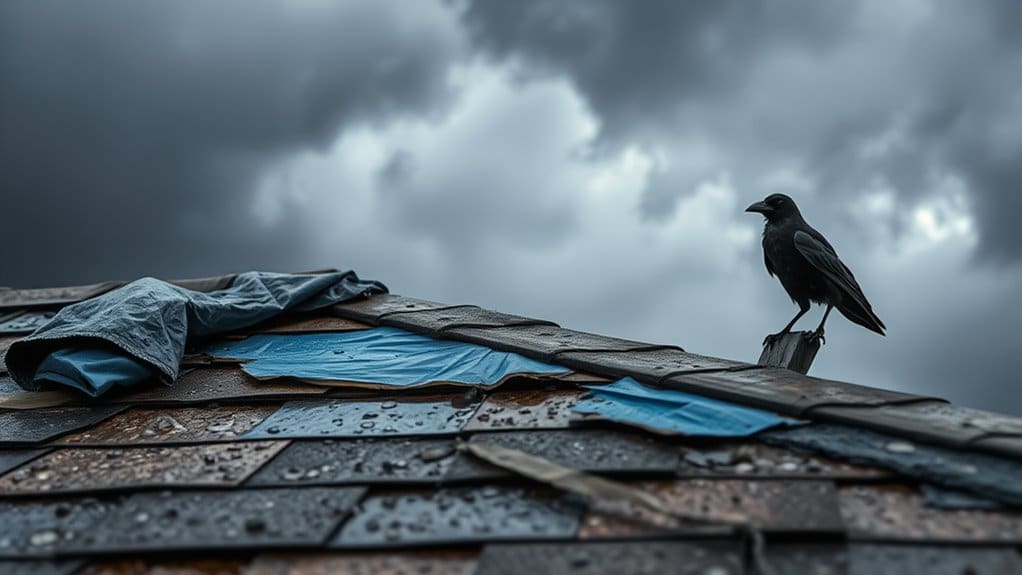
Before scheduling a roof inspection, it's crucial to check the weather conditions to ensure safety and accuracy.
Look for clear days with low wind and minimal chance of rain. High winds can remove shingles, while heavy rain can make it difficult to spot any damage. Additionally, keep in mind that timely roof damage assessments can help prevent costly repairs or replacements after storms. Regular inspections are essential to maintain structural integrity and can help identify potential issues before they worsen.
Familiarising yourself with local weather patterns can help you plan inspections during milder seasons.
Regularly checking your roof before stormy weather can identify weaknesses, allowing for timely repairs.
This proactive approach not only enhances safety but also helps maintain your roof's integrity, potentially saving you from costly repairs down the line.
Keep these tips in mind for a successful inspection.
Essential Ladder Safety Practices
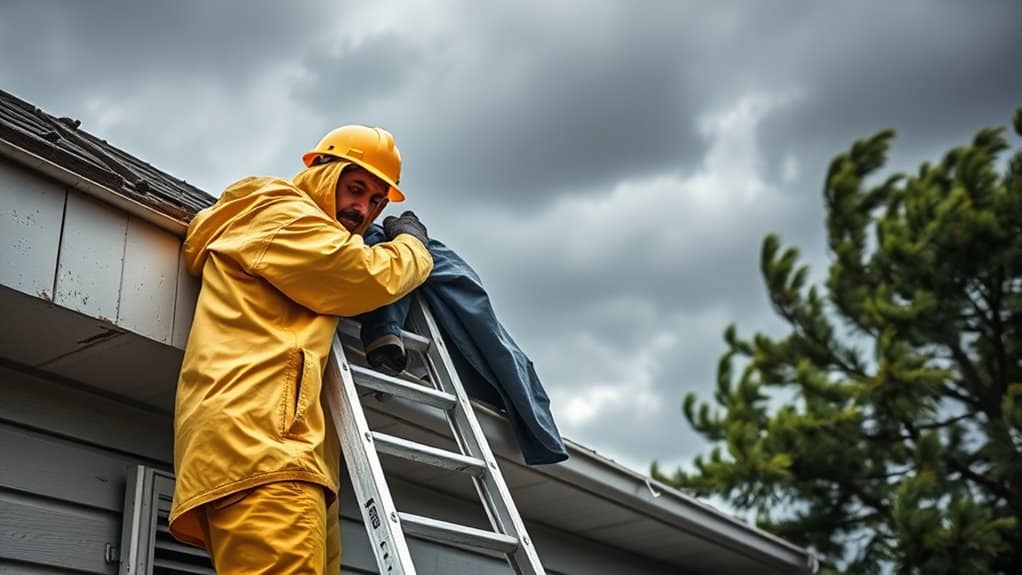
Ladder safety is crucial for anyone working on roofs, as improper use can lead to serious injuries. Choose the right type of ladder and set it up at a 4-to-1 slope for stability. Ensure the ladder extends at least three feet above the roof and is on level ground, clear of debris. Always secure the ladder at both ends, using stabiliser bars or hammering stakes in windy conditions. Additionally, check for a stable and level ground surface to prevent any accidents. Regularly conducting a risk assessment can help identify potential hazards before you start working. Maintain three points of contact while climbing, face the ladder, and avoid carrying tools. Regularly inspect your ladder for defects before use and tag any damaged ladders to prevent accidents. Prioritising safety protects both you and those you work with.
Choosing the Right Footwear for Roof Work

When working on roofs, selecting the right footwear is crucial for safety and efficiency. Opt for boots that offer excellent grip on various surfaces and are made from tough materials to survive harsh conditions. Look for essential safety features like slip resistance and ankle support to keep yourself protected while carrying out roofing tasks. For instance, a good pair of work boots with a rubber sole can help prevent slips on wet tiles. Additionally, consider boots with composite safety toes to ensure protection against potential injuries while working at heights. Regular inspections for flashing maintenance can further enhance your safety by preventing leaks that may create slippery conditions on the roof.
Importance of Traction
Choosing the right footwear for roofing work is crucial, as proper traction significantly lowers the risk of falls and accidents.
Effective traction techniques are particularly important on wet or icy surfaces. Rubber-soled shoes offer great grip, especially on metal roofs, while specialised boots like Cougar Paws provide innovative features designed for roofers.
When selecting boots, ensure they've appropriate lugs for the surface type to maximise stability and safety.
Always check your footwear before use to avoid the hazards of worn or slippery soles.
In extreme weather conditions, it's essential to prioritise both traction and protection to ensure your safety while you work. Additionally, adhering to regular inspection schedules for roof conditions can help identify potential issues before they escalate into more serious problems.
Material Types Overview
Choosing the right materials for roofing footwear is crucial for safety and performance on the job. Opt for full-grain leather boots, such as those from Sureway or Irish Setter, for durability and comfort.
If you're dealing with specific roofing materials, look for footwear with advanced soles that offer slip and abrasion resistance. For metal and tile roofs, foam sole technology provides excellent grip, while composite safety toes in models like the Wolverine Overpass deliver lightweight protection.
Moisture-wicking linings keep your feet dry, and heat-resistant materials are essential in extreme conditions. Furthermore, adaptable traction systems, like the Korkers Convertible Over-Shoe, allow you to switch soles based on insulation types and roof surfaces, increasing versatility in your roofing tasks. Additionally, consider the benefits of metal roofing which include superior longevity and energy efficiency, making it a popular choice for homeowners.
Safety Features to Consider
Choosing the right footwear for roof work is crucial for your safety and performance.
Start with slip-resistant soles to help prevent falls, especially on wet surfaces. Look for ergonomic designs with cushioned soles to minimise fatigue, and choose lightweight options to aid movement.
Reinforced toes are essential for protection against falling objects, while breathable materials will keep your feet comfortable in various weather conditions.
Ensure your shoes meet UK safety standards and have the necessary certifications for impact protection and slip resistance.
Following these guidelines will enhance your safety and efficiency while working on roofs.
Utilizing Safety Gear for Enhanced Protection

When carrying out roof repairs, using safety gear is crucial to protect yourself from potential hazards. The importance of equipment like harness systems and guardrails can't be overstated, as they're essential for fall protection and can prevent serious injuries.
Always check your gear for any damage and ensure it fits properly; this is vital for it to work effectively. If you're working at height, consider using fall protection kits that include lifelines and carabiners for extra security.
Don't overlook the need for non-slip footwear to help you move safely on slippery surfaces. Regular training on the use of safety gear and adherence to health and safety regulations will further enhance your protection.
Identifying and Locating Leak Sources
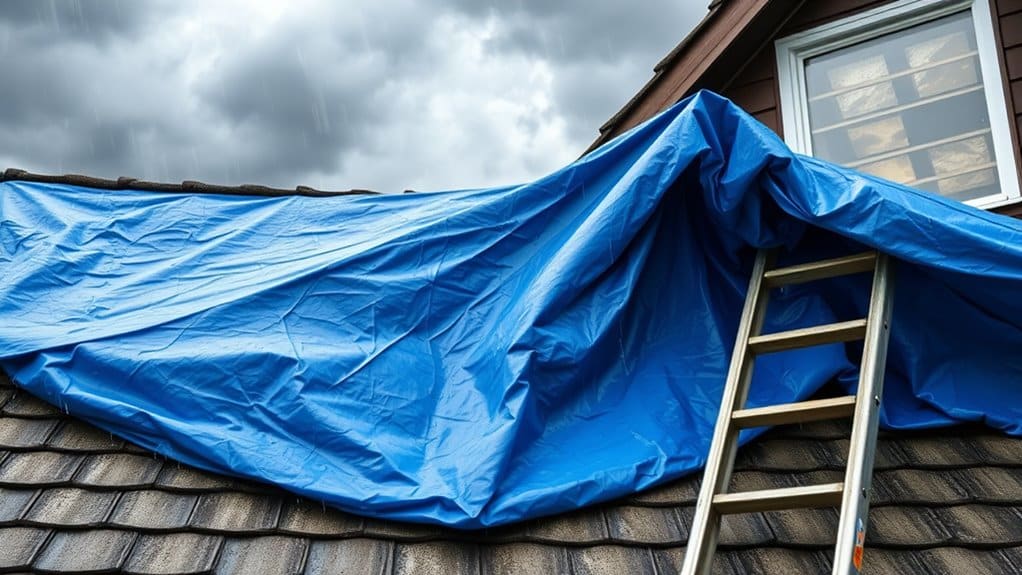
To effectively identify and locate leak sources, inspect roofing layers carefully, focusing on common trouble spots such as penetrations and flashing.
Record any damage you discover, as this will be crucial for insurance claims and planning repairs.
Inspect Roofing Layers Thoroughly
Thoroughly inspecting roofing layers is crucial for effectively identifying and locating leak sources.
Begin by checking for visible damage, such as missing or curled tiles and cracked flashing, particularly around chimneys and vents. Use appropriate inspection methods to identify these issues, as they can compromise the roofing materials.
Ensure gutters and downspouts are clear of debris to prevent water pooling.
Inside the property, look for water stains, mould growth, and damp insulation, which can indicate potential leaks. Tools like moisture meters and thermal imaging can help detect hidden moisture without causing disruption.
Document Damage for Insurance
Documenting roof damage is crucial for a successful insurance claim, as it provides the necessary evidence to support your case. Start by taking clear, dated photographs of the damage both inside and outside your home. This will help establish a timeline and identify the types of damage covered by your insurance, such as hail or wind damage.
- Check the attic for leaks and damp patches.
- Use buckets to catch any dripping water temporarily.
- Keep detailed records of any temporary repairs and their costs.
Notify your insurer promptly to start the claims process, ensuring you provide all required documentation. This thorough approach will help streamline your claim and improve your chances of a positive outcome.
Quick Temporary Fixes for Roof Leaks

When you spot a roof leak, it's crucial to act swiftly to avoid further damage to your home. Here are some quick emergency solutions for effective roof repair:
| Method | Description |
|---|---|
| Plywood Placement | Position plywood beneath the leak to catch water. |
| Roofing Tape | Use roofing tape to seal small leaks from the attic. |
| Waterproof Tarps | Cover damaged sections with tarps, ensuring they're secured firmly. |
| Silicone Sealant | Fill in small gaps or cracks with silicone sealant. |
These temporary fixes will help manage leaks until a professional can take a look. Be sure to pinpoint the source of the leak and prioritise safety while making any repairs. Preparing your home for further inspections will help maintain the roof's long-term integrity.
Handling Storm Damage Efficiently
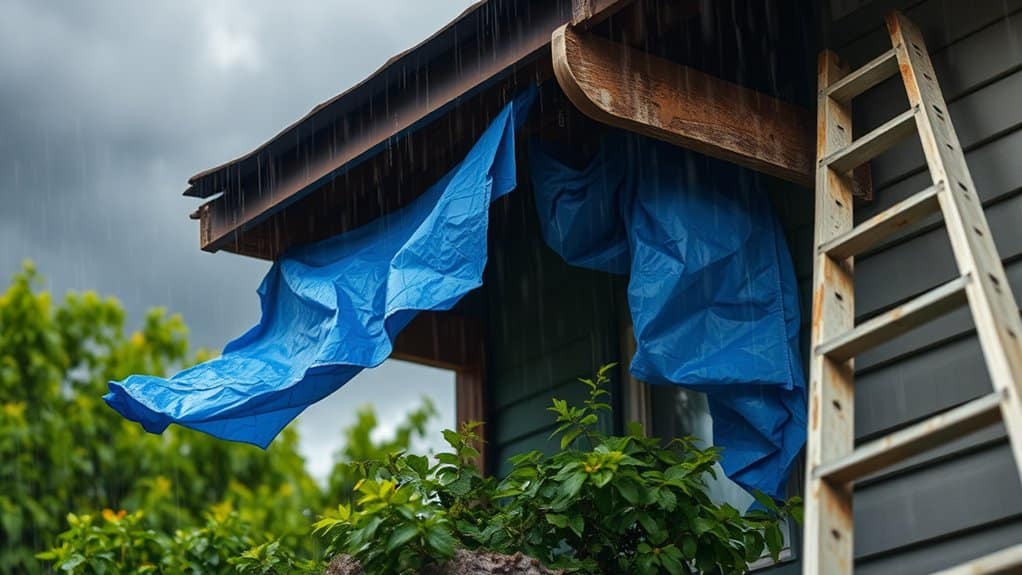
After a storm, assess the damage promptly to safeguard your home and prepare for insurance claims.
Use a sturdy ladder and appropriate safety gear to check your roof for missing tiles or other visible issues.
Once you've documented the damage, carry out temporary repairs, such as covering affected areas with heavy-duty tarpaulins.
Assess Damage Immediately
Assessing roof damage promptly is crucial to preventing further issues, particularly after severe weather events.
Begin with a thorough inspection to spot visible damage. Check for compromised tiles, flashing, and vents, and evaluate the impact of any debris. Prioritise safety by implementing measures to prevent injuries during inspections.
- Conduct a walk-around to identify visible damage from the ground.
- Document your findings with photographs and notes for insurance purposes.
- If the damage assessment indicates serious problems, consult professionals.
This proactive strategy not only protects your home but also facilitates the claims process, making recovery more efficient.
Perform Temporary Repairs
Once you've assessed the damage, it's time to carry out temporary repairs to prevent further issues. Start by choosing a robust tarp, making sure it extends at least 1.2 metres beyond the leak. Use proper tarp installation techniques and secure it with heavy objects like sandbags. For small cracks, apply roofing cement or silicone sealant for an effective seal. Consider laying synthetic underlayment beneath the shingles for added protection. Always opt for high-quality materials for durability and ensure easy access to your repair supplies. Regular inspections afterwards are vital to maintain the integrity of your repairs.
| Task | Materials Needed | Tips |
|---|---|---|
| Tarp Installation | Durable tarp | Secure with sandbags |
| Seal Cracks | Roofing cement, sealant | Apply generously |
| Underlayment Installation | Synthetic underlayment | Install beneath shingles |
| Secure Tarps | Heavy objects | Use bricks or weights |
| Regular Inspections | None | Check after storms |
Materials Needed for Temporary Repairs
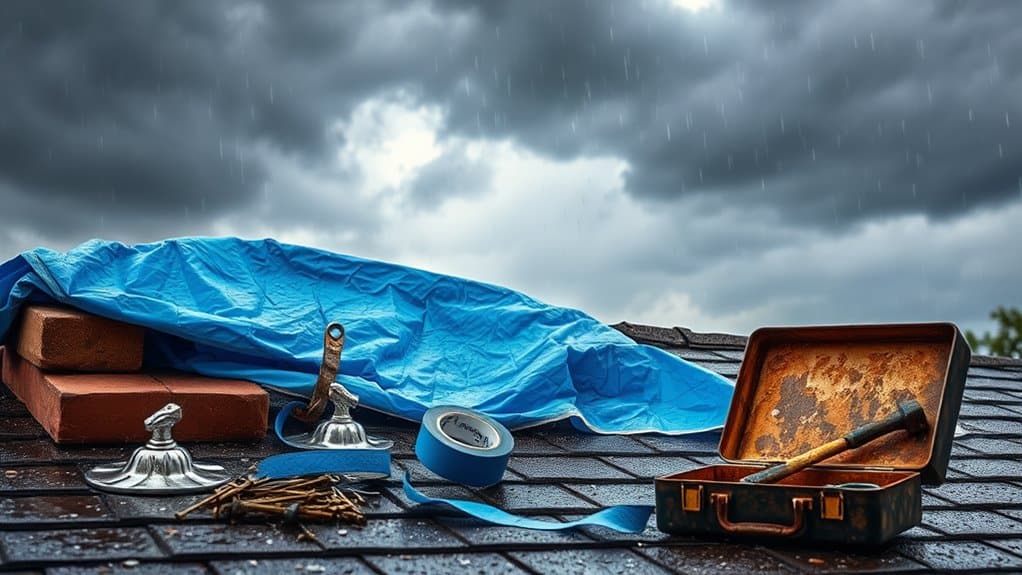
When dealing with roof damage, having the right materials for temporary repairs is crucial to prevent further issues.
Gathering the following items can help you carry out effective repairs:
- Waterproof Tarpaulins: These provide a quick waterproof layer to stop leaks.
- Roofing Tape: Perfect for sealing small gaps without needing a ladder.
- Wooden Battens: Offer extra stability over plastic sheeting against windy conditions.
These materials are essential for your temporary repair kit.
With them, you can tackle leaks and structural problems safely and effectively.
Always choose quality materials to ensure your temporary fixes last until professional repairs can be made.
When to Involve Professionals for Inspections

If you spot visible signs of roof damage or experience leaks, it's crucial to call in professionals for a thorough inspection.
Look out for damaged tiles, sagging rooflines, or water stains on your walls—these indicate issues that need prompt attention.
After severe weather, like heavy rain or hail, it's wise to have a professional assessment to uncover any hidden damage.
Additionally, debris around your home or rising energy bills could point to underlying roof problems.
Roofs older than ten years often require more frequent inspections.
Regular checks not only ensure safety but can also save you money by identifying issues early.
Ultimately, timely professional evaluations are key to maintaining the long-term health of your roof.
Documenting Damage for Insurance Claims

After experiencing roof damage, it's crucial to document everything properly for a successful insurance claim. Start by gathering your insurance documents and taking clear photos of the damage, such as missing tiles and any water stains inside the property.
Make a note of any previous repairs and the age of the roof to provide context.
- Record any significant weather events that might've caused the damage.
- Keep detailed notes of your claim process and any conversations with your insurer.
- Get multiple quotes from licensed contractors for comparison.
These steps will help ensure your claim is processed smoothly.
Frequently Asked Questions
How Do I Choose the Right Tarp for Roof Repair?
To select the right tarp for roof repair, start by considering the material options with an eye on durability and the local climate. For instance, a heavy-duty polyethylene tarp is ideal for wet weather, while a breathable canvas option may suit drier conditions better. When it comes to installation, ensure you choose a tarp that fits properly and is securely fastened to prevent water ingress and UV damage. A well-placed tarp can save you from costly repairs later on.
Can I Use Duct Tape for Temporary Roof Fixes?
Duct tape isn't the best choice for temporary roof repairs. Its effectiveness can be quite limited, especially in harsh weather. Instead, opt for specialised roofing tape or tarpaulins, which provide better adhesion and durability during emergencies. For instance, if you have a leak, using roofing tape designed for outdoor use can hold up much better than duct tape.
What Should I Do if I Can't Access My Roof?
If you can't access your roof, safety should be your top priority. If the situation is serious, don't hesitate to call emergency services for help. In the meantime, use buckets to catch any leaks, move valuables to a safe place, and keep an eye on the weather forecast to prepare for professional repairs.
How Long Can Temporary Fixes Last Until Permanent Repairs?
Temporary repairs can endure for as long as a year, but this largely depends on the weather and how well they were installed. It's important to carry out regular checks to ensure they remain effective, as extreme weather can significantly reduce their lifespan. For instance, a temporary roof patch might hold up well during mild conditions but could fail quickly in heavy rain or strong winds.
Are There Any DIY Solutions for Roof Leaks?
For DIY roof leaks, begin by locating the source through visual inspections and a garden hose test. Once you've identified the leak, carry out temporary repairs using roofing tar, waterproof tarpaulins, or silicone sealants to reduce water ingress until you can arrange for a more permanent fix.
Conclusion
In stormy weather, quick and effective solutions can help protect your roof and your finances. Assess the situation, use proper safety gear, and address leaks without delay to prevent further damage. Having the right tools and materials on hand is crucial. If the storm is too severe for your abilities, don't hesitate to call in professionals. Ensure you document any damage thoroughly to facilitate insurance claims. Stay safe and your roof will stand up to the worst of the weather.


