
Comprehensive Green Roofing Guide: Benefits, Types, and Sustainable Solutions
Transforming Urban Spaces: The Rise of Green Roofing Solutions
Green roofs offer a sustainable solution for our increasingly urbanised environment, providing numerous benefits including stormwater management, heat mitigation, and biodiversity enhancement. You’ll find two main types: extensive (with shallow substrate) and intensive (with deeper soil). These systems can reduce runoff by up to 65% and lower temperatures by 5°C, a significant advantage in our often unpredictable climate.
When considering a green roof installation, it’s crucial to account for structural capacity, material selection, and local council regulations. Many boroughs now actively encourage green roofing as part of their sustainability initiatives, offering guidance and sometimes incentives for implementation.
Popular materials for green roofs in our region include sedum, wildflower meadows, and even vegetable gardens for intensive systems. These choices not only provide aesthetic appeal but also contribute to improved air quality and urban wildlife habitats.
Weather considerations play a vital role in green roof design. Our frequent rainfall necessitates excellent drainage systems, while occasional dry spells may require irrigation solutions. Additionally, wind uplift calculations are essential, particularly in coastal or high-altitude areas.
Proper maintenance is essential for long-term performance, involving regular inspections and care. This includes checking drainage outlets, removing any unwanted plant species, and ensuring the waterproofing membrane remains intact.
By implementing green roofs, you’re not only improving building efficiency but also contributing to healthier urban ecosystems. This innovative approach can transform your property and community, aligning with national efforts to create more sustainable cities and combat climate change.
As the roofing industry evolves, green solutions are becoming increasingly popular among homeowners, businesses, and public buildings alike. Discover how this eco-friendly option can enhance your property while supporting broader environmental goals.
Key Takeaways
Eco-friendly Roofing Solutions: Embracing the Green Revolution
As our cities grow and climate concerns intensify, the roofing industry is experiencing a verdant transformation. Green roofs have emerged as a sustainable solution, offering myriad benefits to property owners and the environment alike.
These living rooftops excel in managing stormwater, a crucial aspect in our often rain-soaked regions. By absorbing rainfall, they reduce the strain on urban drainage systems and mitigate flood risks. Moreover, green roofs combat the urban heat island effect, cooling our bustling town centres and reducing energy consumption in buildings.
Two primary types of green roofs are gaining popularity: extensive and intensive. Extensive systems, with their shallow substrate of 75-150 mm, are lighter and require minimal maintenance, making them ideal for retrofitting existing structures. Intensive green roofs, boasting over 300 mm of substrate, support a wider variety of plants and can even create accessible garden spaces atop buildings.
Beyond their environmental merits, green roofs can significantly boost property values. They improve air quality by filtering pollutants and offer a haven for local wildlife, enhancing biodiversity in urban areas.
When considering a green roof installation, several factors must be addressed. Structural capacity is paramount; older buildings may require reinforcement to support the additional weight. Proper waterproofing and root barriers are essential to protect the underlying structure. Drainage systems must be carefully designed to ensure efficient water management.
It’s crucial to select plants that can thrive in our local climate, withstanding both wet winters and occasional dry spells. Native species are often the best choice, requiring less maintenance and supporting local ecosystems.
For those embarking on a green roof project, adherence to local building regulations is essential. The construction industry has embraced sustainable practices, and many local councils now offer incentives for green roof installations.
As we look to create more sustainable urban environments, green roofs represent a vital step forward. They combine aesthetic appeal with practical benefits, transforming our skylines into living, breathing ecosystems that work in harmony with nature and modern architecture.
Understanding Green Roof Systems
Transforming Dull Rooftops into Thriving Ecosystems
Green roofs are architectural marvels that convert barren rooftops into vibrant ecosystems. These systems comprise multiple layers working in harmony to provide effective stormwater management and energy efficiency. One will find vegetation, growing medium, drainage, waterproofing, and insulation all contributing to the roof’s performance. Sustainable roofing materials like slate, clay tiles, and metal can be incorporated into green roof systems, enhancing their overall sustainability and longevity.
When considering green roof installation, one will encounter two main types: extensive and intensive. Extensive green roofs, with a substrate depth of 75-150 millimetres, offer a low-maintenance, cost-effective solution. In contrast, intensive green roofs, featuring depths over 300 millimetres, support a wider variety of plants but require more upkeep and structural support.
The growing medium’s composition is essential for a green roof’s success. It’s specifically designed to retain moisture and support diverse plant life, with substrate composition greatly affecting performance in our varied climate. Plant selection should be tailored to local conditions and roof type, with native species often proving most resilient.
Proper installation is key to ensuring long-term durability and functionality. One must evaluate structural load and waterproofing carefully, adhering to building regulations and standards set by organisations like the National Federation of Roofing Contractors.
As green roofing technology advances, innovations like green-blue roofs are enhancing water management capabilities and simplifying maintenance, particularly valuable in areas prone to heavy rainfall.
When planning a green roof, it’s crucial to consider our unique weather patterns, from persistent drizzle to occasional heatwaves. Adequate drainage and insulation are paramount to prevent water ingress and maintain energy efficiency year-round. Moreover, selecting appropriate materials that can withstand our maritime climate is essential for the longevity of the roofing system.
Local councils often look favourably upon green roof installations, as they contribute to urban biodiversity and help mitigate the urban heat island effect. Some areas may even offer incentives for incorporating these eco-friendly roofing solutions into new builds or retrofits.
Environmental Benefits of Green Roofs

Green roofs offer a myriad of environmental advantages that are particularly relevant to our climate and urban landscapes. These living rooftops can significantly reduce stormwater runoff by up to 65%, alleviating pressure on municipal drainage systems during heavy downpours, which are all too common in our region.
In bustling city centres, green roofs play a crucial role in mitigating the Urban Heat Island effect, helping to lower temperatures and create more comfortable environments for residents and workers alike. This cooling effect can lead to reduced energy consumption for air conditioning in buildings during warmer months.
Moreover, by incorporating a diverse array of plant species, green roofs enhance biodiversity in urban areas. These elevated gardens can support up to 172 species of flora and fauna, providing much-needed habitats for local wildlife, including birds and beneficial insects.
When considering a green roof installation, it’s essential to comply with local building regulations and obtain necessary permissions from the council. Popular materials for green roofs in our area include sedum mats, which are well-suited to our climate and require minimal maintenance.
It’s worth noting that green roofs can contribute to a building’s BREEAM (Building Research Establishment Environmental Assessment Method) rating, potentially increasing property value and demonstrating a commitment to sustainability.
While initial costs may be higher than traditional roofing options, the long-term benefits of green roofs, including improved insulation and extended roof lifespan, often outweigh the investment. Additionally, some local authorities offer incentives for green roof installations as part of their sustainability initiatives.
As we face increasingly unpredictable weather patterns, including more frequent heatwaves and intense rainfall events, green roofs offer a practical solution to enhance urban resilience and create more sustainable, liveable cities.
Stormwater Management Benefits
Green Roofs: A Smart Solution for Sustainable Stormwater Management
One of the most notable environmental benefits of green roofs is their remarkable ability to manage stormwater. These innovative structures can reduce runoff by up to 65%, considerably mitigating urban flooding risks during heavy rainfall events. The combination of vegetation and substrate in green roofs acts as a natural water retention system, delaying runoff by an average of 3 hours. This delay eases the burden on urban drainage systems, allowing for more efficient water management.
The growing medium of green roofs enhances water retention, effectively managing up to 75% of water that would typically run off in urban areas. This natural filtration process contributes to improved water quality in our cities and towns. By incorporating green roofs into urban planning, we’re not only addressing stormwater issues but also potentially reducing the need for costly management infrastructure.
| Benefit | Impact | Significance |
|---|---|---|
| Runoff Reduction | Up to 65% | Mitigates flooding |
| Runoff Delay | 3 hours average | Eases drainage burden |
| Water Retention | Up to 75% | Improves water management |
When considering a green roof installation, it’s crucial to work with experienced roofers who understand local building regulations and can navigate the unique challenges posed by our climate. Popular materials for green roofs in our region include sedum, wildflowers, and grasses that are well-suited to withstand both wet winters and occasional dry spells.
Given our propensity for frequent rain showers, green roofs offer an excellent opportunity to transform our urban landscapes while addressing practical concerns. They not only help manage stormwater but also provide insulation, potentially reducing heating and cooling costs for buildings.
As regulations around sustainable building practices continue to evolve, green roofs are becoming an increasingly attractive option for both new constructions and retrofits. By choosing a green roof, property owners can contribute to urban biodiversity, improve air quality, and enhance the overall aesthetic of their buildings.
When planning your green roof project, it’s essential to consider factors such as load-bearing capacity, waterproofing, and maintenance requirements. A professional roofing company can guide you through these considerations, ensuring that your green roof meets all necessary standards while delivering maximum environmental benefits.
Urban Heat Mitigation
Whilst stormwater management is a key benefit, the urban heat mitigation potential of green roofs shouldn’t be overlooked. These living installations can considerably reduce city temperatures by up to 5°C compared to traditional roofing materials. This cooling effect is essential in combating the Urban Heat Island phenomenon and alleviating heat-related health issues in densely populated areas.
Sustainable roofing materials like clay and concrete also contribute to temperature reduction and energy efficiency, making them excellent choices for environmentally conscious builders.
Green roofs achieve this temperature reduction through multiple mechanisms. The vegetation enhances evapotranspiration, which not only lowers peak runoff but also contributes to overall cooling in urban environments. By absorbing solar radiation, green roofs can decrease the roof surface temperature by as much as 25°C, improving building energy efficiency. This translates to a substantial 30% reduction in summer cooling energy consumption, decreasing reliance on air conditioning.
Beyond temperature regulation, green roofs play an important role in improving air quality. They absorb CO2 and release oxygen, helping to combat pollution and enhance urban biodiversity. By implementing green roofs, you’re not just cooling your building; you’re contributing to a more sustainable, healthier urban ecosystem that benefits all city dwellers.
When considering green roofs, it’s crucial to adhere to local building regulations and planning permissions. The Building Regulations 2010 and subsequent amendments provide guidance on structural requirements and fire safety considerations for green roofs.
Popular materials for green roofs include sedum, wildflowers, and hardy grasses that can withstand our variable climate. Our temperate maritime climate, characterised by mild winters and cool summers, is well-suited for green roof installations.
However, it’s essential to consider the increased rainfall we experience, particularly in autumn and winter. Proper drainage systems and waterproofing measures are paramount to ensure the longevity and effectiveness of your green roof.
For those seeking alternatives to green roofs, cool roofing options like light-coloured tiles or reflective coatings can also contribute to urban heat mitigation. These materials reflect more sunlight and absorb less heat than traditional dark roofing, helping to reduce cooling costs and improve comfort in both residential and commercial buildings.
By embracing these innovative roofing solutions, property owners can’t only enhance their building’s energy efficiency but also contribute to the broader efforts of creating more sustainable and resilient urban environments.
As we face increasing challenges from climate change, including more frequent heatwaves, investing in heat-mitigating roofing solutions is a prudent choice for both individual comfort and collective wellbeing.
Biodiversity Enhancement Strategies
Enhancing Urban Biodiversity with Green Roofs
Green roofs present a remarkable opportunity to boost urban biodiversity, creating vibrant ecosystems atop otherwise barren structures in our cities and towns. By implementing biodiverse green roofs, property owners actively contribute to habitat creation and foster species interaction in urban environments. Studies have shown that these rooftop ecosystems can support up to 172 plant and animal species, greatly enhancing local biodiversity.
Sustainable building practices are becoming increasingly important as the construction industry seeks to minimise its environmental impact, with green roofs playing an essential role in this effort.
To maximise the ecological benefits of a green roof, it’s crucial to incorporate a variety of native and adaptive plant species. This diversity not only supports pollinators like bees and butterflies but also improves ecosystem resilience. By creating microhabitats, green roofs help sustain local wildlife populations amidst increasing urbanisation.
When designing a green roof, consider its role in enhancing urban ecological networks. These rooftop habitats can serve as important stepping stones, connecting fragmented ecosystems and promoting species movement and genetic diversity. By carefully selecting plant species that can withstand environmental stressors, including our often unpredictable weather patterns, property owners can guarantee ongoing biodiversity support even in changing climates.
It’s important to note that green roofs must comply with local building regulations and planning permissions. Consultation with experienced roofers and ecological experts is essential to ensure that the green roof meets all necessary standards while maximising its biodiversity potential.
Popular materials for green roof construction include specialised waterproofing membranes, root barriers, and lightweight growing media. These components are designed to withstand our climate, including heavy rainfall and occasional frost, while providing an ideal environment for plant growth.
Types of Green Roofs

Green Roofing Solutions for Modern Properties
When considering eco-friendly roofing options, property owners have several distinct types to choose from, each offering unique benefits and characteristics. Your selection will depend on factors such as substrate depth, plant selection, maintenance frequency, and desired ecological impact.
| Type | Substrate Depth | Key Features |
|---|---|---|
| Intensive | 30+ cm | High plant diversity, regular maintenance |
| Semi-Intensive | 15-30 cm | Moderate diversity, medium maintenance |
| Extensive | 7-15 cm | Low maintenance, drought-resistant plants |
| Biodiverse | Varies | Native plants, wildlife habitat |
Intensive green roofs provide the greatest design flexibility and aesthetic appeal, but they require more maintenance and structural support. Extensive roofs, on the other hand, are lightweight and low-maintenance, making them ideal for urban integration on existing buildings. Semi-intensive roofs offer a middle ground, balancing plant diversity with moderate maintenance needs.
For those focused on ecological impact, biodiverse green roofs are an excellent choice. They’re designed to support local ecosystems and can be tailored to specific environmental goals. Green-blue roofs take sustainability a step further by incorporating water management systems, effectively addressing urban stormwater challenges while providing the benefits of vegetation.
When planning your green roof, it’s crucial to consider your building’s structural capacity, local climate, and long-term maintenance capabilities to guarantee successful installation and longevity. Adhering to British Standards and local building regulations is essential, particularly BS 6229:2018 for flat roofs and BS 8217:2005 for pitched roofs.
Popular materials for green roofing projects include sedum mats, which are well-suited to our temperate climate and can withstand periods of drought. For more diverse plantings, native wildflowers and grasses can create a vibrant ecosystem that supports local wildlife, including bees and butterflies.
Regional weather considerations play a significant role in green roof design. With our frequent rainfall, proper drainage systems are paramount to prevent waterlogging. Conversely, during drier summer months, irrigation systems may be necessary to maintain plant health, especially for intensive green roofs.
By investing in a green roof, property owners can contribute to improved air quality, reduced urban heat island effect, and enhanced biodiversity in our cities and towns. Moreover, these living roofs can provide excellent insulation, potentially lowering energy costs and improving the overall sustainability of buildings.
For those seeking professional guidance, our team of experienced roofers can provide bespoke green roofing solutions tailored to your property’s specific needs, ensuring compliance with all relevant standards and maximising the benefits of this innovative roofing technology.
Green Roof Design Considerations

Designing a green roof requires careful consideration of several vital factors to guarantee its success and longevity. First, you’ll need to evaluate the structural capacity of your building. Extensive green roofs typically add 50 to 200 kg/m² to the roof load, necessitating a thorough structural assessment, especially for existing structures.
Sustainable roofing materials like slate, clay tiles, and zinc can be incorporated into green roof designs to enhance overall sustainability and durability.
Selecting an appropriate growing medium is essential. You’ll want a substrate that balances moisture retention with adequate drainage. For extensive green roofs, aim for a depth of 75-150 mm.
Plant selection is equally important; choose vegetation that’s drought-resistant and well-suited to our local climate and roof conditions. Sedum and wildflower mixes are popular choices that thrive in our temperate environment.
Don’t overlook the importance of waterproofing techniques. A robust waterproofing layer is essential to protect your building from leaks and water damage, particularly given our frequent rainfall. Proper installation is key to ensuring long-term performance and preventing costly repairs.
It’s crucial to be aware of local planning regulations when considering a green roof. While many councils encourage their installation, some may have specific requirements, especially in conservation areas or for listed buildings. Always consult with your local authority before proceeding with installation.
Lastly, incorporate a regular maintenance plan into your design. Schedule inspections at least twice a year to maintain the health and longevity of your green roof. This is particularly important in autumn to clear fallen leaves and in spring to address any winter damage.
By carefully considering these factors, you’ll create a sustainable, thriving green roof that benefits both your building and the environment, while also potentially increasing your property’s value in the housing market.
With proper design and care, your green roof will provide insulation, reduce energy costs, and contribute to improved air quality for years to come.
Maintenance and Long-Term Performance
Maintaining Your Green Roof for Optimal Performance
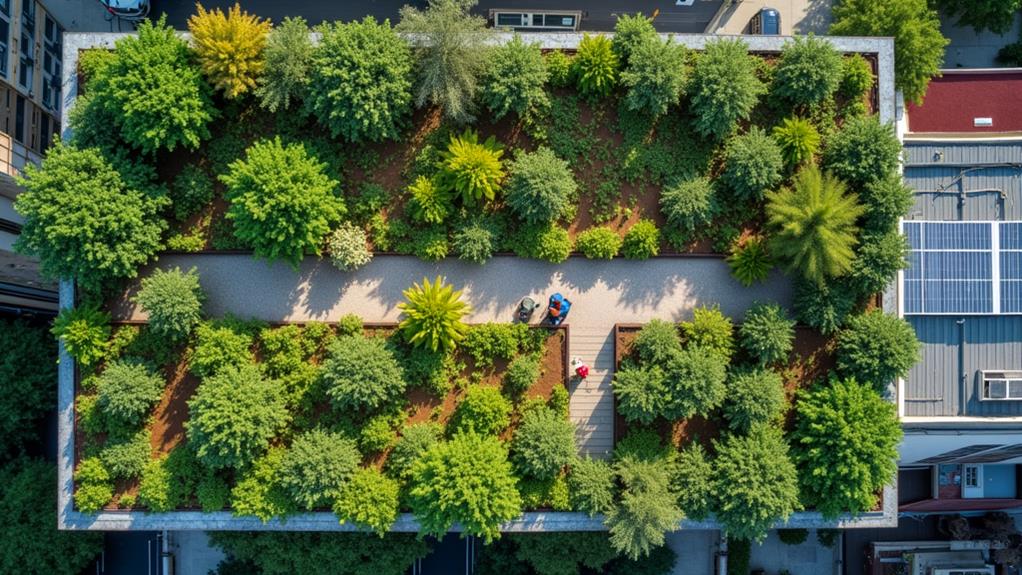
To ensure the longevity and peak performance of your green roof, regular maintenance is crucial. Biannual inspections are vital to prevent deterioration and preserve aesthetic value. Neglecting upkeep can lead to serious issues, including water pooling, plant death, and structural damage, greatly reducing your roof’s lifespan and benefits.
Sustainable roofing materials such as slate, clay tiles, and metal offer durability and environmental advantages, but they still require proper care to maximise their potential.
Effective maintenance practices encompass watering, feeding, weeding, and monitoring plant health. These actions enhance the environmental and aesthetic advantages of your green roof while extending the lifespan of underlying waterproof membranes by two to three times compared to conventional roofs.
When establishing your maintenance routine, consider factors such as plant selection and maintenance frequency. Different plant species may require varying levels of care, influencing your overall maintenance strategy. It’s advisable to seek professional assistance and expert guidance to develop efficient maintenance schedules tailored to your specific green roof type and local conditions.
Given our variable climate, with frequent rain and occasional dry spells, it’s crucial to adapt your maintenance approach accordingly. During prolonged dry periods, additional watering may be necessary, while drainage systems should be regularly checked to handle heavy rainfall.
Moreover, compliance with local building regulations and planning permissions is essential when installing or maintaining a green roof.
Popular native plant species for green roofs in our region include sedum, wildflowers, and grasses that are well-adapted to local weather patterns. These plants not only contribute to biodiversity but also require less maintenance than non-native species.
Overcoming Green Roof Implementation Challenges
Tackling the Challenges of Green Roof Implementation
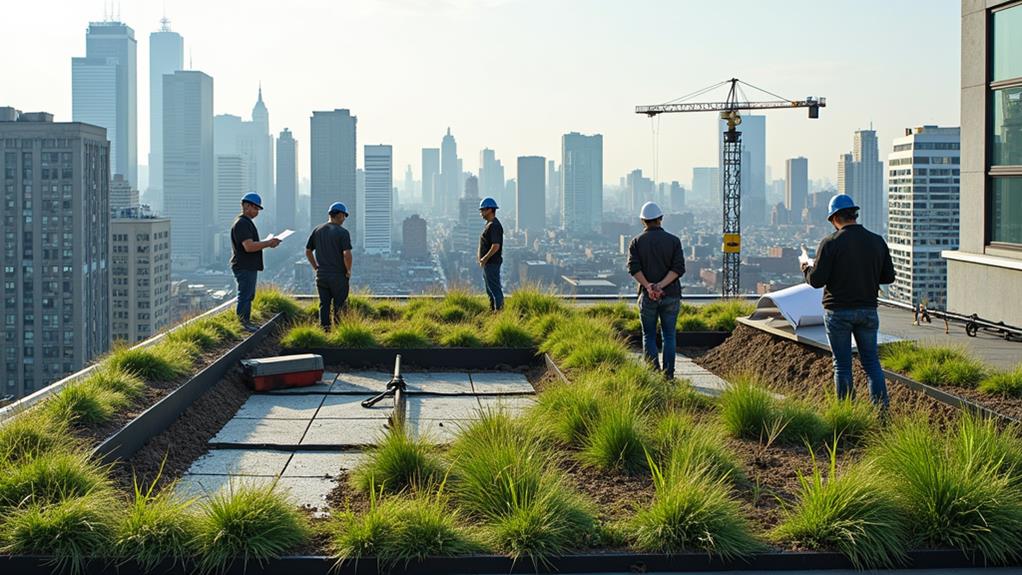
When considering a green roof for your property, it’s crucial to assess the structural capacity of your building to support the additional weight, which can vary from 50 to 200 kg/m². Consulting with a qualified surveyor is essential to ensure your roof can bear the load safely.
To minimise the burden, explore options such as lightweight growing media and drought-resistant plants that thrive in our climate.
For a cost-effective installation, modular systems are worth investigating. These can significantly reduce labour costs and installation time, making the process more efficient.
It’s also wise to enquire about local council incentives or tax benefits that may help offset the initial outlay. Some areas offer grants or reduced business rates for properties with green roofs, recognising their environmental benefits.
When selecting materials, consider those that perform well in our damp climate. Ensure proper waterproofing and drainage to prevent issues with moisture build-up, which is particularly important given our frequent rainfall.
Popular choices include sedum mats, which are hardy and low-maintenance, ideal for our varying weather conditions.
It’s important to be aware of local planning regulations, as some areas may have specific requirements for green roof installations, particularly in conservation areas or on listed buildings.
Always check with your local authority before proceeding with any major roofing works.
Structural Load Considerations
Structural Load Considerations for Green Roofs
When implementing eco-friendly roofing solutions, structural load considerations are paramount. Given the substantial weight added by green roofing systems, a thorough load assessment is essential before installation, as these systems can add 50 to 200 kg/m² to your existing structure. It’s crucial to engage structural engineers to evaluate your building’s load-bearing capacity and determine if reinforcements are necessary.
Sustainable roofing materials, such as clay tiles, concrete, and metal, can also impact the overall weight and structural requirements of your green roof system.
The type of green roof you choose greatly influences the required support:
- Extensive green roofs: Lighter profile, less structural modification
- Intensive green roofs: Thicker substrate, diverse vegetation, more support needed
- Retrofitted systems: May involve considerable costs and engineering challenges
- New constructions: Easier to incorporate green roof load requirements from the outset
Compliance with local building regulations governing green roof installations is essential. These may dictate specific structural requirements to ensure safety and avoid legal issues.
When retrofitting existing buildings, thorough feasibility studies are crucial to assess the viability and cost-effectiveness of the project.
Regional weather considerations play a significant role in green roof design. Our climate, with its frequent rainfall and occasional heavy snow, necessitates robust drainage systems and additional load calculations for potential snow accumulation.
Popular materials for green roofs in our region include sedum and other hardy, drought-resistant plants that can withstand both wet winters and dry summers.
By carefully considering structural load factors, you’ll ensure a successful and sustainable green roof implementation that maximises environmental benefits while maintaining building integrity. This approach not only contributes to improved energy efficiency but also aligns with the growing emphasis on sustainable construction practices in urban areas.
Cost-Effective Installation Strategies
Green Roofing Solutions: Cost-Effective Installation Strategies
Implementing an eco-friendly green roof can seem daunting, particularly when considering the initial outlay. However, several cost-effective installation strategies can make this sustainable roofing option more accessible and financially viable for property owners.
To optimise your green roof project, consider these key approaches:
| Strategy | Benefit |
|---|---|
| Utilise extensive systems | Lower installation and maintenance costs |
| Plant native species | Reduced irrigation and care needs |
| Retrofit existing structures | Long-term energy savings, extended roof life |
| Leverage local council incentives | Offset initial costs |
| Partner with specialised contractors | Streamlined installation, reduced modifications |
When planning your green roof, it’s crucial to consider our unique climate and building regulations. Extensive systems, which use a shallow growing medium and hardy plants, are particularly well-suited to our weather patterns and require less structural reinforcement.
Selecting native plant species not only supports local biodiversity but also ensures your green roof thrives with minimal intervention. Plants accustomed to our rainfall and temperature fluctuations will naturally require less maintenance and irrigation.
Retrofitting existing structures can be a cost-effective approach, particularly for older buildings. This strategy not only improves insulation, potentially reducing energy bills, but also extends the life of the underlying roofing materials.
Many local councils offer incentives for sustainable building practices, including green roofing. These can range from grants to tax rebates, helping to offset the initial installation costs.
Partnering with specialised contractors who understand both green roofing technology and local building codes can streamline the installation process. Their expertise can help avoid costly modifications and ensure compliance with all relevant regulations.
Frequently Asked Questions
What Are the 4 Main Benefits of a Green Roof?
A verdant rooftop offers four principal advantages for property owners: enhanced thermal efficiency, superior rainfall management, bolstered biodiversity, and improved air quality. These eco-friendly solutions present substantial environmental and economic benefits, particularly in our densely populated urban centres.
When considering a green roof installation, it’s crucial to adhere to local building regulations and obtain necessary planning permissions. Many councils now actively encourage such environmentally conscious improvements, especially in areas prone to flooding or excessive heat during summer months.
Popular materials for green roofs include sedum, which is well-suited to our temperate climate and requires minimal maintenance. For more intensive systems, native wildflowers and grasses can create a thriving ecosystem atop your property.
Our unpredictable weather patterns, characterised by frequent rain and occasional heatwaves, make green roofs an ideal choice. They effectively absorb excess rainwater, reducing strain on drainage systems, while also providing natural insulation against both cold and heat.
Professional installation is paramount to ensure proper waterproofing and structural integrity. A reputable roofing firm will conduct a thorough assessment, taking into account factors such as load-bearing capacity and pitch, to deliver a bespoke solution tailored to your property’s specific needs.
Investing in a green roof not only enhances your property’s aesthetic appeal but also contributes to wider efforts in sustainable urban development. With potential benefits including reduced energy bills and increased property value, it’s an investment well worth considering for the environmentally conscious homeowner.
How Does a Green Roof Benefit Sustainability?
Green roofs are becoming increasingly popular among environmentally conscious homeowners and businesses across the country. These innovative roofing solutions offer a myriad of benefits for sustainability, making them an excellent choice for those looking to reduce their carbon footprint and contribute to a greener future.
One of the most significant advantages of green roofs is their ability to reduce urban air pollution by up to 37%. In bustling city centres and industrial areas, this can make a substantial difference to air quality and overall wellbeing. Moreover, green roofs play a crucial role in enhancing urban biodiversity, providing much-needed habitats for various species in our concrete jungles.
When it comes to stormwater management, green roofs are unparalleled. They effectively absorb and filter rainwater, reducing the strain on our drainage systems and helping to prevent localised flooding – a common concern in many regions, particularly during our notoriously wet winters.
The urban heat island effect is another issue that green roofs help to mitigate. By absorbing heat and providing natural insulation, these living roofs can significantly improve energy efficiency in buildings. This not only reduces cooling costs during warmer months but also helps to keep interiors warm during chilly periods, potentially leading to lower heating bills.
For those considering a green roof installation, it’s essential to be aware of local building regulations and planning permissions. While many councils are supportive of green initiatives, it’s always wise to check with your local authority before proceeding with any major roofing work.
When selecting materials for your green roof, it’s crucial to choose those that can withstand our varied climate. Sedum is a popular choice due to its hardiness and low maintenance requirements. However, other native plant species can also thrive, creating a diverse and vibrant ecosystem atop your property.
As we continue to face environmental challenges, green roofs offer a practical and aesthetically pleasing solution for sustainable living. By embracing this eco-friendly roofing option, property owners can make a significant contribution to urban greening efforts while enjoying the numerous benefits these living roofs provide.
What Are the Social Benefits of Green Roofs?
Green roofs offer a wealth of social benefits for communities across the country. These innovative roofing solutions foster neighbourhood interaction, provide educational opportunities, and promote urban biodiversity. Residents can enjoy quieter environments, improved aesthetics, and increased property values whilst contributing to sustainable urban development.
For homeowners and businesses alike, installing a green roof can be a fantastic way to comply with local planning regulations, particularly in areas where environmental considerations are paramount. Many councils now encourage or even require green roofing solutions for new builds and renovations, especially in urban centres.
When considering materials, it’s essential to choose those that can withstand our variable climate. Sedum is a popular choice for green roofs, as it’s hardy and well-suited to our often damp conditions. However, wildflower mixes can also thrive, offering greater biodiversity and a splash of colour to urban landscapes.
Weather considerations play a crucial role in green roof design. Our roofing experts are well-versed in creating systems that can manage heavy rainfall, ensuring proper drainage and preventing water ingress. Additionally, green roofs provide excellent insulation, helping to regulate indoor temperatures during both chilly winters and increasingly warm summers.
What Is the Difference Between Eco Roof and Green Roof?
Considering a sustainable roofing solution for your property? You might be weighing up the benefits of eco roofs and green roofs. While both offer environmental advantages, they serve different purposes and require distinct maintenance approaches.
Eco roofs, which can slash energy costs by up to 30%, typically feature photovoltaic panels and rainwater collection systems. These roofs are particularly beneficial in areas with frequent rainfall, allowing homeowners to harness natural resources efficiently. Local councils often offer incentives for installing eco roofs, as they contribute to carbon reduction targets.
On the other hand, green roofs focus on cultivating vegetation, creating a living blanket atop buildings. These are increasingly popular in urban areas, where they help combat the heat island effect and support biodiversity. Green roofs require regular horticultural maintenance, including weeding and occasional replanting.
When considering either option, it’s crucial to consult with a qualified roofer who understands regional building regulations. Factors such as load-bearing capacity and waterproofing are paramount, especially given our varied climate. Popular materials for eco roofs include EPDM and TPO membranes, known for their durability in damp conditions.
Whether you opt for an eco roof or a green roof, both choices demonstrate a commitment to sustainable living and can significantly enhance your property’s energy efficiency. As the push towards net-zero emissions continues, these roofing solutions are likely to become increasingly common across our towns and cities.
Conclusion
Embarking on a green roofing project is akin to cultivating a lush garden atop your property, offering a host of benefits for both your home and the environment. As our climate continues to shift, with increasingly unpredictable weather patterns, these living roofs provide excellent insulation and natural drainage solutions. They’re particularly effective in areas prone to heavy rainfall, helping to mitigate localised flooding issues that plague many of our communities.
When considering a green roof, it’s crucial to ensure your structure can support the additional weight. Most domestic buildings require reinforcement before installation, and it’s essential to consult with a qualified surveyor to assess the feasibility. Local planning regulations vary by council, but many authorities now actively encourage green roofing as part of their sustainability initiatives.
Popular materials for green roofs in our region include sedum, which is well-suited to our temperate climate and requires minimal maintenance. For those seeking a more diverse ecosystem, wildflower meadows can transform a roof into a haven for pollinators, contributing to urban biodiversity.
The initial investment in a green roof may be higher than traditional roofing materials such as slate or clay tiles. However, the long-term benefits, including improved energy efficiency and extended roof lifespan, often outweigh the upfront costs. Moreover, as we collectively strive to reduce our carbon footprint, green roofs represent a tangible step towards more sustainable living in our bustling towns and cities.
By embracing this eco-friendly roofing solution, property owners are not merely enhancing their own dwellings but contributing to the broader goal of creating greener, more resilient urban landscapes. As the roofing industry evolves, green roofs stand as a testament to our ability to harmonise modern living with nature’s wisdom.