

How Long Does It Take to Reroof a House
Reroofing a house typically takes 1 to 5 days, with most projects averaging 1 to 3 days.
The timeline depends on factors like roof complexity, weather conditions, and material selection. Simple roofs on smaller homes can be completed in a day, whilst intricate designs with features like valleys or chimneys may extend to 4-5 days.
We recommend scheduling during late spring or summer for ideal conditions. Proper planning, including material procurement and permit acquisition, is essential to avoid delays.
Weather, unforeseen structural issues, and material availability can impact timelines. Understanding these factors will help you better prepare for your reroofing project.
Key Takeaways
- Reroofing typically takes 1 to 5 days, with an average of 1 to 3 days for most residential projects.
- Simple roof structures on smaller homes can be completed in one day, whilst complex designs may take 4 to 5 days.
- Factors like roof complexity, weather conditions, accessibility issues, and material selection significantly influence the timeline.
- Preparation steps, including site assessment, planning, permits, and material procurement, can add several weeks to the overall process.
- Efficient scheduling, material readiness, and professional engagement can help streamline the reroofing process and minimise delays.
Average Reroofing Timeline
Reroofing a house can take anywhere from 1 to 5 days, depending on several factors. On average, a complete reroofing project typically spans 1 to 3 days. This timeline varies based on the roof’s size, complexity, and design.
We’ve found that simple roof structures on smaller homes can be finished in as little as one day, whilst more intricate designs with multiple valleys or chimneys may extend the project to 4 or 5 days. Proper installation techniques are essential for guaranteeing longevity and protection against the elements, which can impact the overall timeline of the project.
For standard double hip semi-detached homes, we usually complete the reroofing process in about 2 days. It’s important to note that weather conditions play a significant role in project duration. Rain or snow can halt work and prolong the timeline, so we always factor in potential delays when planning our reroofing techniques.
To guarantee timely completion without compromising quality, we recommend engaging experienced roofing professionals. Their expertise in project management and efficient reroofing techniques can help streamline the process.
Factors Affecting Project Duration
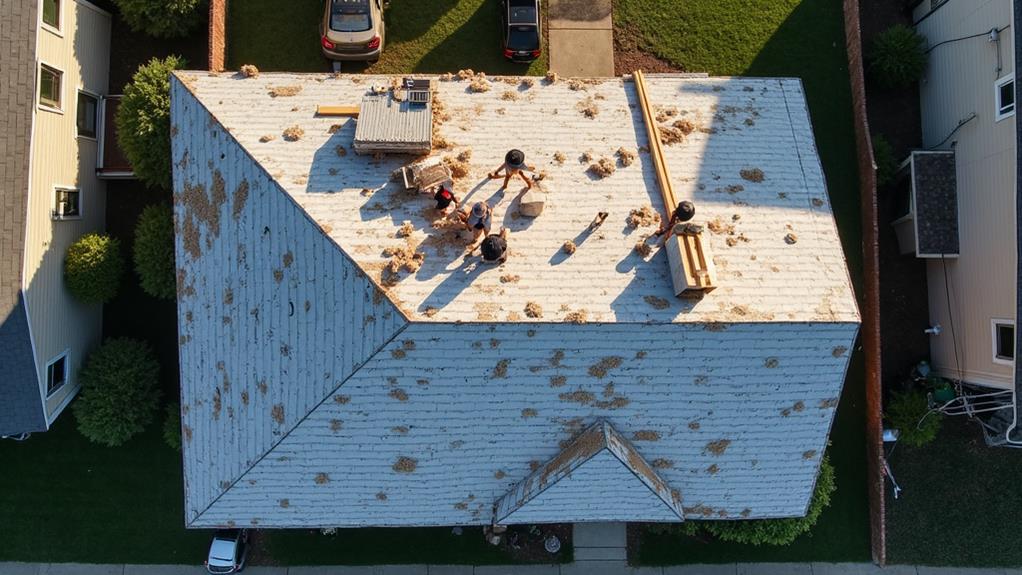
The clock ticks differently for every re-roofing project. When estimating the duration of a re-roofing job, we must consider several key factors that can notably impact the timeline.
Roof complexity plays an essential role, with simple structures potentially completed in a day, whilst intricate designs with multiple features may extend to 4-5 days. Professional roofing services often provide expert leak detection and thorough assessments, which can help accurately estimate project duration and identify potential complications.
Weather impact is another vital consideration. Ideal conditions can expedite work, but rain or snow can cause considerable delays.
We can’t overlook the importance of accessibility and material choice either.
Four primary factors affecting project duration:
- Roof size and complexity (chimneys, valleys)
- Weather conditions and seasonal timing
- Accessibility issues (roof steepness, need for scaffolding)
- Roofing material selection (e.g., asphalt shingles vs concrete tiles)
Additionally, pre-existing issues discovered during inspections may necessitate repairs, potentially extending the timeline.
It’s important to account for these variables when planning a re-roofing project to guarantee accurate timeframes and manage expectations effectively. By considering these factors, we can provide a more precise estimate of the time required to re-roof a house.
Preparation Steps for Reroofing
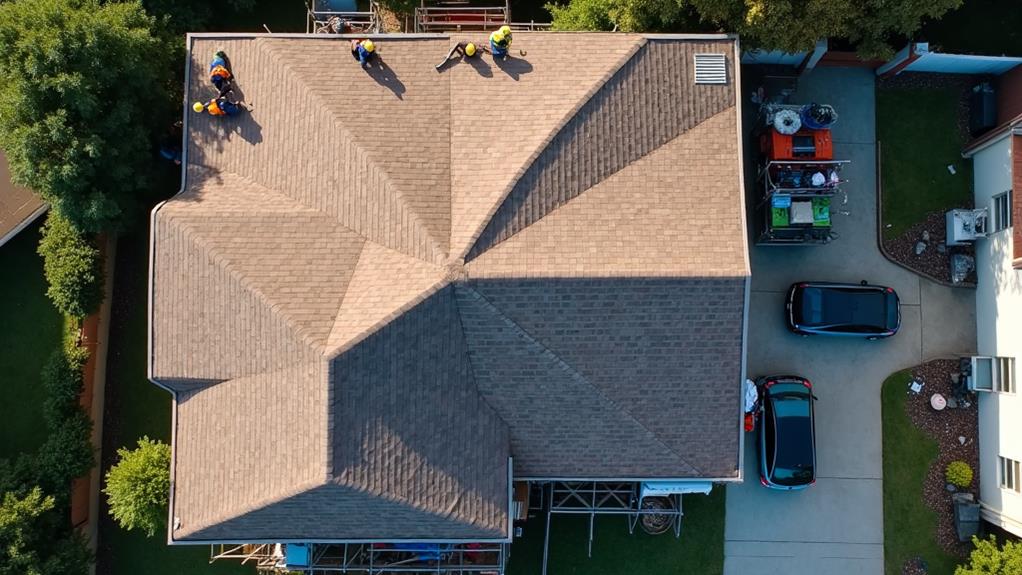
Let’s examine the vital preparation steps for reroofing.
We’ll start with the site assessment and planning phase, which involves a thorough roof inspection and can take up to a fortnight.
Regular inspections are essential for maintaining roof integrity and can help identify potential issues before reroofing begins.
We’ll then explore the material selection process, including the potential 2-4 week lead time for ordering supplies.
Site Assessment and Planning
Site Assessment and Planning
Before initiating a reroofing project, three essential preparation steps demand attention: site assessment, planning, and material procurement.
We begin with a thorough site assessment, which involves an extensive roof inspection and damage assessment. This process typically takes 1-2 days, depending on the roof’s condition and complexity. A professional inspection can help identify common roofing issues such as leaks, tile deterioration, and flashing problems, guaranteeing a more accurate assessment of the reroofing requirements.
Planning is the next vital phase, encompassing several key elements:
- Obtaining necessary permits (1-4 weeks)
- Confirming compliance with local regulations and building codes
- Verifying material orders to prevent delays (2-4 weeks)
- Arranging for debris disposal and property protection (1 day)
We recommend engaging a professional roofing contractor early in the planning phase to guarantee accurate timelines and a thorough approach. Their expertise will facilitate a smoother shift to installation and help anticipate potential challenges.
Material procurement is an essential component of the planning process. We must confirm the availability of all required materials to avoid delays caused by backorders.
This step can greatly impact the overall timeline, potentially adding 2-4 weeks to the preparation phase.
Material Selection Process
Material selection’s importance in the reroofing process cannot be overstated. We begin with a thorough inspection of the existing roof to assess its condition and determine appropriate replacement materials. When selecting roofing materials, we consider factors like climate, durability, and energy efficiency, as these greatly impact the roof’s lifespan and performance.
Popular material types include:
| Material | Lifespan | Cost Analysis |
|---|---|---|
| Asphalt Shingles | ~25 years | Cost-effective |
| Slate Tiles | 100+ years | Higher initial investment |
| Metal Roofing | 40-70 years | Moderate to high cost |
| Wood Shakes | 30-40 years | Moderate cost |
We must check material availability and lead times, as delays in sourcing can extend the reroofing process. Bespoke orders may take several weeks, impacting the project timeline. Consulting with a professional roofing contractor provides valuable insights into the best options based on local regulations, aesthetics, and specific structural needs. This expertise guarantees we select materials that meet both functional requirements and homeowner preferences whilst adhering to budget constraints. By carefully considering these factors, we can optimise the material selection process for a successful reroofing project.
Permit Acquisition Timeline
The permit acquisition process marks an essential step in preparing for a reroofing project. We must understand that obtaining necessary building permits can take anywhere from 1 to 4 weeks, depending on local regulations and project complexity.
It’s important to check with our local council’s planning department to understand specific permit requirements and processing times before initiating the project.
To streamline the permit acquisition timeline, we should:
- Determine if planning permission is required (some areas don’t require permits for minor repairs or replacements involving less than 50% of the roof structure)
- Submit planning applications as early as possible to avoid delays
- Confirm that our contractor will handle the permit acquisition process
- Follow up regularly on the application status
Different permit types may apply based on the project’s scope, and the application process can vary by jurisdiction.
We should be prepared to provide detailed information about the proposed work, including materials, structural changes, and compliance with local building regulations.
Common Challenges and Delays

During the reroofing process, several challenges and delays can greatly impact the project’s timeline. Weather impacts are amongst the most significant factors we encounter. Rain, snow, or extreme heat can force us to halt work, causing substantial setbacks.
Additionally, structural inspections may reveal unforeseen damage, necessitating additional repairs and extending the project duration.
Material availability issues can also slow progress. Backorders or bespoke orders for specific roofing materials may lead to unexpected waiting periods.
Complex roof designs present another hurdle, as intricate features like multiple valleys or chimneys require more time and precision during installation.
We often face accessibility challenges that can impede our work. Steep terrain or limited space around the house may necessitate extra safety precautions and slow down the replacement process.
These factors not only affect the speed of installation but also influence the overall project timeline.
Seasonal Considerations for Reroofing

Whilst challenges and delays can affect reroofing timelines, seasonal factors play an important role in project planning and execution. We recommend considering the following seasonal advantages and weather impacts when scheduling your reroofing project:
- Summer months: Ideal for reroofing due to lower rainfall and quicker installation times.
- Winter season: Spike in urgent projects due to leaks, but less favourable due to snow and ice interruptions.
- Rainy seasons: Can greatly extend project timelines and should be avoided when possible.
- Pre-seasonal periods: Best for inspections and maintenance to prevent urgent reroofing needs.
We’ve found that even minor weather events can halt reroofing work, making it essential to account for local climate patterns and seasonal forecasts in your planning.
Summer offers the most advantageous conditions, allowing for efficient project completion. Conversely, winter reroofing, whilst sometimes necessary, can face challenges from snow and ice.
To minimise delays and guarantee ideal results, we strongly advise scheduling your reroofing project during drier seasons. Regular inspections and maintenance can help you avoid urgent reroofing needs, allowing for more strategic timing of your project and potentially reducing overall completion time.
Expediting Your Reroofing Project

To expedite your reroofing project, we’ll focus on efficient scheduling strategies and maximising crew productivity.
We’ll outline key steps to streamline the process, from obtaining planning permission to preparing the worksite.
Our recommendations will help you minimise delays and ensure a swift, efficient reroofing experience.
Efficient Scheduling Strategies
Efficient scheduling strategies can greatly reduce the time it takes to reroof your house. We recommend timing flexibility and crew coordination to optimise the project’s duration. By considering the following strategies, we can guarantee a smoother, faster reroofing process:
- Schedule during late spring or summer: These seasons offer milder weather conditions, minimising potential delays due to rainfall or harsh temperatures.
- Pre-order materials: Confirm availability and order supplies in advance to prevent installation hold-ups caused by backordered items or bespoke orders.
- Engage a professional roofing contractor: Skilled teams with organised workflows can manage multiple tasks simultaneously, expediting the overall process.
- Conduct thorough pre-project inspections: Identify and address potential issues before scheduling, allowing for timely repairs and smoother execution.
We also recommend utilising scaffolding or other access solutions to improve efficiency. These tools provide safer and quicker access to high or difficult-to-reach areas, reducing overall labour time.
Maximizing Crew Productivity
Maximising crew productivity is vital for expediting your reroofing project. We shall focus on key strategies to guarantee efficient task execution and minimise downtime.
First, we must have all materials on-site before work begins, preventing delays due to supply shortages. Effective communication protocols are important; we shall implement clear task delegation and guarantee each crew member understands their role in the project timeline.
Safety equipment availability is paramount. By providing readily accessible harnesses and scaffolding, we maintain crew motivation and focus.
Weather considerations play a significant role in productivity; we shall schedule work during favourable conditions to avoid climate-related setbacks.
Throughout the project, we shall continuously assess and adjust our workflow. This flexibility allows us to identify and address bottlenecks promptly, optimising our reroofing timeline.
Frequently Asked Questions
How Long Does It Take to Reroof a House in the UK?
We typically reroof UK houses in 1-3 days, depending on size and complexity. Factors such as roofing materials and weather conditions can affect this timeframe. Simple roofs may take a day, whilst complex ones could require up to 5 days. Our experienced roofers work efficiently to minimise disruption to your daily life, ensuring a top-quality job that meets British building standards.
How Long Should It Take to Put a Roof on a House?
We typically estimate a roofing timeline of 1-3 days for an average house. However, project factors such as roof size, complexity, materials, and weather can extend this to 5-9 days for more challenging installations. We shall assess your specific situation.
Do You Have to Empty the Loft When Having a New Roof?
We don’t always have to empty the loft for a new roof, but it’s often advisable. Clearing the space can protect belongings, facilitate access for roofers, and accommodate potential changes in loft insulation or roofing materials during the project. Whilst not strictly necessary, removing items from your loft can prevent dust and debris from settling on your possessions and allow workers to move about more freely. Additionally, if you’re considering updating your loft insulation or making structural changes, having a clear space will make the process much smoother.
How Long Does It Take to Finish a House After the Roof Goes On?
Did you know 80% of homes require additional work after roofing? We’ve found that post-roof installation timeline varies. Typically, it takes 1-3 weeks to finish a house after the roof’s on, depending on the extent of post-roofing renovations needed.
Conclusion
We’ve navigated the complex landscape of reroofing timelines, from weather-beaten shingles to gleaming new tiles. Whilst project durations vary, we’ve equipped you with the knowledge to anticipate challenges and optimise your roof replacement. Remember, a well-planned project is like a finely-tuned machine, efficiently transforming your home’s crown. By understanding the factors at play and implementing our strategies, you’ll be well-prepared to initiate your reroofing journey with confidence and clarity.


