

Tile vs. Metal Roof Replacements: Which Is Better?
When weighing tile versus metal roof replacements, consider durability, energy efficiency, and cost. Metal roofs generally last between 40 to 70 years, whereas tile roofs can last over 50 years. Metal is often more affordable upfront and requires less maintenance, leading to better long-term savings. On the other hand, tile roofs offer a classic look and are fire-resistant.
Both options are energy efficient, but they differ in terms of weather resistance and installation requirements. For instance, metal roofs can handle extreme weather better than tiles, which may crack in severe conditions. It's essential to assess these factors to determine the best fit for your home.
Key Takeaways
- Metal roofs generally have a lower initial cost and require less maintenance, making them more economical over time compared to tile roofs.
- Tile roofs are known for their remarkable longevity, lasting between 50 to 100 years, which can offer substantial long-term value.
- Metal roofs are energy efficient, reflecting heat effectively, while tile roofs provide natural insulation, helping to maintain stable indoor temperatures throughout the year.
- Metal roofs are simpler to maintain and repair, while tile roofs can be more complex and costly to upkeep due to issues like cracking and breakage.
- Aesthetic preferences differ; metal roofs provide a contemporary look with various customisation options, whereas tile roofs are often favoured for their traditional appearance, ideal for heritage properties.
Durability and Lifespan Comparison
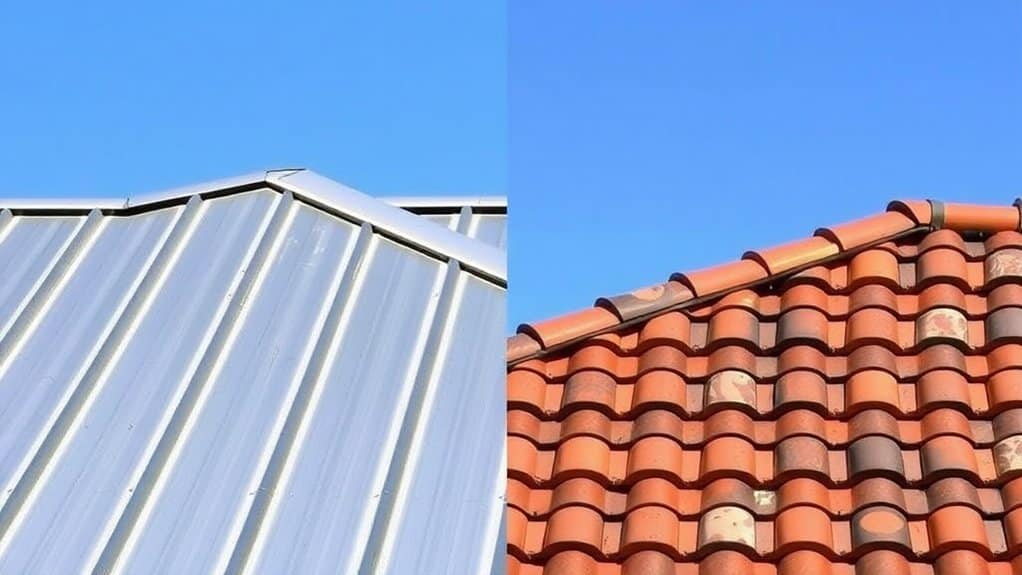
When considering roofing options, it's important to look at the durability and lifespan of both tile and metal roofs.
Metal roofs generally last between 40 to 70 years, with high-quality variants lasting over 70 years. On the other hand, tile roofs, especially clay tiles, can last from 50 to 100 years or more. Longevity is a primary consideration when selecting roof materials, as it not only affects the roof's lifespan but also enhances the resale value of a home. Additionally, the average lifespan of roofs is approximately 30 years, which emphasizes the importance of choosing durable materials.
In terms of materials, metal roofs are known for their corrosion resistance, low maintenance needs, and strong performance in severe weather.
Tile roofs offer great fire resistance and thermal insulation but are heavier and may need more robust support structures.
Energy Efficiency and Insulation Benefits
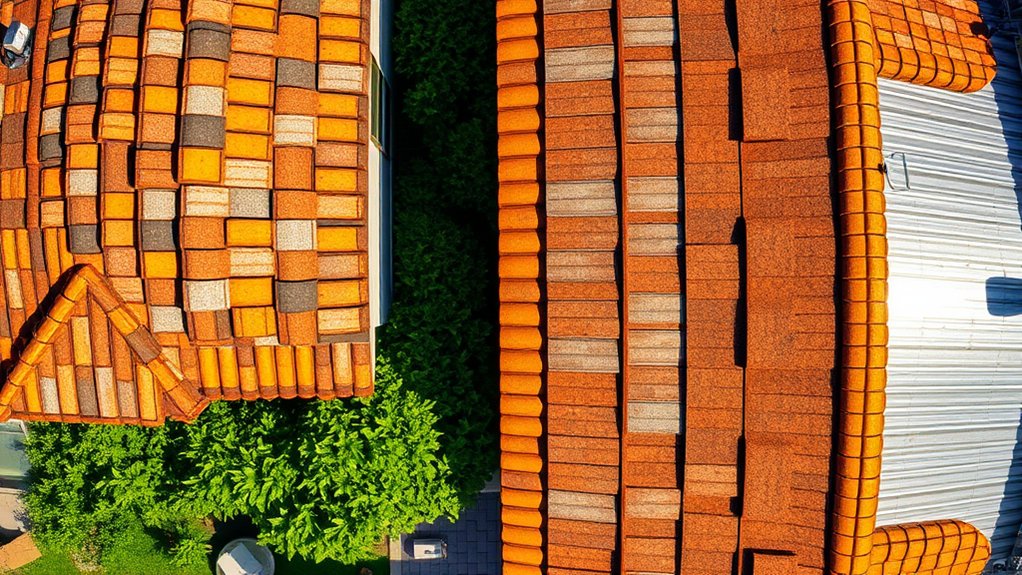
When it comes to energy efficiency and insulation, the type of roofing material you choose is crucial. Metal roofs are excellent at reflecting heat, which can significantly lower your cooling costs in the summer. Additionally, metal roofs reduce reliance on air conditioning, further decreasing energy expenses. On the other hand, tile roofs provide natural insulation, helping to maintain a comfortable temperature throughout the year. Both materials adapt well to different climates, allowing you to enhance energy performance based on your local conditions. Moreover, high R-value insulation can further improve energy efficiency by minimizing heat transfer, making both metal and tile roofs even more effective in reducing energy consumption.
Heat Reflection Capabilities
Both metal and tile roofs provide energy efficiency benefits, but their heat reflection capabilities differ.
Metal roofing often has reflective coatings that significantly reduce heat absorption, resulting in lower cooling costs. This makes metal roofs a popular choice in various climates, helping to maintain comfortable indoor temperatures and reducing the need for air conditioning. Some metal roofs also include built-in insulation layers, further enhancing energy efficiency. Additionally, metal roofs typically last 40 to 70 years, contributing to long-term value and sustainability. Metal roofs also reflect solar heat, which can lead to further energy savings during hot months.
On the other hand, tile roofs, especially clay, tend to absorb and gradually release heat, which offers a more stable temperature but is less effective at reflecting heat.
If maximum heat reflection and energy efficiency are your priorities, metal roofs are likely the better option for you.
Natural Insulation Properties
Natural insulation properties significantly enhance the energy efficiency of roofing materials, and tile roofs are particularly effective in this regard.
Clay and concrete tiles naturally retain heat, absorbing it during the day and releasing it slowly, which helps maintain stable indoor temperatures. The gaps between the tiles also promote airflow, improving ventilation and further regulating your home's climate. This combination can lead to reduced energy consumption and less heat transfer on warm days, which might save you money on energy bills.
While metal roofs can offer insulation benefits through reflective coatings and built-in layers, tile roofs are exceptional for their thermal mass and effective air circulation. Additionally, the use of fibreglass insulation can further enhance the overall energy efficiency of your roofing system.
This makes them a strong choice for energy efficiency in the UK.
Climate Adaptability Factors
When considering roof replacements, it's vital to understand climate adaptability, especially between tile and metal options. Each material offers unique benefits depending on your environment.
Metal roofs are ideal for warmer climates, as they reflect sunlight and can lower cooling costs by 10–25%. They work well with insulation, enhancing energy efficiency in areas affected by varying climate conditions. Additionally, metal roofs generally require less maintenance, which can be advantageous in areas prone to extreme weather.
On the other hand, tile roofs provide excellent natural ventilation, helping to regulate temperatures in both hot and cold climates. This makes them a solid choice for warmer regions. However, their insulation can sometimes lead to higher cooling costs in very hot weather.
Ultimately, your choice should depend on your local climate to ensure your roof meets your home's specific needs efficiently.
Cost Analysis and Initial Investment

When assessing the cost analysis and initial investment for roof replacements, it's important to consider both the upfront costs and long-term savings linked to various materials.
Metal roofs generally range from £50 to £100 per square metre, whereas tile roofs can cost between £70 to £140 per square metre. The complexity of installation also impacts costs; tile roofs often need specialised labour, which can significantly increase expenses.
In terms of investment, metal roofs tend to provide better long-term savings due to their lower maintenance requirements and energy efficiency. Overall project costs for metal roofing typically fall between £11,500 and £20,000, compared to tile roofs, which can reach £40,000 to £60,000.
This makes metal roofing a more economical option for many homeowners.
Aesthetic Appeal of Roofing Options
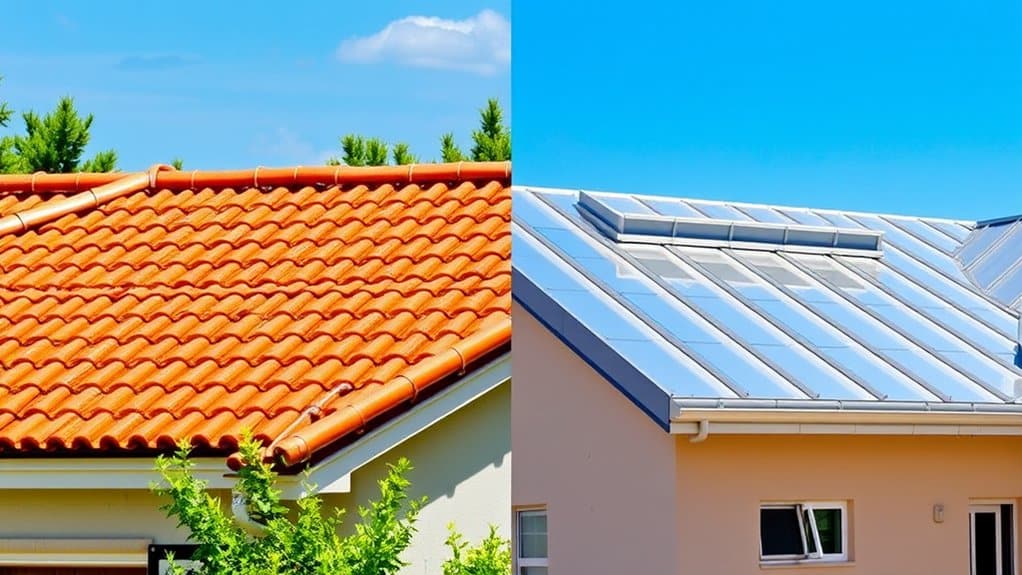
When deciding between tile and metal roofing, consider how each option fits with your home's style and architecture.
Metal roofs offer a contemporary look and allow for various customisations, making them suitable for modern homes.
In contrast, tile roofs provide a timeless appearance that enhances traditional designs, such as Victorian or Georgian properties.
Traditional vs. Modern Styles
Both tile and metal roofs have unique aesthetic qualities, appealing to different architectural tastes.
Tile roofs reflect traditional styles, often using rustic clay or elegant slate that complement historical and Mediterranean designs. However, these materials may not be the most energy-efficient option.
On the other hand, metal roofs showcase modern practicality, featuring sleek lines and various colours that fit contemporary architecture. They can even imitate traditional materials while offering better energy efficiency thanks to their reflective properties.
When selecting a roof, consider how each style matches your home's design, ensuring it meets both your aesthetic preferences and practical needs.
Customization and Versatility
Selecting the right roofing material impacts not just your home's look but also provides significant customization and versatility to suit your personal style. Both metal and tile roofs offer a range of options, including custom colours and distinct textures, enhancing your home's overall appearance.
| Feature | Metal Roofing |
|---|---|
| Material Options | Steel, Aluminium, Copper |
| Colour Variety | Unlimited custom colours |
| Style Mimicry | Resembles wood shakes, slate |
| Texture Options | Stone-coated, textured finishes |
Tile roofs come in various profiles, while metal roofs offer a sleek, modern finish. Both materials allow you to personalise your roof, ensuring your home stands out in any neighbourhood.
Architectural Compatibility Factors
Understanding architectural compatibility factors is crucial when selecting roofing materials, as it affects your home's visual appeal and how well it fits into its surroundings.
For instance, tile roofs are often associated with historical styles and work well in areas like the Mediterranean or in Spanish-style homes, particularly in regions such as the south of England.
On the other hand, metal roofs suit contemporary designs, offering a range of colours to boost curb appeal.
Additionally, local preferences matter; homeowners' associations may prefer traditional tiles to maintain uniformity in neighbourhoods.
Ultimately, it's important to ensure that your roofing choice aligns with community standards and local regulations, so it complements both your home and its environment effectively.
Maintenance Requirements and Repairs
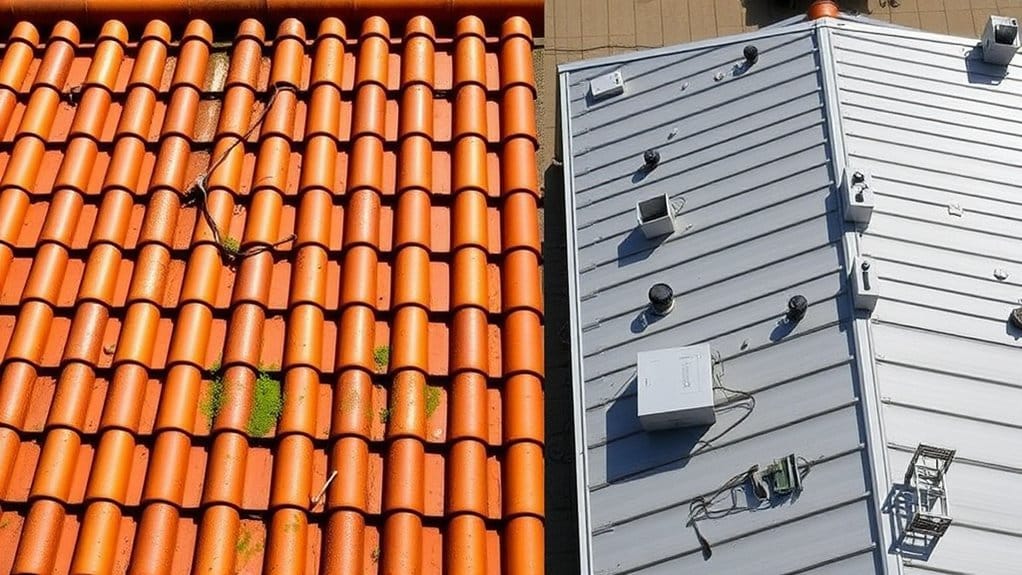
When it comes to roof maintenance, tile roofs require more attention and specialised care than metal roofs. Here are some key points to consider:
- Tile Roof Inspections: Arrange annual inspections and check after storms to ensure your roof remains intact.
- Labour Costs: Be prepared for higher labour costs for tile repairs due to the complexity and specialist skills involved.
- Common Issues: Keep an eye out for cracked or broken tiles, as these need prompt repairs to prevent further damage.
- Maintenance Tools: Use soft wash cleaning methods and low-pressure settings to avoid damaging the tiles during cleaning.
While maintaining a metal roof is generally easier, tile roofs require thorough inspections and careful upkeep to maximise their lifespan.
Prioritising these tasks will help protect your home effectively.
Environmental Impact and Sustainability
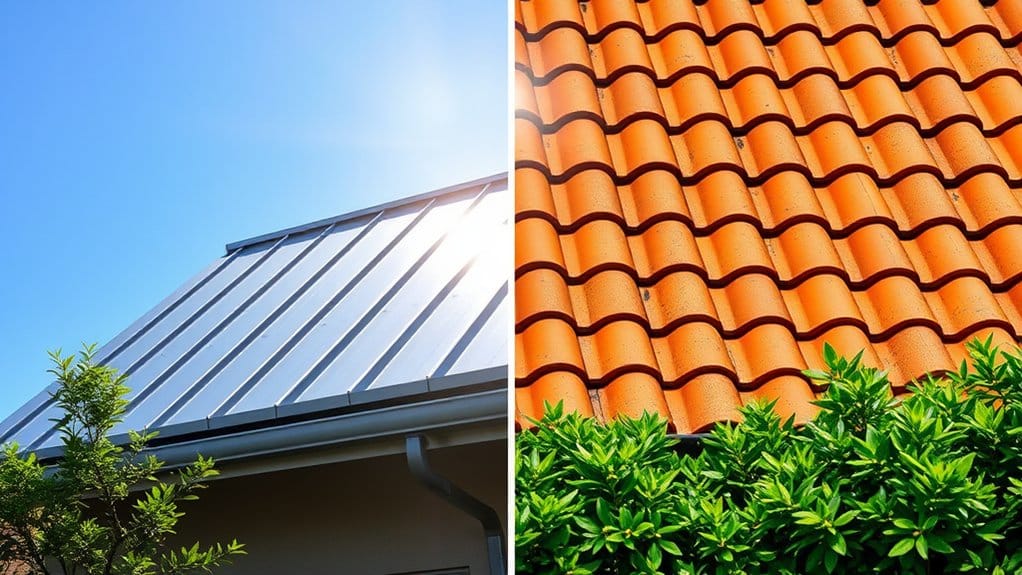
When considering roofing options, the environmental impact and sustainability of materials are significant factors. Metal roofs are a strong choice as they can contain up to 95% recycled content and are fully recyclable, which supports various green certifications and recycling initiatives.
Their production is energy-efficient, resulting in a lower carbon footprint compared to tile roofs, which require substantial energy for quarrying.
Moreover, metal roofs last an average of 50 years, reducing the need for replacements and minimising waste. On the other hand, tile roofs, although durable for over 100 years, have a higher embodied energy and contribute more to landfill waste.
Therefore, opting for metal roofing can greatly enhance your environmental responsibility and promote sustainability in your community.
Weather Resistance and Safety Features

When it comes to weather resistance and safety features, tile and metal roofs each have their strengths.
Metal roofs are particularly good at withstanding high winds and impacts, making them a robust choice for exposed areas.
On the other hand, tile roofs tend to perform better in extreme weather, especially in very windy conditions.
Both materials boast Class A fire resistance, but their impact performance can differ.
It's important to evaluate your local environment and specific needs before making a decision.
Extreme Weather Performance
Extreme weather performance is crucial when choosing roofing materials, with both tile and metal roofs presenting unique benefits for different climates.
Here are key factors to consider for storm resilience and climate suitability:
- Wind Resistance: Tile roofs often pass stringent seismic tests, while metal roofs can withstand winds of up to 140 mph, making them suitable for storm-prone areas.
- Hail Impact: Metal roofs are highly resistant to hail damage, whereas tile roofs may crack under severe impacts, which could be a concern in hail-heavy regions.
- Snow Management: Metal roofs enable snow to slide off easily, reducing the risk of ice dams, unlike tile roofs that might need additional measures to manage heavy snowfall.
- Corrosion Resistance: Metal roofs, particularly aluminium, are excellent for coastal areas due to their resistance to corrosion, which is vital in environments with salty air.
Selecting the right roof for your local climate is essential for ensuring safety and longevity, highlighting the importance of considering extreme weather performance.
Fire Resistance Comparison
When choosing a roofing material, it's important to consider not only its weather performance but also its fire resistance, which is vital for homeowners.
Both metal and tile roofs are non-combustible and boast a Class A fire rating, indicating strong resistance to ignition and flame spread. This makes them suitable for areas at risk of wildfires or lightning strikes.
Moreover, both roofing types adhere to stringent regulations, ensuring they meet safety standards throughout the UK. Their robust structure helps minimise risks during fires, providing peace of mind and safeguarding your home and family.
Impact Damage Resistance
When it comes to impact damage resistance, both metal and tile roofs have their advantages.
Here's what you need to consider when choosing your roofing material:
- Hail Resistance: Metal roofs handle hail exceptionally well, having passed stringent impact resistance tests.
- Wind Performance: Metal roofs can withstand winds of up to 140 mph, while tile roofs also perform admirably in windy conditions.
- Durability: Metal is less likely to crack compared to tile, making it a sturdier choice.
- Snow and Ice Management: Metal roofs efficiently deal with snow loads, which helps prevent ice damming.
These points emphasise the need to assess impact resistance when selecting roofing materials for safety and longevity.
Weight and Structural Considerations

When considering roof replacements, it's important to understand the weight and structural implications of tile versus metal roofs.
Metal roofs weigh between 22.5-67.5 kilogrammes per square metre, significantly lighter than tile roofs, which can weigh up to 400 kilogrammes per square metre.
This weight difference means that metal roofs require less structural support, while tile roofs often need additional reinforcement to handle their weight.
The lighter nature of metal roofing reduces strain on the structure and allows for quicker installation, which can help lower labour costs.
Additionally, metal roofs can often be fitted to existing structures with minimal modifications, whereas tile roofs require skilled craftsmanship for proper installation due to their complexity and weight.
Customization and Design Options
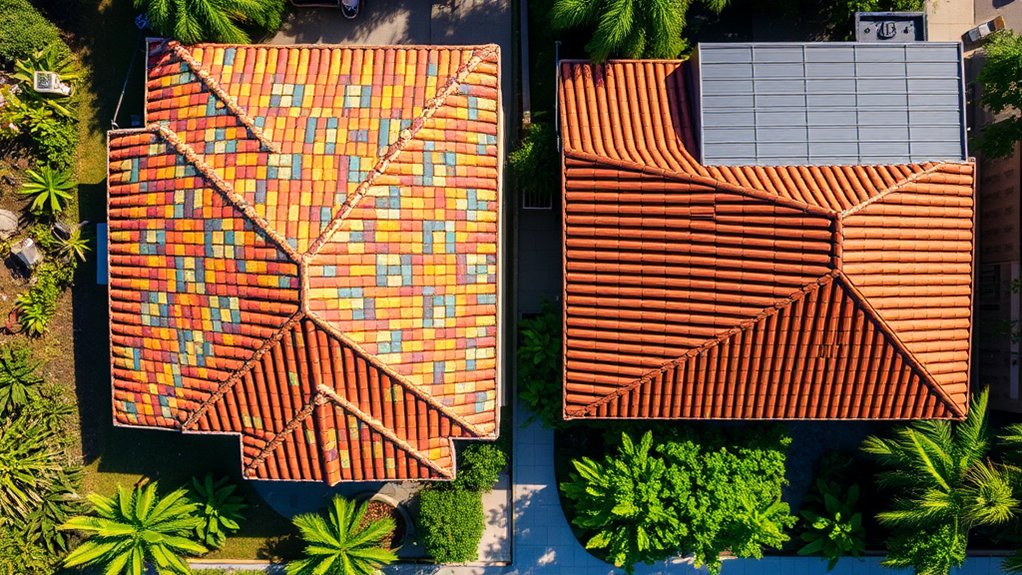
Customisation and design options are crucial when selecting between tile and metal roofs. Both materials offer distinct benefits to enhance your home's appearance and functionality.
Here are some key factors to consider:
- Colour Choices: Metal roofs come in a wide range of colours, while tile roofs can be personalised with various finishes to suit your style.
- Durability: While metal roofs generally outlast traditional tiles, advancements in tile materials are enhancing their longevity.
- Design Styles: Metal roofs can imitate natural materials, providing a modern touch, whilst tile roofs offer classic shapes and styles that reflect different cultural influences.
- Installation Flexibility: Metal tile sheets can be fitted over existing roofs, making installation easier and more adaptable.
Understanding these factors is essential to ensure your roof complements your home's design vision.
Long-Term Value and Return on Investment
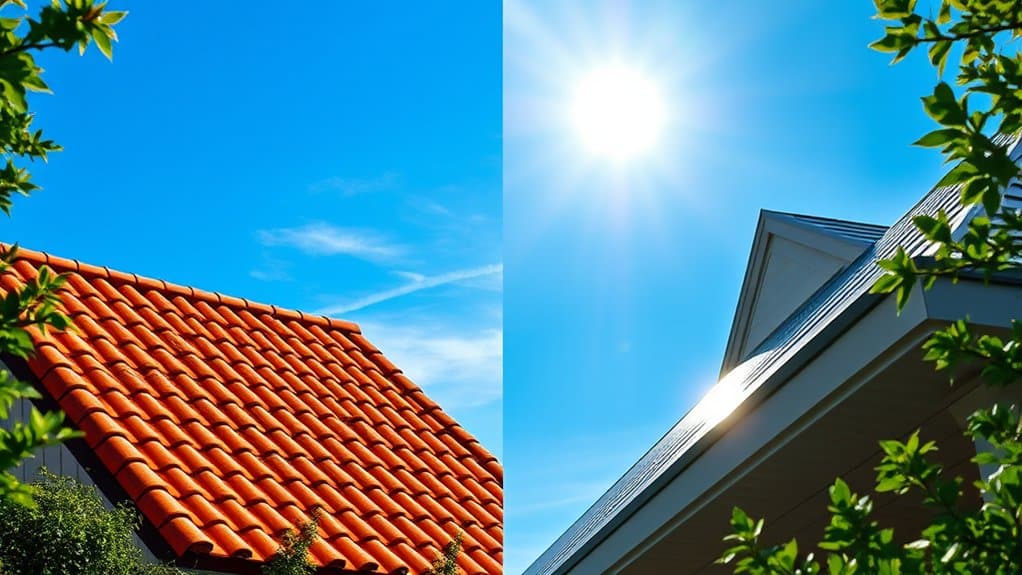
Choosing the right roofing material affects both aesthetics and long-term value. Metal roofs typically have lower initial costs and are easier to install, lasting between 40 to 70 years.
On the other hand, tile roofs can last over 100 years but require a higher upfront investment. However, they can significantly increase your property's value. Both options enhance resale potential due to their durability and visual appeal.
While tile roofs may need more frequent maintenance, metal roofs generally require fewer repairs, leading to long-term savings.
Ultimately, your choice should reflect your financial goals, weighing immediate costs against the potential for increased property value in the future.
Frequently Asked Questions
How Do Local Building Codes Affect Roofing Material Choices?
Local building regulations significantly influence your choice of roofing materials, as they require compliance with specific codes. It's essential to ensure that your chosen materials meet safety standards and the manufacturer's specifications. For example, if you live in an area prone to high winds, you may need to select materials that can withstand such conditions. Adhering to these regulations helps prevent issues during installation and future maintenance.
Can I Install a Metal Roof Over a Tile Roof?
You can install a metal roof over a tile roof, but it's important to check the structural integrity first. Metal roofs are durable, while tile roofs are known for their longevity. Make sure to comply with local building regulations for a successful installation.
What Are the Best Practices for Roof Ventilation?
Think of your roof as a living thing; proper ventilation is crucial for its health. Using a balanced system of intake and exhaust vents can boost energy efficiency and extend the life of your roof. Ensure that airflow pathways are clear of blockages to shield your home from dampness and extreme temperatures. For example, installing soffit vents at the eaves and ridge vents at the peak allows fresh air to circulate effectively.
How Do Weather Conditions Impact Installation Timing?
Weather conditions significantly influence the timing of your roofing installation and can lead to delays. It's best to plan your project during more stable seasons, such as spring or autumn. This approach not only improves efficiency but also ensures a robust and high-quality installation, even in the face of unpredictable weather. For instance, trying to install a roof during heavy rain or strong winds can compromise the project and lead to additional costs.
Are There Warranties Available for Metal and Tile Roofs?
Yes, warranties are available for both metal and tile roofs. Metal roofs generally come with warranties lasting between 20 and 50 years, providing extensive coverage. In contrast, tile roofs primarily focus on material defects and can last over 100 years.
Conclusion
When it comes to roofing, both tile and metal have their advantages. If you're looking for durability and aesthetic appeal, tile could be the better choice. On the other hand, if energy efficiency and storm resilience are what you need, metal might be the way to go. Your decision should take into account your home's requirements, as well as factors like maintenance and cost. By understanding the unique benefits of each option, you can ensure your home remains well-protected and visually appealing for years to come.


