

Top Questions to Ask Your Roofing Contractor
When hiring a roofing contractor, ask about their experience and past projects. Find out how long they have been operating and whether they hold the necessary licences and insurance. It's also crucial to understand how they will protect your property while they work. Request a detailed estimate that includes a payment schedule and the expected timeline for the project. Lastly, clarify any conditions that may result in additional costs. For further insights on selecting the right contractor, explore the key factors to consider.
Key Takeaways
- Ask about the contractor's experience and how long they have been in the roofing trade to ensure you receive reliable and quality service.
- Check that the contractor has the necessary licensing and insurance, including public liability and workers' compensation, for your peace of mind regarding legal and safety matters.
- Inquire about the warranty for both materials and workmanship, including how long it lasts and the process for making a claim.
- Discuss the quality of roofing materials they use, making sure they comply with industry standards and are appropriate for the UK weather.
- Understand how the contractor manages the budget, especially regarding fluctuations in material costs and how potential inflation might affect your project.
How Long Have You Been in Business?
Have you ever considered why the length of time a roofing contractor has been in business is important? Longevity can be a key indicator of stability.
With around 80% of roofing contractors failing within their first two years, opting for one with a solid track record can significantly influence the success of your project. Established contractors are more likely to deliver quality work, comply with local regulations, and uphold warranties. They've honed their skills over the years and typically have extensive industry knowledge, ensuring you receive top-notch service. Furthermore, a contractor with a long-standing presence in your community is likely to be committed to maintaining a good reputation. This focus on customer satisfaction can lead to a more reliable and positive experience throughout your roofing project. Additionally, an established business like S Jones Roofing is dedicated to building lasting relationships with its clients, ensuring ongoing support and service long after the project is completed.
What Is Your Experience With Local Roofing Projects?
When choosing a roofing contractor, it's essential to inquire about their experience with local projects. Their knowledge of regional building regulations and weather patterns can help you avoid potential legal issues and ensure your roof is designed correctly. Furthermore, a contractor with a solid local reputation usually indicates good service and customer satisfaction. A contractor who has established local supplier relationships can provide you with high-quality materials at competitive prices. Additionally, a contractor's experience with similar large-scale projects can greatly enhance the quality and reliability of your roofing installation.
| Key Considerations | Benefits |
|---|---|
| Local Knowledge | Tailors solutions to regional challenges |
| Supplier Network | Access to quality materials at competitive prices |
| Community Reputation | Confidence in dependable service |
Being aware of these factors can significantly influence the outcome of your roofing project, resulting in a robust and compliant roof that meets your community's requirements.
What Types of Roofing Projects Do You Specialize In?

It's important to understand a contractor's expertise in different roofing projects to ensure your needs are met.
Ask about their specialisation in roofing techniques, such as asphalt shingles, metal roofs, or flat roofing systems. This will help confirm they can manage your project effectively. Additionally, effective contractors will stay updated on newer options with recycled materials, which can enhance your roof's sustainability.
Don't forget to ask about unique roof designs like mansard or dome roofs, which require specific skills. Knowing their experience with both residential and commercial roofing can boost your confidence in their work. Additionally, inquire about their familiarity with A-Frame Roof designs, which are popular for their cost-efficiency and aesthetic appeal.
Also, discuss project timelines to set realistic expectations. A knowledgeable contractor will outline a clear plan, ensuring your project runs smoothly and meets your standards. This allows you to focus on providing a reliable roofing solution for your community.
Can You Provide a List of Previous Projects?

How can you assess a roofing contractor's expertise and reliability? One effective method is to review their portfolio. A robust portfolio demonstrates their experience and versatility, indicating their capacity to tackle different roofing challenges.
When evaluating, consider these three key aspects:
- Types of Projects: Look for a variety of residential, commercial, and specialised work.
- Quality of Workmanship: Seek high-quality images and client testimonials that showcase their skills.
- Recent Projects: Ensure the portfolio features recent work relevant to your requirements.
Are You Properly Licensed and Insured?

When selecting a contractor for your roofing needs, evaluating their portfolio is just one step.
It's crucial to verify their licensing and insurance. Ensure the contractor is registered with the relevant local authority, as this is a legal requirement.
For your peace of mind, ask for proof of public liability insurance—typically £1 million for residential projects and £2 million for commercial work.
If they employ workers, make sure they've employers' liability insurance as well. This protects both you and the contractor from potential risks. Additionally, confirm that the contractor understands the importance of regular inspections to maintain warranty validity.
What Is Your Warranty Policy for Materials and Workmanship?
When speaking with your roofing contractor, inquire about their warranty policy for materials and workmanship.
Knowing the length and coverage of these warranties, as well as any options for extensions, can save you trouble later on.
Additionally, ask how to file a warranty claim if issues arise—it's important to be informed before you need to take action. Understanding warranty specifics can empower you to make informed decisions about your roofing investment.
Warranty Duration and Coverage
What should you expect from your roofing contractor regarding warranty duration and coverage? Understanding the importance of warranties is crucial, as they protect you from poor workmanship and material failures.
Here are three key points to consider:
- Warranty Length: Workmanship warranties generally last between 2 to 25 years. A longer warranty often reflects the contractor's confidence in the quality of their work.
- Coverage Limitations: Be clear about what the warranty covers—does it include both labour and materials, or just one of them?
- Claim Process: Ensure you know how to file a claim if problems arise. It's important to have a straightforward process in place for any issues that may come up.
Extended Warranty Options
A solid warranty policy covering both materials and workmanship can significantly enhance your peace of mind when investing in a new roof.
It's important to understand the various coverage options available. Workmanship warranties protect you from installation errors, while material warranties cover defective products. Extended warranties, often available through manufacturers, can provide up to 50 years of non-prorated coverage.
Ensure your contractor is certified, as this can enhance your warranty benefits and ensure comprehensive coverage.
Also, remember to inquire about the registration process to activate these warranties and whether they're transferable should you decide to sell your home.
Ultimately, considering the costs against the long-term reassurance these warranties offer can be a wise investment.
Filing Warranty Claims Process
How can you ensure a smooth process when filing your roofing warranty claims? Understanding the claims process is crucial. Here are three essential steps to follow:
- Collect warranty documents: Make sure you have the original warranty, proof of purchase, and clear photographs of any damage.
- Carry out an initial inspection: Look for any visible problems and note signs of leaks or damage. It might be wise to hire a professional for a thorough evaluation.
- Inform the relevant parties: Contact your contractor or manufacturer promptly about any defects, providing all necessary documentation to prevent delays.
What Types of Roofing Materials Do You Use?
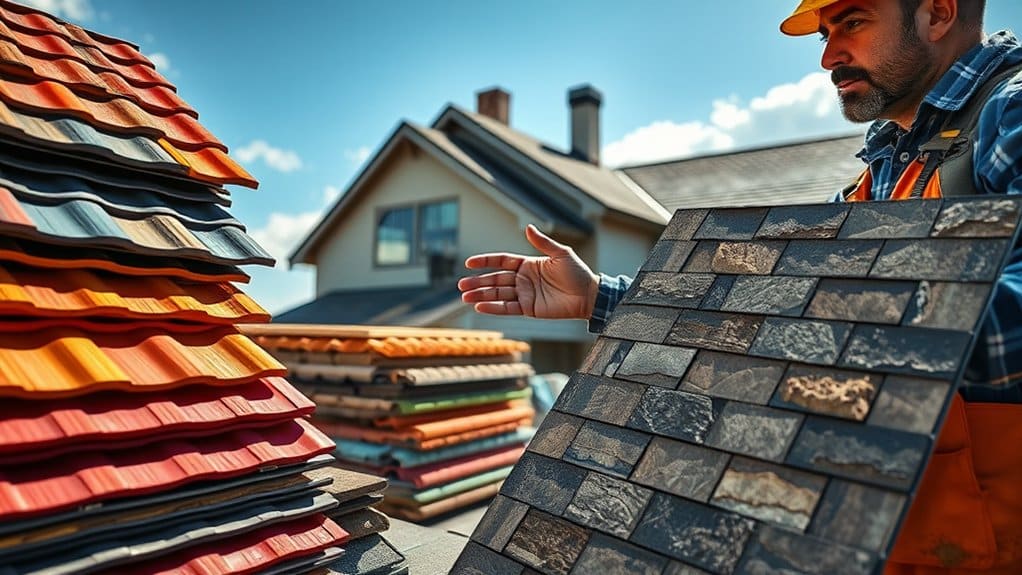
When discussing roofing materials with your contractor, it's important to inquire about the quality standards they adhere to.
Ask if they provide eco-friendly options and which manufacturers they work with for dependable products.
Knowing these details will help you make a well-informed decision for your roofing project.
Material Quality Standards
What roofing materials do you use, and how do they meet quality standards? Knowing the materials ensures safety and durability. Consider these three key points:
- Material Certifications: Opt for materials that comply with British Standards for fire resistance and durability, such as BS 476.
- Installation Standards: Ensure your contractor adheres to proper installation practices, as this significantly affects the material's performance and longevity.
- Impact and Tear Resistance: Inquire about the material's ability to endure severe weather conditions, confirming it meets the relevant impact ratings and tear strength.
Eco-Friendly Options Available
Are you considering eco-friendly roofing options? Choosing sustainable materials can significantly benefit the environment.
Speak to your contractor about metal roofing, which contains over 25% recycled content and is fully recyclable at the end of its life. Solar tiles can generate renewable energy, helping to reduce reliance on traditional power sources.
Green roofs with vegetation can enhance air quality and reduce stormwater runoff. Concrete and recycled shingles are also worth exploring for their durability and energy efficiency.
By selecting these eco-friendly materials, you're not only improving your home's sustainability but also contributing to a healthier planet.
Don't hesitate to ask about the best options for your needs!
Manufacturer Partnerships Explained
Understanding the manufacturer partnerships your roofing contractor has can significantly impact the quality and selection of materials for your project.
These relationships determine the materials available and ensure they meet industry standards. Here are a few types of partnerships to consider:
- Supplier Partnerships: These help streamline the sourcing and delivery of materials, ensuring timely access to what you need.
- Manufacturing Partnerships: These collaborations can boost product availability and demand, allowing for a wider range of options.
- Strategic Relationships: These focus on shared goals and resources, fostering innovation and better service.
What Safety Protocols Do You Follow During Roofing Projects?

How does your roofing contractor ensure safety during projects? They focus on safety training and maintaining equipment to protect workers and your property. Here are some key protocols they may follow:
| Safety Protocols | Description |
|---|---|
| Compliance with UK Regulations | Adhering to regulations for fall protection, among others. |
| Regular Training Sessions | Providing crews with education on recognising and managing hazards. |
| Job Site Inspections | Performing checks to ensure safety measures are in place. |
| Fall Protection Measures | Implementing guardrails and personal fall arrest systems. |
| Safe Handling of Hazardous Materials | Training on the proper handling and disposal of chemicals. |
These protocols help create a safer environment for everyone involved.
How Do You Protect My Property During the Project?

Protecting your property during a roofing project is crucial to avoiding damage and ensuring everything runs smoothly.
Here's how your contractor will keep your home safe:
- Tarping: Heavy-duty tarps will be placed around windows, gardens, and pools to protect them from debris.
- Debris Management: Your contractor will use skip bins and chutes to manage waste effectively, ensuring your garden remains tidy.
- Regular Cleanup: Expect frequent cleanups, including magnetic sweeps to collect stray nails and metal pieces, keeping the area safe for you and your pets.
Can You Provide a Detailed Estimate and Payment Schedule?

What should you expect in a roofing estimate? A detailed estimate ensures clarity about your project. Look for a breakdown of costs, a clear payment schedule, and the scope of work. Here's a straightforward table outlining key components:
| Component | Details |
|---|---|
| Company Information | Name, address, and contact details |
| Scope of Work | Description of tasks involved |
| Materials and Costs | List of materials and their costs |
| Payment Schedule | Initial deposit, progress payments, final payment |
| Warranty Details | Information on material and workmanship |
This structured approach will help you understand what to expect and ensure that there are no surprises along the way.
What Is the Expected Timeline for the Project?

What Is the Expected Timeline for the Project?
Roofing projects can vary significantly in duration, so understanding the expected timeline is essential for planning.
Here are three key factors that can influence your project's timeline:
- Roof Type: Asphalt shingles typically take 1-3 days to install, while tile roofs may require 5-10 days due to their complexity.
- Weather Conditions: Adverse weather, such as rain or extreme temperatures, can lead to delays. It's wise to anticipate potential interruptions.
- Material Availability: If there are delays in material delivery, the start or progress of your project may be affected.
By discussing these factors with your contractor, you can stay informed and prepared.
Asking about the expected timeline will help you manage your schedule and expectations throughout the roofing process.
What Conditions Could Lead to Additional Costs?

When planning your roofing project, be mindful that unforeseen damage can arise, resulting in unexpected costs.
For instance, if you discover rotten wood during the renovation, it may require additional materials and labour.
Moreover, material prices can vary due to market fluctuations, which may affect your overall budget.
Being aware of these factors in advance can help you manage your expenses more effectively.
Unforeseen Damage Discovery
Have you ever thought about how unforeseen issues can unexpectedly increase your roofing costs?
During the process, you might come across hidden damage that needs urgent attention.
Here are three common problems that can lead to extra expenses:
- Wood Rot or Decay: This is often discovered when the roof is removed and can jeopardise the structure's integrity.
- Hazardous Materials: Finding asbestos or similar substances requires specialised handling and removal.
- Missing Structural Elements: Essential components like beams mightn't be obvious until the renovation begins.
Being aware of these potential issues can help you plan effectively and communicate clearly with your contractor.
Understanding these hidden challenges ensures your roofing project stays on schedule and within budget, ultimately benefiting your home.
Material Price Fluctuations
Unforeseen damage can lead to unexpected costs during your roofing project, but fluctuations in material prices can complicate your budget even further. It's crucial to understand how different factors influence pricing trends. For instance, inflation affects not just material costs but also transportation and labour, resulting in a ripple effect on your overall expenses. Similarly, disruptions in the supply chain and seasonal demand can push prices up.
| Factor | Impact on Costs |
|---|---|
| Inflation | Increases material prices |
| Supply Chain Disruptions | Reduces availability |
| Seasonal Demand Variations | Drives costs higher during peaks |
Staying informed about these factors will help you navigate challenges and make sound decisions for your roofing project.
Frequently Asked Questions
Do You Offer Emergency Roofing Services?
Yes, we provide emergency roofing services available 24/7. Our swift response ensures that your urgent needs are addressed promptly, offering temporary repairs and expert evaluations to safeguard your home from further damage. In an emergency, you can count on us to be there for you!
How Do You Handle Weather-Related Delays?
When weather-related delays happen, we utilise proactive weather forecasting and keep you updated on any changes. We adjust timelines as needed, ensuring you're well-informed and comfortable throughout the process. Our top priority is safety and efficiency in every project. For example, if heavy rain is forecasted, we'll notify you promptly and reschedule accordingly to avoid any disruptions.
What Is Your Process for Project Cleanup?
Your project cleanup involves using designated cleaning materials to ensure safety and efficiency. Once the work is complete, we conduct a thorough inspection to confirm that no debris is left behind, restoring your property to its original condition.
Can I Communicate Directly With Your Crew?
Yes, you can communicate directly with our crew. This ensures you receive timely project updates and that your concerns and questions are addressed promptly. For example, if you have specific requests about materials or timelines, you can discuss these directly with the team. This straightforward communication helps make the roofing process smoother and more enjoyable for you.
Will You Obtain Necessary Permits for the Project?
Have you considered how permit regulations might affect your project timeline? Rest assured, I will take care of all necessary permits, ensuring your roofing project remains compliant and on schedule, avoiding any unnecessary delays.
Conclusion
By asking these essential questions, you're not only protecting your investment but also ensuring a smoother roofing project. A trustworthy contractor will value your thoroughness and give you straightforward answers. Remember, an informed homeowner fosters better collaboration and outcomes. So, don't shy away from digging deeper—this is your home! With the right questions and a reliable contractor, you can rest easy knowing your roofing project is in capable hands.


