

How to Prevent Leaks in UK Residential Roofs
To prevent leaks in residential roofs across the UK, conduct regular inspections at least once a year, or twice for older roofs. Opt for quality materials such as EPDM for flat roofs or metal roofing, which offer better durability. Ensure effective ventilation to minimise moisture buildup, aiming for a vent area ratio of 1:300.
Check that flashing is properly installed around chimneys and at roof-to-wall junctions to effectively redirect water. Regularly clean your gutters to avoid overflow, which can lead to leaks. By taking these straightforward steps, you can significantly extend the lifespan and integrity of your roof, ultimately protecting your home's value and comfort.
Key Takeaways
- Schedule regular roof inspections at least once a year, or every six months for flat roofs, to catch potential problems early.
- Choose high-quality roofing materials such as EPDM, metal, or TPO for improved durability and waterproofing.
- Ensure proper installation of flashing around chimneys and walls to effectively direct rainwater away from vulnerable spots.
- Keep gutters in good condition by cleaning them twice a year and checking for any damage to prevent water overflow and leaks.
- Use effective ventilation strategies, like a combination of ridge and soffit vents, to reduce moisture buildup in the roof space.
Regular Roof Inspections
Regular roof inspections are crucial for maintaining your home's roof and preventing leaks. For most roofs, an annual inspection is recommended. If you have a flat roof, it's best to inspect it twice a year, ideally before and after winter. Heritage roofs should also be checked at least once a year, but depending on their condition, more frequent checks may be necessary.
Timing is key. Spring inspections help identify any damage caused by winter weather, while autumn inspections prepare your roof for the colder months ahead. Always carry out a post-storm inspection to assess any damage from severe weather. For older roofs, consider having them inspected twice a year to catch potential issues early. Regular inspections not only help maintain the roof's integrity but also can prevent costly repairs in the future. Comprehensive evaluations during these inspections ensure that all critical components are assessed for potential vulnerabilities.
Hiring a qualified professional for these inspections is advisable. They'll provide a thorough assessment of both the interior and exterior components of your roof, such as tiles, flashing, and drainage systems.
Taking care of minor issues promptly can save you money on repairs later and extend your roof's lifespan, keeping your home safe and energy-efficient.
Quality Material Selection
Here are four roofing choices to consider:
- EPDM Rubber Roofing: This affordable and durable option is ideal for flat roofs, offering excellent waterproofing and flexibility to endure varying weather conditions. EPDM rubber is ideal for flat roofs, flexible and elastic.
- Metal Roofing: With a remarkable lifespan of up to 70 years, metal roofing is energy-efficient and requires minimal maintenance, making it a smart investment. Metal roofs also provide excellent weather resistance against hail, high winds, and heavy snow.
- Asphalt Shingles: Cost-effective and versatile, asphalt shingles come in a range of styles and colours, allowing for personalisation while providing dependable protection.
- TPO Roofing: Merging the benefits of EPDM and PVC, TPO boasts outstanding UV resistance and puncture protection, making it a top choice for contemporary roofs.
Choosing the right materials is essential for minimising leak risks.
Effective Ventilation Strategies
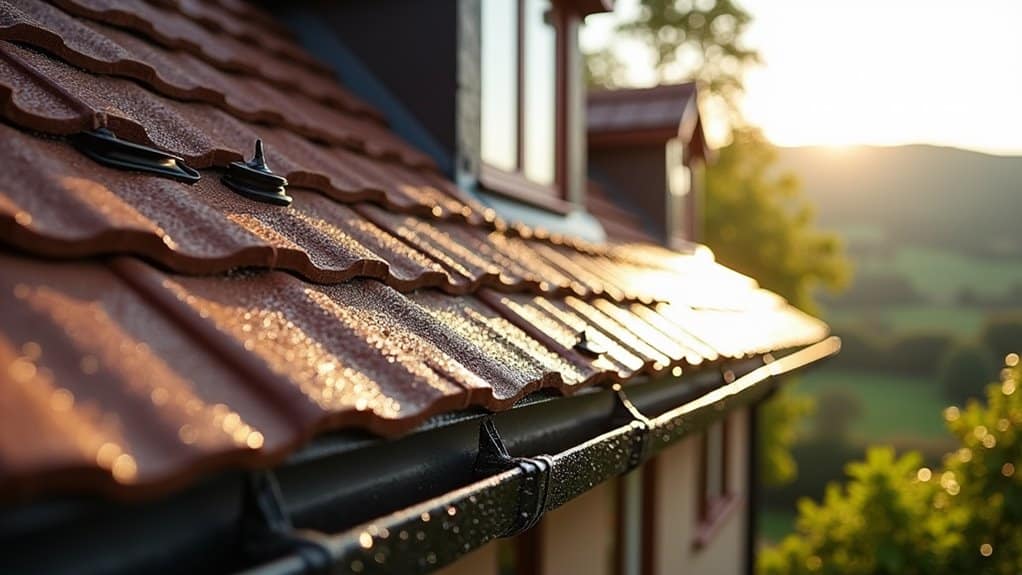
Effective ventilation strategies are essential for preserving your roof's integrity and preventing leaks. Aim for a 1:300 ratio of vent area to loft space to ensure proper airflow. This helps prevent moisture buildup, which can cause condensation problems.
Using a mix of ridge vents and soffit vents creates an efficient airflow system: ridge vents allow hot air to escape, while soffit vents bring in cooler air. Additionally, maintaining a healthy loft space contributes to improved indoor comfort during humid summers and cold winters. Proper ventilation not only mitigates the risk of structural damage but also enhances energy efficiency.
Consider wind-driven turbines and powered extractor fans for improved moisture control. It's vital to install these systems correctly, ensuring vents are placed at both high and low levels to facilitate effective airflow throughout the loft.
Regular inspections and maintenance of your ventilation system are crucial. Check ridge vents for blockages and inspect soffit vents for any damage to ensure optimal airflow.
Flashing and Sealing Techniques
Proper flashing and sealing techniques are crucial for preventing leaks in your roof. Understanding the various types of flashing and employing effective sealing methods can significantly extend the life of your roofing system. For instance, using lead flashing around chimneys or dormer windows is a reliable way to guard against water ingress. Utilizing step flashing at roof-to-wall intersections can further enhance protection against leaks. Additionally, incorporating dry fix systems can help reduce reliance on mortar, which is prone to failure and can lead to leaks. Correct installation and regular maintenance are vital to protect your home from water damage and avoid expensive repairs.
Importance of Proper Flashing
Proper flashing installation is crucial for safeguarding your roof against leaks and water damage. Flashing directs water away from vulnerable areas like chimneys and skylights. Ignoring this can result in significant damage and hefty repair bills.
Here are four reasons to prioritise proper flashing:
- Prevents Water Infiltration: Flashing materials, such as aluminium and copper, keep water from seeping through edges and seams.
- Maintains Roof Integrity: Effective flashing techniques help preserve your roof's structure against adverse weather conditions, which is essential for maintaining roof integrity.
- Reduces Mold and Damage Risk: Proper installation minimises the chance of mould growth and structural issues, protecting your home and health.
- Cost-Efficient Investment: Spending on quality flashing and professional installation can save you money on repairs in the long run.
Sealing Techniques for Longevity
Sealing techniques are vital for prolonging the life of your roof and preventing leaks. One effective method is the banding technique, particularly suited for single-ply roofs. By wrapping an unreinforced membrane around soil vent pipes to at least 150mm high, you create a strong barrier against water ingress.
For hot-melt roofs, pitch pockets effectively seal multiple penetrations and irregular shapes. Cover flashings are equally important as they protect base flashings, rooflights, and upstand kerbs, ensuring comprehensive coverage.
Using liquid sealing materials like cold liquid bitumen is also beneficial for resealing around structures such as ventilation pipes and wall joints, enhancing waterproofing. Bitumen membranes offer high resistance to aggressive substances, making them ideal for flat roofs.
Regular maintenance is crucial; inspect your roof after severe weather or seasonal changes to identify any issues early. Additionally, conducting regular checks can help in early leak detection and prevent further damage.
Gutter Maintenance Practices
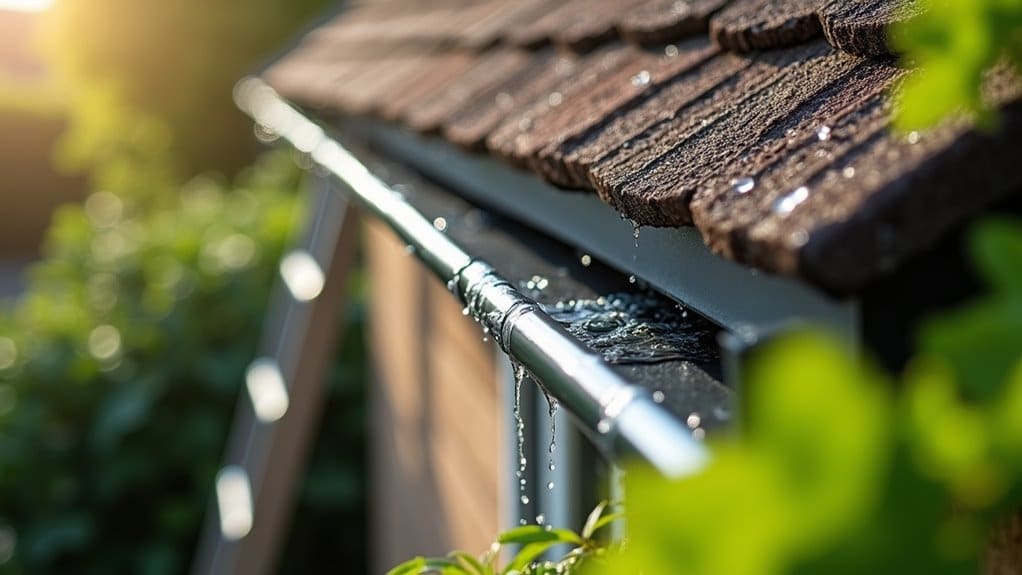
To prevent leaks in your roof, regular gutter cleaning is vital for ensuring proper water drainage.
Check your gutters for debris and any signs of damage, as even small issues can escalate into serious problems.
Importance of Regular Cleaning
Regular cleaning of your gutters is crucial for maintaining a healthy roofing system and preventing leaks in your home. By managing debris effectively through routine gutter cleaning, you can remove leaves, twigs, and dirt that may cause clogs.
To ensure your gutters perform at their best, consider the following practices:
- Schedule Seasonal Cleanings: Aim to clean your gutters at least twice a year, preferably in spring and autumn, to keep them clear.
- Use the Right Tools: Invest in tools specifically designed for safe and efficient gutter cleaning; this can save you time and effort.
- Clear Downspouts: Ensure downspouts are free from blockages to prevent water backup and overflow, which can harm your home's foundation.
- Inspect for Damage: While cleaning, check for any signs of damage, such as holes or sagging sections that may need immediate repair.
Gutter Inspection Techniques
Regular gutter inspections are crucial for maintaining an effective drainage system and preventing leaks in your home.
First, ensure your gutter design suits your roof's size and shape. Frequent checks can help you spot damaged seams, blockages, and debris build-up. For hard-to-reach areas, consider using drones or thermal imaging to identify hidden moisture without compromising safety.
Visual inspections are also important; using binoculars from the ground can help you detect obvious damage. After heavy rain or storms, conduct a physical inspection for a closer look at the gutter components.
Address any issues you find promptly to keep your gutters functioning properly.
Installing gutter protection systems can further improve your inspections by reducing debris entry. Pay attention to any moss or algae growth, as these can indicate moisture issues that may lead to clogs.
Additional Protective Measures
Effective protection against leaks in residential roofs requires additional measures to enhance durability and resilience.
By installing waterproof barriers and using advanced waterproofing techniques, you can significantly lower the risk of leaks and the damage they cause.
Here are four key protective measures:
- Install Waterproof Barriers: Fit high-quality waterproof barriers around eaves, vents, chimneys, and skylights to block water seepage and ensure warranty coverage.
- Use Advanced Waterproofing Techniques: Consider applying silicone roof coatings or sprayed polyurethane foam, both of which provide excellent durability and insulation against the elements.
- Regular Inspection and Maintenance: Conduct seasonal inspections to identify issues like damaged tiles and blocked gutters before they lead to major leaks.
- Implement Efficient Drainage Systems: Ensure your gutters are clear and functioning properly to prevent water pooling, and consider fitting gutter guards to reduce debris buildup.
Professional Roofing Services

Professional roofing services are crucial for maintaining the integrity of your home's roof, ensuring that issues are spotted and dealt with swiftly. Regular inspections by qualified professionals help identify signs of wear, damaged tiles, or deteriorating flashing before they result in major leaks.
It's wise to arrange these inspections following severe weather or at the change of seasons to preempt any problems.
Skilled contractors possess a deep understanding of roofing technology and hold the necessary qualifications to undertake various roofing tasks. Their expertise enables them to perform comprehensive maintenance, including checking attic ventilation and sealing any gaps in your roof's structure.
These professionals provide a broad range of services, from new roof installations to repairs, using high-quality materials that extend the life of your roof.
By opting for their services, you not only prevent leaks but also ensure your roof meets local building regulations. Regular maintenance can save you money on expensive repairs while enhancing your property's value.
Trusting experts gives you peace of mind, knowing your home is safeguarded against potential roofing issues.
Frequently Asked Questions
How Can I Identify Early Signs of a Roof Leak?
To spot early signs of a roof leak, check for water stains or damp patches on your ceilings and walls. These signs indicate moisture getting in, which can cause more serious damage if not dealt with quickly.
What Are Common Causes of Roof Leaks in the UK?
Think of your home as a fortress facing the elements. In the UK, heavy rain and strong winds can wear down roofing materials. This can lead to damaged tiles, faulty flashing, and structural issues, all of which can result in leaks. For example, slipped or cracked tiles can allow water to seep through, while poorly installed flashing around chimneys or vents can create weak spots. Regular maintenance is key to preventing these issues and keeping your home dry.
How Do I Choose a Reliable Roofing Contractor?
To select a trustworthy roofing contractor, start by checking their credentials and insurance. It's wise to choose contractors who provide comprehensive roofing warranties, ensuring the quality of their work. Investigate their reputation through reviews and ask about their project management approach to gauge the likelihood of a successful outcome. For instance, a contractor who communicates clearly and adheres to timelines is often a good sign.
What Are the Costs Associated With Roof Repairs?
On average, roof repairs in the UK cost about £650. When planning your budget, keep in mind that factors such as the size of the roof and the materials used can significantly affect the total cost. For example, a small flat roof may be less expensive to repair than a larger, pitched roof made of slate. It's essential to be prepared for these potential variations in your expenses.
How Often Should I Replace My Roof?
You should replace your roof based on its lifespan and the materials used. Asphalt roofs typically last 15-20 years, while slate roofs can last over 100 years. Regular inspections are crucial to determine when a replacement is needed. For example, if you notice leaks or missing tiles, it may be time to consider a new roof.
Conclusion
To prevent leaks in your UK residential roof, regular inspections, quality materials, and proper ventilation are crucial. Take, for example, a homeowner in Manchester who discovered water stains after heavy rain. An inspection revealed poor flashing around the chimney. By fixing this issue and investing in quality materials, they not only stopped the leak but also extended their roof's lifespan. Being proactive is vital for protecting your home from expensive water damage.


