
The 5 Best Types of Roof Insulation for UK Homes
When it comes to roof insulation for UK homes, there are several excellent options to consider.
- Fibreglass Insulation: This is a popular choice due to its affordability and effectiveness. It’s widely used and provides good thermal performance.
- Polyisocyanurate Boards: These boards offer high thermal efficiency and are known for their durability. They’re ideal for those looking to maximise energy savings.
- Expanded Polystyrene: This is a cost-effective solution that’s easy to install. It’s a great option for DIY enthusiasts.
- Extruded Polystyrene: If you’re dealing with damp conditions, this type excels in moisture resistance, making it suitable for certain areas of your home.
- Spray Foam Insulation: This creates a superb air barrier, which can significantly reduce energy bills. It’s a more modern approach that many homeowners are opting for.
Each insulation type comes with its own advantages, whether it’s thermal performance or moisture resistance. Selecting the right one can greatly enhance your home’s comfort and energy efficiency. Consider your specific needs to find the best fit.
Key Takeaways
- Fibreglass Insulation: Cost-effective and efficient, fibreglass provides good thermal performance and fire resistance, making it a popular choice for UK homes.
- Polyisocyanurate (PIR) Boards: These boards offer excellent insulation with low thermal conductivity, perfect for energy efficiency and long-lasting performance in residential roofs.
- Expanded Polystyrene (EPS) Boards: A budget-friendly option, EPS is mould-resistant and waterproof, making it suitable for various roofing needs.
- Extruded Polystyrene (XPS) Insulation: Ideal for damp conditions, XPS retains its insulation quality and strength, making it a great choice for challenging environments.
- Spray Foam Insulation: This type provides outstanding air sealing and noise reduction, potentially leading to significant savings on heating bills and lasting up to 80 years.
Fiberglass Insulation
When insulating your home, fiberglass insulation is a top choice for homeowners in the UK. It significantly boosts energy efficiency, helping you maintain comfortable indoor temperatures and cut down on heating and cooling costs. Available in batts, rolls, or loose-fill, it’s versatile for various uses. Additionally, fiberglass insulation is known for its fire resistant properties, ensuring safety while providing thermal regulation. Proper moisture management is also crucial to prevent mold growth and ensure the insulation remains effective.
Installation is straightforward: clear out any old insulation or debris, measure the area, and cut the fiberglass to size. Lay the batts across attic floors and walls, ensuring complete coverage without gaps, and secure them with tape to stop any shifting.
For long-term performance, keep these maintenance tips in mind. Fiberglass insulation generally needs replacing every 7 to 10 years, as it can settle over time, affecting its insulation value.
Regularly check for signs of settling or moisture, even though fiberglass absorbs less water than some alternatives. If you’re uncertain about installation or upkeep, it’s wise to hire a professional to ensure safety and efficiency.
With proper care, fiberglass insulation can deliver lasting benefits for your home.
Polyisocyanurate (PIR) Boards
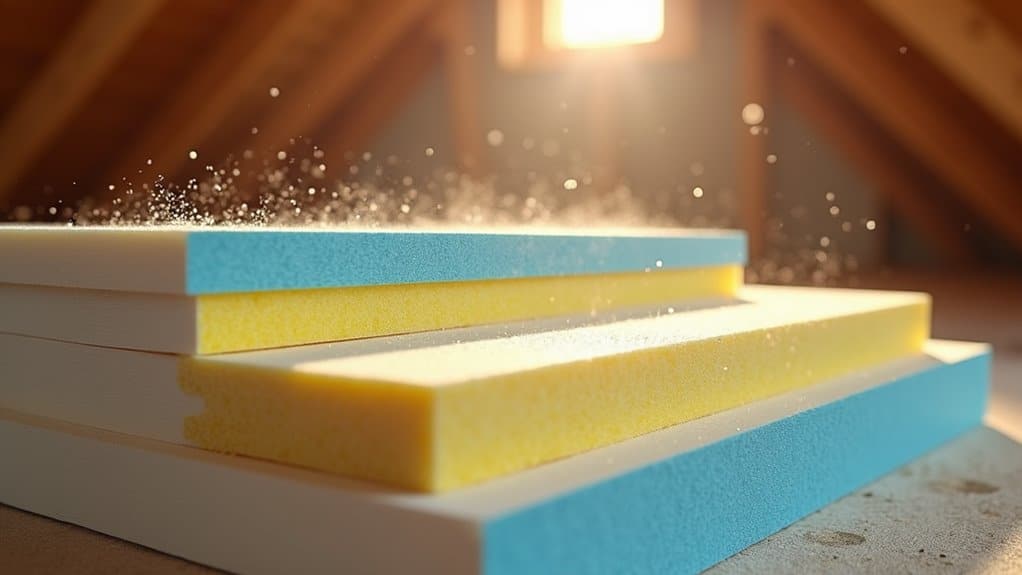
For homeowners looking for effective insulation solutions, Polyisocyanurate (PIR) boards are an excellent choice thanks to their outstanding thermal performance and versatility.
One key benefit of PIR boards is their low thermal conductivity of just 0.022 W/mK, which allows for superior insulation with thinner boards. This means you can maximise insulation while saving valuable space in your home. Moreover, using sustainable materials like recycled plastics in roofing products aligns with the growing focus on eco-friendly building practices.
PIR boards also resist moisture effectively, maintaining their shape and insulation properties over time—essential for long-term performance. Their durability is further bolstered by their ability to withstand pressure, making them ideal for areas that may experience foot traffic during installation. Additionally, these boards are designed to maintain insulation effectiveness over time, ensuring consistent performance throughout their lifespan.
Additionally, PIR insulation is lightweight, weighing around 32 kg/m³, which reduces structural load and supports your home’s integrity.
Installation is straightforward, as PIR boards are easy to cut and handle. However, it’s important to consider fire safety; these boards shouldn’t be used in external walls of buildings taller than 11 metres due to their combustibility.
Expanded Polystyrene (EPS) Boards

Expanded Polystyrene (EPS) boards are a budget-friendly insulation option tailored for UK homeowners. With a thermal conductivity of approximately 0.042 W/mK and an R-value between R-3.9 and R-4.4 per inch, they deliver excellent thermal efficiency. Their durability and moisture resistance make them suitable for a variety of uses. EPS is a lightweight and versatile material, making it suitable for various insulation applications(low thermal conductivity). Additionally, EPS boards can be enhanced by incorporating advanced insulation techniques to further improve energy efficiency.
Here are some key benefits of EPS:
- Versatility: Perfect for insulating walls, floors, and roofs.
- Easy Installation: Can be easily applied using adhesive or mechanical fixings.
- Long-lasting Performance: Mold-resistant and waterproof, ensuring durability.
- Custom Fit: Boards can be measured and cut to fit snugly.
For a successful installation, ensure the boards are well-aligned and the surface is properly prepared.
Secure them firmly, either directly to the wall or with mechanical fixings, particularly in challenging weather.
After installation, it’s advisable to cover the boards with an outer layer for extra protection.
Extruded Polystyrene (XPS) Insulation

Extruded Polystyrene (XPS) insulation is an excellent choice for UK homeowners wanting to improve their property’s thermal performance.
With great moisture resistance, XPS is well-suited for damp conditions, ensuring it remains effective over time. Its high compressive strength makes it ideal for demanding applications, such as inverted flat roofs and below-ground slabs, where durability is key. Additionally, XPS insulation’s superior load-bearing capacity makes it particularly beneficial for heavy loads often found in construction. The use of sustainable materials in roofing can further enhance the overall environmental impact of your building.
In terms of thermal efficiency, XPS insulation features low thermal conductivity and high thermal resistance, helping you keep your home comfortable while lowering energy bills.
It’s versatile and can be used in various applications, including flooring, green roofs, and external wall insulation below the damp proof course.
Installing XPS is quite straightforward—just make sure the surfaces are clean, take accurate measurements, and use a strong adhesive for a secure fit.
Priced around £26 per m² for a 100mm thick board, it’s a valuable investment in energy efficiency.
Environmentally, XPS stands out for its low global warming potential and recyclability, making it a responsible choice for modern building projects.
Opt for XPS insulation to boost both comfort and sustainability in your home.
Spray Foam Insulation

Spray foam insulation is an effective solution for homeowners looking to improve energy efficiency. It can help reduce heating bills by up to 56% annually and has a lifespan of up to 80 years, making it a worthwhile investment. Additionally, homes without insulation can lose 35-40% of heat through walls and roofs, highlighting the importance of proper insulation. Regular inspections can help identify areas where gutter maintenance may be necessary to further enhance energy efficiency.
Key benefits include:
- Noise Reduction: Diminishes outside noise for a more comfortable home.
- Pest Control: Forms a barrier against rodents and pests.
- Structural Strength: Increases wall and roof strength by 250%.
- Quick Application: Sets in just 5 seconds, ensuring minimal disruption.
However, it’s important to consider the environmental impact of traditional spray foam, which often contains petroleum-based components and high-GWP blowing agents.
Fortunately, newer eco-friendly alternatives are now available that address these concerns.
Installation usually takes one to two days, with costs around £35 per square metre. Proper installation is crucial to avoid roof damage and ensure optimal performance.
Frequently Asked Questions
How Long Does Roof Insulation Typically Last Before Replacement?
Roof insulation generally lasts between 20 to 30 years, depending on the quality of installation and materials used. Signs that it may need replacing include moisture, damage, or compression. It’s advisable to inspect your insulation every 5 to 10 years to ensure it remains effective.
Can Roof Insulation Help Reduce Noise Pollution in Homes?
Yes, roof insulation can significantly reduce noise pollution in homes. By using quality insulation materials, you can enjoy soundproofing advantages that enhance your living space. For example, if you live near a busy road, proper insulation can help muffle the sound of traffic, making your home more peaceful. Additionally, it improves energy efficiency and can boost your property’s value.
Is Roof Insulation Installation a DIY Project or Best Left to Professionals?
Installing roof insulation can be a DIY project, but it’s essential to weigh the costs and ensure proper installation techniques are used. While tackling it yourself might save some money upfront, hiring professionals can guarantee efficiency and compliance with regulations. This reduces risks and can save you more in the long run, making professional services a more sensible choice for many homeowners.
What Are the Environmental Impacts of Different Roof Insulation Materials?
When selecting roof insulation materials, it’s important to think about their environmental benefits and sustainability. Materials like cellulose and hemp have lower carbon footprints, making them eco-friendly choices. Sheep wool is another great option, providing effective natural insulation. Each of these choices can significantly affect your home’s ecological impact.
How Do I Maintain Roof Insulation After Installation?
To effectively maintain your roof insulation, carry out regular visual checks for any visible damage. If you spot common issues like damp or sagging, address them immediately. Clean surfaces like lofts and eaves regularly to prevent build-up. Ensure all gaps are sealed properly to avoid heat loss. Lastly, consider scheduling professional inspections periodically to ensure your insulation remains efficient and performs well over time.
Conclusion
In summary, selecting the right roof insulation for your home in the UK is crucial. Each type, whether it’s fibreglass, PIR boards, EPS, XPS, or spray foam, has its own benefits suited to different needs. Consider aspects like cost, ease of installation, and thermal performance. Investing in quality insulation will improve your home’s energy efficiency and comfort, keeping it warm in winter and cool in summer. Choose the option that best fits your lifestyle!


