

10 Reasons to Consider Green Roofs for Your Home or Business
Considering a green roof for your home or business offers numerous advantages. They improve air quality by filtering pollutants, support biodiversity, and effectively manage stormwater, helping to reduce flood risks. Financially, green roofs can increase property value, lower energy bills, and may even provide tax benefits. They also enhance the visual appeal of a building and help reduce urban noise, creating a more enjoyable environment. Additionally, green roofs help mitigate urban heat, making your space more comfortable throughout the year. With so many benefits, investing in a green roof is a wise choice that pays off over time. Explore how to get started today.
Key Takeaways
- Green roofs enhance air quality by trapping pollutants, resulting in cleaner urban environments and healthier living conditions.
- They significantly decrease stormwater runoff, reducing flood risks and boosting urban resilience during heavy rainfall.
- Energy efficiency improves, with summer cooling costs dropping by over 75%, leading to long-term savings on utility bills.
- Green roofs can increase property value by up to 20%, making them attractive to eco-conscious buyers and enhancing overall curb appeal.
- They support biodiversity by providing habitats for wildlife, aiding pollinators, and fostering healthier urban ecosystems.
Environmental Impact
The environmental impact of green roofs is considerable, offering clear benefits that enhance urban living.
Firstly, green roofs improve air quality by capturing particulate matter and pollutants, resulting in cleaner air and less smog. They also aid in carbon sequestration, as the plants used can effectively store carbon dioxide, helping to combat climate change. Additionally, these roofs can remove heavy metals and volatile organic compounds, further enhancing the urban ecosystem.
Moreover, green roofs manage stormwater efficiently. They can retain large volumes of rainfall, reducing runoff and alleviating pressure on sewer systems. By slowing the release of stormwater, they help prevent flooding and strengthen climate resilience in the area. In fact, they can reduce runoff by up to 80%, showcasing their effectiveness in stormwater management.
While the costs of installation and maintenance can vary, the long-term ecological benefits generally outweigh these factors.
Green roofs create habitats for various species and promote biodiversity, contributing to healthier urban ecosystems. Investing in a green roof not only enhances your property but also supports a more sustainable urban future.
Economic Benefits
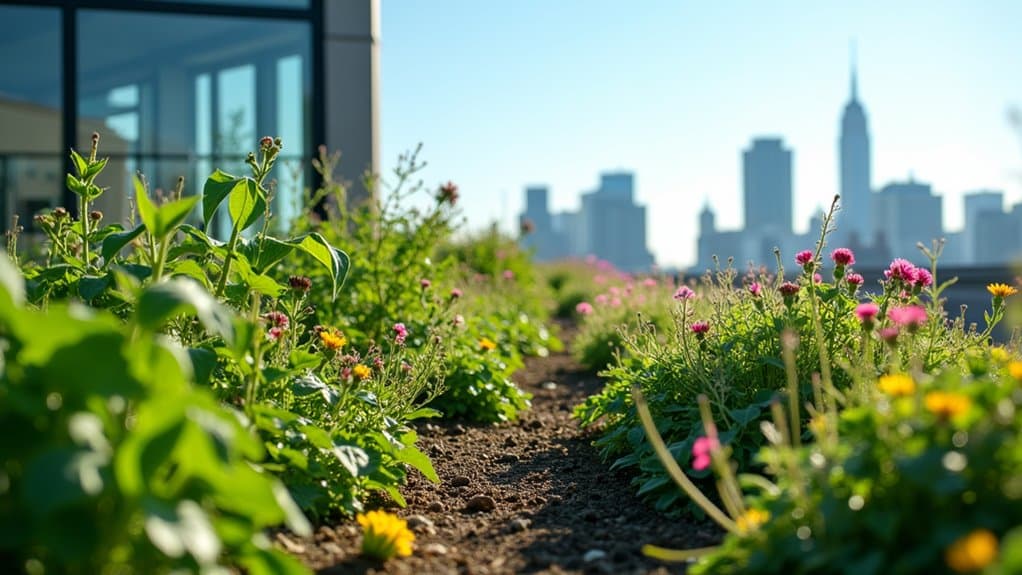
Investing in green roofs offers considerable economic benefits that can enhance both residential and commercial properties. By incorporating green infrastructure, you not only improve sustainability but also boost your financial returns.
Here’s a quick overview of the economic advantages:
| Benefit | Details |
|---|---|
| Increased Property Value | Green roofs can raise property value by up to 20%, appealing to buyers who value sustainability. |
| Cost Savings | Expect cooling cost savings of 10-30% in summer, with potential energy consumption reductions of up to 75%. |
| Marketability | Properties with green roofs stand out in the market, attracting more tenants and buyers. |
| Financial Incentives | Many councils offer tax credits and grants to offset installation costs, improving return on investment. |
With these benefits, green roofs not only enhance your property’s appeal but also promise long-term savings. Additionally, they can lead to increased energy efficiency, which further contributes to cost reductions and sustainability. The environmental benefits of green roofs also include reduced stormwater runoff, making them an attractive option for eco-conscious investors. The available financial incentives make this investment even more appealing, positioning you as a leader in sustainable real estate. Take the opportunity to elevate your property’s value while contributing to a greener future.
Energy Efficiency

Green roofs significantly improve energy efficiency, making them an excellent choice for homeowners and businesses alike. By installing a green roof, you can better regulate your building’s temperature, leading to notable savings on heating and cooling. The soil and plants on these roofs absorb and store heat, which helps mitigate the effects of extreme outdoor temperatures. Typical 2-3 story buildings can save 15-25% on summertime energy costs, showcasing the effectiveness of green roofs in reducing energy expenses.
Here are some key benefits of energy efficiency with green roofs:
- Temperature regulation: Lower heating and cooling costs throughout the year.
- Reduced energy demand: Cut air conditioning costs by over 75% in summer.
- Stormwater management: Decrease runoff and associated energy expenses.
- Long-lasting advantages: Enjoy energy savings that outlast conventional roofs.
Besides cooling, green roofs help retain warmth in colder months, even if they don’t provide traditional insulation. Their ability to absorb moisture through evapotranspiration further aids in cooling, while the shade from plants reduces heat gain.
Urban Heat Reduction
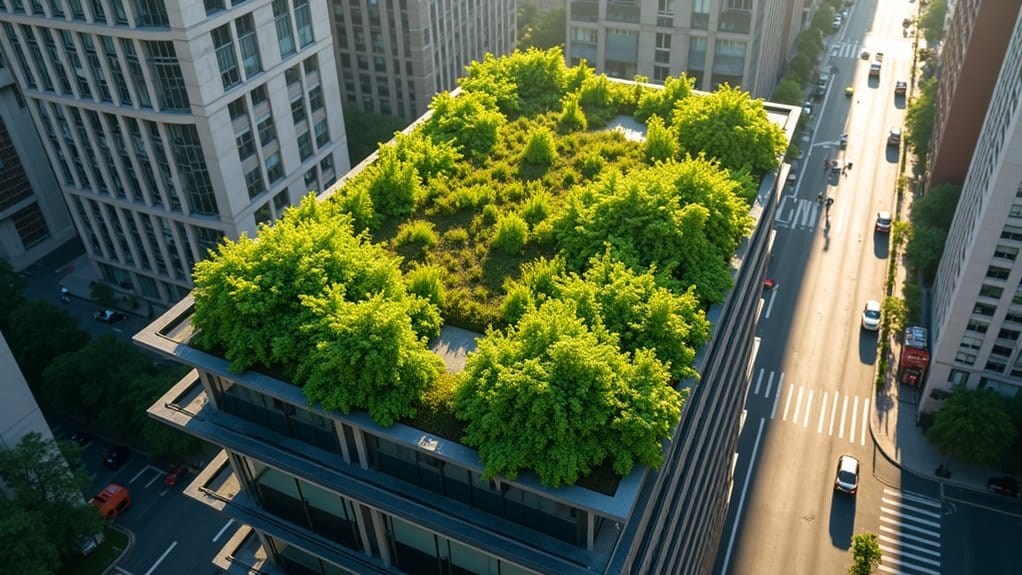
Urban areas often experience significantly higher temperatures than nearby rural regions due to the urban heat island effect. One effective solution to combat this issue is green roof technology. Incorporating greenery on rooftops can lower city temperatures by as much as 1°C during summer, with some studies suggesting reductions of up to 30°C in surface temperatures. This makes buildings with green roofs much cooler compared to those with traditional black roofs.
Green roofs cool the air through evaporation and transpiration, which not only diminishes the need for air conditioning but also insulates buildings, reducing heat transfer indoors. Research shows that with maximum green roof coverage, the energy demand for cooling could drop by nearly 8%, alleviating pressure on power grids during heatwaves. Additionally, the use of flexible roofing membranes allows for effective integration of green roofs, enhancing their overall performance and durability.
As urban areas adapt to climate change, integrating green roofs into building designs can enhance resilience against rising temperatures. By opting for green roofs, you’re not only improving comfort but also contributing to a more sustainable urban environment.
Wildlife Support
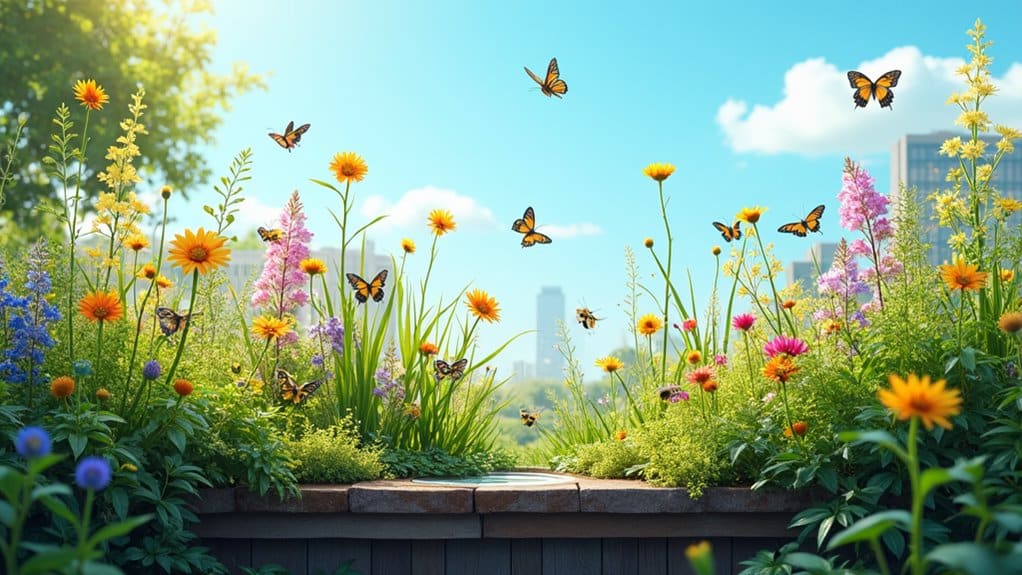
Green roofs aren’t just attractive; they’re important for supporting wildlife. They provide habitats for various species, boost biodiversity, and offer vital resources for pollinators. Additionally, green roofs support diverse insect populations, which can further enhance the ecological balance in urban areas.
Habitat Creation
Creating habitats through green roofs offers significant benefits for local wildlife and enhances biodiversity in urban areas. By adding green roofs to your home or business, you can help support species diversity and restore habitats.
These living roofs act as vital ecosystems, providing shelter for various forms of wildlife.
Here are some key advantages:
- Support for Rare Species: Green roofs can create habitats for endangered plants and insects, aiding in the protection of vulnerable species.
- Feeding Grounds for Birds: They offer food and resting spots for migratory birds, which is crucial for their survival during long journeys.
- Increased Insect Diversity: A thriving insect population can be nurtured, benefiting local bird species and promoting ecological balance.
- Urban Connectivity: Green roofs help link fragmented habitats, allowing wildlife to move more freely between green spaces.
Incorporating green roofs is a practical step towards fostering a more biodiverse urban environment.
Biodiversity Enhancement
Enhancing biodiversity through wildlife support on green roofs offers significant ecological benefits. These green spaces not only boost species diversity but also provide vital habitats within urban environments.
By creating foraging areas, green roofs help mitigate habitat loss due to urban development, attracting a variety of birds, insects, and small mammals. They also facilitate wildlife movement, enhancing ecological networks across the city.
Green roofs are critical for migratory species, serving as important stopovers for birds on their journeys. They help combat the urban heat island effect by providing cooler microclimates, which can be especially beneficial for sensitive species.
Additionally, their ability to manage water by absorbing rainfall and reducing stormwater runoff positively influences nearby aquatic ecosystems.
Examples from cities like London and Manchester highlight the ecological value of green roofs, with many bird species taking advantage of these spaces.
Pollinator Support
Supporting pollinators on green roofs is vital for nurturing urban ecosystems. By adding green roofs to your home or business, you can create important pathways and habitats that link fragmented environments.
These green roof ecosystems not only provide food and shelter for urban pollinators like bees and butterflies but also enhance biodiversity.
To make the most of your green roof for pollinator support, keep these key points in mind:
- Choose native plants that cater to the specific needs of local pollinators.
- Increase floral diversity by selecting a variety of wildflowers that bloom at different times throughout the year.
- Design with pollinators in mind, considering their ability to see in ultraviolet light when planning your layout.
- Regularly monitor and adjust your green roof to ensure it continues to support a wide range of pollinator species over time.
Stormwater Management
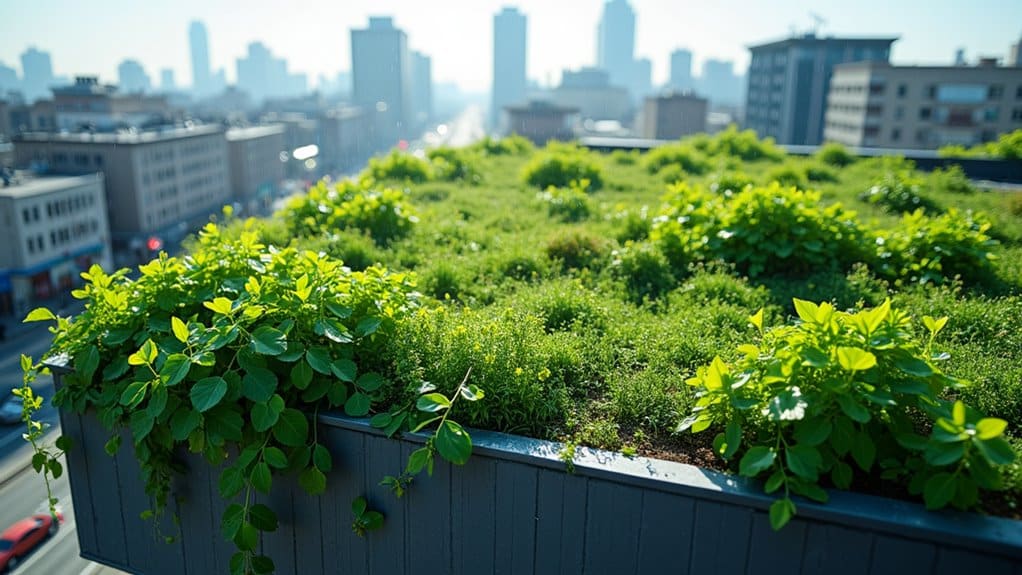
When it comes to stormwater management, green roofs are highly effective, capable of absorbing up to 80% of stormwater runoff.
They not only slow down water release during heavy rain but also help reduce flood risks, safeguarding your property and the local environment.
Incorporating a green roof into your building design isn’t just about aesthetics; it’s a smart, sustainable approach to managing water.
Water Absorption Efficiency
Green roofs are highly effective at managing stormwater, capturing and retaining significant amounts of rainfall, which makes them a valuable asset for any building. Their excellent water absorption efficiency can greatly reduce stormwater runoff, helping to address urban flooding and water management issues.
Key factors that enhance water retention on green roofs include:
- Substrate depth: A deeper substrate (15-60 cm) can retain more water than shallower options.
- Rainfall intensity: It’s important to consider how different levels of rainfall impact retention rates when designing your green roof.
- Plant selection: Choosing the right plants can significantly improve water absorption.
- Layered materials: A combination of substrate, vegetation, and drainage layers can enhance overall water retention efficiency.
Runoff Reduction Techniques
The benefits of green roofs in reducing stormwater runoff are increasingly acknowledged in urban planning. These systems effectively capture, retain, and infiltrate rainwater, promoting gradual evaporation and evapotranspiration. By incorporating these strategies on your property, you can significantly lessen the effects of heavy rainfall.
| Retention Capacity | Impact on Runoff |
|---|---|
| 40-100% | Varies by season and substrate depth |
| 50% | Retained over multiple storm events |
| 70-80% | Typical summer runoff retention |
Green roofs are excellent at intercepting rainfall, with their effectiveness depending on the depth and type of substrate used. For instance, a 4-inch green roof can retain up to 50% of total rainfall across several events, while a 3-inch roof retains approximately 0.6 inches per event. This approach not only reduces peak discharge rates by 50-90% but also delays runoff by an hour or more. By integrating green roofs into your development, you can improve stormwater management and contribute to a more sustainable urban landscape.
Flood Mitigation Benefits
Incorporating green roofs helps reduce runoff and plays a vital role in flood mitigation, making them a key element of stormwater management. By improving stormwater retention, green roofs effectively manage flood volume. They temporarily hold and absorb rainwater, significantly decreasing runoff and alleviating pressure on drainage systems.
Key benefits of green roofs for flood mitigation include:
- Flood Volume Reduction: They can lower flood volume by 10-60%, depending on rainfall and application rates.
- Pollutant Filtration: Green roofs filter harmful contaminants before stormwater reaches natural waterways, enhancing water quality.
- Urban Resilience: They bolster urban resilience by managing stormwater, which reduces strain on sewer systems.
- Practical Examples: Real-world case studies highlight the effectiveness of green roofs in action.
Increased Property Value
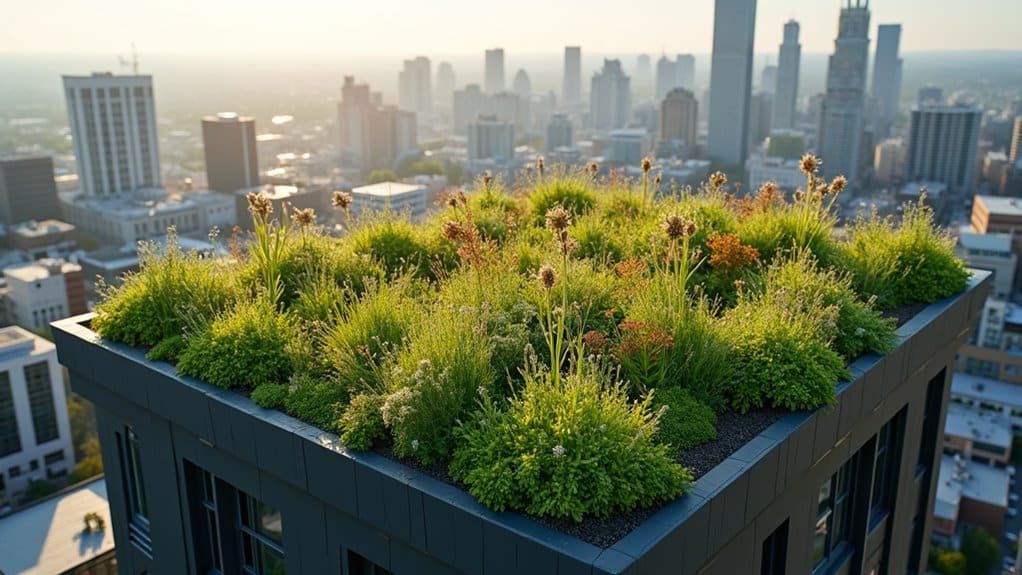
Investing in a green roof can significantly enhance your property’s value, making it a wise choice for both homeowners and business owners.
The attractive appearance of a green roof not only boosts your property’s curb appeal but also serves as a unique selling point in a competitive market. Many buyers now prioritise sustainability, leading to increased demand and potentially higher rental yields for properties with green roofs.
Additionally, aligning your property with corporate social responsibility can enhance your reputation, appealing to environmentally conscious consumers.
Green roofs can also extend the lifespan of your roof, potentially doubling it and reducing long-term maintenance costs.
The financial benefits go beyond just immediate value, as green roofs can help lower energy bills due to their natural insulation. Furthermore, sustainable roofs can improve energy efficiency, which is a key factor in reducing overall building costs.
By investing in a green roof, you’re not only improving your property’s aesthetics but also making a strategic choice that meets buyer preferences and boosts market appeal.
Ultimately, a green roof is an investment that offers both value and sustainability.
Noise Reduction
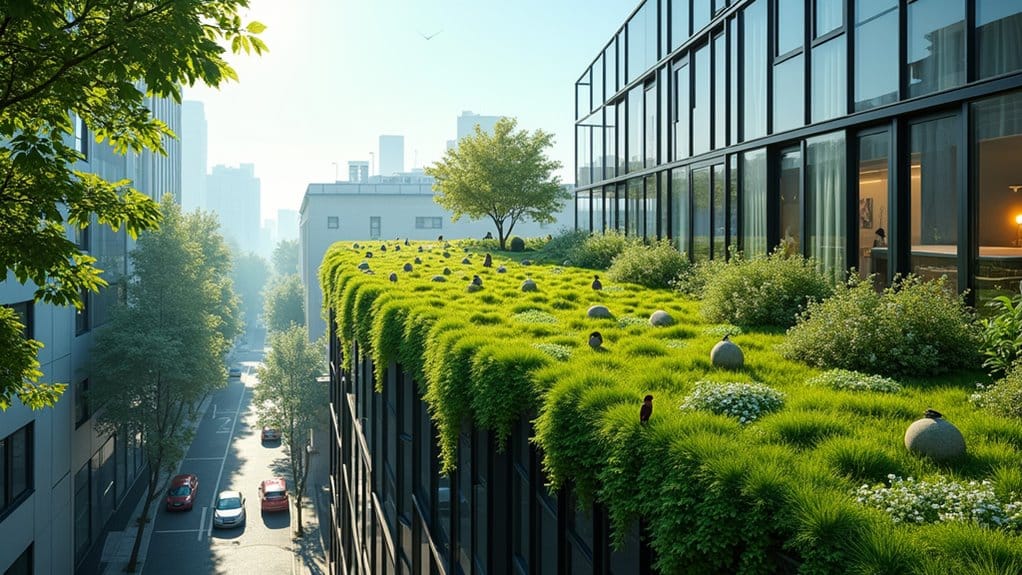
When considering green roofs, it’s worth noting their excellent sound absorption qualities, which can significantly reduce urban noise.
These systems not only create a quieter indoor environment but also improve your privacy by blocking out unwanted external sounds.
Sound Absorption Capabilities
Green roofs significantly improve sound absorption, making them a practical solution for reducing noise in urban areas. By integrating layers of plants and substrate, these systems offer enhanced sound insulation compared to conventional roofs.
Here’s a quick overview:
- Extensive Green Roofs: Can reduce noise levels by 5-45 decibels.
- Intensive Green Roofs: Achieve noise reductions of 46-50 decibels.
- Substrate Thickness: Thicker layers enhance sound insulation.
- Frequency Blocking: The growing medium and plants can block different sound frequencies.
Research shows that well-designed green roofs can provide substantial acoustic benefits. For example, one study found that vegetated roofs could achieve up to 51 dB of sound insulation when wet, far exceeding non-vegetated roofs.
Additionally, the depth of the substrate is crucial—layers of around 12 cm can reduce noise by approximately 40 dB. By selecting suitable plants and ensuring proper design, you can create a peaceful environment that effectively counters urban noise.
Investing in a green roof not only improves acoustics but also offers ecological advantages, making it a wise and sustainable choice for homes and businesses alike.
Urban Noise Mitigation
Urban areas are often plagued by noise pollution, which can seriously affect one’s quality of life. If you’re seeking a way to alleviate this problem, green roofs are a highly effective solution. Their layered structure, featuring different substrate depths, significantly improves sound insulation.
For example, a 12 cm substrate can reduce noise by 40 dB, while a 20 cm substrate can achieve reductions of 46-50 dB, especially against lower frequencies.
Green technology utilises the natural sound absorption properties of both the porous substrate and the plants on top. The substrate blocks lower frequencies, while the vegetation helps to diminish higher frequencies, creating a comprehensive barrier against urban noise.
Research indicates that green roofs can cut noise transfer into buildings by half, providing much-needed relief in noisy areas such as near airports or busy roads.
Moreover, modular systems can be tailored for better sealing and sound absorption. Even a modest amount of vegetation can improve noise insulation, making green roofs a flexible option.
Enhanced Privacy Features
Enhancing privacy in busy areas can be difficult, but green roofs offer a practical solution. One of the main advantages of green roofs is their excellent sound insulation, which significantly improves privacy by reducing noise pollution. This creates a more tranquil environment in both homes and businesses.
Here are a few key points on how green roofs enhance privacy through noise reduction:
- Noise Reduction: Extensive green roofs can lower noise levels by up to 40 decibels, while intensive green roofs can achieve reductions of 46-50 decibels.
- Porous Materials: The materials used in green roofs absorb sound waves, lessening their impact.
- Vegetation Type: Selecting different plants can further improve sound absorption, allowing for tailored noise reduction.
- Maintenance: Regular upkeep ensures that your green roof continues to effectively insulate against sound.
Incorporating green roofs can be an efficient way to enhance privacy and comfort in your living or working space.
Aesthetic Appeal

People often overlook the impact of green roofs on enhancing aesthetic appeal. These living spaces can significantly improve urban landscapes, creating vibrant environments that blend seamlessly with nature.
With various plant species to choose from, you can create everything from lush gardens to diverse habitats. A well-designed green roof can enhance the exterior of your building.
Consider using earthy tones or neutral colours to harmonise with your property, or opt for bold contrasts to make it stand out. Community involvement is vital in shaping these spaces.
Green roofs that cater to communal use not only beautify the area but also strengthen social ties. Although maintenance is important, modern modular designs make upkeep easier without compromising on aesthetics.
Ultimately, investing in a green roof not only elevates your property but also enriches the urban environment, creating a more sustainable and visually appealing space for everyone.
Long-Term Savings

Investing in a green roof not only enhances your property’s visual appeal but also delivers significant long-term savings.
While the initial installation costs can seem high, the benefits make it worthwhile. Green roofs can substantially lower your energy consumption, with annual savings estimated at £0.023 per square foot. They also extend the lifespan of your roof by 2-3 times, reducing future replacement costs.
Here are some key benefits:
- Reduced Cooling Costs: Save up to 20% on energy consumption in the summer months.
- Lower Maintenance: Smart maintenance can lower ongoing expenses and extend your roof’s life.
- Tax Incentives: Many local councils offer financial incentives to help with installation costs.
- Increased Property Value: Properties with green roofs often achieve higher rental rates and appeal to environmentally conscious buyers.
Frequently Asked Questions
How Do Green Roofs Affect My Property’s Insurance Rates?
Green roofs can positively influence your property’s insurance rates by showcasing a lower risk profile during assessments. They may lead to benefits such as premium discounts and fewer claims, resulting in substantial savings and an increase in property value over time. For instance, if your green roof helps manage stormwater effectively, insurers might view your property as less prone to flooding, which could lower your premiums.
Can I Install a Green Roof on an Existing Building?
Yes, you can install a green roof on an existing building, but there are some challenges to consider, such as ensuring the structure can support the added weight and complying with local regulations. However, the advantages, like improved energy efficiency and a longer roof lifespan, often make it worthwhile. For instance, a green roof can help reduce heating costs in winter and keep your building cooler in summer.
What Types of Plants Are Suitable for Green Roofs?
When choosing plants for green roofs, opt for drought-resistant varieties such as sedums and succulents. These plants require minimal upkeep and can flourish in different weather conditions, contributing to sustainability and boosting your building’s biodiversity.
Are There Any Zoning Regulations Regarding Green Roofs?
Yes, there are zoning regulations concerning green roofs in the UK. You need to be aware of certain requirements, such as submitting an operational plan and calculating the necessary green roof area based on your building’s total roof space. For instance, if your building has a large flat roof, you may be required to cover a specific percentage with vegetation to comply with local regulations.
How Much Weight Can a Building’s Structure Support for a Green Roof?
When considering a green roof, think of your building like a bridge; its load capacity depends on a thorough structural assessment. Most standard green roofs can support up to 250 kg per m², so it’s essential to plan accordingly.
Conclusion
Investing in a green roof may seem daunting, but the long-term advantages significantly outweigh the initial costs. Not only does it boost your property’s aesthetic appeal and value, but it also has a positive impact on the environment and your local community. Additionally, the energy savings and potential government grants could help you recover your expenses more quickly than you might expect. Adopting a green roof is not just a passing trend; it’s a sensible, sustainable choice that offers lasting benefits.


