

Is It Illegal to Work on a Roof Without Scaffolding
Working on a roof without scaffolding isn’t inherently illegal, but it’s subject to strict regulations under the Work at Height Regulations 2005. One must assess the risks and implement appropriate safety measures for any roof work.
For roofs over 2 metres high, scaffolding is typically mandated, especially for commercial projects. However, alternatives like safety harnesses, guardrails, or mobile elevating work platforms may suffice for certain tasks or lower-height domestic projects.
Non-compliance can result in severe consequences, including fines and prosecution. It’s vital to conduct thorough risk assessments, provide proper training, and use appropriate safety equipment.
Understanding the full scope of regulations and safety practices is essential for anyone involved in roofing work.
Key Takeaways
- Work at Height Regulations 2005 mandates scaffolding for roofs over 2 metres in height.
- Commercial roofing projects require stricter compliance, especially for work above 2 metres.
- Domestic projects may not always require scaffolding for minor repairs, but safety measures are still necessary.
- Alternatives to traditional scaffolding, such as safety harnesses and MEWPs, can be used when appropriate.
- Non-compliance with safety regulations can result in fines, prosecution, and severe legal consequences.
Legal Requirements for Roof Work
When it comes to roof work, we’re bound by specific legal requirements in the UK. Whilst working on roofs without scaffolding isn’t strictly illegal, we must adhere to stringent safety regulations to protect workers and the public.
The Work at Height Regulations 2005 mandates scaffolding for roofs exceeding 2 metres in height to mitigate fall risks. Regular roof inspections are vital for identifying potential safety hazards and guaranteeing compliance with regulations. These inspections can also help determine the need for scaffolding based on the roof’s condition and the nature of the work to be performed.
For projects involving four or more workers, we’re obligated to conduct a risk assessment. This evaluation determines the necessity of scaffolding and other safety measures. It’s important to note that non-compliance with these regulations can result in severe consequences, including hefty fines and potential criminal charges.
Homeowners aren’t typically subject to specific regulations unless their roofing work poses a risk to others. However, we strongly encourage them to follow safety practices.
When undertaking roof work, it’s imperative to think about obtaining roofing permits and liability insurance. These precautions guarantee compliance with local building codes and protect against potential accidents or damages.
Safety Risks and Hazards
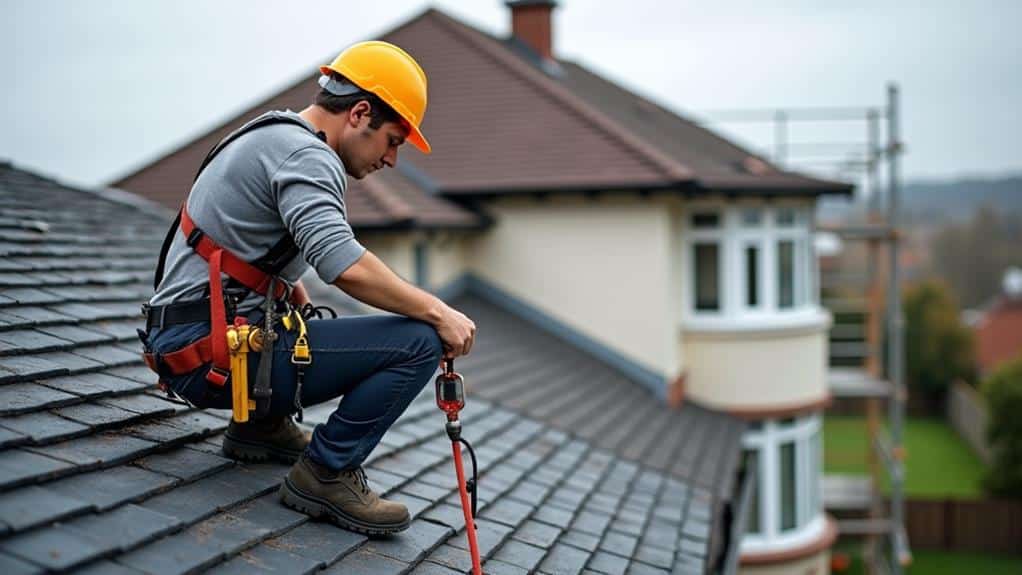
In light of the notable risks associated with roof work, we must address the vital safety hazards involved. Falls from height pose the most considerable danger, accounting for approximately 20% of construction-related fatalities. We cannot overstate the importance of fall protection and hazard awareness when working on roofs.
Several factors contribute to the heightened risk of accidents:
| Risk Factor | Impact | Mitigation |
|---|---|---|
| Roof Height | Increased fall severity | Proper fall protection systems |
| Roof Slope | Reduced stability | Non-slip footwear, safety harnesses |
| Surface Material | Potential slipperiness | Awareness of material properties |
Weather conditions exacerbate these risks, making roofs slippery and increasing the likelihood of falls. It’s essential to be aware of other hazards, such as dropped tools, uneven surfaces, and overhead power lines.
Working without adequate protection can result in severe injuries or fatalities. The high incidence of workplace injuries due to lack of fall protection underscores the need for stringent safety measures. We must prioritise hazard awareness and implement thorough safety protocols to mitigate these risks effectively. By doing so, we can considerably reduce the occurrence of roof-related accidents and guarantee worker safety.
Scaffolding Regulations and Compliance

Scaffolding regulations form the backbone of safe working practices for roof-related tasks. We need to adhere to strict scaffolding standards and inspection protocols to guarantee compliance with legal requirements.
The Work at Height Regulations 2005 (as amended) mandate that scaffolding must be stable and equipped with fall protection measures. Competent individuals are responsible for assembling and maintaining scaffolding according to these guidelines.
Regular inspections are vital, similar to roof inspection processes that verify the integrity of roofing systems. These safety measures are essential for both workers and property protection.
To meet legal and insurance compliance, we’re required to:
- Inspect scaffolding before first use and at least every 7 days
- Verify stability and fall protection measures are in place
- Maintain detailed inspection records, including inspector’s name, date, and observations
- Assemble and maintain scaffolding using competent individuals
PUWER regulations dictate the frequency of inspections, emphasising the importance of regular safety checks.
Non-compliance with these regulations can result in severe legal consequences, including fines and prosecution, especially in cases of injuries or fatalities.
It’s vital that we comprehend and follow these scaffolding standards to maintain a safe working environment and avoid potential legal issues. By prioritising compliance, we not only protect workers but also guarantee our operations meet the necessary regulatory requirements.
Alternatives to Traditional Scaffolding
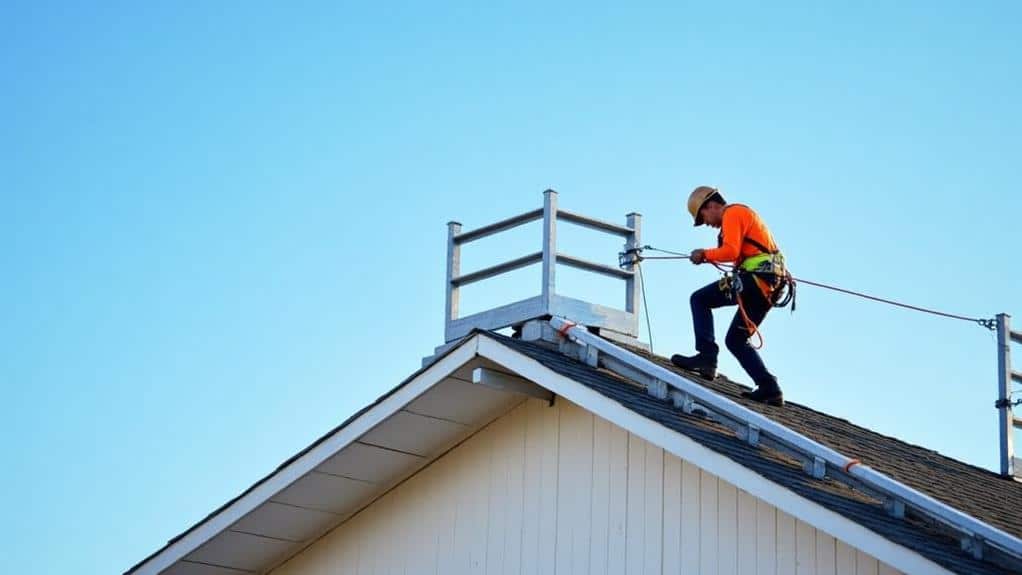
Exploring alternatives to traditional scaffolding can provide safer, more efficient options for certain roofing tasks.
We’ve identified several effective methods that can be employed depending on the specific requirements of the project. Biannual inspections are essential for identifying potential roofing issues early, and these alternative methods can facilitate safer access during such checks.
Safety harnesses and guardrails offer significant benefits, particularly for work on low-pitched roofs. The harness benefits include increased mobility and reduced set-up time, whilst guardrail effectiveness lies in its ability to prevent falls without impeding worker movement.
Mobile elevating work platforms (MEWPs) provide a stable, adjustable working surface for various roofing activities.
For minor repairs on low-pitched roofs, ladders and crawling boards can be viable options when properly secured. Edge protection systems, such as fixed barriers, offer an alternative to full scaffolding in some scenarios.
Safety nets and soft landing systems can be employed near fragile edges or surfaces to mitigate fall risks.
It’s important to conduct thorough risk assessments to determine the appropriateness of these alternative safety measures.
Each roofing project presents unique challenges, and the chosen safety system must align with regulatory requirements and provide adequate protection for workers.
Consequences of Non-Compliance

Following non-compliance with scaffolding regulations, the consequences can be severe and far-reaching. We must emphasise that failure to adhere to these safety standards can result in significant legal repercussions and financial liabilities for individuals and companies alike.
The potential consequences of non-compliance include:
- Legal action, including prosecution and substantial fines
- Corporate manslaughter charges in cases of fatalities
- Issuance of improvement notices requiring costly modifications
- Civil claims from injured workers seeking compensation
We can’t stress enough the importance of adhering to scaffolding regulations. Non-compliance can lead to criminal proceedings, with offending parties facing prosecution and hefty fines.
In extreme cases where fatalities occur, corporate manslaughter charges may be brought against individuals or companies responsible.
Moreover, improvement notices issued following incidents or inspections can result in significant financial burdens as modifications are required to meet safety standards.
Workers who suffer injuries due to non-compliance may file civil claims, potentially leading to substantial compensation payouts.
Additionally, breaching health and safety regulations can severely damage a company’s reputation, potentially resulting in lost contracts and clients within the industry.
Risk Assessment Procedures

Whilst understanding the consequences of non-compliance is essential, it’s equally important to focus on preventative measures. At the heart of these measures lies the risk assessment process, a vital step in ensuring safety during roofing work.
We must emphasise that conducting a thorough risk assessment isn’t just a recommendation but a legal requirement under the Work at Height Regulations 2005. Before any work at height commences, employers must carry out a detailed evaluation to identify potential hazards, with a particular focus on fall risks.
This process involves carefully considering factors such as roof height, slope, surface condition, and weather conditions that could impact worker safety.
During the hazard identification phase, we need to determine whether scaffolding or alternative safety measures are necessary. It’s important to document every step of the risk assessment process, as this provides evidence of compliance and can be invaluable in the event of an incident.
We must also remember that risk assessments aren’t one-off events. They should be regularly reviewed and updated, especially after incidents or changes in work processes, to maintain ongoing safety in roofing operations.
Training and Equipment Essentials
Safety is the cornerstone of any roofing operation, and thorough training coupled with essential equipment forms its foundation. We must ensure that all workers involved in roofing activities receive proper safety training to comply with health and safety guidelines, particularly regarding working at height. This includes obtaining necessary roofing certifications and adhering to strict safety protocols.
To ensure the safety of our workers, we implement the following measures:
- Provide extensive training on the use of safety equipment, including harnesses and guardrails
- Conduct regular safety assessments to identify potential hazards
- Offer specialised training on electrical hazard management
- Require certification in working at height for all personnel
It’s vital that we equip our workers with appropriate safety gear and conduct thorough risk assessments before commencing any roof work. By focusing on these training and equipment essentials, we can greatly reduce the risk of accidents and ensure compliance with regulatory requirements.
Domestic Vs Commercial Considerations
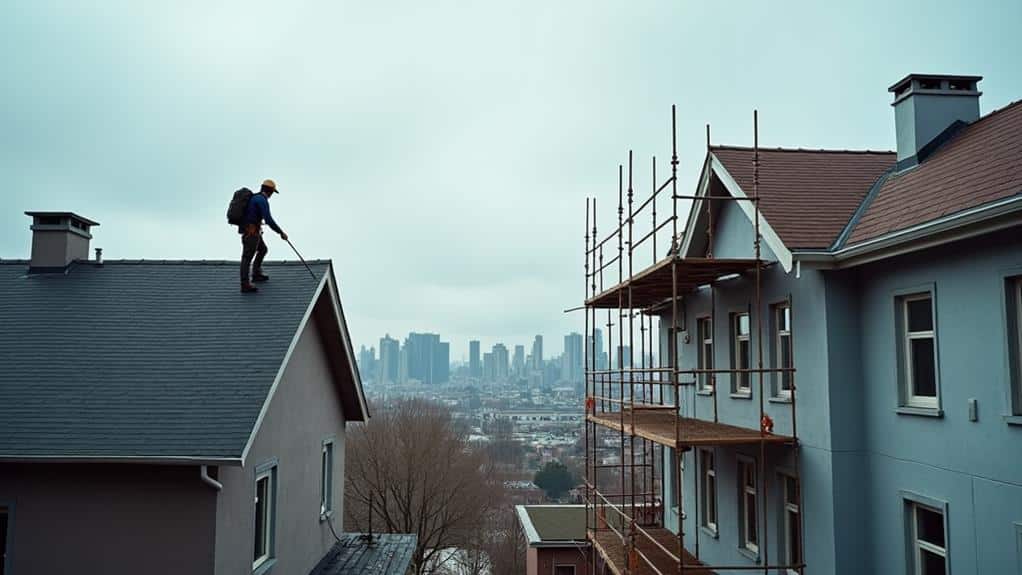
The distinction between domestic and commercial roofing projects is vital when considering the legal requirements for scaffolding. We must understand that commercial roofing jobs typically demand stricter compliance with Work at Height Regulations, particularly for roofs exceeding 2 metres in height. Scaffolding is generally mandatory in these cases to guarantee safety standards are met.
In contrast, domestic roofing projects may not always legally require scaffolding for minor repairs. However, this doesn’t exempt homeowners from prioritising safety. Whilst domestic projects aren’t subject to the same regulations as commercial ones, homeowner responsibilities still include implementing appropriate safety measures, such as using harnesses and ladders when scaffolding isn’t employed.
It’s important to note that risk assessments are mandatory for both domestic and commercial work. These assessments determine the necessity of scaffolding based on factors like height, slope, and job complexity.
Different roofing techniques may influence the need for scaffolding as well. We must emphasise that whilst legal requirements vary considerably between domestic and commercial projects, safety should always be the primary concern, regardless of the setting or scale of the roofing work.
Weather-Related Safety Precautions
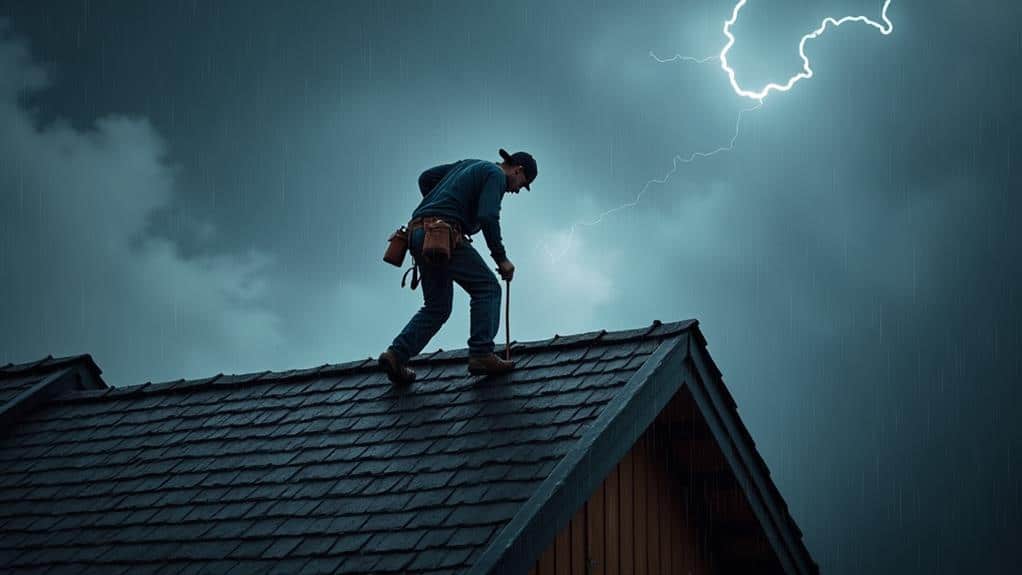
We must carefully assess weather conditions before commencing any roof work, as adverse weather greatly increases fall and injury risks.
Our assessment should include monitoring forecasts, evaluating wind speeds, and checking for precipitation that could create slippery surfaces.
Based on these assessments, we’re required to implement appropriate protective gear, which may include non-slip footwear, wind-resistant clothing, and additional fall protection systems such as safety harnesses or guardrails.
Assessing Weather Conditions
Before commencing any roof work, a thorough assessment of weather conditions is essential. The Work at Height Regulations 2005 explicitly prohibit roofing activities during inclement weather that could jeopardise worker safety. We must prioritise continuous weather monitoring and evaluate environmental impacts to guarantee compliance with these regulations.
To effectively assess weather conditions, we recommend the following steps:
- Regularly check reliable weather forecasts for the work area
- Implement a system for real-time weather monitoring on-site
- Establish clear criteria for halting work due to adverse conditions
- Conduct post-storm inspections to evaluate roof stability
It’s vital to recognise that high winds, rain, and snow greatly elevate the risk of falls and accidents. We must be prepared to suspend operations if conditions deteriorate, as poor visibility and wet surfaces can lead to hazardous situations.
In addition, we should reinforce safety measures, such as utilising non-slip footwear and harnesses, during adverse weather to mitigate heightened risks. By maintaining vigilance in weather assessment and adhering to strict safety protocols, we can considerably reduce the likelihood of weather-related incidents and guarantee regulatory compliance in our roofing operations.
Protective Gear Requirements
Roof workers face a myriad of weather-related challenges that demand specific protective gear requirements. We must highlight the critical importance of proper PPE selection and weather adaptability in guaranteeing worker safety during roof operations.
Workers are required to don appropriate PPE, including helmets, harnesses, and non-slip footwear, to mitigate injury risks associated with adverse weather conditions. It’s essential that we prioritise insulating layers and moisture-proof gear to protect against cold and wet conditions, which can lead to decreased grip and increased fatigue.
We must also implement safety nets and edge protection systems during inclement weather to provide additional fall protection. Regular safety training sessions should focus on adapting protective gear based on changing weather conditions to maintain compliance with safety regulations.
Weather-related safety precautions extend beyond gear selection. We need to continuously monitor forecasts and avoid work during severe weather, such as high winds or rain, which greatly increase the likelihood of slips and falls.
Frequently Asked Questions
Can Roof Repairs Be Done Without Scaffolding?
Certain roof repairs can be carried out without scaffolding, utilising alternative repair techniques and roof safety measures. However, it is essential to conduct thorough risk assessments, implement fall protection systems, and strictly adhere to height regulations and local building codes.
Are You Allowed to Work on a Roof on Your Own?
One can work on one’s own roof, but it is essential to adhere to strict DIY regulations and roof safety guidelines. Homeowners are required to conduct risk assessments, follow the Work at Height Regulations 2005, and implement appropriate safety measures regardless of their status. It is crucial to take all necessary precautions when undertaking such work to ensure one’s safety and comply with UK regulations.
Do You Need Scaffolding to Clean a Roof?
Much like a tightrope walker’s safety net, scaffolding isn’t always compulsory for roof cleaning. One must assess the specific situation, employing appropriate roof cleaning techniques and safety precautions. Height, pitch, and surface conditions determine the need for scaffolding or alternative protection.
Is Scaffolding a Legal Requirement?
We must emphasise that scaffolding regulations are often legally required. Safety standards dictate its necessity based on work height and project scope. We’re obliged to comply with these regulations to guarantee worker protection and avoid legal repercussions.
Conclusion
We’ve reviewed the regulations regarding roof work safety. Rigorously adhering to requirements reduces risks and reinforces responsible practices. Whilst working without scaffolding isn’t always illegal, it’s essential we implement appropriate safety measures. Careful consideration of compliance, conditions, and consequences is vital. Let’s utilise legal guidelines, employ proper protection protocols, and prioritise precautionary procedures. By balancing between regulatory requirements and practical alternatives, we can guarantee safe, secure, and standards-compliant roofing operations.


