

Thatched Roof Repairs: When to Call a Professional in the UK
If you spot sagging areas, dark triangles at the eaves, or moss growth on your thatched roof, it’s time to call in a professional. In the UK, the unique challenges of moisture retention and fire risks make timely repairs essential. Regular annual inspections can help identify minor issues before they worsen. Professionals ensure that repairs preserve the historical appearance and structural integrity of your thatched roof. For effective property protection, familiarise yourself with key maintenance and repair options.
Key Takeaways
- Contact a professional if you see visible damage such as moss growth or sagging areas, which may indicate structural issues.
- Book an annual inspection with a Master Thatcher to catch minor repairs early and extend the life of your roof.
- Get expert assistance for ridge repairs or patching to ensure waterproofing and preserve the historical character of your thatched roof.
- Reach out to professionals immediately if you notice wildlife damage, as this can compromise waterproofing and lead to expensive repairs.
- Consider enlisting experts for regular maintenance and inspections to safely and effectively manage any repairs needed.
Signs Indicating the Need for Repairs

When assessing your thatched roof, it’s crucial to spot signs that indicate repairs are needed.
Look for visible deterioration like moss and lichen growth, which often means moisture retention and potential decay. Check for lines or dips on the surface that suggest uneven wear, and loose fixings that may signal thatch deterioration.
Dark triangles at the eaves could indicate water ingress, while cracked lead or cement flashings around chimneys can lead to leaks.
Bald patches expose the roof and increase the urgency for repairs, and any sagging sections may point to underlying structural issues. Additionally, regular monitoring is necessary to ensure any wear is addressed promptly before it worsens.
Understanding the Lifespan of Thatched Roof Components
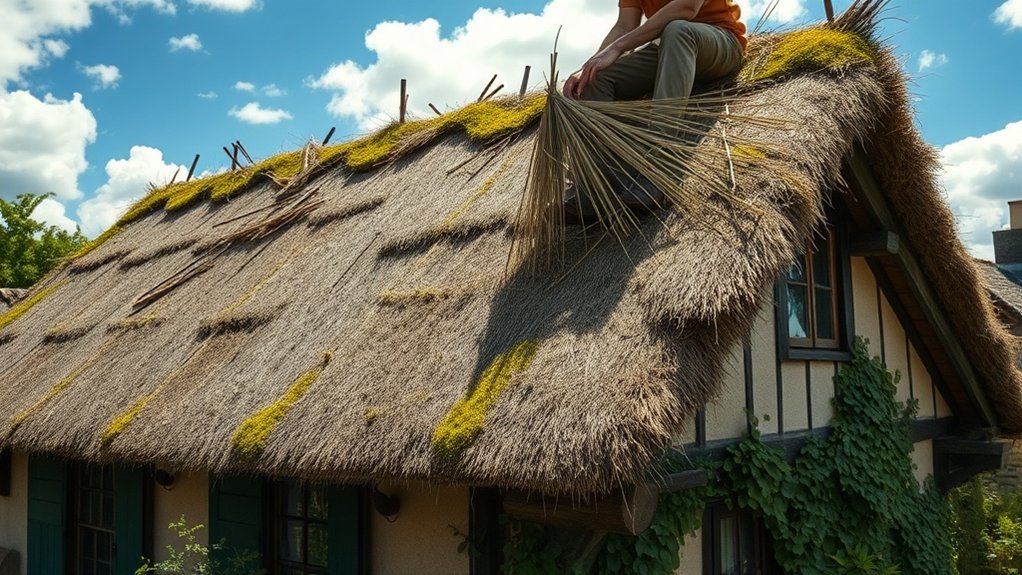
To manage your thatched roof effectively, it’s important to know the lifespan of its components.
The main thatch layer generally lasts between 15 to 40 years, while ridge renewals should be done every 10 to 15 years to keep the structure sound. Selecting quality materials and sticking to maintenance schedules will greatly affect your roof’s durability and performance. Additionally, proper installation techniques are essential for ensuring that your thatched roof achieves its maximum lifespan.
Main Thatch Layer Lifespan
Understanding the lifespan of the main thatch layer is crucial for homeowners and builders looking to maintain a thatched roof’s integrity.
Different types of thatch materials significantly affect longevity:
- Water reed: 25–40+ years; Norfolk reed can last up to 60 years.
- Combed wheat reed: Usually lasts 25–35 years.
- Longstraw: Generally lasts 15–30 years and is often chosen for budget-friendly structures.
Several factors influence the durability of the thatch layer, including material quality, roof pitch, and the skill of the thatcher. Regular maintenance is also essential to ensure proper care is taken to extend the lifespan of your thatched roof. Environmental conditions, such as humidity and nearby trees, can also speed up decay.
Regular inspections and maintenance are essential to extend the lifespan of your thatched roof, ensuring it remains a charming and functional feature for many years.
Ridge Renewal Frequency
Ridge renewal may seem like a small part of maintaining a thatched roof, but it’s vital for the roof’s integrity. Generally, ridges need replacing every 10 to 15 years, depending on exposure to the elements and the quality of craftsmanship.
Since ridge materials like water reed or long straw are more exposed to the weather, they deteriorate faster than the main thatch layer. Regular inspections are crucial to spot issues like straw rot or cracking early on. By addressing these problems promptly, you can avoid further damage to the roof.
Hiring professional thatchers who use traditional techniques ensures the roof’s strength and enhances its appearance.
Common Repair Options and Their Characteristics
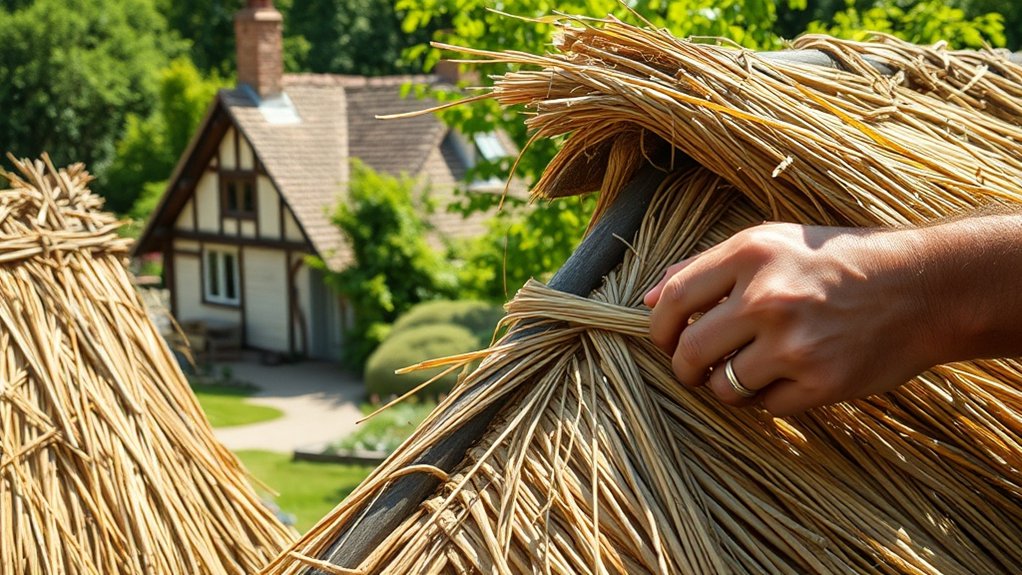
When it comes to maintaining thatched roofs, there are several effective repair options that can tackle common issues and prolong the roof’s lifespan.
Here are three methods to consider:
- Patch Repair: This involves using shorter lengths of thatch, which is handy during straw shortages and can extend the roof’s life by several years.
- Ridge Repairs: Cost-effective options like flush ridges help maintain the historical look of your roof while ensuring it remains waterproof.
- Cleaning and Surface Maintenance: Regularly removing debris is essential to prevent moisture build-up, which can damage your thatch materials.
Choosing the right repair techniques not only boosts the roof’s durability but also helps meet preservation standards, especially for listed buildings.
Always consult a professional for the best results.
Unique Risks and Challenges for Thatched Roofs in the UK
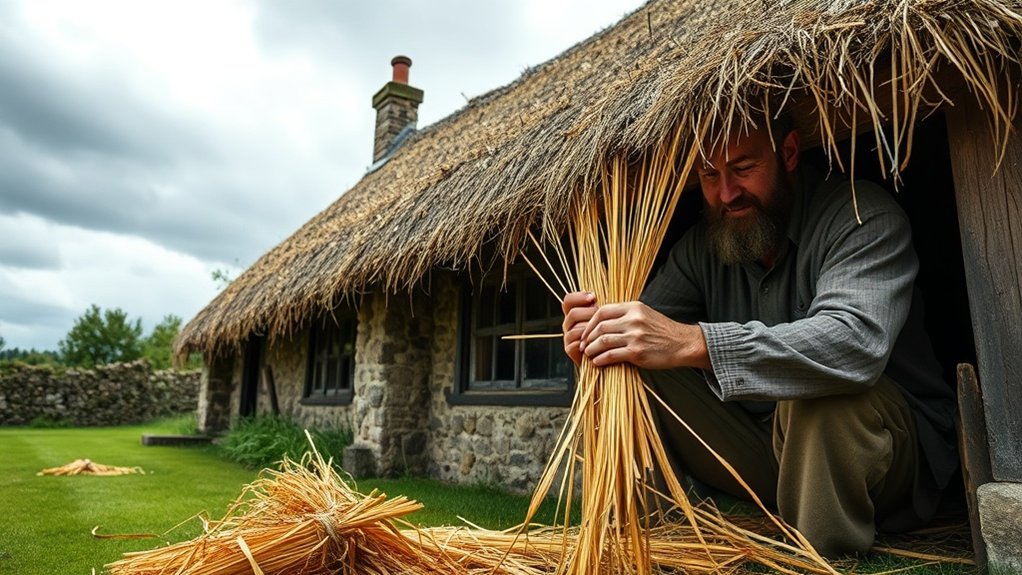
Thatched roofs in the UK come with specific risks and challenges that can affect their lifespan and safety. While thatch can be quite durable, it has its weaknesses. A major concern is fire, with over 90% of incidents linked to chimney issues, which can cause severe damage.
The organic materials used in thatching can also attract pests and retain moisture, leading to problems with moss and algae. Moreover, harsh weather, such as heavy rain and frost, can accelerate deterioration, making regular maintenance essential. Regular inspections are crucial to prevent these issues and ensure the longevity of thatched roofs.
Lastly, the costs of repair or replacement can be significant, putting a strain on budgets. Being aware of these risks is crucial for anyone considering ownership of a thatched roof.
Recommended Maintenance Practices for Longevity
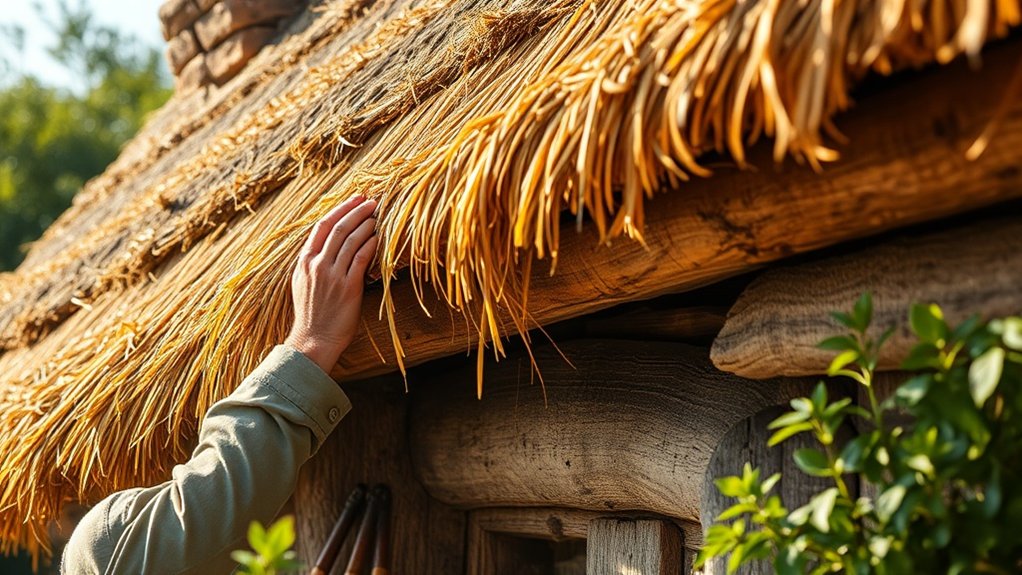
Maintaining a thatched roof is essential for its longevity and structural integrity. Here are some key practices to implement:
- Regular debris removal: Remove leaves and branches regularly to prevent moisture build-up.
- Routine inspections: After storms, check for any damage, leaks, or signs of pests.
- Ventilation and moisture control: Ensure proper airflow to keep the thatch dry and prevent deterioration.
By incorporating these maintenance steps, you can extend your roof’s lifespan and minimise the need for extensive cleaning and repairs.
Always use gentle tools, like a soft-bristled brush, to avoid damaging the thatch. Staying proactive will help you catch minor issues before they become costly repairs, keeping your thatched roof in excellent condition.
When to Seek Professional Help for Your Thatched Roof
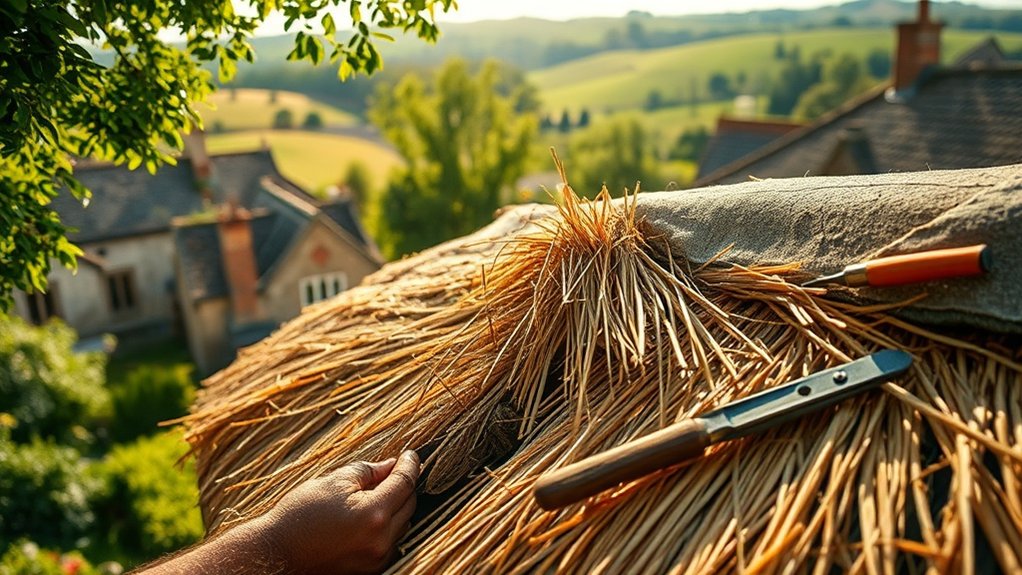
How can you tell if your thatched roof needs professional help? Look out for significant wear and tear, visible water leaks, or damp patches inside your home, as these are clear signs that you need a thatcher urgently.
Sagging thatch or structural damage should be assessed immediately due to safety concerns. If you spot fire damage or excessive moss growth, it’s also time to call in an expert.
Complex repairs, such as partial re-thatching, require skilled thatchers to ensure the right materials and techniques are used, which can affect repair costs.
Moreover, any changes to the roof’s structure may need to comply with local regulations, making professional advice crucial.
Don’t risk substandard repairs; hiring a qualified thatcher is vital for keeping your roof safe and sound.
The Importance of Annual Inspections
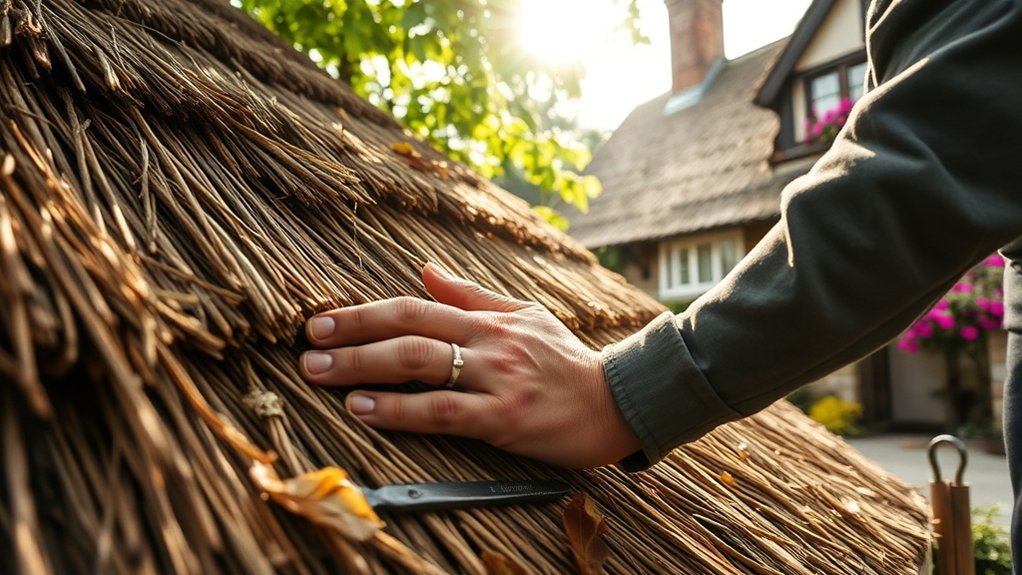
Annual inspections are crucial for spotting problems with thatched roofs early on.
By catching issues like damage or pest infestations before they worsen, you can extend your roof’s lifespan and save on costly repairs later.
Regular checks ensure your thatch stays in good condition, protecting both your investment and home.
For instance, a small leak left unattended can lead to significant water damage, so it’s wise to schedule these assessments.
Early Problem Detection
Scheduling regular inspections of your thatched roof significantly boosts your chances of spotting issues early. This proactive strategy helps you avoid expensive repairs and preserves the overall integrity of your home.
- Early warning signs, such as loose thatch or damp patches, can reveal more serious problems.
- Annual inspections enable you to detect pest infestations before they worsen, maintaining structural stability.
- Keeping an eye out for weather-related damage prevents moisture build-up that can lead to rot.
Prolonged Roof Lifespan
Regular inspections are vital for spotting issues early and extending the lifespan of your thatched roof. By arranging annual check-ups with a Master Thatcher, you’re investing in the longevity of your thatch.
These inspections, usually costing around £100, help identify minor repairs that can save you from expensive damage later on. Simple maintenance tasks such as clearing debris and controlling moss can significantly boost durability.
It’s also important to carry out routine waterproofing treatments to prevent moisture damage, ensuring your roof stays weathertight. Additionally, many insurance companies require proof of your roof’s condition, so regular maintenance is crucial for coverage. Furthermore, regular assessments ensure optimal roof performance, extending the overall lifespan of roofing materials and maintaining energy efficiency.
Addressing Wildlife Damage Promptly
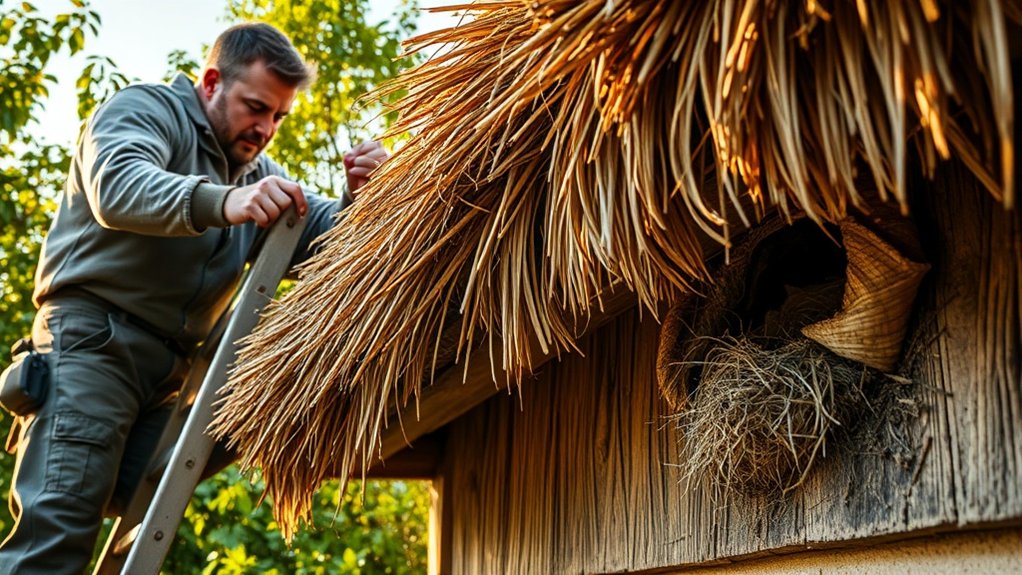
Addressing wildlife damage promptly is essential for preserving thatched roofs. Ignoring early signs can lead to more serious problems.
Here are some straightforward steps to manage this effectively:
- Regularly check for signs of nesting or damage.
- Use wildlife prevention methods, such as netting or mesh.
- Apply proper repair techniques for any damage identified.
Birds and rodents can quickly compromise your roof’s waterproofing, resulting in expensive repairs. Acting quickly helps prevent further issues, like moisture accumulation or structural weakening.
Hiring professionals ensures repairs are done correctly, reducing the chance of future wildlife problems. Remember, timely action not only safeguards your home but also prolongs the life of your thatched roof.
Fire Safety Considerations for Thatched Roofs
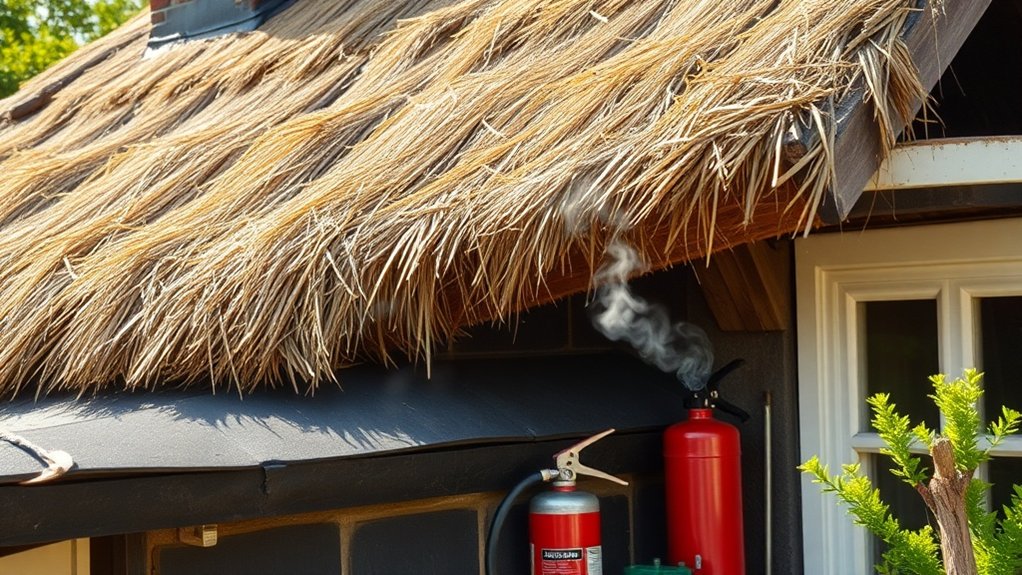
To ensure the safety of thatched roofs, it’s vital to implement effective fire safety measures that address their specific risks.
Start by installing smoke alarms on every level, including loft spaces, to enable early fire detection. Consider adding chimney heat alarms for comprehensive coverage. Regular testing, ideally twice a year, is crucial for reliability.
Focus on electrical safety by enclosing wiring in metal conduits and keeping a minimum 30cm clearance from thatch. Avoid any hot works near the roof voids and ban open flames in these areas.
Additionally, use fire retardants and barriers to reduce the risk of ignition, slow the spread of fire, and protect structural components.
Frequently Asked Questions
How Much Does Thatched Roof Repair Typically Cost?
Repair estimates for thatched roofs generally range from £100 to £225 per day, depending on the roof’s size and complexity. Factors such as labour, materials, and the overall condition of the roof will affect the total cost of repairs. For instance, a small repair on a well-maintained roof may be on the lower end, while extensive damage could push costs higher.
Can I Repair My Thatched Roof Myself?
You can try DIY repairs on your thatched roof, but be mindful of safety. Ensure you have the correct materials and tools, and carry out a thorough inspection. If there’s significant damage, it’s best to call in a professional to maintain structural integrity and safety.
How Long Does a Thatched Roof Repair Take?
Repair times for thatched roofs can vary significantly. Small patch repairs typically take 1-2 days, whereas a full roof replacement may require 1-3 weeks. Factors such as the weather, the extent of the damage, and the complexity of the roof all play a role in the timeframe. For example, if you’re just fixing a small hole, it’s a quick job, but if the entire roof needs replacing due to extensive damage, you’ll need to allow more time.
What Materials Are Used in Thatched Roof Repairs?
For thatched roof repairs, you’ll typically use materials like long straw and combed wheat reed. These materials, combined with traditional techniques such as hazel spars, ensure that your repairs are durable and maintain the roof’s aesthetic appeal.
Is Thatching Environmentally Sustainable?
Thatching is environmentally sustainable as it uses biodegradable materials and offers excellent thermal performance. By opting for thatch, you support renewable practices that reduce carbon footprints and boost local economies, contributing to more sustainable construction. For example, using locally sourced reeds not only helps the environment but also supports local craftsmen.
Conclusion
In summary, looking after your thatched roof is essential for its durability and safety. A well-maintained thatched roof can last up to 40 years. Regular inspections and timely repairs can stop small problems from turning into larger ones, particularly with the unique risks from wildlife and fire. By enlisting a professional when necessary, you ensure your roof stays functional and visually appealing, preserving your home’s character for years to come.


