

Chimney and Roof Junction Checks Through the Seasons
To keep your chimney and roof junctions in good condition throughout the year, carry out seasonal checks and maintenance. In spring, inspect for any cracks and remove debris to avoid moisture problems. During summer, ensure airflow is unobstructed and check that the damper is working properly. As autumn approaches, sweep the chimney and look for any signs of damage. In winter, watch for ice dams and manage snow accumulation. Being proactive is crucial, and there’s more to explore on this topic.
Key Takeaways
- Inspect the chimney and roof junction thoroughly each season to spot cracks, leaks, and structural issues early.
- Clear debris from gutters and chimney caps regularly to prevent water buildup and ensure proper ventilation throughout the year.
- Watch for ice dams in winter, as these can cause leaks around the chimney and roof junction.
- Book an annual chimney sweep and inspection to reduce fire hazards and maintain airflow efficiency.
- Trim back overhanging branches and remove any vegetation near the roof to prevent moisture accumulation and damage.
Spring Chimney Inspections and Maintenance

As spring arrives and temperatures rise, it’s vital to prioritise chimney inspections and maintenance to ensure your home remains safe and efficient.
Begin with a thorough inspection of your chimney, looking for visible cracks, missing bricks, and crumbling mortar joints. Check for signs of moss or algae, which can indicate moisture problems. Assess the chimney cap for rust or damage, making sure it effectively blocks debris and pests. Examine the chimney structure from the outside to catch any potential issues early. Regular maintenance of chimney flashing is essential for preventing water damage and preserving your roof’s integrity.
Inside, look for water stains or mould, which signal leaks that need urgent attention.
For maintenance, clean the firebox and test the damper to ensure it functions correctly. Regularly removing creosote buildup is crucial to prevent fire hazards.
Seasonal Roof Assessment for Spring and Summer
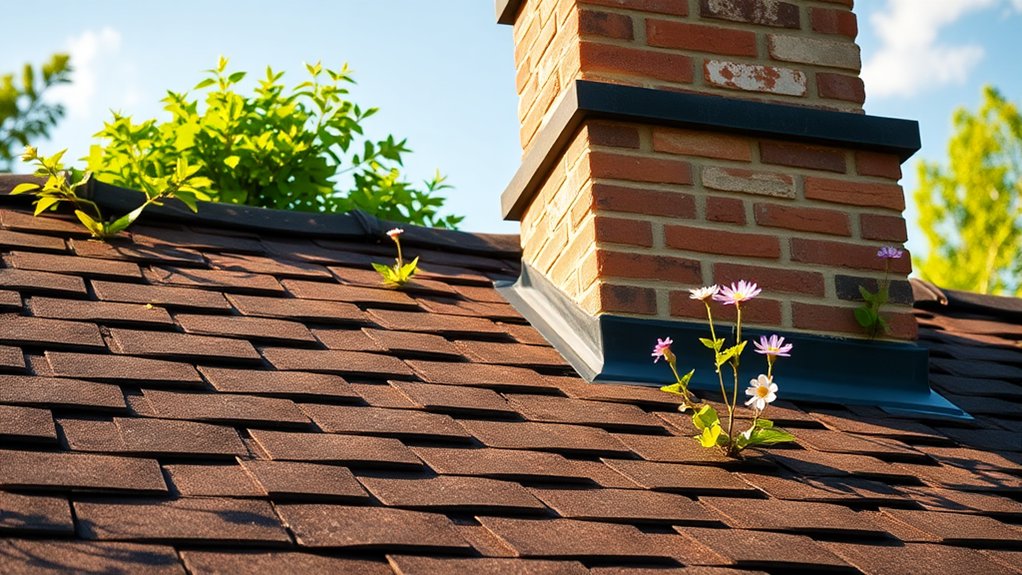
Once you’ve ensured your chimney is in good condition, it’s time to focus on the roof.
Start by checking the shingles for any winter damage, such as missing or cracked tiles.
Clean your gutters and downpipes to ensure proper drainage, removing any blockages from winter debris. Clearing gutters can help prevent water pooling on the roof or foundation.
Inspect the metal flashing around roof penetrations for any cracks or gaps that could lead to leaks.
Don’t overlook your attic; look for signs of moisture or leaks, as these may indicate more serious problems.
With spring wildlife becoming more active, make sure to remove any nests or droppings and trim back any overhanging branches that could cause damage.
Lastly, keep an eye out for vegetation growth like moss, which can compromise your roof’s integrity if not addressed.
Summer Chimney Care and Safety Checks
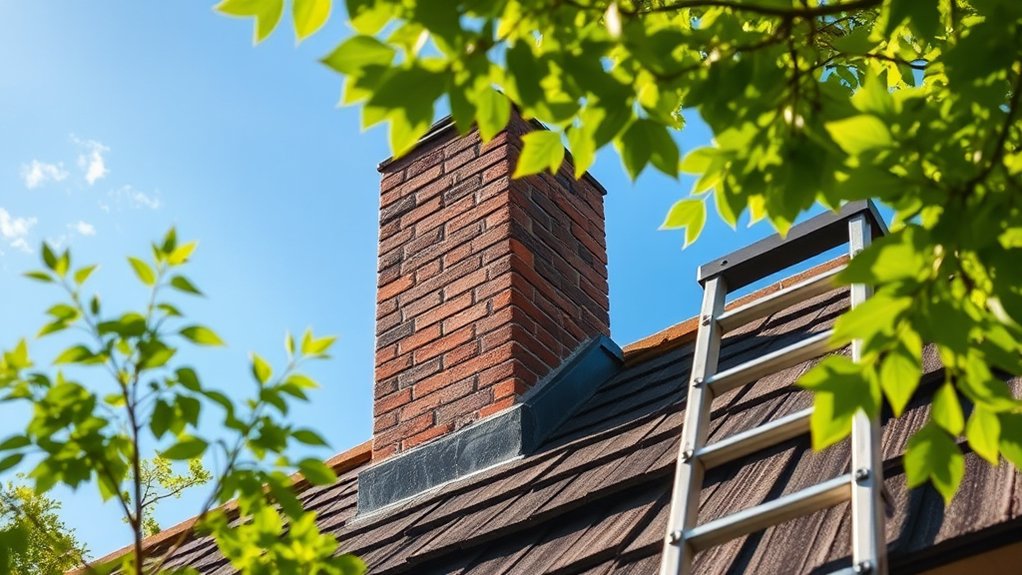
To ensure your chimney operates safely and efficiently during the colder months, it’s vital to conduct thorough summer care and safety checks.
Begin with a chimney inspection to check the cap, ensuring it’s clear of debris and animal nests that could block airflow. Clean your chimney to remove creosote buildup, which can pose a fire risk. Regular inspections are essential for maintenance and leak prevention to keep your chimney in optimal condition.
Inspect the chimney liner for any cracks that might allow harmful gases into your home. Make sure the damper is functioning properly to prevent unwanted drafts, and address any necessary masonry repairs promptly. Additionally, hiring professionals can help ensure thorough maintenance and safety.
Also, test your carbon monoxide and smoke detectors to ensure they’re working. Booking a professional summer maintenance service can help uncover hidden issues, giving you peace of mind before winter sets in.
Preparing Chimney and Roof for Fall
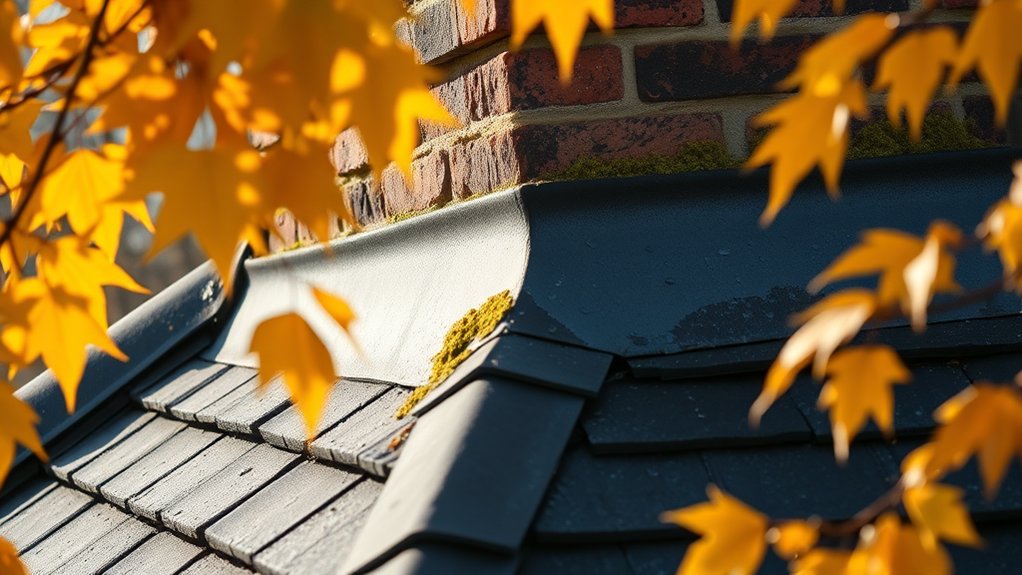
As autumn approaches, it’s essential to clean and inspect your chimney and roof thoroughly. This not only ensures safety by removing flammable debris but also helps identify any structural concerns that could result in expensive repairs later. Don’t forget about your gutters; regular maintenance is crucial to prevent water damage and ensure proper drainage as leaves start to fall. Additionally, consider installing gutter guards to reduce the frequency of cleaning and enhance the efficiency of your gutter system.
Comprehensive Cleaning and Inspection
Preparing your chimney and roof for autumn involves a thorough cleaning and inspection to ensure they’re in top shape for the colder months.
Start with a chimney sweep to clear out debris, promoting proper airflow and reducing fire hazards.
Then, inspect your roof, paying special attention to the area around the chimney. Look for damaged, missing, or curling tiles, as these can lead to leaks.
Check the chimney’s brickwork for cracks and make sure the cap is secure. Don’t overlook the flashing around roof joints; any rust or gaps should be fixed promptly.
Finally, remove any vegetation or debris that could trap moisture. This proactive approach can help you avoid serious issues as temperatures drop.
Gutter Maintenance and Checks
As autumn arrives, the beauty of falling leaves brings a challenge for your gutters. Leaves, twigs, and debris can clog them, causing water to overflow and potentially damaging your home’s exterior. Regularly removing this debris is crucial to prevent blockages and protect your roof edges.
During your inspection, look for cracks, rust, and sagging, particularly at joints and seams where leaks are likely to occur. Installing gutter guards can help reduce debris build-up and the frequency of maintenance.
It’s also wise to trim back overhanging branches to limit leaf litter in your gutters. Aim to schedule cleanings twice a year, ideally in spring and autumn, and consider hiring professionals for a thorough check-up.
These steps will help ensure your gutters work properly and safeguard your home through the colder months.
Winter Monitoring and Essential Maintenance
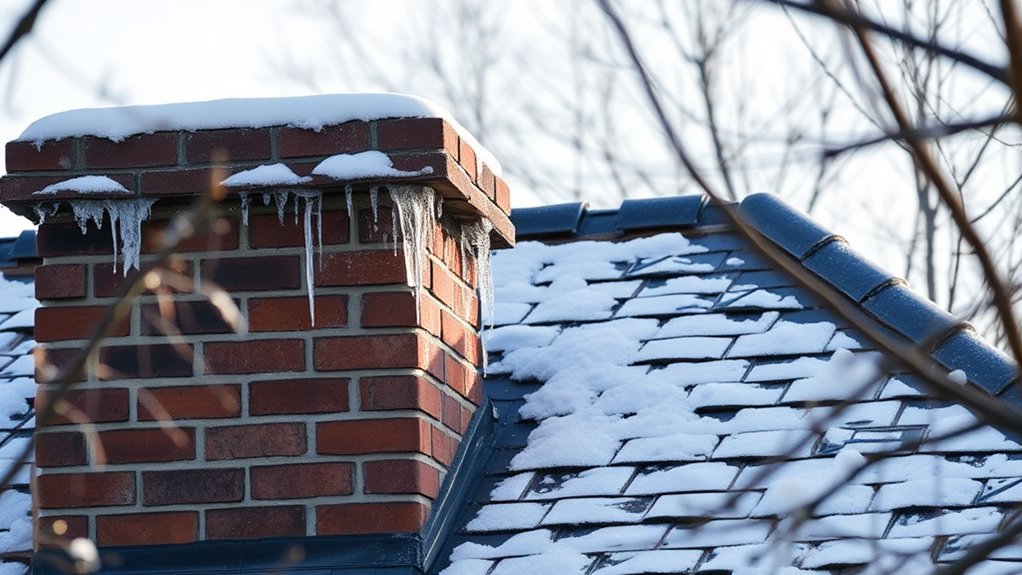
As winter approaches, it’s crucial to keep an eye out for ice dams, which can lead to water backing up and potentially causing leaks around your chimney and roof junctions.
Make sure to check that your damper is working properly to ensure effective ventilation and prevent chilly drafts.
Regular inspections throughout the season will help you spot any issues early, safeguarding the integrity of your chimney and roof.
Ice Dam Prevention
To effectively prevent ice dams from forming on your roof during winter, it’s crucial to grasp the relationship between attic insulation, ventilation, and your roof design.
Follow these straightforward measures to protect your home:
- Ensure your attic insulation has a minimum R-value of R-40 to minimise heat loss.
- Maintain adequate attic ventilation to promote air circulation and avoid warm spots.
- Regularly remove accumulated snow from your roof to decrease the risk of refreezing.
- Check and maintain chimney flashing and gutters for leaks and proper drainage.
Draft Performance Monitoring
Monitoring chimney draft performance during winter is crucial for safe and efficient operation. Cold air can impede the rise of smoke and gases, leading to poor draft efficiency.
Regular chimney testing is essential; consider using a fireplace mantel thermometer to monitor flue temperatures and spot any draft problems. Noise detection devices can also help identify irregular airflow patterns.
Annual chimney sweeps are necessary to remove creosote that can block airflow. Additionally, using well-seasoned wood contributes to a hotter fire, which can improve draft strength.
Regular maintenance, including checking for cracks and fitting top-sealing dampers, can enhance draft control. By being aware of environmental factors, you can ensure your chimney operates effectively, reducing health risks and improving safety in your home.
Common Seasonal Damage and Mitigation Strategies

When assessing seasonal damage to chimneys and roof junctions, it’s important to understand how different weather conditions can affect your home.
Seasonal changes can lead to chimney leaks and poor roof ventilation if not managed properly. Here are some common issues and prevention strategies:
- Inspect chimney caps and flashing each year to stop water from getting in.
- Keep gutters clear to prevent water from backing up and damaging the chimney base.
- Trim back tree branches to avoid damage during summer storms.
- Check for cracks and moisture in the chimney during wet periods.
Taking these steps can help protect your home throughout the seasons.
Frequently Asked Questions
How Often Should I Perform Chimney and Roof Inspections?
You should carry out inspections of your chimney and roof at least once a year, ideally seasonally. Tailor your maintenance schedule depending on usage, weather conditions, and any visible damage to ensure safety and efficiency throughout the year. For instance, if you use your fireplace frequently or live in an area prone to heavy storms, more frequent checks may be necessary.
What Are the Signs of a Chimney Needing Immediate Repair?
You’ll need immediate repairs if you spot cracked mortar or leaks in your chimney. These problems can cause moisture damage, compromise the structure, and create safety risks. Addressing them quickly ensures your home stays safe and functional. For example, a small crack can lead to larger issues like dampness or even a collapsed chimney if left untreated.
Can I Do Chimney Maintenance Myself?
You can handle chimney maintenance yourself with the right tools. Use a brush to clean the flue and check the chimney cap for blockages. However, it’s important to know when to call a professional to ensure safety. Regular checks can prevent dangerous issues, so keep your chimney in good shape.
How Can I Prevent Ice Dams From Forming?
To prevent ice dams, focus on winter maintenance. Ensure your loft is well insulated and ventilated, clear out gutters, and consider installing ice barriers. Regularly check for snow build-up and remove heavy layers promptly. This helps maintain the stability of your roof and prevents leaks.
What Materials Are Best for Chimney Caps?
Choosing the right chimney cap is akin to selecting the right protection for your home. Metal chimney caps, particularly those made from stainless steel and copper, offer excellent durability and safeguard against the elements. On the other hand, concrete chimney caps are robust but may not be the most visually appealing option.
Conclusion
In summary, it’s crucial to carry out regular inspections of your chimney and roof throughout the year to ensure your home remains safe and efficient. Neglecting these checks can lead to significant problems that could hit your wallet hard. By regularly assessing and addressing any potential issues, you’ll prolong the life of your chimney and roof, providing a secure and comfortable space for you and your family, no matter the season.


