
How to Respond to Roof Damage From Snow and Ice
To address roof damage from snow and ice, start by safely assessing the situation from the ground. Look for cracked tiles, ice dams, and any leaks. Use a roof rake from the ground to carefully remove snow. If you spot leaks, cover them with heavy-duty plastic sheeting. Document the damage for your insurance claim and file it promptly. It might be wise to seek professional help for repairs and consider preventative measures to reduce future risks and prolong the life of your roof.
Key Takeaways
- Check your roof for damage, such as ice dams, cracked tiles, and water stains in the loft.
- Stay safe by not climbing onto snow or ice-covered roofs; instead, use a roof rake from the ground to clear excess snow.
- Place buckets under any leaks to catch water and avoid further damage to your home.
- Take photos and videos of any damage for insurance claims and to share with a professional.
- Get in touch with a qualified roofing contractor for a comprehensive inspection and necessary repairs to maintain safety and structural integrity.
Assessing the Damage

Assessing roof damage after harsh winter weather is crucial. Start by checking the snow load on your roof; ensure it doesn’t exceed 20 kg per square metre. Pay close attention to wet snow and ice, as they increase the risk of structural failure. Look for signs of ice dams, which occur when melting snow refreezes at the eaves. This trapped water can lead to leaks and serious internal damage. Inspect the shingles for any cracks or lifting, and check for water stains in the loft. Lastly, assess insulation and ventilation; poor conditions can worsen these problems and create a damaging cycle that needs prompt attention. Remember that heavy snowfall and ice accumulation can contribute to the overall risk of roof damage, making it vital to address these issues promptly. Additionally, ensure that your roof is equipped to handle seasonal challenges such as snow and ice, as these can significantly affect its longevity and integrity.
Immediate Action Steps

Once you’ve assessed the damage to your roof, it’s crucial to act quickly to ensure safety and limit further issues. Start by prioritising safety—avoid climbing onto roofs covered in snow or ice, and evacuate your home if you suspect structural damage. To manage the situation, place buckets under any leaks to catch drips and prevent water damage. Use a roof rake from the ground to safely remove snow, concentrating on the eaves and valleys. Cover any damage with heavy-duty plastic sheeting to stop water from getting in. It’s advisable to contact a professional roofing contractor for a thorough assessment and repairs. Additionally, be aware that heavy snow accumulation can strain roof structures, potentially leading to more severe damage if not addressed promptly. Regular maintenance and annual professional roof inspections can help mitigate long-term risks. Also, take photos of all damage for your insurance claim; this documentation will help support your case.
Preventing Future Issues

To prevent future roof damage, it’s vital to take proactive steps that tackle potential issues before they result in expensive repairs.
Start by preventing ice dams: install a self-adhesive ice dam protection membrane along the eaves and ensure your attic is well-insulated and ventilated. This helps maintain cold attic temperatures, reducing the risk of snow melting and refreezing. Additionally, ensure proper attic ventilation with baffles near eaves to further mitigate the risk of ice dam formation. Proper ventilation systems can significantly enhance airflow and reduce moisture accumulation in the attic.
Regularly clear your gutters and downpipes to ensure proper drainage.
For added roof strength, consider retrofitting to meet local snow load standards, reinforcing rafters and trusses for better structural integrity.
Keep an eye on snow accumulation and have a snow removal plan in place to avoid excessive weight on your roof.
Insurance Claims Process
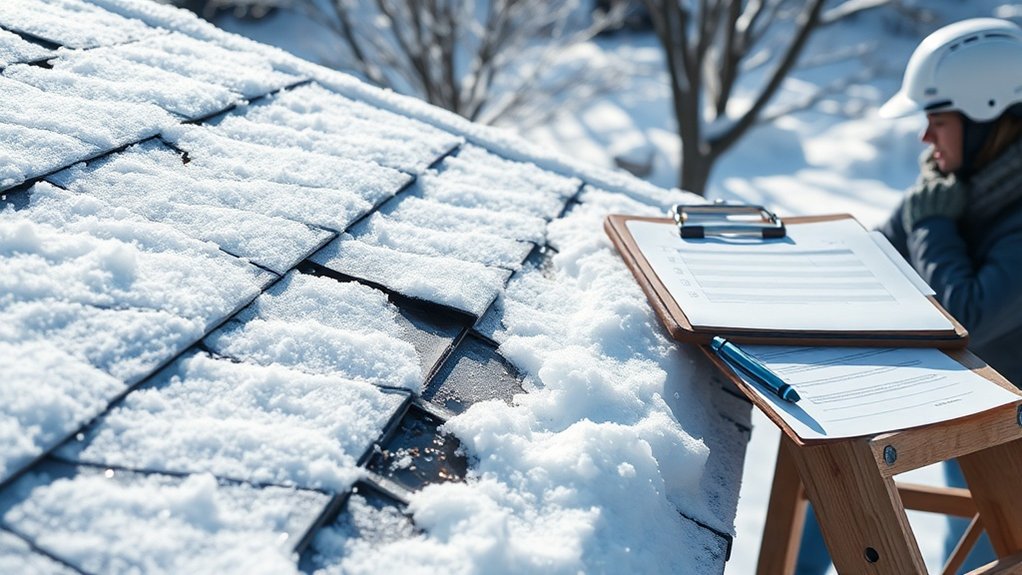
Even with preventative measures in place, roof damage can still happen, so it’s important to navigate the insurance claims process effectively. Here’s a straightforward approach:
- Assess Damage: Carry out a detailed inspection and document everything with photographs and videos.
- Review Policy: Familiarise yourself with your home insurance coverage, paying special attention to any exclusions related to snow and ice damage.
- File Claim: Get in touch with your insurer promptly, providing thorough claim documentation, including your policy number and evidence of the damage.
- Coordinate Adjuster: Arrange for an inspection with the insurance adjuster, ensuring you present all visual evidence for a comprehensive assessment.
Professional Help and Maintenance
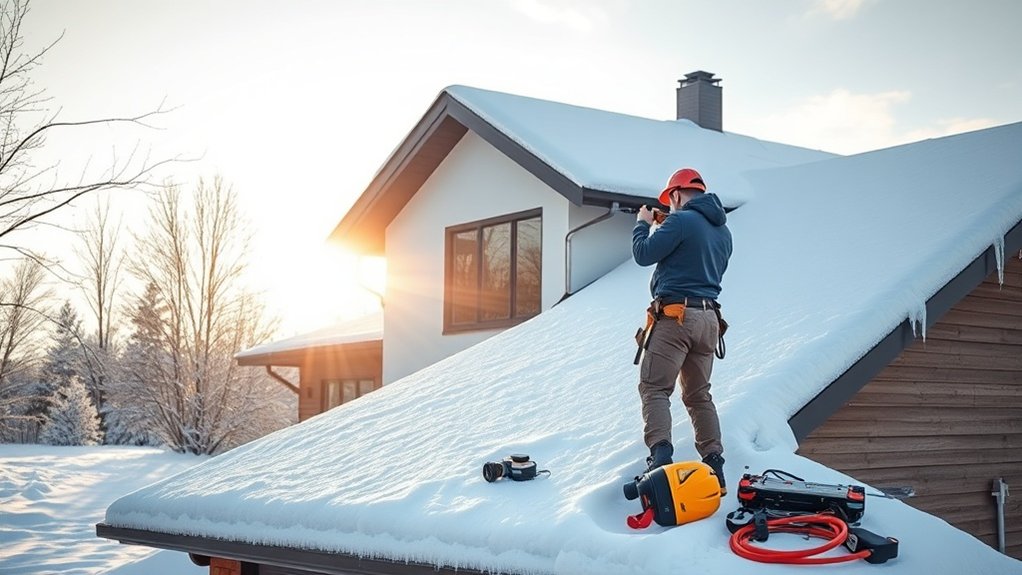
When it comes to roof damage, seeking professional help is crucial for ensuring the longevity and effectiveness of your roof.
Begin with thorough inspections before winter to spot issues like cracked tiles, damaged flashing, or blocked gutters. Professionals are equipped to carry out these inspections, ensuring that significant damage is identified before it leads to expensive repairs.
After heavy snowfall, it’s important to hire trained experts for snow removal. They’ve the right tools to remove snow without causing further damage.
Consider installing preventative measures, such as heat tracing and gutter guards, to reduce the risk of ice dams.
Always opt for professional repairs for any damage found during inspections to keep your warranty intact and ensure quality work.
Regular maintenance is essential for prolonging your roof’s lifespan and safeguarding your home.
Frequently Asked Questions
How Can I Tell if My Roof Is Structurally Compromised?
To determine if your roof is structurally compromised, carry out regular inspections. Check for sagging areas, cracks, and water stains, as these can signal potential issues that require prompt attention. For instance, if you notice a dip in the roof or damp patches on your ceilings, it’s time to investigate further.
What Are Common Signs of Ice Dams on My Roof?
Over 90% of homeowners in the UK face issues with ice dams, which can lead to expensive repairs. Common signs to watch for include icicles hanging from the eaves, water stains on ceilings or walls, and any sagging areas on your roof. It’s essential to prioritise winter roof maintenance and take steps to prevent ice dams to safeguard your home effectively.
Can I Repair Roof Damage Myself or Should I Hire a Professional?
You can handle minor roof repairs yourself, but for significant damage, it’s best to hire a professional. Experts ensure safety, spot hidden issues, and offer valuable insights, which could save you from expensive repairs down the line. For example, if you notice a few missing tiles, it might be straightforward to replace them yourself. However, if there’s water damage or sagging, getting a professional in is crucial to prevent further complications.
How Often Should I Inspect My Roof for Winter Damage?
Consider your roof as a protective barrier; it’s wise to inspect it twice a year, especially before winter. Regular roof checks can identify potential problems early, helping to keep your home safe from the harsh effects of snow and ice.
What Are the Long-Term Effects of Ice Dam Damage?
Ice dam effects can significantly weaken your roof’s structure. Extended moisture exposure can cause decay, promote mould growth, and lead to higher energy bills. This can result in expensive repairs and potential safety risks in your home. For instance, if left untreated, a small leak may escalate into a major issue, affecting both your living space and finances.
Conclusion
In conclusion, it’s crucial to address roof damage caused by snow and ice without delay to prevent further complications. For example, if you spot a leak following heavy snowfall, act quickly by assessing the damage and reaching out to a professional. This proactive approach can save you from expensive repairs later. Don’t forget to keep a record of everything for your insurance claim and consider regular maintenance to minimise future issues. By taking these steps, you can ensure your roof stays secure and functional throughout the harsh winter months.