

Concrete Tile Roof Maintenance: Annual Checklist for UK Homeowners
To maintain your concrete tile roof, start with annual inspections to spot cracks, missing tiles, and any issues with flashing or drainage. Control moss and algae by scraping them off manually and using suitable chemical treatments. Clean the tiles with softwashing techniques to avoid damage. Regularly check for worn components and replace them as needed. Keep a record of all maintenance tasks to monitor the roof’s condition and adhere to building regulations. This checklist helps ensure your roof remains in good shape for years to come. If you’d like to learn more about specific methods, there’s plenty of information available.
Key Takeaways
- Arrange annual inspections, particularly after severe weather, to spot potential issues early and maintain your roof’s integrity.
- Regularly clean the tiles and remove moss and algae to improve appearance and prevent damage.
- Check and repair flashing, ridge tiles, and drainage systems to ensure waterproofing and structural stability.
- Keep records of inspections and repairs to track your roof’s condition and comply with building regulations.
- Consider hiring qualified roofing professionals for comprehensive evaluations and repairs to prolong your roof’s lifespan.
Annual Inspection and Damage Assessment
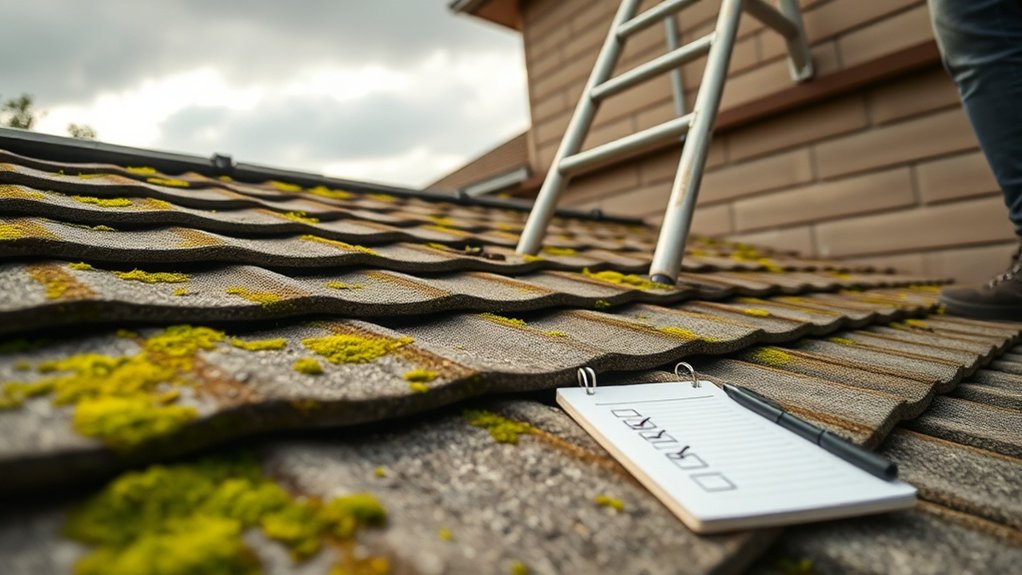
To ensure your concrete tile roof remains in good condition, it’s essential to carry out an annual inspection, particularly after severe weather that could worsen any existing issues.
Make it a habit to schedule these inspections each year, taking into account the age of your roof and the local climate. Regular inspections prevent leaks caused by cracked or loose tiles, which can lead to further complications if not addressed promptly, and also bolster claims against potential insurance exclusions related to roof condition.
During your inspection, look for signs of damage such as cracked or missing tiles, which can affect the roof’s ability to keep out water. Check the ridge tiles for any mortar wear and examine the flashing for gaps that might result in leaks.
Additionally, inspect the fascia boards and drainage systems for signs of rot or blockages.
Hiring a qualified roofing professional for a thorough evaluation can help catch potential problems early, ensuring your roof stays durable and performs well for years to come.
Moss, Algae, and Vegetation Control
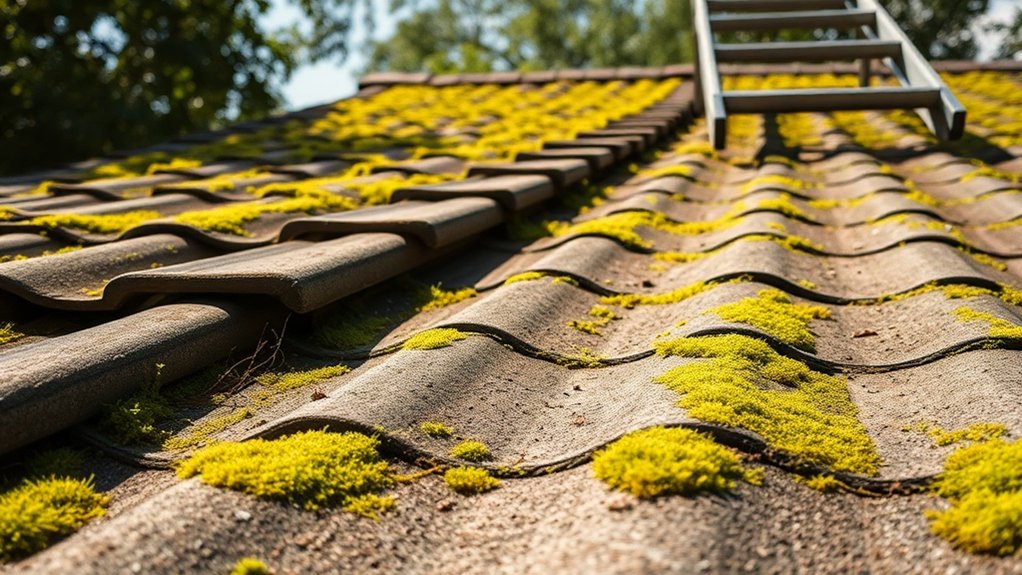
Moss and algae on your concrete tile roof may appear minor, but they can cause serious long-term damage if left unchecked. To effectively manage these issues, consider the following methods:
- Manual scraping: Carefully remove moss using specialised tools.
- Chemical treatments: After scraping, apply moss killers and fungicides for thorough treatment. Regular application of these treatments can help mitigate moss growth risks associated with excess moisture.
- Protective coatings: Use silane/siloxane coatings to minimise moisture retention, as concrete roof tiles can retain moisture longer, accelerating moss growth.
- Metal strips: Install copper or zinc strips to release compounds that deter moss growth.
Regular vegetation control not only improves your roof’s appearance but also extends its lifespan.
Tile Cleaning and Surface Maintenance

Proper maintenance of your concrete tile roof goes beyond just tackling moss and algae.
Regular cleaning is essential to maintain both the integrity and appearance of the tiles. On dry days, use a trowel or stiff brush to manually scrape away dirt and organic debris. For a safer alternative, consider the SkyVac SkyScraper system, which allows you to clean from ground level. Additionally, manual roof scraping is recommended as it eliminates the risk of water ingress during cleaning. Regular assessments ensure optimal roof performance and can help identify small leaks before they become significant issues.
Avoid using high-pressure washers, as they can damage the tiles.
Once you’ve cleared the debris, apply an HSE-approved biocide wash designed for concrete tiles to prevent moss and algae from returning.
Always wear personal protective equipment when handling chemicals, and take care to prevent runoff that could harm plants and water sources nearby.
Repair and Replacement of Roof Components
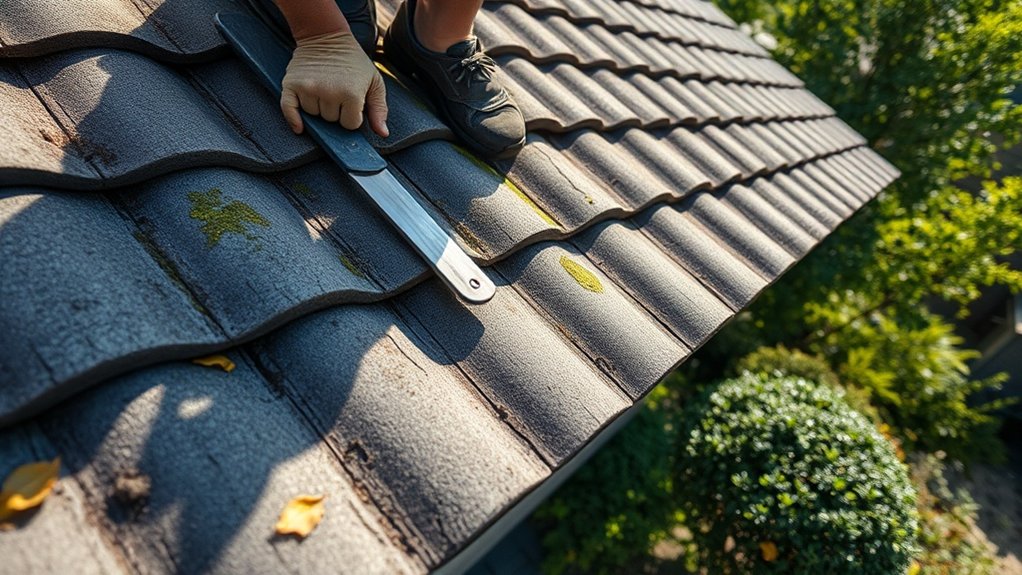
A well-kept concrete tile roof not only safeguards your home but also boosts its appearance.
Regular inspections and prompt repairs are vital for maintaining roof integrity and proper ventilation. Here are the essential points to consider:
- Look for cracked or broken tiles to prevent leaks.
- Check and repair flashing around chimneys and vents to ensure waterproofing.
- Replace worn mortar to secure ridge tiles and improve weather resistance.
- Hire professionals for comprehensive repairs to avoid issues from improper installation.
Roof Structural and Safety Checks
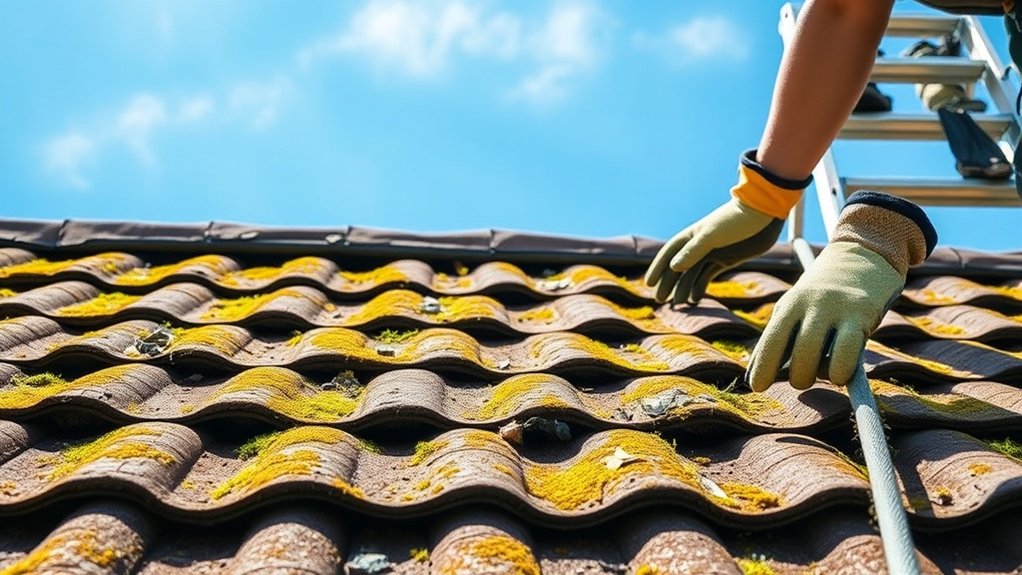
Regular roof structural and safety checks are vital for keeping your concrete tile roof secure. Start with a visual inspection using binoculars to spot any broken tiles, sagging sections, or debris that could weaken the structure.
Check the roof timbers for rot or insect damage, and ensure that the fastening systems comply with BS 5534 standards.
Always follow safety protocols to adhere to NHBC guidelines, and wear the appropriate PPE during inspections.
After any severe weather, promptly check for damage or signs of water ingress.
Keep an eye on moss and algae growth, as well as attic humidity, to avoid long-term issues.
Document your findings to maintain a comprehensive maintenance record and ensure ongoing safety compliance.
Energy Efficiency and Long-Term Roof Care
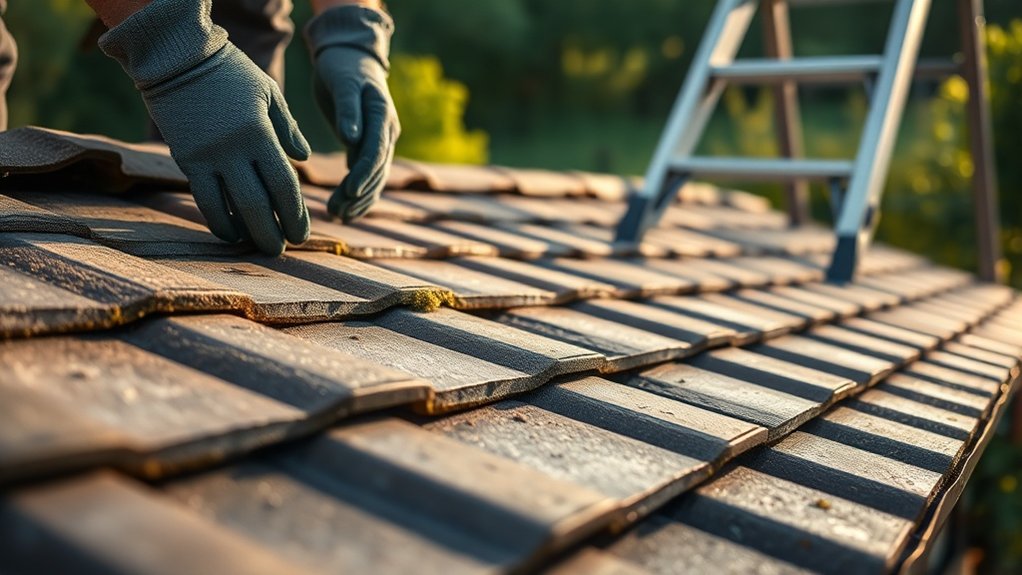
When it comes to looking after a concrete tile roof, understanding its energy efficiency is key for long-term maintenance.
Concrete tiles are great at insulating thermal energy; they soak up heat during the day and release it at night, helping to keep your home cosy in winter and cool in summer.
Here are some essential tips for maintaining energy efficiency:
- Conduct regular inspections to prevent insulation wear and tear.
- Keep tiles clean to ensure they reflect heat and regulate temperature effectively.
- Ensure proper ventilation to avoid dampness and moisture build-up.
- Tackle minor issues quickly to maintain overall energy efficiency.
Signs of Water Penetration
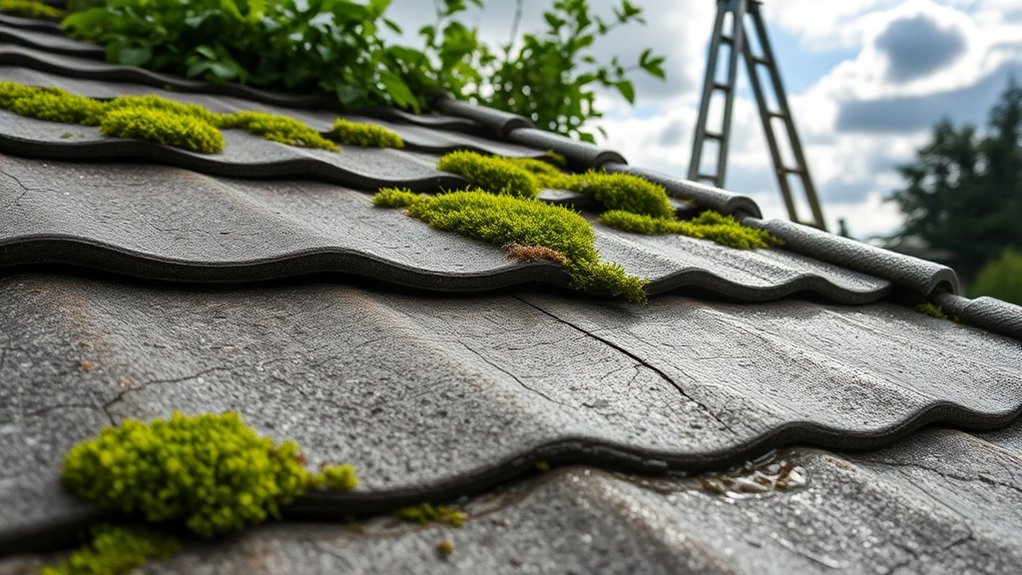
How can you tell if your concrete tile roof has water penetration? Look for telltale signs such as water stains on your ceilings and walls, which indicate leaks due to damaged tiles.
Check for any loose or missing tiles, as these can create gaps for water to enter. Inspect tiles for visible cracks or breaks, which can lead to serious issues.
Additionally, be on the lookout for moss and algae, as they hold moisture and can speed up tile deterioration.
Don’t forget to check the flashing; corroded or poorly sealed flashing around chimneys and joints can cause localized leaks.
Regular moisture detection assessments can help you spot problems early, preventing extensive damage and costly repairs.
Address these signs promptly to keep your roof in good condition.
Importance of Professional Inspections
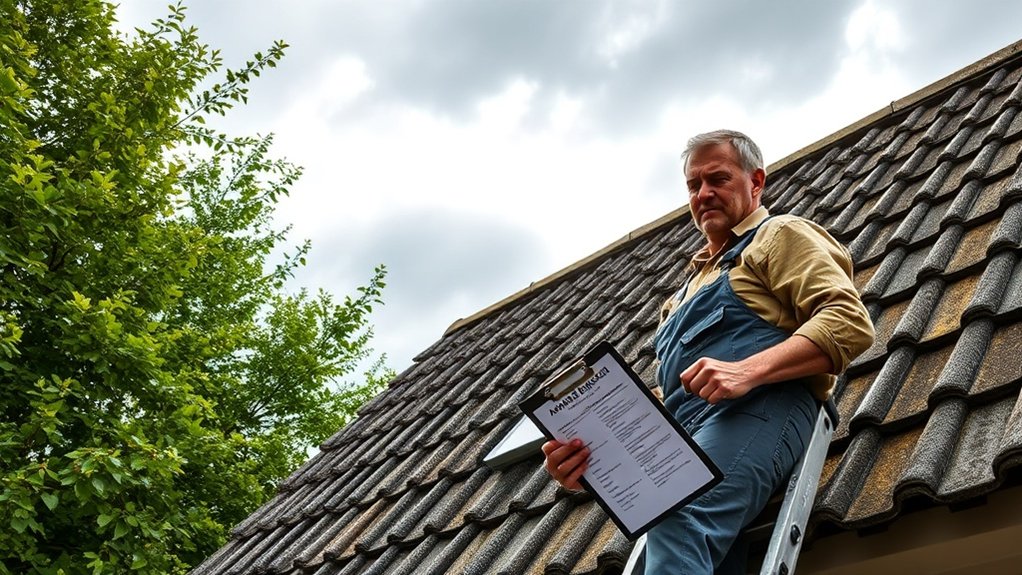
Regular professional inspections are crucial for maintaining the integrity of your concrete tile roof, as they can reveal hidden problems that may go unnoticed.
These inspections offer several benefits, ensuring your roof remains secure and functional:
- Detects minor cracks or damage before they worsen
- Identifies moss and algae growth that can compromise tile integrity
- Assesses flashing and structural stability to prevent leaks
- Evaluates ventilation and insulation for optimal energy efficiency
With a professional evaluation, experts can accurately identify issues and prioritise repairs, extending your roof’s lifespan.
They ensure that all repairs meet industry standards, maintaining both durability and appearance.
Safe Cleaning Methods for Roof Maintenance
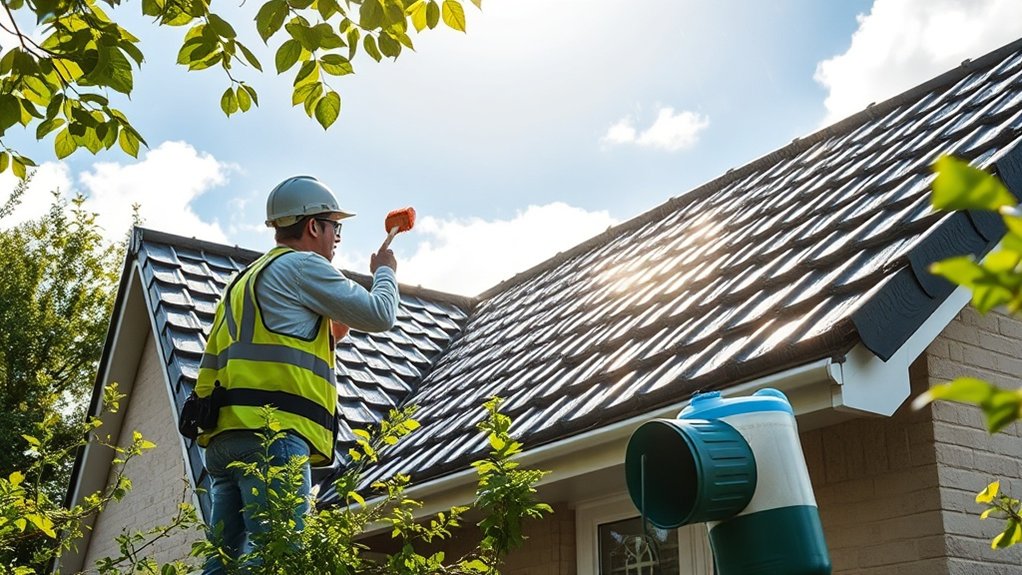
When maintaining your concrete tile roof, it’s crucial to use low-pressure washing techniques to avoid causing damage and to prolong the life of the tiles.
Choosing biodegradable cleaning solutions helps you effectively remove organic growth while being kind to the environment.
Low-Pressure Washing Techniques
To keep your concrete tile roof in good condition, it’s important to use low-pressure washing techniques for effective cleaning without causing harm. By applying appropriate pressure levels—around 4–5 bar (60–70 PSI)—you can help ensure the roof’s longevity and prevent issues like cracking or losing its seal.
- Protects tiles from damage
- Enhances safety for delicate roofs
- Effectively targets dirt and contaminants
- Extends the roof’s lifespan
Softwashing is particularly beneficial, as it involves gentle cleaning with specialised solutions rather than just lowering the pressure.
Use variable pressure washers on low settings and fan jets to reduce force. Always work from the top down to avoid water infiltration, and block downpipes to manage runoff effectively.
Biodegradable Cleaning Solutions
Low-pressure washing techniques effectively clean concrete tile roofs, but using biodegradable cleaning solutions enhances safety and benefits the environment. These eco-friendly products are made from natural ingredients that break down safely, minimising pollution risks. They contain no harsh chemicals, making them safe for plants, pets, and people.
Here’s a quick comparison of biodegradable cleaning solutions:
| Feature | Conventional Cleaners | Biodegradable Solutions |
|---|---|---|
| Environmental Safety | High pollution risk | Minimal pollution risk |
| Toxicity | Contains harsh chemicals | Non-toxic, safe for pets |
| Application Ease | Requires special disposal | No special disposal needed |
| Effectiveness | Surface cleaning only | Deep cleaning, long-lasting results |
| Cost | Often expensive | Cost-effective option |
Incorporating these biodegradable solutions into your maintenance routine supports sustainable living.
Preventative Treatments for Algae and Moss

To maintain a concrete tile roof, it’s crucial to implement preventative treatments for algae and moss to ensure its longevity and visual appeal.
Here are some effective strategies:
- Install copper or zinc strips along the roof ridge; these metals release salts that prevent spore growth.
- Regularly clear gutters and roof surfaces to remove debris and dampness, which can encourage algae and moss.
- For new roofing, consider using algae-resistant materials for continuous protection.
- If using chemical treatments, ensure they’re biodegradable and follow safety guidelines carefully.
Record Keeping for Maintenance Activities
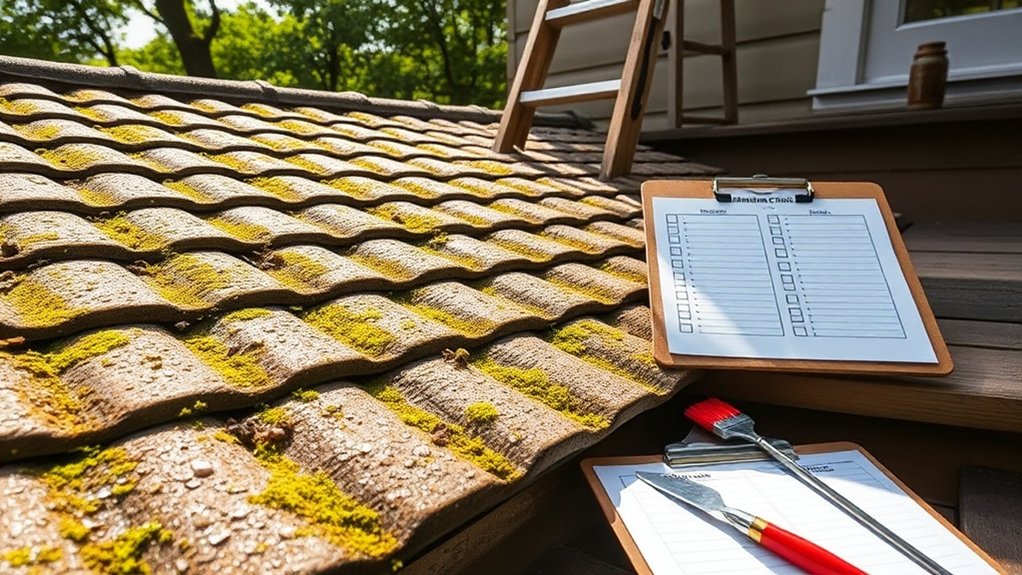
Effective record keeping is crucial for monitoring the maintenance schedule and condition of your concrete tile roof.
By logging each inspection and maintenance task, you can spot trends and prioritise repairs, ensuring your roof stays in good condition. This method not only helps you meet industry standards but also enhances your proactive maintenance planning.
For instance, if you notice recurring issues, you can address them before they escalate into costly repairs.
Importance of Documentation
Proper documentation of maintenance activities is crucial for ensuring the longevity and performance of concrete tile roofs. Keeping accurate records offers several benefits that boost maintenance efficiency.
- Demonstrates compliance with UK Building Regulations
- Monitors maintenance history to spot patterns and issues
- Supports warranty and insurance claims with concrete evidence
- Reduces safety risks through documented inspections
Good documentation not only protects you from legal liabilities but also helps you gauge your roof’s condition over time.
This proactive approach allows you to schedule timely repairs, enhances your property’s value, and shows future owners or contractors that you’ve taken responsible care of your roof.
Maintenance Schedule Tracking
To ensure the longevity and performance of your concrete tile roof, it’s vital to implement a comprehensive maintenance schedule that tracks all activities. Establish a biannual inspection routine and use an inspection checklist to record tasks, such as checking tile conditions and removing debris. Keeping a detailed log not only improves maintenance frequency but also provides a clear record of repairs and observations.
| Date | Inspection Task | Notes |
|---|---|---|
| 01/04/2023 | Checked tile integrity | No issues found |
| 01/10/2023 | Removed moss and debris | Follow-up scheduled |
| 01/12/2023 | Replaced broken tiles | 7 tiles replaced |
Consider using digital tools for organisation, and ensure all records are backed up to protect against data loss.
Compliance With Building Regulations and Standards

Ensuring compliance with building regulations and standards is crucial when installing concrete tile roofs.
These regulations not only safeguard safety but also improve the durability and efficiency of the roofing system.
To stay compliant, keep these points in mind:
- Follow BS 5534 for design and installation guidelines.
- Ensure thermal performance aligns with Building Regulations Part L.
- Use materials that meet BS EN 490 and BS EN 491 standards.
- Apply proper mechanical fixing methods to boost structural integrity.
Frequently Asked Questions
How Can I Tell if My Roof Needs Immediate Attention?
To check if your roof needs urgent attention, look for signs of leaks like water stains on ceilings or walls, or cracked or missing tiles. It’s important to address any roof issues quickly to avoid expensive repairs and to keep your home structurally sound.
What Are the Signs of Poor Roof Ventilation?
Look out for signs like condensation, mould growth, or damp insulation—these indicate poor roof ventilation. Excess moisture can cause significant structural damage, so be vigilant about these warning signs to safeguard your home.
How Often Should I Trim Trees Near My Roof?
You should trim trees near your roof once a year to ensure there’s enough clearance. In areas with fast-growing trees or after storms, you might need to trim them twice a year to avoid damage from overhanging branches and to ensure proper drainage.
Can I Perform My Own Roof Inspections Safely?
In today’s world, you can safely inspect your own roof by taking the right safety precautions and using tools like binoculars. It’s best to avoid walking on the roof itself to reduce the risk of accidents.
What Are the Benefits of Professional Roof Maintenance Services?
Professional roof maintenance services ensure comprehensive inspections, prompt problem identification, and skilled repairs. By preventing damage and improving energy efficiency, you’ll save money in the long run while boosting your property’s value and structural soundness. It’s essential to invest in proper care for your roof.
Conclusion
Just like a gardener looks after their plants, it’s essential to maintain your concrete tile roof. Use this annual checklist to ensure your home remains a strong defence against the weather. Regular inspections and timely upkeep not only protect your investment but also help keep your living space safe and pleasant. So, gather your tools and take on the role of caretaker; your roof will appreciate it.


