

How Weather Affects Chimney Flashing Durability
Weather significantly impacts the durability of chimney flashing, leading to issues such as erosion, corrosion, and structural problems. Rain and temperature changes can weaken materials, causing cracks and allowing water to seep in. UV rays can break down sealants, while freeze-thaw cycles may create small cracks at the seams, worsening the damage.
To maintain the integrity of your chimney flashing, it’s essential to choose the right materials, ensure professional installation, and carry out regular inspections. Being aware of the signs of weather-related damage can help you avoid expensive repairs and extend the lifespan of your chimney.
Key Takeaways
- Changes in weather can erode and corrode chimney flashing materials, reducing their effectiveness in preventing water ingress.
- Coastal and urban areas accelerate corrosion due to exposure to salt and pollutants, which shortens the lifespan of flashing.
- Temperature fluctuations cause thermal expansion in metal flashing, leading to cracks and potential leaks over time.
- Freeze-thaw cycles can create micro-cracks in flashing seams, heightening the risk of water damage and structural problems.
- Regular inspections and maintenance are crucial to spot and resolve weather-related damage to chimney flashing before it escalates.
Weather-Induced Erosion and Corrosion of Flashing Materials
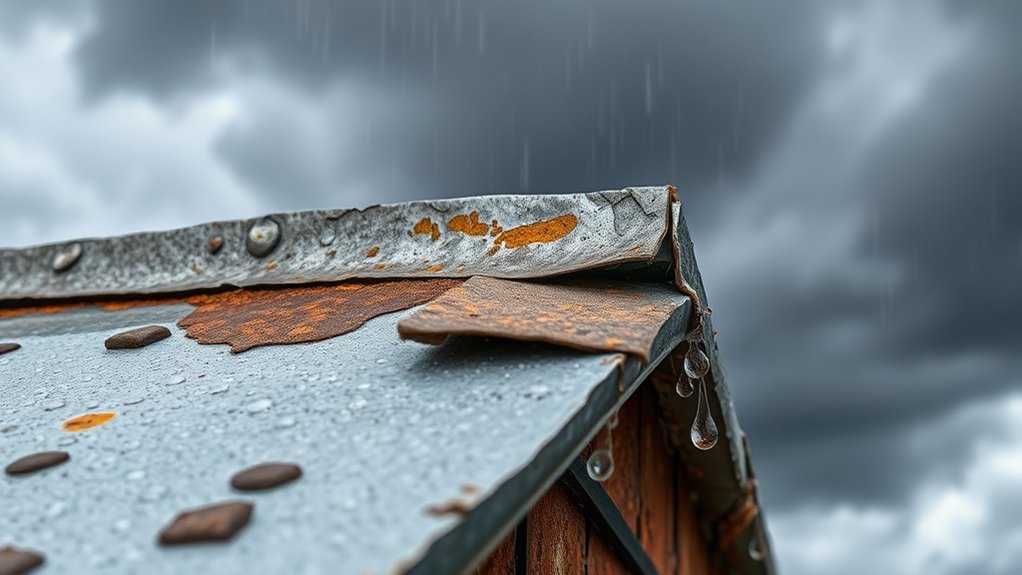
As weather conditions change, chimney flashing materials can suffer significant erosion and corrosion. Exposed to rain, snow, and humidity, metals like galvanized steel and aluminum are particularly vulnerable. When flashing is compromised, moisture can seep in, leading to leaks that threaten both your chimney and the surrounding roof. The constant cycle of wet and dry conditions accelerates oxidation, weakening the metal over time. While copper is more resistant, it develops a protective patina that reduces, but doesn’t completely prevent, corrosion. Moreover, environments near the coast or in urban areas introduce salt and pollutants, which can speed up these processes. To ensure your flashing remains effective and lasts longer, it’s crucial to protect it from these elements, safeguarding your home from potential water damage. Using copper flashing is recommended because of its superior corrosion resistance and long lifespan. Regular inspections of your fire-resistant roofing can further help identify potential flashing issues before they escalate into significant problems.
The Effects of Thermal Expansion and UV Damage

Thermal expansion and UV damage significantly affect the durability of chimney flashing, often leading to early failure if not properly managed. The constant expansion and contraction of metal flashing create thermal stress, resulting in cracks and gaps at seams. Moreover, prolonged exposure to UV rays can degrade sealants, causing brittleness and increasing the risk of corrosion. Chimney flashing is essential for maintaining the integrity of the roof structure and preventing water damage. Regular maintenance of chimney flashing helps avoid expensive repairs associated with water damage and extends its lifespan.
Here’s a brief overview of different materials:
| Material | Thermal Expansion Rate | UV Resistance |
|---|---|---|
| Galvanised Steel | Moderate | Low |
| Aluminium | High | Moderate |
| Copper | Low | High |
To combat these issues, using flexible, UV-resistant sealants can accommodate movement and extend the lifespan of flashing. Regular inspections, timely maintenance, and professional installation are essential for ensuring chimney flashing remains effective against thermal and UV challenges.
Impact of Freeze-Thaw Cycles on Flashing Integrity
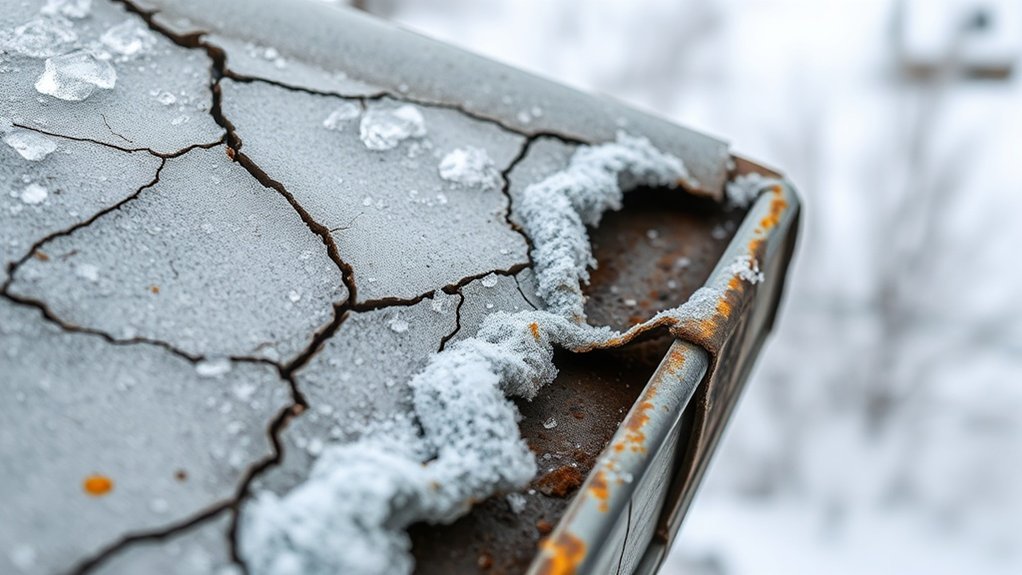
When moisture gets into the joints and cracks of chimney flashing, it creates serious issues during freeze-thaw cycles. Water expands when it freezes, putting pressure on the seams of the flashing and leading to micro-cracks that can grow into larger problems over time. This constant cycle of expanding and contracting wears down sealants and adhesives, compromising the flashing’s integrity. Winter weather can exacerbate these issues, leading to further deterioration of the flashing if not addressed promptly. Regular inspections of chimneys and roofs are vital for catching any signs of wear early on.
To prevent moisture from getting in, proper flashing repair is essential. This helps protect both the chimney and the roofing from deterioration. Regular inspections, especially before winter, are crucial for catching any signs of wear early on. By addressing these issues promptly, you can extend the lifespan of your flashing and prevent costly water damage to your home. Maintaining your flashing is vital in areas prone to freeze-thaw conditions.
Selecting the Right Material for Weather Resistance
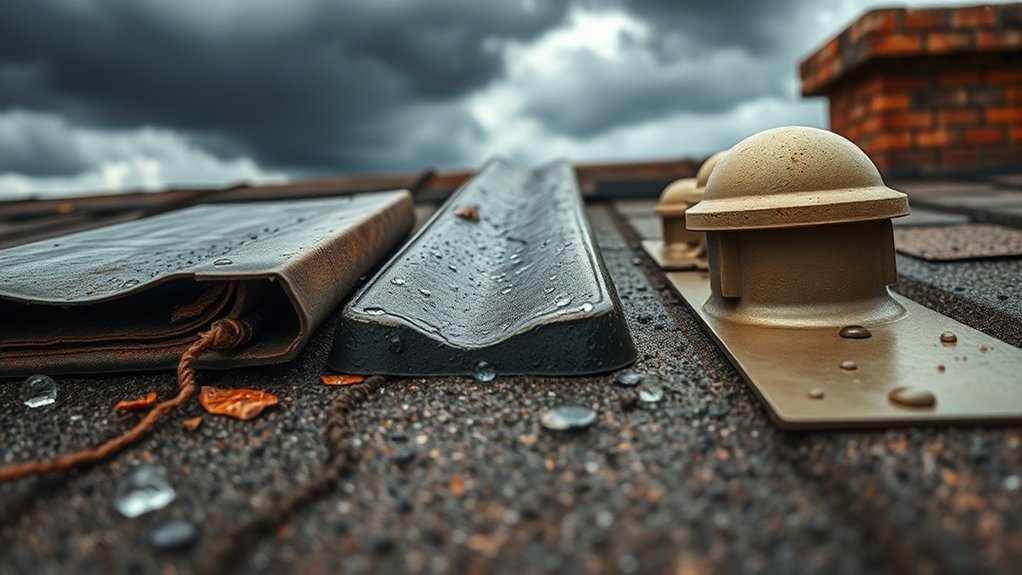
Choosing the right material for chimney flashing is crucial for long-lasting weather resistance and performance. A comparison of materials reveals several options: copper, galvanised steel, aluminium, and synthetic rubber.
Copper is renowned for its longevity and requires minimal maintenance.
Galvanised steel is strong and cost-effective, making it a popular choice.
Aluminium is lightweight and budget-friendly but needs special coatings to enhance durability.
Synthetic rubber is highly flexible, which is beneficial for roofs with complex shapes, though it may not last as long as metal options.
It’s also important to consider environmental impact; avoid lead flashing due to health risks.
Additionally, assess how well the material matches your roof and the complexity of installation to ensure you choose a flashing that can withstand harsh weather while meeting your long-term needs.
Importance of Proper Installation and Regular Maintenance
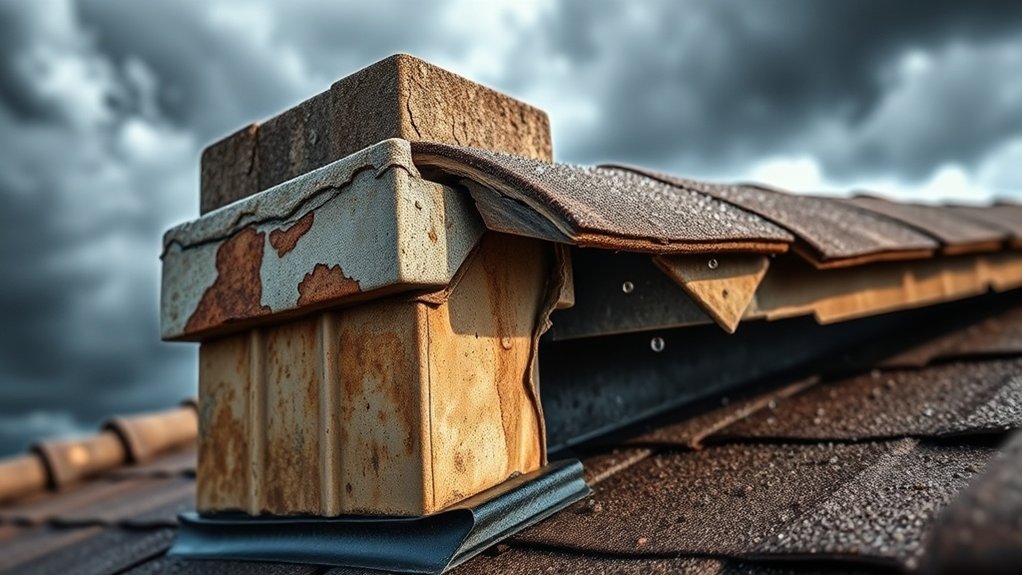
Proper installation of chimney flashing is crucial for preventing water leaks and ensuring durability.
It’s advisable to seek professional installation to ensure that the flashing integrates well with your roofing materials and is securely fastened.
Regular maintenance checks every six months can help spot any potential issues early, extending the lifespan of your flashing and protecting your home from moisture damage.
For instance, a simple inspection can reveal signs of wear, allowing for timely repairs before they lead to costly problems.
Professional Installation Benefits
Professional installation of chimney flashing is crucial for ensuring a waterproof barrier between your chimney and roof.
Skilled installers use proper techniques and high-quality materials to create a tight, airtight seal that effectively prevents water ingress. This careful approach not only protects your chimney and home from structural damage but also extends the lifespan of both components.
- Reduces the risk of leaks and water damage inside your home.
- Maintains the integrity of mortar joints, ensuring the chimney remains stable.
- Cuts down on expensive repairs caused by prolonged water damage.
Maintenance Check Frequency
Many homeowners often neglect chimney flashing maintenance, but regular inspections are crucial for avoiding expensive water damage and ensuring the longevity of both the chimney and roof.
Aim to conduct visual inspections at least every two years, with annual checks recommended, particularly after severe weather or if the flashing is more than ten years old.
It’s essential to address any signs of damage—such as cracks, rust, or water stains—promptly. Be mindful of inspection intervals, especially in areas with harsh weather conditions.
While you can manage routine visual checks, professional assessments are important for thorough evaluations.
Recognizing Signs of Flashing Failure Due to Weather

How can you tell if your chimney flashing has failed due to weather-related issues? Spotting signs of flashing deterioration early can save you from expensive repairs.
Look out for these indicators of moisture intrusion:
- Stains or discolouration on walls or ceilings near the chimney may indicate water leakage.
- Active dampness or dripping after storms suggests that the flashing seals may be compromised.
- Cracked or crumbling mortar joints next to the flashing are a sign of potential water infiltration.
Also, check for rust on metal flashing, loose sections, or gaps where the flashing meets the chimney.
Unusual noises during storms could indicate movement of the flashing. By staying alert, you can tackle these issues before they lead to more significant damage.
Frequently Asked Questions
How Can I Prevent Water Pooling Around My Chimney Flashing?
To prevent water pooling around your chimney flashing, ensure the chimney is designed with an adequate slope and consider adding a chimney cricket. Regularly clear roof surfaces of debris and keep gutters clean to promote effective water drainage.
What Seasonal Maintenance Should I Perform on Chimney Flashing?
Seasonal inspections of your chimney’s flashing are essential. At the start of each season, check for any damage, seal gaps, and clear away debris. This regular maintenance helps avoid costly repairs and ensures your chimney remains safe and functional. For instance, if you notice cracks or rust, addressing these issues early can save you from more extensive work later on.
Are There Specific Brands Known for Durable Chimney Flashing?
When comparing brands, Selkirk SuperPro stands out due to its robust stainless steel construction. In contrast, brands like DuraVent and ShastaVent provide a range of materials. It’s essential to evaluate durability, warranty options, and ease of installation to determine the best chimney flashing for your needs.
How Often Should I Inspect Chimney Flashing for Damage?
You should inspect your chimney flashing every two years. If the flashing is older or after severe weather, check it more frequently. Look for signs of damage such as cracks, rust, or loose sections during each inspection. Simple checks can save you from costly repairs later on.
Can I Repair Flashing Myself, or Should I Hire a Professional?
If you’re handy and have the right tools, you can try DIY repairs on flashing. However, for significant damage or if you’re concerned about safety, it’s best to hire a professional. This ensures quality workmanship and long-lasting results, protecting your home from leaks and structural problems.
Conclusion
Weather can severely impact chimney flashing, causing even the toughest materials to deteriorate. Erosion, corrosion, and freeze-thaw cycles can damage your chimney, compromising your home’s structure. To protect your investment, choose durable materials, ensure proper installation, and commit to regular maintenance. Don’t wait for visible damage—take action now to keep your chimney resilient against the elements.


