

Clay vs. Concrete Roof Tiles: Which Is Best for Your British Home?
When deciding between clay and concrete roof tiles for your British home, it’s essential to think about longevity, durability, and maintenance. Clay tiles can last over 100 years, whereas concrete tiles usually last between 30 and 50 years. While concrete tiles have a lower initial cost, clay tiles can save you money in the long run due to their reduced maintenance needs and better resale value. Additionally, clay tiles often enhance the aesthetic appeal of your home and are more environmentally friendly. If you’d like to dive deeper into these considerations, there’s plenty more to explore.
Key Takeaways
- Clay tiles are incredibly durable, often lasting over 100 years, whereas concrete tiles generally last between 30 to 50 years. This makes clay a better long-term investment.
- Despite their higher initial cost, clay tiles require less maintenance, which can lead to savings over time and potentially increase your home’s value.
- Clay tiles manage moisture effectively and provide superior insulation, making them particularly suitable for the British climate compared to concrete tiles.
- In terms of aesthetics, clay tiles develop a natural patina that enhances traditional designs, while concrete tiles may fade and need refinishing over time.
- Clay tiles are also more environmentally friendly, made from natural materials and lasting longer, which reduces landfill waste compared to concrete tiles.
Weight and Structural Considerations
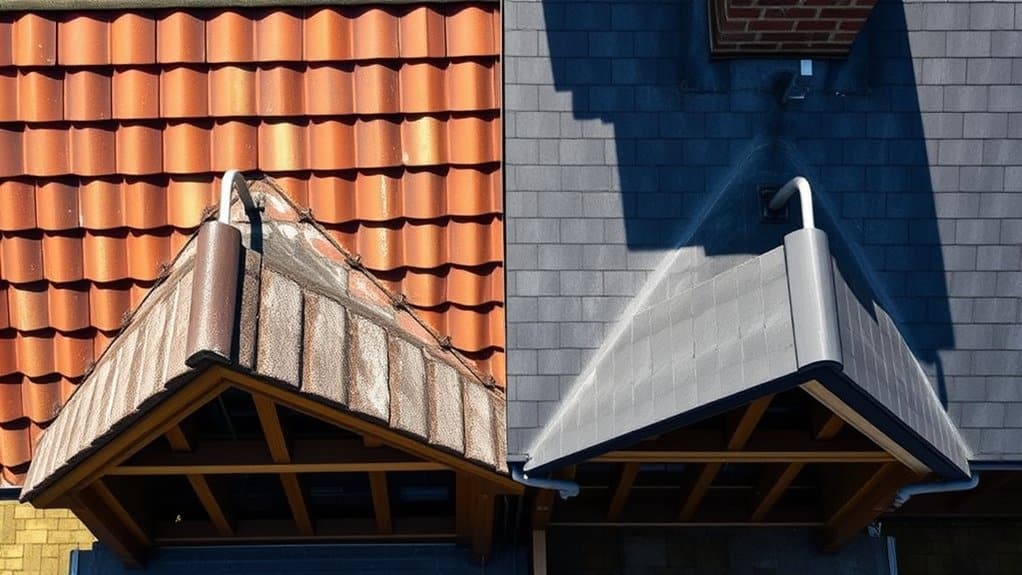
When deciding between clay and concrete roof tiles, it’s important to consider their weight and the structural implications.
Concrete tiles typically weigh between 40-60 kg/m², while clay tiles can range from 60-80 kg/m². This weight difference can significantly affect your roof’s structural integrity.
Heavier concrete tiles may require additional structural support, which can raise construction costs and limit design options. If your existing roof structure isn’t designed to bear the extra weight, you may need to reinforce it, making installation more complex.
On the other hand, while clay tiles can also be heavy, they mightn’t need as much additional support. Additionally, the durability of clay tiles can lead to a longer lifespan, which means they may be a more cost-effective option in the long run due to their long lifespan.
Ultimately, your decision should strike a balance between aesthetics, functionality, and budget.
Always consider your home’s specific requirements before making a choice.
Durability and Lifespan Comparison

When choosing between clay and concrete roof tiles, it’s essential to consider their durability and lifespan.
Clay tiles can last over 100 years with proper installation and care, thanks to their heat-resistant properties that prevent warping and cracking. This makes them ideal for the UK’s varied weather conditions. Additionally, clay tiles are naturally fire-resistant, adding an extra layer of safety to your home. Regular inspections can help ensure that clay tiles remain in optimal condition, further extending their lifespan.
On the other hand, concrete tiles generally have a lifespan of 30 to 50 years. They tend to absorb moisture, which can lead to quicker deterioration and require more upkeep, such as bi-annual inspections and pressure washing. The need for regular maintenance is a significant factor when considering concrete tiles.
Both materials meet the UK’s weatherproofing standards, but clay’s non-porous surface is better at resisting water infiltration, moss growth, and staining.
If longevity and resilience are your priorities, clay tiles are the superior choice for your home.
Cost Analysis: Clay vs. Concrete

When comparing the cost of clay and concrete roof tiles, it’s important to consider both the initial outlay and potential long-term savings. Concrete tiles usually have a lower upfront cost, making them appealing for budget-conscious homeowners. However, clay tiles tend to be more durable and may require less maintenance over time, which could save you money in the long run. For instance, while concrete tiles might need replacing sooner, clay tiles can last decades with minimal upkeep. Additionally, concrete tiles are known for their exceptional durability and strength, which can be a significant advantage for some homeowners. Understanding the costs of roof replacement will help you make a decision that fits your financial situation and future plans.
Initial Investment Comparison
When comparing initial investment costs for clay and concrete roof tiles, you’ll notice significant differences.
Concrete tiles typically start at around 34p per tile, making them a more cost-effective option than clay tiles, which range from approximately £405 for machine-made to £772 for handmade tiles per 1,000. This means clay tiles can be 20-30% pricier per unit than concrete.
While installation costs are similar for both materials, the heavier weight of concrete may require additional structural support, leading to unexpected costs.
Don’t forget to factor in potential waste and labour variations, as both materials need skilled contractors and comparable installation conditions, which can affect your overall budget.
Long-Term Cost Savings
The long-term cost savings of clay and concrete roof tiles can significantly affect your investment.
Clay tiles can last over 100 years, while concrete typically has a lifespan of 30-50 years. This means fewer replacements and lower costs in the long run. As labour and material prices rise, the financial burden of concrete increases, especially if structural reinforcements are necessary due to its heavier weight.
Moreover, clay tiles offer better thermal performance, which can lead to reduced energy bills and additional savings.
In heritage areas, homes with clay tiles often sell for a premium of 5-15%, making them a more attractive investment.
Maintenance Expense Differences
Maintaining your roof can be a considerable expense, so it’s essential to understand the maintenance cost differences between clay and concrete roof tiles.
Clay tiles are more durable and generally require less frequent maintenance, but they may need occasional re-pointing due to mortar wear.
On the other hand, concrete tiles might require more regular replacements, which can affect your long-term costs.
Both materials have similar repair complexities, but labour costs can vary depending on how accessible your roof is.
Regular inspections are crucial to catch any potential issues early, helping to minimise repair costs. Implementing a regular inspection program can help detect problems before they escalate, ensuring your roof remains in optimal condition.
Installation and Maintenance Requirements

Understanding the installation and maintenance requirements for clay and concrete roof tiles is crucial for ensuring their durability and performance. Different installation methods, such as mechanical fixings, are vital for securing the roof effectively. It’s important to set up maintenance schedules that include regular inspections and cleaning to avoid potential damage.
| Aspect | Clay Tiles | Concrete Tiles |
|---|---|---|
| Weight Consideration | Lighter, requires less support | Heavier, needs strong framing |
| Underlay Material | Breathable membranes advised | High-quality membranes essential |
| Maintenance Needs | Sealing may be needed | Regular visual checks required |
Regular maintenance is key to maximising the life of your roof tiles. For instance, cleaning debris from gutters can help prevent water damage.
Aesthetic Appeal and Design Options

How do clay and concrete roof tiles compare in terms of aesthetic appeal and design options?
Clay tiles develop a beautiful patina over time, enhancing their appearance and maintaining their colour. On the other hand, concrete tiles offer a wider range of colours but often fade and may need more frequent refinishing.
Clay tiles feature natural texture variations and a handcrafted quality that adds organic visual interest, unlike the uniform look of machine-made concrete. For traditional homes, clay tiles provide historic authenticity, while contemporary designs typically prefer the clean lines of concrete.
If you prioritise long-term aesthetics, clay tiles are likely the better choice, as they not only maintain their appearance but also complement various regional architectural styles.
Environmental Impact of Roofing Materials
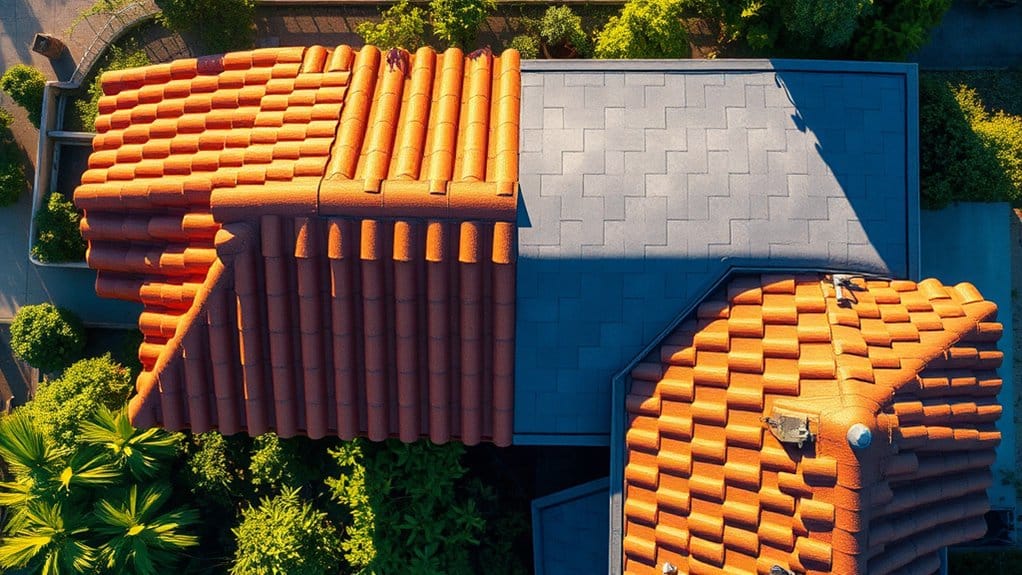
When assessing the environmental impact of roofing materials, the choice between clay and concrete tiles depends on a few key factors.
Clay tiles are made from natural materials, which typically means they’ve longer lifespans and lower transportation emissions due to being sourced locally.
In contrast, concrete tiles contain synthetic components and are heavier, leading to a higher carbon footprint.
Natural vs. Synthetic Materials
Clay and concrete roof tiles are both durable options, but their environmental impacts differ significantly.
Clay tiles are made from natural materials, often sourced locally, which reduces transportation emissions and energy use. This local sourcing not only supports the community but also promotes sustainability, resulting in a smaller carbon footprint.
On the other hand, concrete tiles require cement, a process that’s energy-intensive and contributes to greenhouse gas emissions. The production of concrete tiles often involves complex supply chains and significant transportation, raising concerns about their environmental impact.
For eco-conscious homeowners, choosing clay tiles is a better option as it aligns with sustainable practices and supports local economies.
Longevity and Waste Reduction
When it comes to roofing materials, longevity is key for both economic and environmental sustainability.
Clay tiles can last over 100 years with minimal upkeep, while concrete tiles typically last only 30 to 50 years. This durability means fewer replacements, reducing waste management issues.
Clay tiles can often be recycled or reused, which supports effective waste reduction. In contrast, concrete tiles, although they can be recycled, tend to end up in landfills more often due to their shorter lifespan.
By opting for clay tiles, you’re not just investing in a long-lasting roofing solution; you’re also helping to minimise your environmental impact through better waste management.
Therefore, clay tiles are the more sustainable choice for your home.
Transportation Emissions Impact
When comparing the transportation emissions of clay and concrete roof tiles, it’s clear that roofing materials can significantly impact greenhouse gas emissions.
Generally, clay tiles are lighter than concrete, which means they require less fuel for transport, helping to reduce emissions.
Sourcing materials locally also plays a crucial role; by obtaining tiles from nearby suppliers, you can cut down on transportation distances and lower carbon footprints.
Additionally, efficient transport logistics—like optimising routes and using alternative methods—can further minimise environmental impacts.
Ultimately, the choice between clay and concrete tiles goes beyond aesthetics; it’s about making informed decisions that support sustainability and benefit the environment.
Performance in Extreme Weather Conditions

As extreme weather becomes more common, it’s crucial for homeowners and builders to understand how clay and concrete roof tiles perform in these conditions. Both materials are resilient, but they have different strengths.
| Performance Factor | Clay Tiles | Concrete Tiles |
|---|---|---|
| Thermal Resistance | Better insulation and heat reflection | Retains heat longer in colder temperatures |
| Freeze-Thaw Resilience | Excellent moisture management | Needs high-quality manufacturing to perform well |
| Wind Resistance | Outstanding wind shear resistance | Heavier weight enhances stability in high winds |
| UV Resistance | Superior colour retention | Can fade without protective coatings |
When choosing roofing materials, consider the specific environmental challenges your home faces to ensure optimal performance throughout the year.
Long-Term Value and Investment

Investing in roofing materials requires careful thought about long-term value, especially when choosing between clay and concrete roof tiles. Both types are durable, lasting 30 to 50 years, but clay tiles typically offer better returns on investment. They’ve lower maintenance costs and can last longer, making them a smart choice for homeowners.
Clay tiles also boost curb appeal, which can lead to a higher resale value.
In contrast, while concrete tiles are cheaper initially, their heavier weight may need extra structural support, adding to your overall costs. Additionally, concrete tiles can require frequent repairs, which may make them less cost-effective over time.
For those prioritising sustainability and long-term savings, clay tiles are often the better option, providing a higher return on investment for your home in the UK.
Popularity and Trends in British Homes

When choosing between clay and concrete roof tiles, it’s important to consider what suits your home and budget.
Clay tiles are often preferred for their classic look and long-lasting durability, making them a popular option in the UK. On the other hand, concrete tiles are gaining traction due to their lower cost and simpler installation process.
Both materials are in line with current trends that emphasise sustainability. They provide natural thermal barriers that improve energy efficiency.
In 2023, there’s been a significant uptick in the production of concrete tiles, reflecting a growing interest in eco-friendly building materials, while clay tiles continue to be valued for their environmental benefits.
Ultimately, your choice will depend on how you weigh aesthetics, cost, and sustainability.
Making the Right Choice for Your Home

When choosing roof tiles, it’s important to consider both weight and appearance to ensure they suit your home.
Clay tiles are lighter and provide a traditional look, making them a popular choice in many areas.
On the other hand, concrete tiles come in various styles but are heavier and might need extra structural support.
Weighing these factors will help you find the right balance between aesthetics and practicality.
Weight Considerations
When selecting roofing materials, weight is a crucial factor that affects structural integrity and installation.
Concrete tiles are typically heavier than clay tiles, with plain clay tiles weighing between 60-80 kg/m² compared to 40-60 kg/m² for interlocking concrete tiles. This weight difference may require structural reinforcement, which could increase your roofing budget by 10-20%.
If you’re updating an older property, a structural assessment is necessary to handle the extra load. While lightweight concrete options can reduce stress on the structure, installing heavier tiles often requires team lifts, complicating the process.
Being aware of these weight considerations is vital for achieving a safe and effective roofing solution tailored to your home’s requirements.
Aesthetic Preferences
When choosing roofing options, aesthetic preferences significantly influence your home’s visual appeal.
Clay tiles provide a classic, rustic look, making them perfect for period properties. Their natural terracotta colours and unique textures age beautifully, adding depth and authenticity to your home.
On the other hand, concrete tiles offer a wide variety of colours and can imitate materials like slate or wood, fitting both traditional and contemporary styles. However, concrete tiles may fade over time, potentially losing their vibrancy and appearing less authentic.
Ultimately, your choice should reflect your architectural vision, weighing the timeless allure of clay tiles against the flexibility of concrete for your specific home design.
Frequently Asked Questions
How Do Clay and Concrete Tiles Perform in High Winds?
In high winds, both clay and concrete tiles provide strong wind resistance and durability. When installed correctly, concrete tiles can withstand more intense gusts, whereas clay tiles, thanks to their porosity, effectively reduce wind stress. For example, if you live in a coastal area prone to storms, opting for concrete might be the safer choice for your roof.
Can I Install Clay on a Flat Roof?
You cannot install clay tiles on a flat roof. Their heavy weight and the need for a minimum pitch of 10° make them unsuitable for such structures. Instead, consider alternative waterproofing solutions that are designed for low-pitched roofs, ensuring you maintain structural integrity and performance.
What Are Fire Resistance Ratings for Clay and Concrete Tiles?
You may have concerns about fire safety, but both clay and concrete tiles offer impressive fire ratings. Their robust materials provide reliable protection, making them suitable options for keeping homes safe from flames while ensuring the structure remains intact over time.
Are There Any Health Risks Associated With Roofing Materials?
When choosing roofing materials, it’s important to consider health risks. Asbestos exposure can result in severe health conditions, while mould growth can lead to respiratory problems. Being informed is crucial for ensuring safety and wellbeing.
How Do Local Climate Conditions Affect Roofing Material Choices?
What use is a roof if it can’t withstand the local climate? It’s essential to consider how the weather affects your choice of materials. For instance, in areas prone to heavy rainfall, materials like slate or clay tiles offer excellent waterproofing. In regions with significant snowfall, roofs designed with a steep pitch can help prevent snow accumulation. Always ensure your roofing materials provide good insulation to protect your home from temperature swings.
Conclusion
When deciding between clay and concrete roof tiles for your British home, it’s important to consider their respective advantages and disadvantages. Clay tiles can last over 100 years, while concrete tiles usually last around 50 years. This longevity could mean considerable savings over time.
Think about your home’s architecture, the local climate, and your personal taste. For instance, if you live in a period property, clay tiles might complement its character better. Ultimately, the right choice will not only enhance your home’s value but also its visual appeal, ensuring it lasts for many years to come.


