

Do You Need Scaffolding to Replace Guttering
Scaffolding isn't always necessary for gutter replacement, but it's often the safest and most efficient option for many properties.
We recommend evaluating your building's height, accessibility, and any potential obstructions before deciding. For homes taller than two storeys or with complex gutter systems, scaffolding provides a stable platform and enhances worker safety.
However, alternatives like ladder systems or mobile elevated work platforms might suffice for simpler projects. Local regulations and site-specific conditions can also mandate scaffolding use.
Ultimately, the decision depends on balancing safety, efficiency, and cost-effectiveness. Proper planning and professional consultation can help you determine the best approach for your gutter replacement project.
Key Takeaways
- Scaffolding is not always necessary but becomes essential for buildings taller than two storeys.
- Property accessibility, including obstacles and uneven ground, influences the need for scaffolding.
- Safety considerations, such as fall protection, may necessitate scaffolding use even on lower buildings.
- Alternatives like ladder systems or mobile elevated work platforms can be used for lower properties.
- The complexity of guttering design and local regulations may require scaffolding regardless of building height.
Understanding Gutter Replacement Basics
In light of the significance of guttering systems, understanding the basics of gutter replacement is essential for homeowners. We understand that gutters play an important role in protecting a property's foundation by directing rainwater away from the structure.
When considering gutter replacement, it's imperative to be aware of the various gutter materials available, such as vinyl, aluminium, steel, and copper. Each material offers different benefits regarding durability, cost, and maintenance requirements. Regular gutter cleaning is essential for preventing blockages and ensuring proper drainage, which can help avoid costly water damage repairs ranging from £400 to £1,500.
The average lifespan of gutters is about 20 years, but this can be extended with proper maintenance tips and regular inspections. When evaluating the need for replacement, we must consider factors like the length of guttering required, the chosen material, and any existing damage.
It's important to note that timely replacements can prevent more significant issues, such as foundation cracks and water intrusion, which could lead to extensive repair costs.
Safety Considerations for Gutter Work

When replacing gutters, we must prioritise safety through proper fall protection equipment.
We'll need to ensure all workers are equipped with harnesses, lanyards, and anchoring systems when working at heights.
Regular gutter maintenance is essential for preventing water damage and extending roof lifespan, making safety during these tasks paramount.
Additionally, we'll focus on correct ladder placement, guaranteeing stability and secure footing for anyone accessing the gutter area.
Fall Protection Equipment
Safety should be your top priority when replacing gutters, and fall protection equipment plays an essential role in preventing accidents. We recommend using harnesses and lanyards when working at height, as these are significant components of a thorough fall protection system.
Different harness types are available to suit various tasks, and it's important to select one that complies with current safety regulations. Professional roofers can provide expert guidance on proper safety equipment and techniques, ensuring you're well-prepared for gutter replacement work.
Anchor points are fundamental for securing fall protection gear. We must verify these points are properly installed and capable of supporting the weight of a falling worker.
Before beginning any gutter replacement work, we need to inspect the area thoroughly for potential hazards such as slippery surfaces or unstable ground.
Working with a partner is another essential safety measure. This buddy system allows for immediate assistance in case of emergencies.
Additionally, we should always wear protective gear like gloves and goggles to guard against debris and tool-related injuries.
Proper Ladder Placement
Proper ladder placement is vital for safe gutter replacement work. We must ensure the ladder's base rests on stable, level ground to prevent tipping during our tasks. The ladder should extend at least 90 centimetres above the roof's edge, providing a secure handhold when accessing gutters.
A 75-degree angle is ideal, achieved by positioning the base 30 centimetres away from the wall for every 120 centimetres of height. Professional consultation can provide valuable insights on proper ladder placement and safety techniques, especially for complex roofing structures.
Ladder safety is paramount when working on gutters. We always secure our ladders with stabilisers or footings, especially on uneven surfaces or near roof edges. It's vital to have a partner present to stabilise the ladder and assist in emergencies, greatly reducing fall risks.
When considering ladder types for gutter work, we recommend:
- Extension ladders for reaching higher gutters
- Step ladders for lower, single-storey homes
- Multi-position ladders for versatility in different scenarios
Assessing Your Property's Accessibility

Before deciding whether scaffolding is necessary for your guttering replacement project, it's essential to assess your property's accessibility.
We'll need to evaluate several factors related to your property layout and potential accessibility issues.
First, let's evaluate the height of your building. If it's taller than two storeys, scaffolding is generally recommended for safe gutter access.
We'll also need to inspect for obstructions like conservatories, trees, or uneven ground that might necessitate scaffolding for efficient and safe replacement.
Regular roof inspections can help identify these accessibility challenges early on, potentially saving time and resources during the guttering replacement process.
Next, we'll examine the complexity of your guttering system.
Intricate designs or tight spaces may require scaffolding for ideal access during installation.
We must also take into account local regulations and safety standards, as some areas mandate scaffolding for certain projects regardless of apparent accessibility.
Scaffolding Benefits in Gutter Replacement
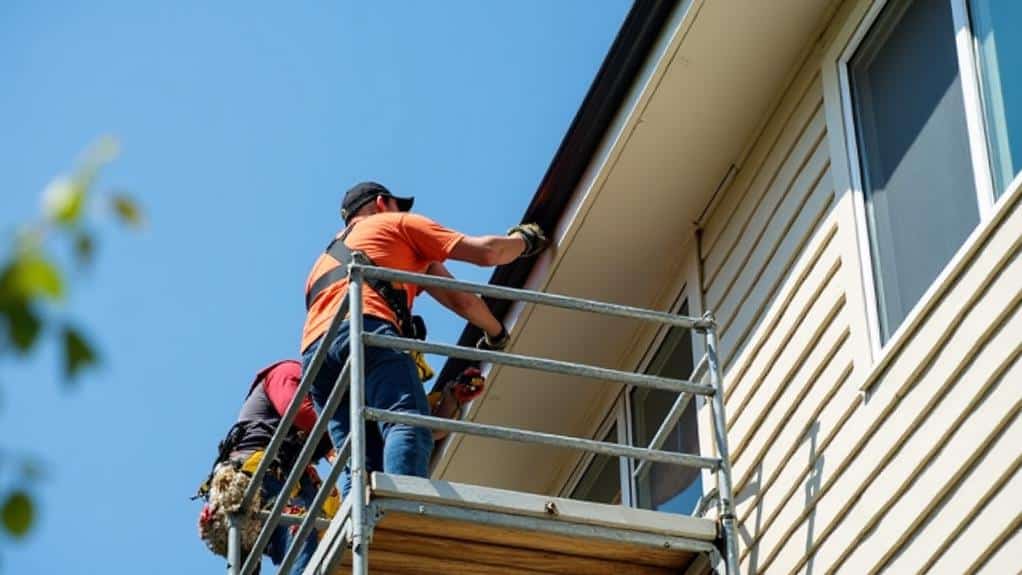
Scaffolding's advantages in gutter replacement projects can't be overstated. We've found that it provides a stable platform for workers, considerably reducing fall risks, especially on high or complex properties.
By utilising various scaffolding types, we guarantee easy access to all sections of the guttering system, eliminating the need for frequent ladder repositioning and enhancing overall efficiency.
When considering installation techniques, scaffolding offers numerous benefits:
- Improved safety: It creates a protective barrier against falling tools or materials, safeguarding workers and individuals below.
- Enhanced productivity: Multiple workers can operate simultaneously, potentially speeding up the project timeline.
- Regulatory compliance: Use of scaffolding often meets safety regulations for high or challenging installations.
We've observed that scaffolding allows for more precise work, as installers can focus on the task at hand without constantly worrying about balance or positioning.
This improved focus leads to better quality installations and repairs. Additionally, scaffolding types can be tailored to the specific needs of each property, guaranteeing ideal coverage and accessibility.
Alternatives to Traditional Scaffolding
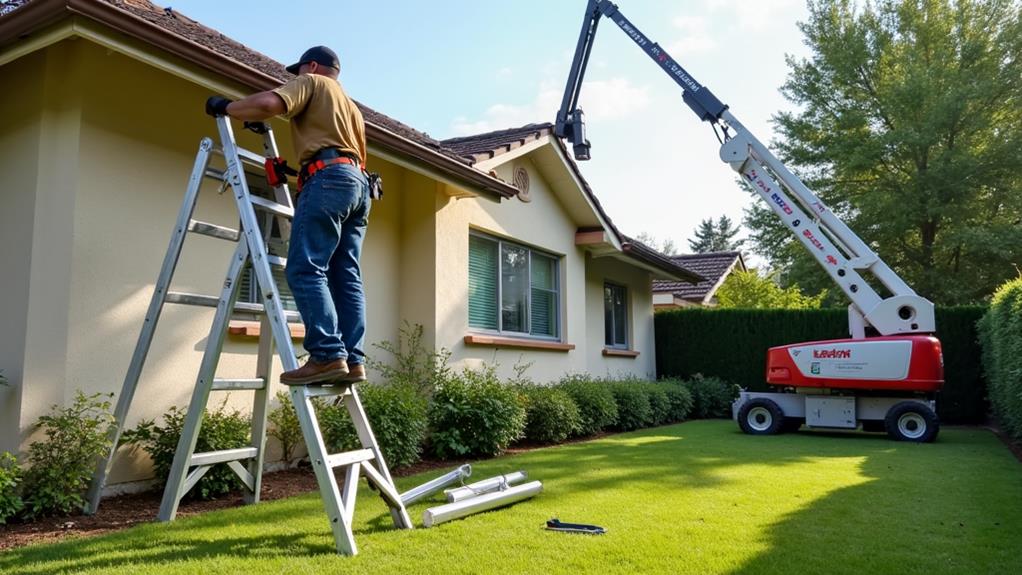
Whilst scaffolding offers numerous benefits, several alternatives have emerged that can effectively replace or complement traditional scaffolding methods for gutter replacement and maintenance.
We've seen significant advancements in gutter maintenance techniques that prioritise safety and efficiency.
Gutter vacuuming systems represent one of the most innovative cleaning solutions, allowing us to clean and replace gutters from ground level. This eliminates the need for scaffolding entirely, guaranteeing both safety and effectiveness.
For those requiring elevated access, Mobile Elevated Work Platforms (MEWPs) provide a safe alternative suitable for residential and commercial projects.
We've also observed the increased use of ladder systems with stabilisers, which enhance safety during gutter work on lower properties. These systems offer a cost-effective alternative where scaffolding may be unnecessary.
Additionally, gutter cleaning poles have become a practical solution for maintenance tasks, enabling ground-level operation without scaffolding.
Professional guttering specialists often employ vacuum systems and other alternatives to guarantee safe and effective gutter replacement or repair.
These innovative approaches demonstrate that scaffolding, whilst useful, isn't always essential for gutter maintenance. By adopting these alternative methods, we can often achieve the same results more efficiently and with reduced risk.
Cost Analysis: Scaffolding Vs Alternatives
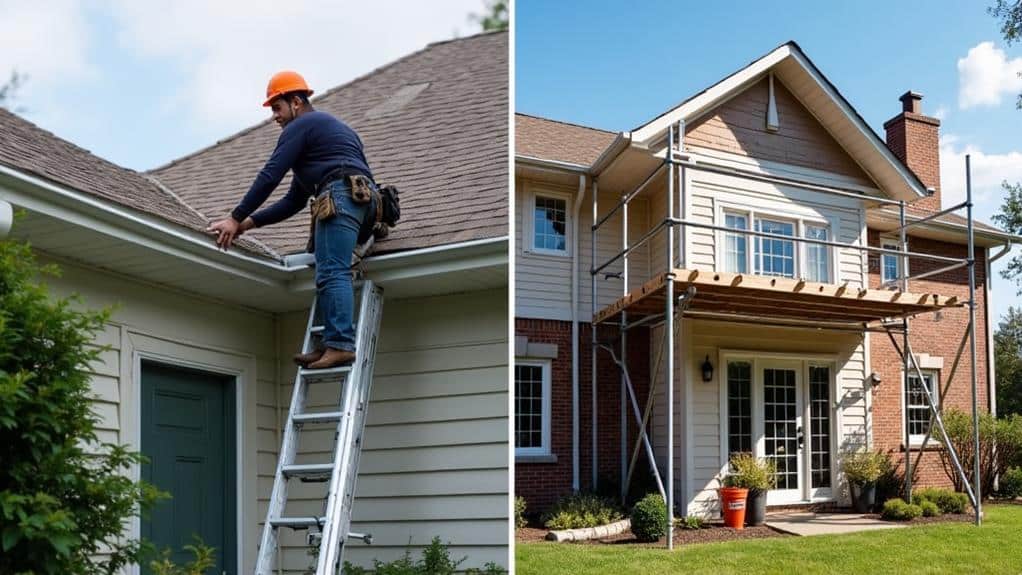
We shall compare the upfront and long-term expenses of scaffolding versus alternatives for gutter replacement.
Our analysis will factor in how safety considerations impact overall costs, as proper equipment can prevent accidents and potential liabilities.
We shall also examine how project scale influences the cost-effectiveness of different access methods, from simple ladder setups to full scaffolding systems.
Upfront Vs Long-Term Expenses
The decision to use scaffolding for gutter replacement involves a careful analysis of upfront costs versus potential long-term savings. Whilst scaffolding typically costs around £500 per side, considerably increasing initial expenses, it's essential to evaluate the broader financial implications.
We must weigh the immediate outlay against potential long-term benefits:
- Safety: Scaffolding provides a safer working environment, potentially reducing expenses associated with accidents or injuries.
- Efficiency: A stable platform can lead to a more efficient installation process, potentially saving on labour costs.
- Versatility: Scaffolding allows for easier access to multiple areas, which may be beneficial for complex jobs or multi-storey homes.
Using alternatives like ladders or scaffold towers may seem cost-effective initially, but they mightn't be suitable for all properties or situations. In some cases, these options could lead to higher long-term costs if the job requires more time or poses increased risks.
Safety Impact on Costs
Safety considerations play a vital role in the cost analysis of scaffolding versus alternative methods for gutter replacement. We must evaluate the cost implications of using scaffolding against potential alternatives like scaffold towers. Whilst scaffolding typically costs around £500 per side, it provides a stable and safe working environment that can prevent costly accidents and project delays.
When evaluating the need for scaffolding, we should consider how it enhances efficiency and safety during gutter replacement. Professional contractors often conduct thorough examinations to determine if scaffolding is necessary, potentially opting for simpler access methods when site conditions allow. This evaluation can lead to significant cost savings.
It's essential to compare the upfront expenses of scaffolding with the long-term benefits of adhering to safety standards. By preventing accidents and maintaining a secure work environment, scaffolding may ultimately prove more cost-effective than alternative methods.
We must weigh these factors carefully, considering both immediate costs and potential future savings. This all-encompassing approach ensures that we make informed decisions about scaffolding use, balancing safety requirements with budget constraints in gutter replacement projects.
Project Scale Considerations
Building on our safety cost analysis, project scale emerges as a key factor in determining whether scaffolding is necessary for gutter replacement. When evaluating project size and installation complexity, we must consider the cost-effectiveness of various access methods.
For smaller, straightforward projects with unobstructed access, professionals may opt for ladders or scaffold towers. These alternatives can considerably reduce costs, as full scaffolding typically runs around £500 per side. However, as project size increases or installation complexity grows, scaffolding becomes a more viable option.
We recommend evaluating the following factors when deciding on scaffolding:
- Height and accessibility of the guttering
- Presence of obstructions like conservatories or uneven ground
- Overall project duration and scope of work
For larger or more complex installations, the enhanced safety and efficiency provided by scaffolding may outweigh its cost. It allows workers to move freely and safely along the entire gutter line, potentially speeding up the replacement process.
Ultimately, the decision between scaffolding and alternatives should be based on a thorough evaluation of the specific project requirements, balancing safety, efficiency, and cost considerations.
Legal Requirements and Regulations
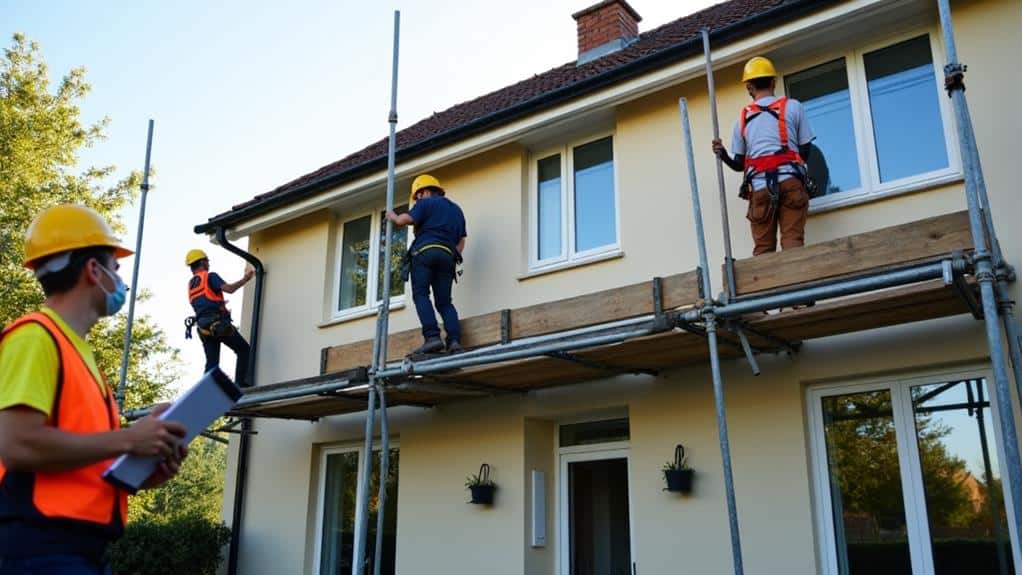
Manoeuvring the legal landscape of scaffolding requirements for gutter replacement can be complex. We need to take into account site-specific conditions, such as height and accessibility, to determine whether scaffolding is legally required. Regulatory compliance often hinges on conducting thorough risk assessments, especially for projects involving more than four workers.
Local scaffolding guidelines may mandate the use of scaffolding in scenarios with obstructions or uneven ground. It's essential to document our risk assessment findings to guarantee accountability and adherence to safety standards. Non-compliance can result in severe consequences, including penalties and work stoppages.
To help navigate these requirements, we've compiled a quick reference table:
| Factor | Consideration | Action |
|---|---|---|
| Height | Above 2 metres | Scaffolding likely required |
| Accessibility | Limited or obstructed | Assess need for scaffolding |
| Workers | More than 4 | Conduct risk assessment |
Gutter Replacement Project Planning
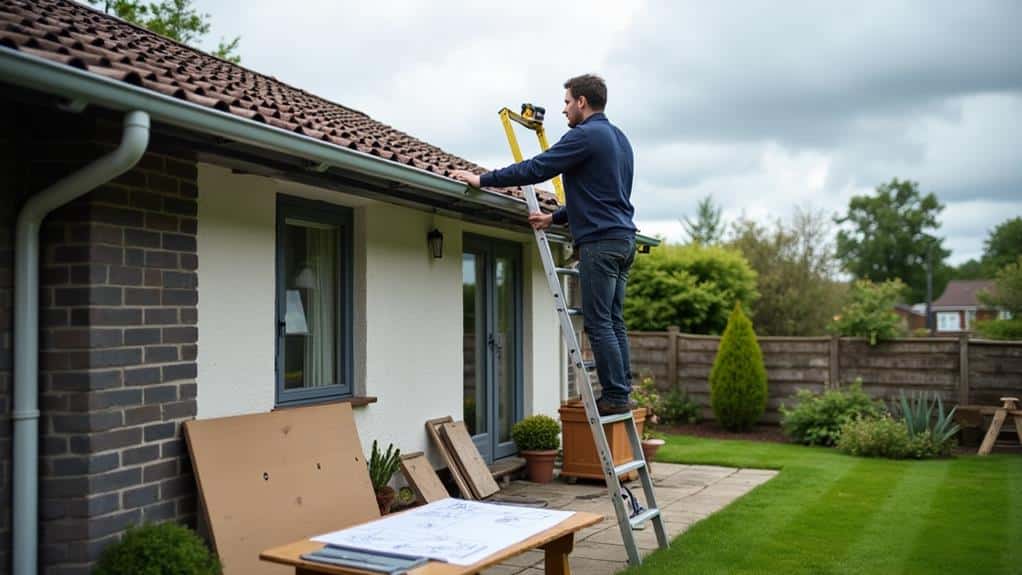
Having addressed the legal aspects, we now turn our attention to the practical planning of a gutter replacement project.
When evaluating the need for scaffolding, we must consider the height and accessibility of the property. These factors determine whether ladder access will suffice or if scaffolding is necessary for a safer working environment.
For projects involving significant height or obstructions like conservatories, we generally recommend scaffolding. It's essential to factor in the estimated cost of approximately £500 per side when budgeting for your project.
To guarantee a thorough evaluation, we advise consulting with professionals who can evaluate specific site conditions and suggest appropriate access methods.
When planning your gutter replacement project, consider the following:
- Evaluate gutter materials and their compatibility with your property's architecture
- Research installation techniques suitable for your chosen gutter system
- Obtain multiple quotes from contractors to compare scaffolding requirements and associated costs
Hiring Professionals Vs DIY Approach
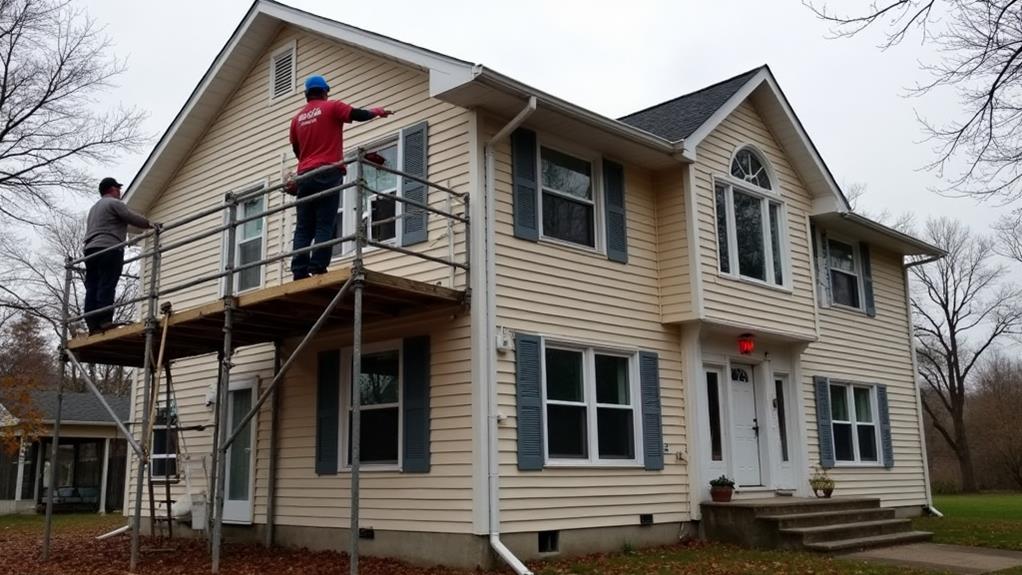
When considering gutter replacement, homeowners often face the decision between hiring professionals or taking a DIY approach. Whilst DIY projects can seem appealing due to potential cost savings, they come with significant risks, especially when working at heights.
Professional expertise is essential in guaranteeing compliance with safety regulations and proper installation techniques. Contractors possess the necessary equipment, including scaffolding and stabilisers, to safely access and replace gutters. They can accurately assess whether scaffolding is required based on site conditions, potentially avoiding unnecessary expenses or unsafe practices.
DIY pitfalls are numerous in gutter replacement projects. Homeowners may lack the proper tools and knowledge to safely work at heights, increasing the risk of falls and injuries. Additionally, inexperienced individuals may struggle to achieve the same level of quality as professionals, potentially leading to future leaks and complications.
Whilst DIY attempts may seem cost-effective initially, errors or safety hazards could result in additional expenses.
Professional services offer guaranteed high standards and peace of mind. By hiring experts, homeowners can guarantee their gutter replacement is completed safely, efficiently, and to a high standard, minimising long-term risks and costs.
Tools and Equipment Needed
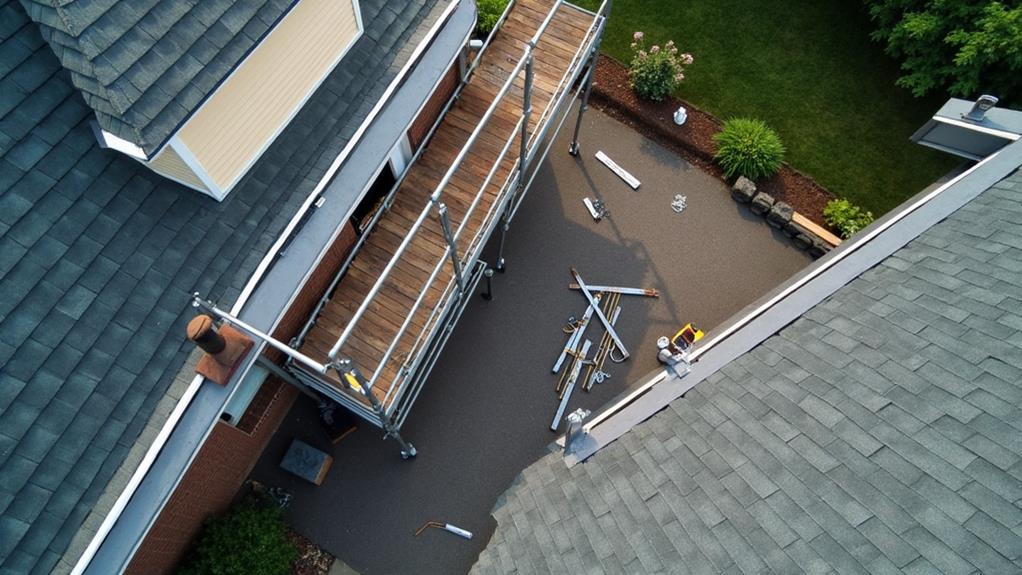
To safely and effectively replace guttering, specific tools and equipment are vital. We'll need to take into account the height of the building and the complexity of the task when selecting our equipment.
For single-storey homes, a sturdy ladder with a ladder stabiliser is often sufficient. However, for higher or more complex jobs, scaffolding or Mobile Elevated Work Platforms (MEWPs) may be necessary to guarantee safety and efficiency.
When it comes to ladder types, we recommend:
- Extension ladders for reaching higher points
- Step ladders for lower sections and corners
- Multi-position ladders for versatility in different situations
Vacuum systems have revolutionised gutter cleaning and replacement, allowing us to work from ground level in many cases. These systems eliminate the need for scaffolding and reduce the risk of falls.
Additionally, we mustn't forget the importance of personal protective equipment (PPE) such as gloves and goggles, which are vital regardless of the chosen method.
Frequently Asked Questions
Can You Replace Gutters Without Scaffolding?
We can replace gutters without scaffolding in some cases. For single-storey homes or straightforward gutter installations, ladders or scaffold towers often suffice. However, we must always prioritise safety considerations and evaluate each project's specific requirements before proceeding.
Do You Need Scaffolding to Clean Gutters?
Much like a tightrope walker, we balance safety and practicality. We don't always require scaffolding for gutter cleaning, but it's an essential safety precaution for multi-storey homes. Consider your property's height and access points when planning gutter cleaning tips. Whilst a ladder may suffice for single-storey dwellings, taller buildings often necessitate more robust equipment to ensure the safety of those carrying out the task.
Do You Need Scaffolding to Replace Soffits and Fascias?
For soffit installation and fascia maintenance, we often recommend scaffolding, especially for taller buildings or complex structures. It's not always necessary, but it ensures safety and efficiency. We'll assess your property to determine the best approach.
Can Roof Repairs Be Done Without Scaffolding?
We can often carry out roof repairs without scaffolding, utilising alternative safety measures and repair techniques. However, the necessity depends on the specific job, height and access. We'll assess each situation to ensure roof safety and compliance with regulations.
Conclusion
We've explored the nuances of scaffolding in gutter replacement. Whilst not always necessary, scaffolding can greatly enhance safety and efficiency. According to the Health and Safety Executive, falls from height remain one of the biggest causes of workplace fatalities and major injuries in the UK. This statistic underscores the importance of proper equipment and safety measures. Whether opting for scaffolding or alternatives, we must prioritise safety, comply with regulations, and consider professional assistance for complex projects. Ultimately, the decision depends on your specific property and project requirements.


