

Can Modern Homes Have Thatched Roofs? UK Planning Considerations
Yes, modern homes can have thatched roofs in the UK, but there are important planning considerations to keep in mind. You must comply with building regulations and fire safety standards, which include appropriate insulation and chimney height. It’s wise to consult with local authorities early on, particularly in conservation areas where heritage rules may require the use of traditional materials and methods. By understanding these factors, you can ensure a successful project that harmoniously blends modern and traditional design.
Key Takeaways
Modern homes can indeed have thatched roofs, but you’ll need to follow local planning regulations and heritage guidelines. It’s a good idea to engage with your local council early on to get approval for your thatching materials and any design changes you plan to make.
If your home is in a conservation area, be aware that any alterations to thatched roofs usually require planning permission. This is to keep the historical character of the area intact. When replacing materials, using like-for-like options is preferred, as it helps maintain traditional craftsmanship while still allowing for modern safety features.
Don’t forget that regular inspections and maintenance are key for thatched roofs. This ensures they meet safety standards and satisfy insurance requirements.
Building Regulations for Thatched Roofs
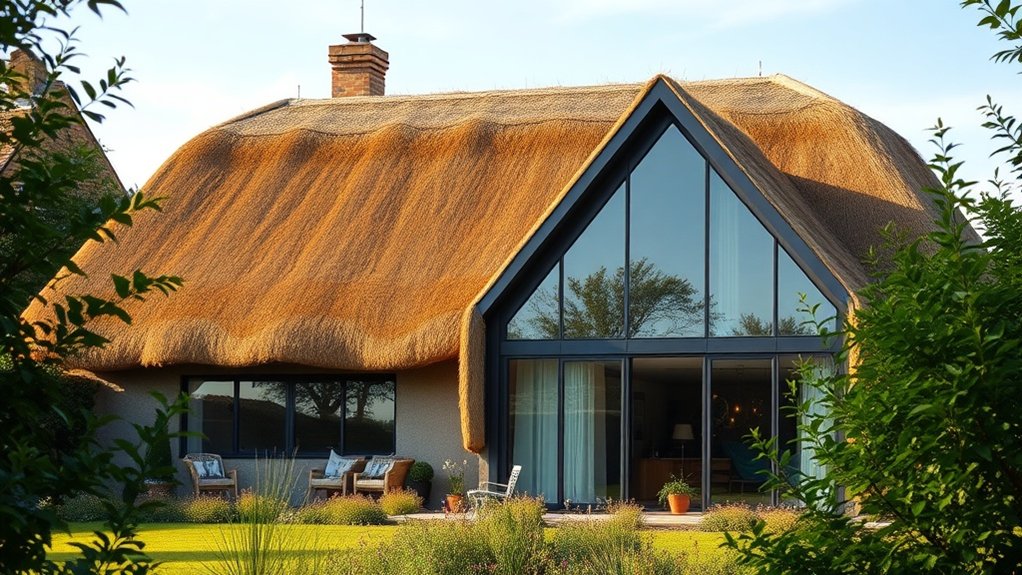
When considering a thatched roof for your modern home, it’s crucial to understand the building regulations that ensure safety and structural integrity.
You’ll need to use approved materials and insulation that meet U-value standards. The ‘Dorset Model’ often guides the design, which requires roof rafters to be covered with microporous fire-resistant boarding.
The thickness of the thatch and its moisture content are key for insulation performance; using multiple layers can improve thermal efficiency. Additionally, proper rainwater discharge is necessary to prevent water logging and maintain the longevity of the thatched roof.
Proper ventilation systems are essential to avoid moisture problems, and air and vapour control layers help protect the thatch.
Following these regulations not only safeguards your home but also honours the traditional craft of thatching.
Fire Safety Requirements
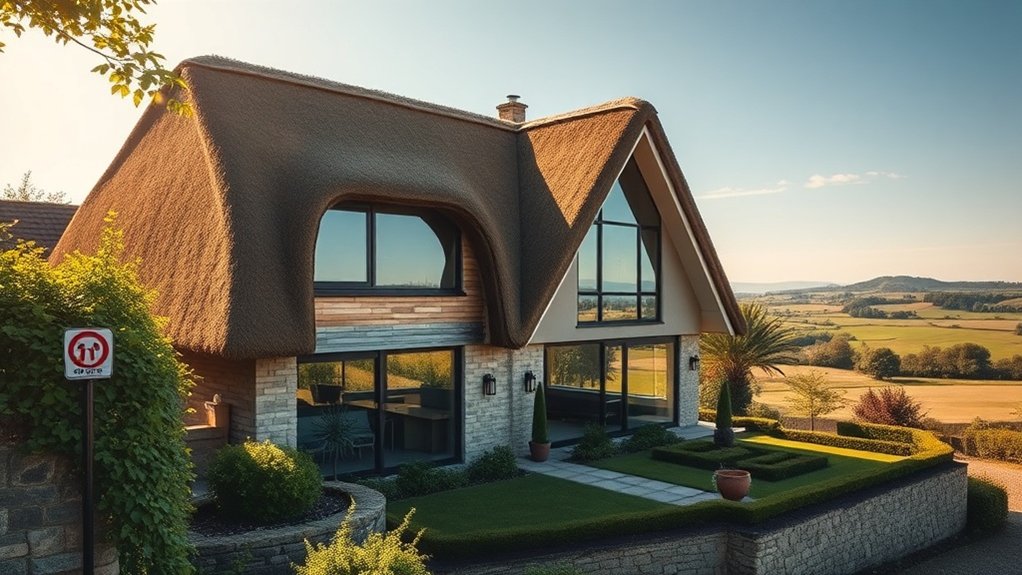
When it comes to fire safety for thatched roofs, it’s vital to understand the regulations. Ensure you use fire-resisting building boards, comply with chimney height requirements, and follow electrical installation standards to minimise risks. For instance, maintaining the correct chimney height can help prevent sparks from igniting thatch. Additionally, wood-burning stoves should be used with extreme caution in thatched buildings, as they pose greater fire risks compared to traditional open fires. Each of these measures contributes significantly to the safety of your thatched home.
Fire-Resisting Building Boards
Understanding fire safety is crucial for modern homes, especially those with thatched roofs. Fire-resisting building boards, usually 12.5 mm thick, provide at least 30 minutes of fire resistance, helping to maintain both structural integrity and insulation. When choosing materials, opt for high-quality fire-rated plasterboards from trusted brands like British Gypsum or Knauf, which adhere to strict safety standards. It’s also important to implement effective fire-stopping and compartmentalisation at junctions to prevent fire spread, particularly with insulated roof panels. Ensuring fire resistance is prioritized in your building design will greatly enhance overall safety. Ensure that clear escape routes are accessible to enhance safety.
Chimney Height Regulations
Fire safety is not just about using fire-resistant materials; chimney height regulations are crucial for the safety and efficiency of your home, particularly if you have a thatched roof. A well-designed chimney is key for effective flue performance. Here are the essential chimney height requirements:
| Requirement | Specification |
|---|---|
| Minimum height for wood-burning | 4.5m from the appliance to the chimney top |
| Height for a 30° roof pitch | Approximately 1330mm above the roof surface |
| Clearance from nearby structures | At least 2.3m from adjacent elements |
| Height above ridge | 1000mm or as specified for the pitch |
Following these regulations is vital to prevent smoke spillage and potential health risks, while also ensuring compliance with UK Building Regulations. Adhering to these guidelines is essential for maintaining a safe and efficient home.
Electrical Installation Guidelines
Ensuring electrical installations in homes with thatched roofs adhere to safety guidelines is vital for reducing fire risks.
Key protocols include avoiding wiring placement directly beneath the thatch and keeping a 300 mm clearance from any wire-netting.
When installing heat-emitting equipment, be mindful of potential hazards. Recessed lighting isn’t recommended; instead, choose bulkhead fixtures for safer illumination.
It’s also important to work with experienced electrical contractors who understand these unique challenges.
Regular Electrical Installation Condition Reports are essential for spotting potential fire hazards and ensuring compliance with regulations.
Planning Permission and Local Authority Engagement
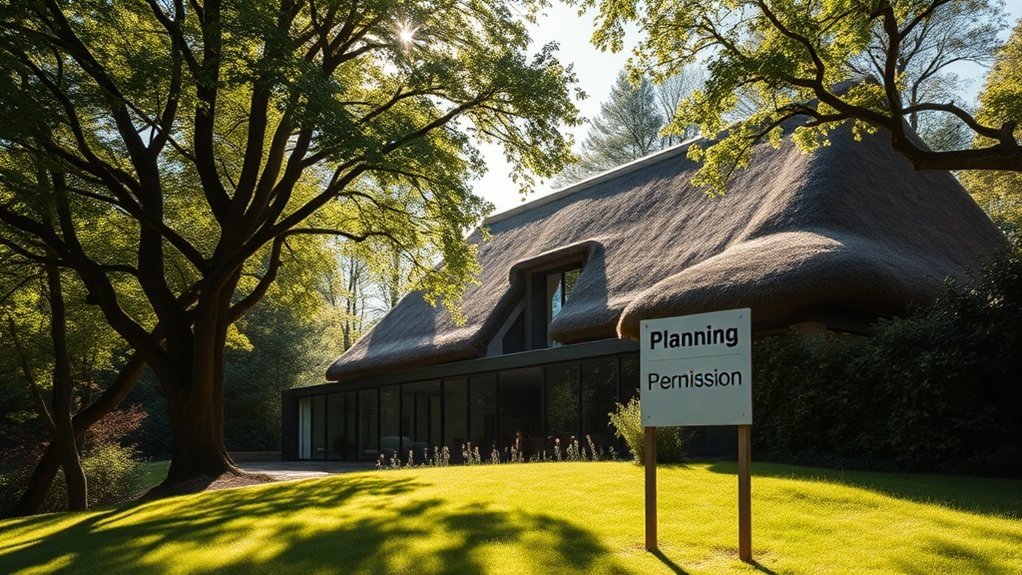
When considering thatched roofs for modern homes, it’s crucial to navigate the planning permission process carefully to avoid delays. Engaging with your local authority and conservation officers early on is essential, as they’ll evaluate whether your plans align with the building’s heritage value.
Prepare comprehensive proposals that detail your choice of materials, maintenance plans, and installation methods, as these will strengthen your application.
Conservation officers typically favour like-for-like material replacements to maintain the historic character of the property. Disputes over materials can stall your project, so it’s best to collaborate and follow their guidelines closely.
Regional Material Specifications
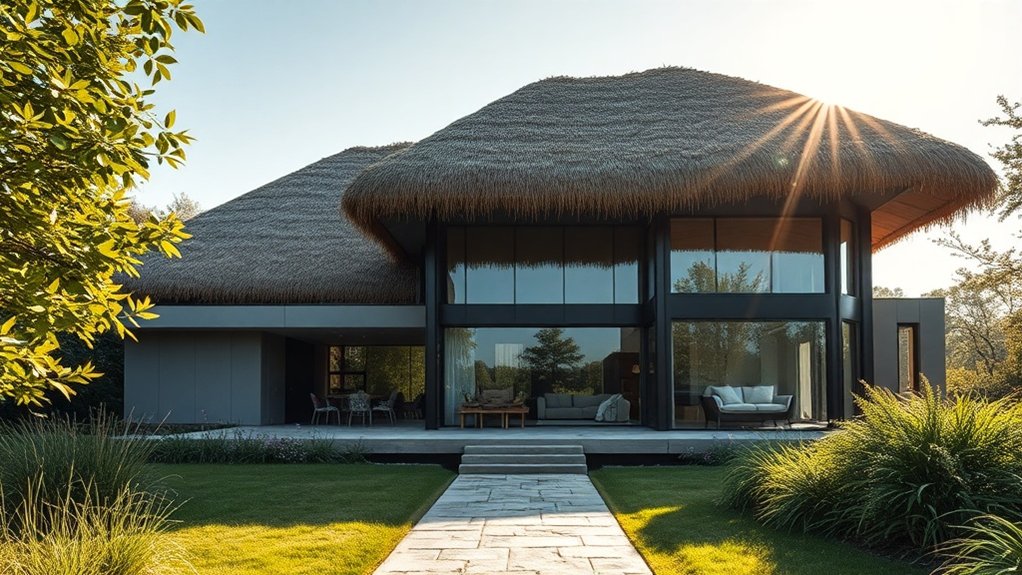
When considering thatched roofs, it’s essential to use local materials to ensure both authenticity and durability.
Many heritage regulations require traditional materials that reflect the area’s historical practices and agricultural resources.
Local Material Preferences
Local material preferences play a vital role in shaping the character and performance of thatched roofs in modern homes, reflecting the unique geological and environmental contexts of various regions. Opting for local materials supports sustainability and enhances local craftsmanship, helping to preserve regional identity.
| Region | Preferred Thatched Material | Benefits |
|---|---|---|
| East Anglia | Water Reed | Durable, moisture-resistant |
| Southern England | Long Straw | Flexible, visually appealing |
| Coastal Areas | Salt-Resistant Thatch | Weather-resistant |
| Rural Areas | Traditional Thatch | Biodegradable, renewable |
| Urban Areas | Composite Materials | Modern durability |
Using indigenous materials ensures harmony with the landscape and meets planning criteria, enriching the architectural story of your home.
Heritage Compliance Requirements
Incorporating thatched roofs into modern homes requires careful navigation of heritage compliance, especially concerning local material specifications.
It’s crucial to understand these details to preserve the area’s heritage and cultural values.
- Use local thatching materials like long straw or combed wheat reed.
- Maintain original craftsmanship in eaves, ridges, and verges.
- Apply traditional fixing methods to ensure historical integrity.
- Source replacement thatch from approved regional suppliers.
- Ensure fire safety regulations are met without compromising the authenticity of materials.
Modern Construction Techniques and Their Implications
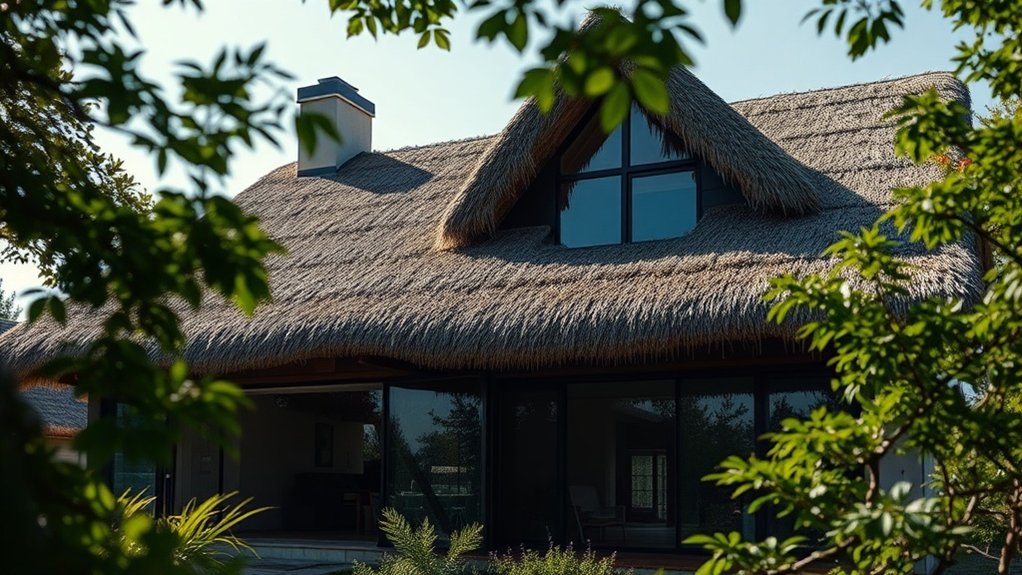
As modern construction techniques progress, incorporating thatched roofs into contemporary architecture offers both challenges and opportunities.
It’s essential to use sustainable materials like reed and straw, which are prized for their thermal efficiency and availability. Modern approaches now utilise metal fasteners instead of traditional twine, improving structural integrity without compromising aesthetics.
A minimum roof pitch of 45 degrees is necessary for effective drainage and longevity. Additionally, implementing vapour control layers and fire safety measures is crucial to comply with current building regulations.
Thatched roofs provide natural insulation, enhancing energy efficiency by keeping homes warm in winter and cool in summer. This allows for a seamless blend of traditional charm and modern practicality.
Insurance Considerations for Thatched Homes
Owning a thatched home can make insurance a bit tricky due to its unique risks and maintenance requirements.
Specialist insurance providers are available that focus specifically on these properties, which often have higher repair and rebuild costs.
Regular inspections and proper maintenance are essential, as they not only help keep your home safe but also ensure you meet your policy’s conditions.
This can directly impact your coverage, so it’s worth investing the time to stay compliant.
Specialist Insurance Providers
Thatched roofs are charming and traditional, but they come with specific insurance challenges. To safeguard your investment, it’s wise to look into specialist providers that offer tailored policies for thatched homes.
Here are some essential features to consider:
- Coverage for different thatch types, like Devon reed and combed wheat.
- Fire damage protection, crucial due to the inherent risks.
- Weather-related damage coverage, including storms and decay.
- Comprehensive policies that encompass public liability and legal expenses.
- Maintenance conditions to ensure your coverage remains valid.
Navigating insurance for thatched homes can be tricky, but with the right expert advice, you can find the best options to keep your home protected and cherished for years to come.
Maintenance and Inspection Costs
Maintaining a thatched roof is essential for both its appearance and cost management. Regular inspections, usually costing around £100 each year, can identify wear and structural issues early on, saving you money in the long run.
Effective maintenance strategies, which typically range from £10 to £20 per square metre annually, can prevent small problems from turning into expensive repairs.
Neglecting maintenance can lead to increased costs, making timely inspections vital. Keeping a record of these inspections can positively impact your insurance premiums, demonstrating your commitment to upkeep.
Additionally, investing in fire safety measures, such as annual chimney inspections, can enhance your home’s safety and possibly reduce insurance costs. Regular maintenance every 12 to 15 years ensures that your thatched roof remains in good condition and insurable for years to come.
Maintenance and Upkeep of Thatched Roofs
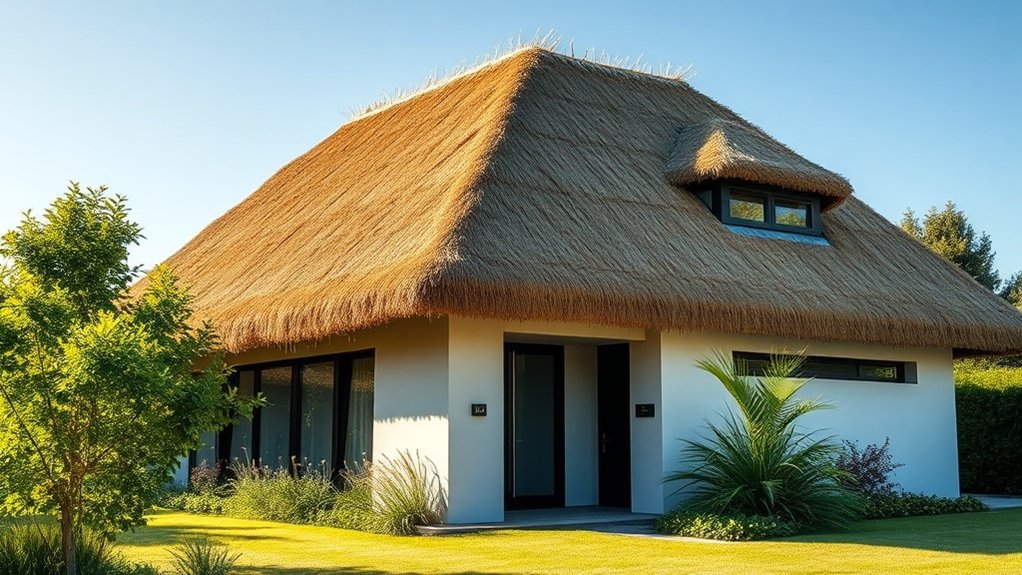
A thatched roof adds a unique charm to your home, but it requires regular upkeep to maintain its beauty and functionality.
Here are some key maintenance tips to ensure your thatch lasts:
- Arrange for annual inspections by skilled thatchers to spot any wear or damage early.
- Regularly clear away debris to improve water drainage and prevent moisture build-up.
- Safely treat and remove moss to protect the thatch from harm.
- Keep the ridges well-maintained to avoid leaks and prolong the roof’s lifespan.
- Ensure adequate ventilation and heating to keep the thatch dry and minimise fire hazards.
Heritage and Conservation Guidelines
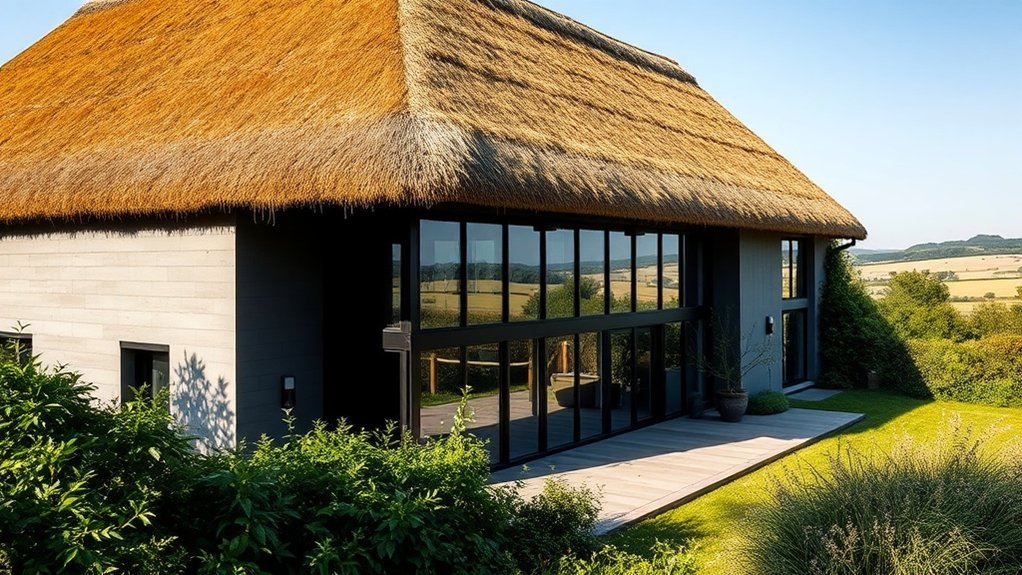
Owning a thatched roof home means you have a duty to maintain its historical charm. In conservation areas, any changes to the roof will need planning permission.
It’s crucial to keep original thatching materials and techniques, as these are key to preserving its heritage. Using traditional methods, such as layering combed wheat reed, ensures your roof maintains its historical value.
Replacing thatch with modern materials is usually not allowed, as it risks losing the building’s cultural significance. Also, any alterations to the roof’s shape require consent, so careful planning is essential.
Impact of Location on Design Choices

Location significantly affects design choices for thatched roofs, with urban and rural settings presenting unique challenges and opportunities.
- Urban areas often have stringent fire safety regulations.
- In rural locations, you can use thicker thatch for better insulation.
- The local climate determines the best thatching materials for durability.
- Sourcing materials can influence costs and support local aesthetics.
- The proximity to other buildings can limit design options and affect insurance rates.
In urban settings, fire safety rules may necessitate creative solutions.
In contrast, rural areas allow for traditional techniques and more substantial thatching, enhancing the connection to heritage.
Being aware of these factors helps you make informed design decisions while prioritising safety and sustainability in your thatched roof project.
Balancing Tradition With Modern Requirements
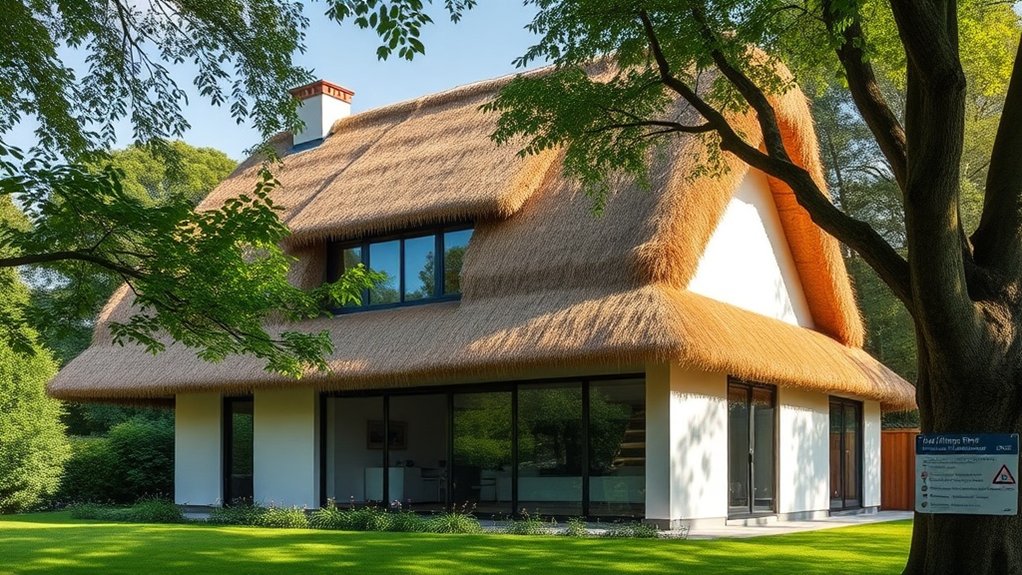
As homeowners look to combine the charm of traditional thatched roofs with modern living needs, it’s crucial to understand how to balance heritage and contemporary requirements.
By emphasising traditional craftsmanship, you can keep the aesthetic appeal of your home while meeting modern performance standards. For example, modern design allows for the use of fire retardants and insulated layers that improve energy efficiency without compromising looks.
Choosing sustainable, locally sourced materials not only supports your heritage but also benefits the community.
Additionally, installing modern safety features like smoke detectors can help protect your property while maintaining its historic character.
This balance ensures your thatched roof is both a nod to the past and a practical part of your contemporary lifestyle.
Frequently Asked Questions
How Does Thatch Affect Property Resale Value?
Thatch can significantly influence the resale value of a property. Its unique charm often makes it appealing to buyers, especially in a market that values character. However, potential purchasers may be put off by the higher maintenance costs and complexities surrounding insurance. Therefore, it’s crucial to ensure the thatch is well-maintained and compliant with local regulations to help sustain its value. For example, a well-preserved thatched cottage in a desirable location can fetch a premium, while one that shows signs of neglect may struggle to attract offers.
What Are the Aesthetic Options for Modern Thatched Roofs?
There are several aesthetic options for modern thatched roofs, seamlessly merging traditional styles with contemporary design. Think about incorporating sharp ridge lines, distinctive edging, and a mix of materials to achieve a striking and cohesive look. For instance, pairing thatch with timber or metal can enhance visual interest while maintaining a classic feel.
Can I Install Solar Panels on a Thatched Roof?
Installing solar panels on a thatched roof is challenging due to structural limitations, fire hazards, and regulatory issues. It’s essential to carefully consider these factors before moving forward with any solar panel installation on a thatched property.
What Is the Lifespan of a Thatched Roof?
A thatched roof can last between 25 to 60 years with proper maintenance. Its lifespan depends on factors like craftsmanship, climate, and care. With the right attention, a thatched roof can protect your home and add charm for decades.
Are There Eco-Friendly Options for Thatched Roofing Materials?
Yes, there are eco-friendly options for thatched roofing materials. Using sustainable materials such as straw or water reed supports renewable resources and promotes biodiversity. These materials not only enhance energy efficiency but also give your home a charming, traditional appearance.
Conclusion
Incorporating a thatched roof into a modern home can blend historical charm with contemporary design. While navigating planning permissions and fire safety regulations might seem daunting, the benefits are significant. A thatched roof not only enhances your home’s visual appeal but also makes a distinctive statement in your neighbourhood. If you’re keen to merge tradition with modern living, consider the unique character that thatching can bring to your home.


