

Is Metal Roofing Noisy? Debunking Common Myths
Metal roofing noise levels are often exaggerated. While they can produce around 52 dBA during rainfall—slightly louder than asphalt shingles—modern insulation and underlayment significantly dampen the sound. The quality of the installation is crucial in reducing noise, with the right materials and techniques leading to quieter roofs. Additionally, new soundproofing technologies improve acoustic performance. If you’re considering roofing options, these factors are important to keep in mind.
Key Takeaways
- Metal roofs generate noise levels similar to asphalt shingles, with only a 6 dBA difference, which is often unnoticeable to the average person.
- High-quality installation and effective soundproofing materials can significantly reduce noise, making metal roofs quieter than many assume.
- Modern metal roofing systems come with insulation and underlayments that enhance sound absorption and minimise noise transmission.
- The belief that metal roofs are excessively noisy ignores the effects of installation methods and material choices on overall sound levels.
- When properly designed and installed, metal roofs can provide a comfortable living space, effectively dampening rain noise with the right measures in place.
Understanding Metal Roofing Noise Levels
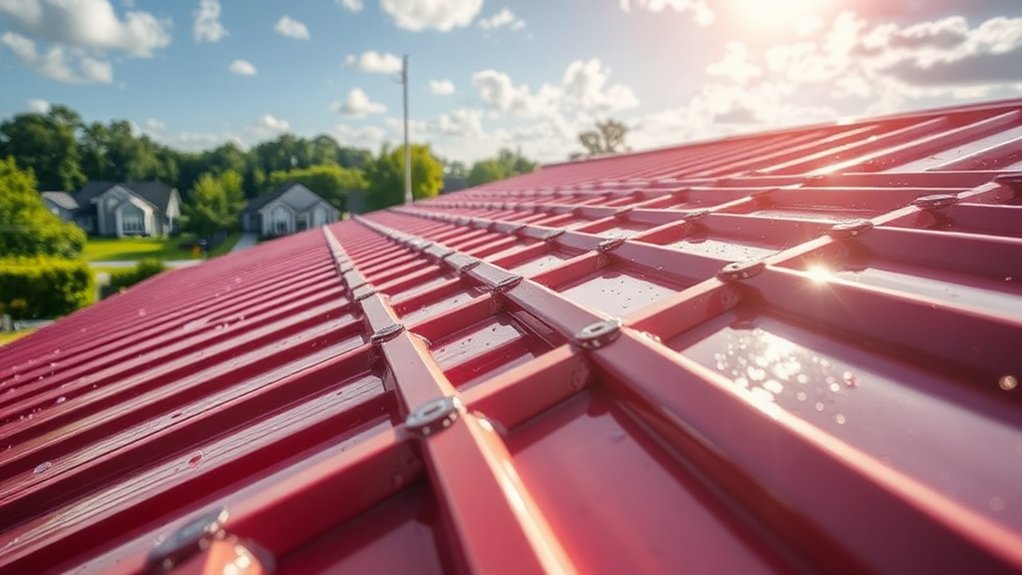
When considering metal roofing, many people are concerned about the noise it makes, particularly during rain.
Sound measurements show that rain on metal roofs produces roughly 52 dBA, compared to 46 dBA for asphalt shingles. While this 6 dBA difference suggests metal roofs may be noisier, many find it negligible because humans often struggle to perceive changes under 3 dBA. Additionally, roof thickness and density can significantly impact the sound-blocking ability of metal roofs. Metal roofs can last 50+ years with proper installation and maintenance, offering durability that complements their sound performance.
For context, normal conversation is around 60 dBA, meaning metal roof noise is still below typical indoor levels.
Installation methods, such as using solid decking, can significantly reduce noise, while thicker metal panels are better at absorbing sound.
Comparison With Traditional Roofing Materials
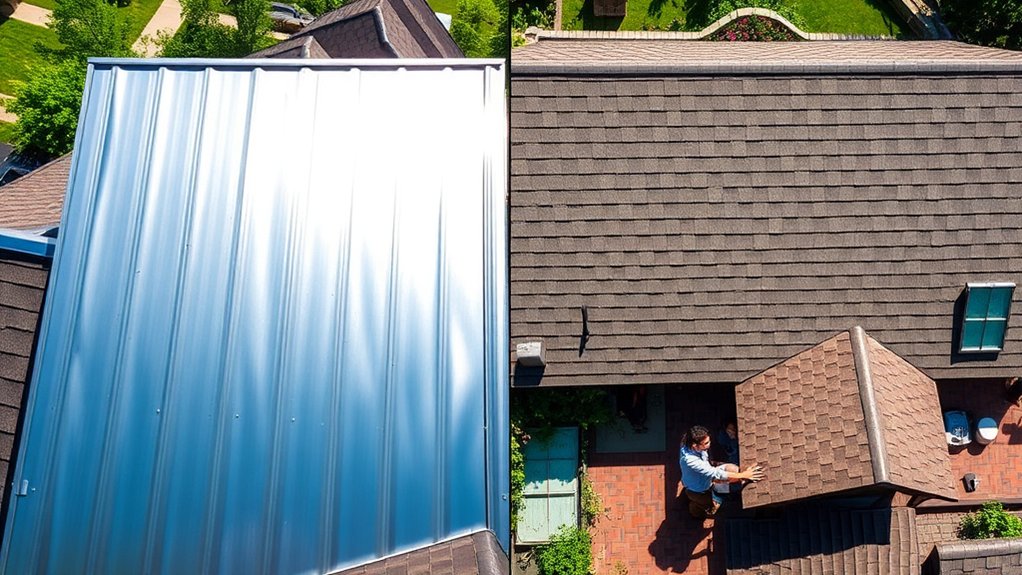
When comparing metal roofing to traditional materials, it’s important to consider factors like noise levels, durability, and performance.
Metal roofs generate around 52 dB of rain noise, which is slightly higher than asphalt shingles at 46 dB. However, this 6 dB difference is often barely noticeable. Modern metal roof installations include insulation and underlayments that improve sound absorption, making them comparable to traditional options. Underlayment layers absorb sound and reduce noise levels significantly, further enhancing the quietness of metal roofs. Additionally, the longevity of metal roofs ensures that the investment remains beneficial over time, as they typically last 40 to 70 years.
In terms of durability, metal roofs outlast asphalt, offering greater longevity and energy efficiency.
Stone-coated metal roofs are particularly effective at dampening sound due to their natural granules, while bare metal sheets can be noisier if not installed properly.
The Role of Installation Quality
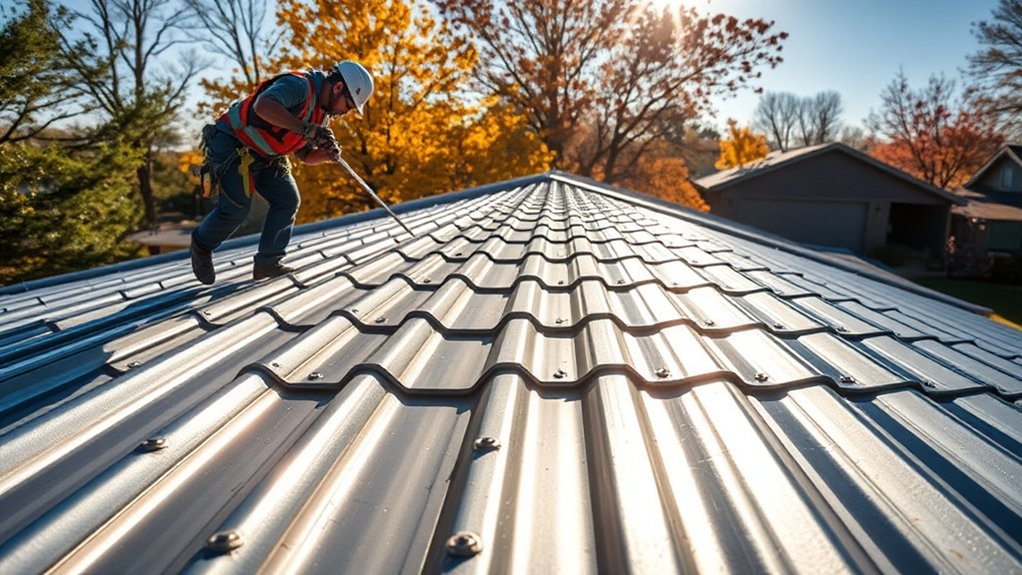
The quality of installation is crucial when it comes to metal roofing, as it significantly impacts noise levels and overall performance. Good insulation and high-quality sheathing materials are essential for reducing sound transmission. Additionally, the methods used during installation can either enhance or detract from these advantages. For example, securing a metal roof with proper fasteners can minimize vibrations and consequently reduce noise.
Importance of Proper Insulation
Proper insulation is essential for optimising the performance of metal roofs, as it greatly impacts energy efficiency and indoor comfort.
Beyond thermal resistance, insulation significantly improves noise control by absorbing vibrations and sound, helping to reduce the sound of rain and outside disturbances.
With correct installation, you could save up to 40% on energy bills each year, while also extending your roof’s lifespan by shielding it from environmental damage.
Choosing the right material and ensuring the correct thickness are crucial for optimal results.
Custom insulation designed for your building’s specific dimensions allows you to fully benefit from these advantages, creating a comfortable and cost-effective space.
Prioritising insulation in your metal roofing project is key to enhancing both performance and living quality. Additionally, achieving a U-value of 0.18 W/m²K can significantly enhance thermal performance and energy savings.
Quality of Sheathing Materials
Insulation is vital for improving the performance of metal roofs, but the quality of sheathing materials and their installation also play a crucial role in the overall effectiveness of your roofing.
Here are some key considerations:
- Solid sheathing materials, such as plywood, enhance durability and help with sound absorption.
- Thicker sheathing options offer better sound reduction than thinner ones.
- Proper installation is essential to minimise gaps that could increase noise transmission.
- Aesthetic appeal is important; high-quality sheathing adds to the overall look of the roof.
By choosing high-quality sheathing, you not only improve noise reduction but also bolster your roof’s structural integrity.
Ensure a tight, professional installation to optimise performance and minimise potential issues, creating a more tranquil indoor environment.
Installation Techniques Impacting Noise
While many homeowners prioritise the materials for metal roofing, the quality of installation is crucial for reducing noise.
Staggered installation can effectively disrupt sound pathways, minimising noise transfer. Using high-quality soundproof materials, such as specialised underlayments, helps absorb vibrations and dampen impact sounds.
Properly sealing the gaps between panels prevents rattling that can amplify noise, and securely fastening panels with rubber-gasketed screws reduces vibration-related sounds.
Additionally, opting for a flatter roof profile can further decrease impact noise.
Acoustic Technologies in Modern Metal Roofing

When considering modern metal roofing, it’s vital to grasp how soundproofing materials, installation methods, and roof design influence acoustic performance.
Innovations like foam inserts and rubberised membranes significantly improve noise reduction.
Moreover, techniques such as standing seam installation and accurate panel fitting are crucial in minimising sound transmission, creating a quieter indoor environment.
Soundproofing Materials Overview
How can you effectively reduce noise from metal roofing? A range of soundproofing techniques and acoustic materials can significantly improve your roof’s noise performance. Here are some options to consider:
- Foam Insulation: Great for absorbing sound.
- Rubber Underlayments: Provides substantial noise reduction.
- Glass Wool Insulators: Specifically designed for metal roofing.
- Viscoelastic Polymers: Help dissipate vibrational energy, reducing noise.
Using these materials can create a quieter home environment. For example, foam insulation underlayments are highly effective, while rubberised options offer strong solutions.
Additionally, sealing gaps with foam fillers can prevent unwanted sound intrusion. Each option has its benefits, allowing you to choose the best combination for your needs.
Installation Techniques Impact
When considering acoustic technologies in modern metal roofing, it’s important to understand how installation techniques significantly affect noise reduction.
Using high-quality roofing underlayment along with secure fastening methods helps create an effective sound barrier. Choosing flat or standing seam panels can reduce vibration and rattling, thus improving acoustic performance.
Proper strapping and the use of clips that allow for slight expansion can significantly minimise movement-induced noise during storms.
Additionally, adding acoustic isolation layers, like mass-loaded vinyl, during installation can further block impact sounds.
Roof Design Considerations
Effective roof design is crucial for enhancing the acoustic benefits of modern metal roofing. By using advanced technologies, you can significantly improve sound insulation.
Consider these key elements in your design:
- Incorporate sound-dampening layers within metal panels to reduce noise from rain and hail.
- Use foam insulation panels that absorb sound and help regulate temperature.
- Opt for solid truss construction to minimise vibrations and rattling from impacts.
- Apply specialised acoustic underlayment to create effective sound barriers.
These strategies not only improve the roof’s performance but also ensure a quieter indoor environment.
Environmental Factors Influencing Noise
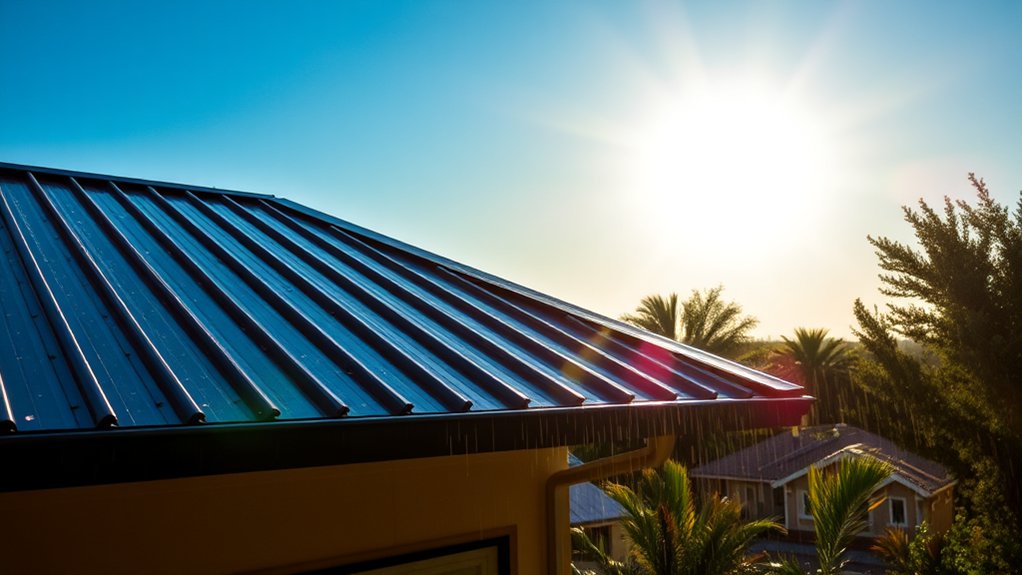
Environmental factors significantly influence the noise levels associated with metal roofing, particularly the roof’s slope and angle. Steeper roofs can amplify sounds from rain and debris, whereas flatter roofs tend to dampen these noises.
Weather conditions, like heavy rain or hail, also affect how noise is perceived; however, modern insulation can significantly reduce these impacts.
The type and thickness of the metal used are also crucial—denser materials such as steel or copper are generally quieter than aluminium.
Additionally, the quality of insulation and soundproofing materials, along with proper installation techniques, are essential for minimising noise from external factors.
Understanding these elements can enhance the acoustic performance of metal roofing.
Addressing Common Myths About Metal Roof Noise

You may think that metal roofs are excessively noisy during storms, but this is a common misconception rooted in older designs that lacked proper insulation.
Modern installations use sound-dampening materials and solid sheathing, which significantly reduce noise levels, making them comparable to traditional roofing options.
The quality of the installation is crucial for minimising sound transmission, ensuring that your metal roof is quiet and effective.
Misconceptions About Noise Levels
Many homeowners are concerned about noise levels with metal roofs, but these worries are often based on outdated beliefs.
Today’s metal roofing systems use advanced materials and techniques designed to reduce noise, making them comparable to traditional asphalt or tile roofs.
- New metal roofs come with sound-dampening layers.
- Proper installation significantly improves noise absorption.
- Research shows minimal noise differences between metal and other roofing materials.
- Most occupants barely notice any increase in noise with modern designs.
With features like insulation and solid sheathing, contemporary metal roofs effectively reduce noise from rain and hail, ensuring a comfortable living space.
Knowing these facts can help you appreciate the advantages of metal roofing without the fear of excessive noise.
Impact of Installation Quality
Understanding the impact of installation quality is crucial for dispelling myths about metal roof noise. The method of installation significantly influences sound absorption; for example, solid decking can reduce noise by stabilising metal panels and minimising vibrations.
Incorrectly placed fasteners can increase noise, making it essential to adhere to the manufacturer’s recommended fastening patterns for secure panel attachment. Loose fasteners can cause rattling, while consistent fastening prevents movement during rain or hail.
Moreover, using quality underlayment and insulation can further absorb sound waves, improving overall quietness.
The Science of Sound Measurement

When measuring sound, it’s vital to understand the basic principles that influence sound waves. Accurate sound measurement and acoustic analysis depend on various tools and methods to assess sound characteristics effectively.
- Sound Pressure Level (SPL): Measured in decibels (dB), this technique evaluates noise levels.
- FFT Analysis: Converts time-domain data into frequency-domain data, making analysis clearer.
- Sound Intensity Measurement: Assesses the acoustic energy emitted by sound waves.
- Advanced Tools: Instruments like sound level meters and data loggers enhance measurement accuracy.
Grasping these concepts helps you understand how sound behaves in different settings, such as under metal roofing, and dispels common myths about noise levels associated with it.
Human Perception of Noise Differences

How do you perceive noise differently in various environments? Your auditory system is finely tuned to distinguish sound qualities beyond just loudness. This tuning affects how you perceive noises, such as those from metal roofing.
Cognitive factors play a significant role too; if you’re concentrating on a task, some sounds may become distracting, while others fade away. The acoustics of your surroundings are important as well—consistent noises, like the hum of a fan, typically disturb less than intermittent sounds.
Additionally, characteristics of noise, such as speech interference, can complicate how you process what you hear. Recognising these elements can help you understand why noise annoyance varies by context, ultimately affecting your comfort and focus in different situations.
Noise Mitigation Techniques for Metal Roofs

While metal roofs are known for their durability and energy efficiency, they can sometimes be noisy during heavy rain or hail.
To reduce this noise, consider these effective techniques:
- Install a quality underlayment to act as a sound barrier.
- Use high-density insulation materials like Quiet Batt to absorb sound.
- Incorporate vibration isolation methods, such as foam pads in ceilings.
- Add acoustic panels in the attic to further reduce noise transmission.
Durable Performance vs. Noise Concerns
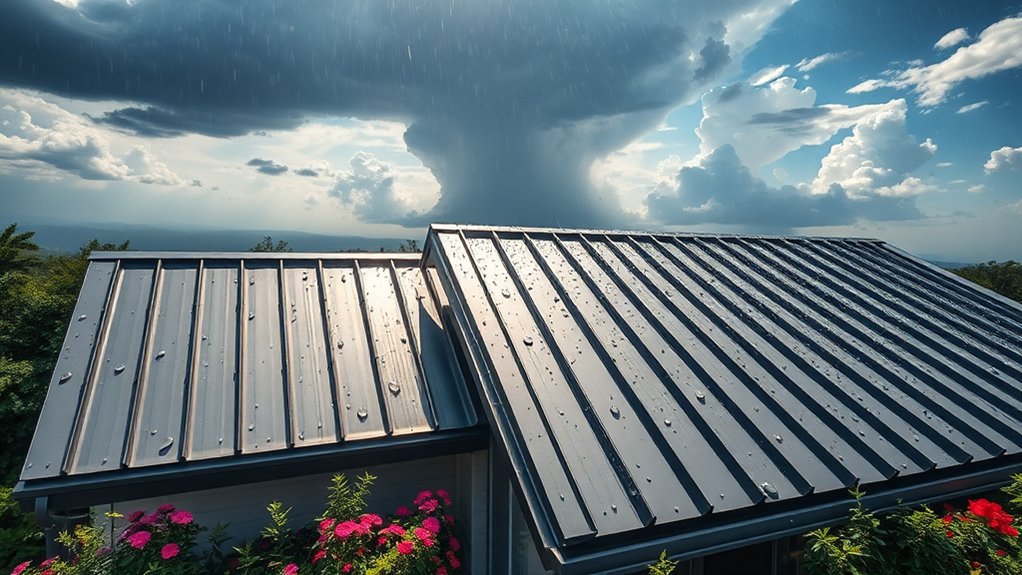
While metal roofs are known for their durability, noise concerns can surface, especially during heavy rain or hail. However, metal roofs, made from robust materials, generally perform similarly to traditional roofing when it comes to sound.
| Aspect | Metal Roofs |
|---|---|
| Rain Noise Level | 52 dBA |
| Asphalt Shingles Noise | 46 dBA |
| Hail Noise Potential | Up to 61 dBA (rarely in homes) |
| Noise Perception Threshold | 3 to 8 dBA |
The tough construction of metal roofs helps absorb sound, resulting in effective noise reduction. With proper installation, they can preserve their structural integrity and minimise noise, creating a quieter environment even in stormy weather.
Importance of Insulation and Underlayment

Proper insulation and underlayment are vital for optimising the performance of metal roofing systems. Choosing the right insulation and an effective underlayment can significantly improve noise reduction and energy efficiency.
Here are some key benefits:
- Insulation absorbs sound, reducing noise from rain and hail.
- Dense materials act as barriers to airborne noise, enhancing comfort.
- Underlayment prevents moisture accumulation, safeguarding insulation and the roof’s integrity.
- Correct installation can lead to energy savings of 10-20%, improving HVAC efficiency.
Making Informed Choices for Your Roof
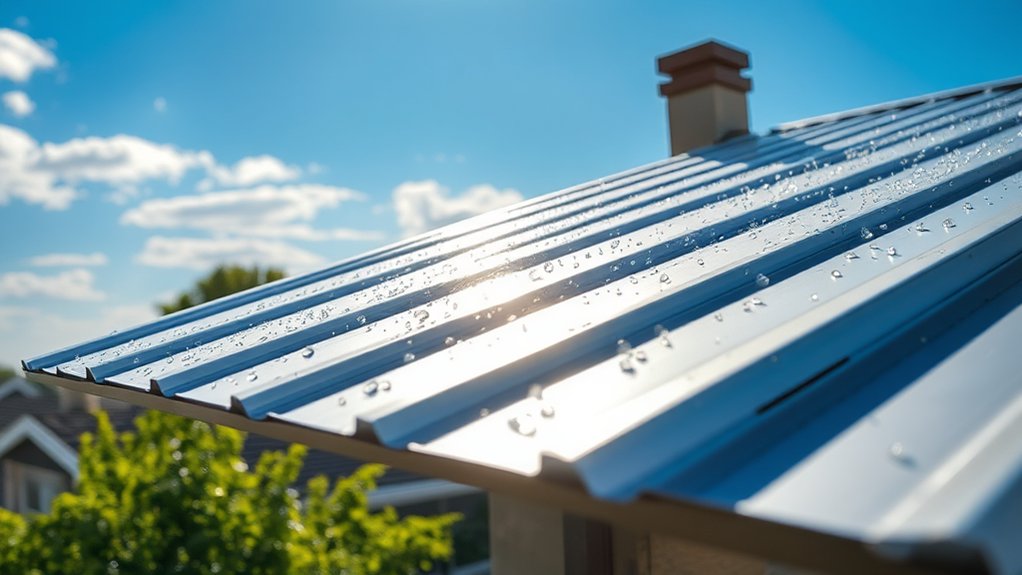
When choosing roofing materials, it’s important to think about factors that affect your home’s performance and comfort.
For instance, the colour of your roof can make a difference; lighter shades reflect heat, which could help reduce energy bills.
The style of the panels also matters for both appearance and sound insulation—standing seam panels typically offer better noise reduction compared to flat panels.
Proper installation is key, and using sound-dampening underlays can help minimise noise, particularly during rain.
By making these informed choices, you can improve your home’s functionality and create a more enjoyable living space.
Frequently Asked Questions
Can Metal Roofs Withstand Severe Weather Without Excessive Noise?
Metal roofs are highly durable and can withstand severe weather conditions effectively. They are designed to minimise noise during storms, thanks to advanced materials and installation methods. This means you can enjoy a quieter home even when the weather outside is tumultuous. For example, during heavy rain or hail, the sound inside is considerably less disruptive compared to traditional roofing materials. Overall, metal roofs offer both resilience and peace of mind.
Do All Metal Roofing Types Produce Similar Noise Levels?
Not all metal roofing types produce the same noise levels. With effective sound insulation, standing seam roofs can be quite quiet, whereas corrugated roofs can be much louder. Your roofing choice significantly impacts the sound in your home, so make your selection carefully.
How Does Metal Roofing Impact Indoor Temperature Control?
Metal roofing significantly affects indoor temperature control by improving insulation and thermal performance. It helps reduce heat transfer, keeping your home cooler in summer and warmer in winter. For example, in summer, a metal roof reflects sunlight, which can lower cooling costs, while in winter, it retains warmth, contributing to energy efficiency and a comfortable living environment.
Are There Specific Maintenance Tips for Quiet Metal Roofs?
Ever wondered how to ensure your metal roof remains quiet? Pay attention to installation methods, such as using high-quality insulation materials and robust fasteners. Regular maintenance is essential to keep noise levels down, enhancing comfort and protecting your investment effectively. For example, checking for loose screws or damaged insulation can make a significant difference.
Is There a Difference in Noise Levels Between Colors of Metal Roofing?
When it comes to the impact of colour on roofing materials, it’s important to note that aesthetic choices do not affect noise levels. The key factors are proper installation and insulation. While the colour of your roofing might influence its appearance and thermal performance, it doesn’t play a role in acoustics. For example, whether you choose a bright red or a muted grey metal roof, the noise levels during rain or hail will remain the same.
Conclusion
In summary, while some may worry about noise from metal roofing, it’s actually more like the sound of a gentle rain rather than a thunderstorm when installed correctly. By recognising the factors that affect sound levels and using effective noise-reducing methods, you can ensure that a metal roof won’t disrupt your comfort. Investing in quality insulation and underlayment will enhance your roofing experience, helping you make a well-informed choice that balances durability with peace and quiet.


