
Why Does My Roof Only Leak in Heavy Rain in Brentwood
Your roof probably leaks during heavy rain due to specific vulnerabilities. Issues like worn seals around chimneys and skylights can allow water to seep in, while damaged shingles leave the underlying layers exposed to moisture. Clogged gutters can lead to water build-up, worsening leaks. Additionally, poor ventilation in the attic can contribute to moisture problems. When these factors come together, a small issue can escalate into a significant leak during intense downpours. By understanding these elements, you can take steps to prevent future leaks and maintain your roof in good condition.
Key Takeaways
- Heavy rain can increase hydrostatic pressure, exploiting minor weaknesses in your roof structure.
- Compromised seals around chimneys and vents may let water in during intense downpours.
- Blocked gutters can prevent proper water flow, causing pooling and leaks specifically in heavy rain.
- An insufficient roof pitch can lead to stagnant water, heightening the risk of leaks during downpours.
- Regularly inspecting flashing and shingles is essential, as any damage can result in leaks when it rains heavily.
Understanding Weather Impact on Roofing
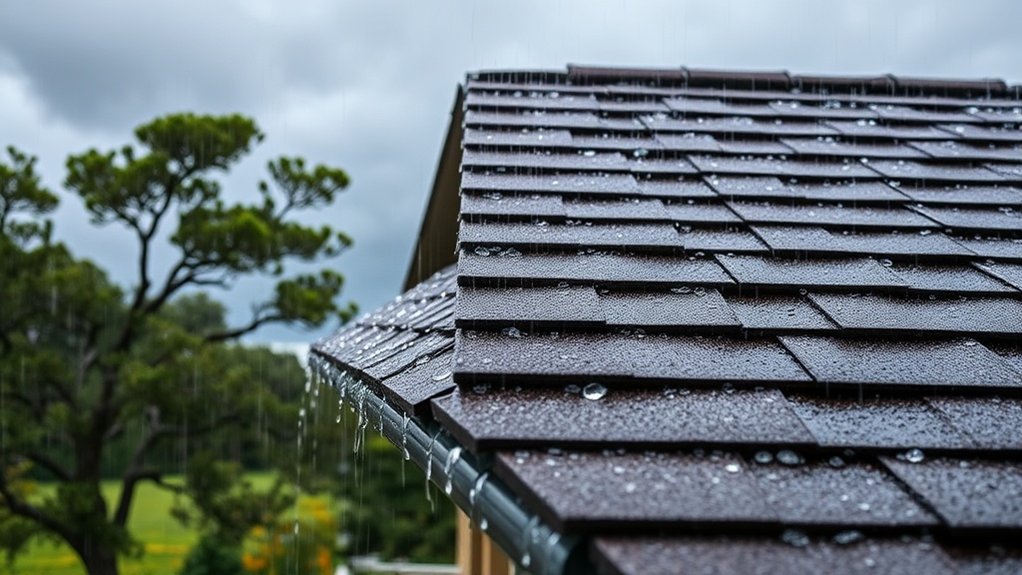
When heavy rain hits, your roof experiences increased hydrostatic pressure that can exploit even minor weaknesses in its structure. It’s crucial to understand this impact for better weather resilience. Heavy rain can force water into compromised seals around chimneys and vents, revealing hidden issues. Weather-related wear and tear is inevitable over time, emphasizing the need for proactive care. Regular inspections help to identify vulnerabilities that could lead to storm damage, ensuring early intervention.
Snow accumulation adds significant weight, potentially causing sagging or even collapse, while ice dams can block drainage, leading to water backup. Fluctuations in temperature can weaken roofing materials, compromising seals and joints. Hailstorms can cause immediate damage, creating entry points for moisture. Regular inspections and maintenance are key to spotting and addressing these vulnerabilities before they worsen.
Opting for durable roofing materials suited to your local climate can significantly enhance your roof’s ability to withstand severe weather, ultimately protecting your home from leaks.
The Role of Damaged Shingles
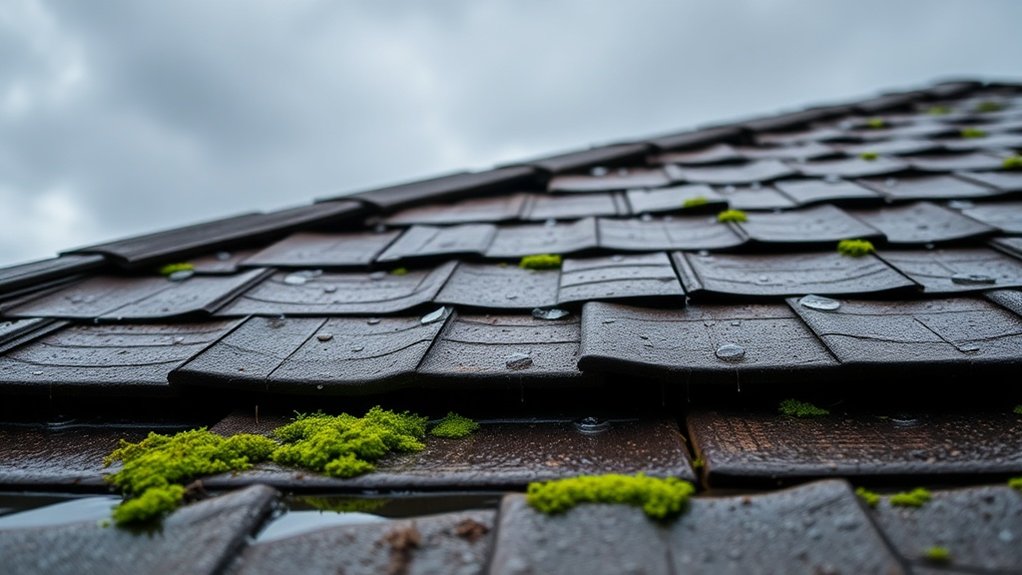
Damaged shingles are vital for maintaining the integrity of your roof, as they act as the primary barrier against water ingress during heavy rain. When shingles are cracked, broken, or missing, they leave the underlayment and roof deck exposed, allowing water to penetrate easily. High winds and hail can further damage shingles, creating hidden entry points for moisture. As shingles age, they become less flexible and lose their protective oils, increasing the likelihood of leaks. Regular inspections and Roof Maxx treatments can help restore flexibility and extend the life of your aging roof. Additionally, implementing a regular inspection program is crucial to catch and resolve minor issues before they turn into bigger problems. By prioritising inspections and repairs, you can improve leak prevention, protect your home, and avoid expensive damage from mould, rot, and structural failures. Don’t let damaged shingles compromise your roof’s effectiveness.
Flashing Failures and Their Consequences

Flashing is crucial for directing water away from vulnerable areas of your roof. However, failures in flashing can lead to serious issues. Poor installation, often due to inadequate sealing or misalignment, can leave your roof exposed to moisture.
Common failure points, such as chimney and vent flashing, can become damaged by storms or corrosion, leading to significant consequences.
If you spot water stains or mould growth, it’s vital to act swiftly. Ignoring these signs can result in rot, weakened structures, and expensive interior damage.
Regular inspections and using quality materials are essential for maintaining effective flashing. Addressing any issues promptly will help protect your home from the damaging effects of water infiltration and ensure its integrity. Conducting a moisture assessment can also help identify potential leak sources related to flashing failures.
Importance of Proper Roof Drainage
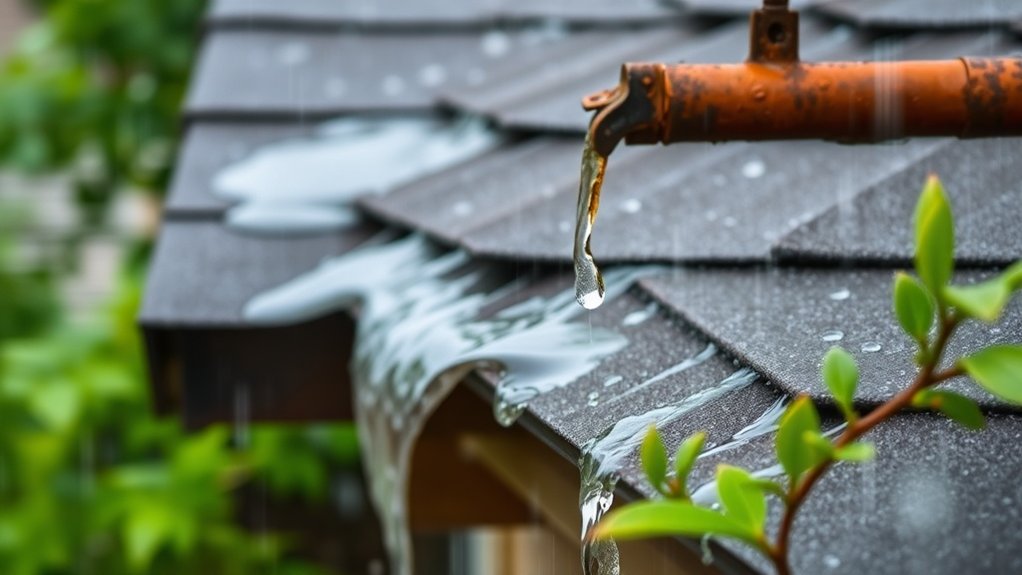
Proper roof drainage is crucial for the structural integrity of your home.
If your gutters are blocked or your roof slope is inadequate, water can pool, causing leaks and potential damage.
A good drainage system not only safeguards your roofing materials but also helps avoid expensive repairs in the future.
For instance, a simple cleaning of your gutters can prevent serious issues during heavy rainfall.
Clogged Gutters Consequences
When gutters get clogged, it can lead to serious problems for your home’s drainage. Blocked gutters prevent water from flowing freely, causing it to back up under roof tiles, which can result in leaks and potential roof damage.
The National Roofing Contractors Association points out that clogged gutters are a major cause of roof issues, especially during heavy rain.
Moreover, standing water can pool around your foundation, leading to cracks and possible basement flooding, which can compromise the structural integrity of your home.
Regular gutter maintenance is crucial to avoid these problems, as neglected gutters can also encourage mould growth and attract pests.
Insufficient Roof Pitch
A well-designed roof pitch is essential for effective drainage, particularly in areas that experience heavy rainfall. An insufficient roof pitch can cause water to pool, as the flow driven by gravity becomes less effective, leading to accumulation.
This stagnant water heightens the risk of leaks during intense storms, as it can gradually penetrate roofing materials. The National Federation of Roofing Contractors advises that roofs with low slopes are at a higher risk of leakage unless fitted with specialist membranes.
In regions with heavy rainfall, a minimum pitch of 6:12 is recommended to ensure quick water runoff. By ensuring an appropriate roof pitch, you can significantly reduce hydrostatic pressure, prevent potential structural damage, extend your roof’s lifespan, and improve its performance against the elements.
Effective Drainage Design
Effective drainage design is crucial for maintaining your roof’s integrity, particularly during heavy rainfall. Key aspects include drain placement and pipe sizing, which are vital for managing stormwater efficiently. Here’s a summary of important design elements:
| Element | Importance | Considerations |
|---|---|---|
| Drain Placement | Prevents water pooling and dead zones | Position drains at the lowest points, steering clear of depressions |
| Pipe Sizing | Ensures sufficient water flow | Size pipes according to roof area and expected rainfall intensity |
| Overflow Systems | Acts as a backup safety measure | Should work alongside main drainage systems |
| Waterproofing Quality | Stops leaks at junctions | Ensure expert sealing and regular maintenance |
Proper drainage is essential for the longevity of your roof and to avoid costly repairs down the line.
Vulnerabilities Around Chimneys and Skylights
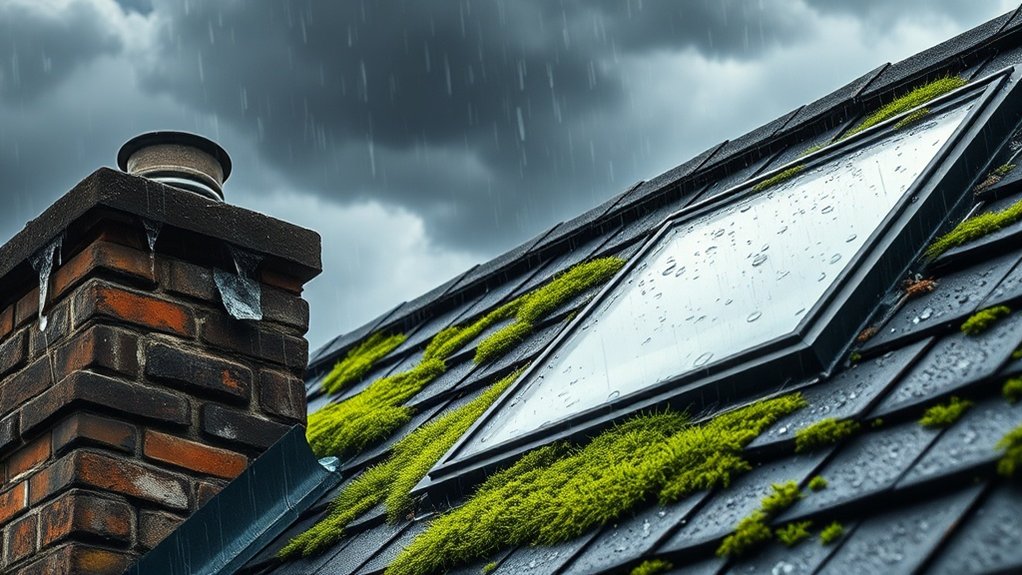
Chimneys and skylights can enhance your home’s appearance and functionality, but they also create vulnerabilities that may lead to leaks during heavy rain.
To safeguard your home, keep these tips in mind:
- Regularly inspect flashing to ensure it’s intact and correctly fitted.
- Check the mortar joints and bricks of your chimney for signs of moisture penetration.
- Maintain seals and caulking around skylights to prevent wear and tear.
- Ensure proper drainage around these areas to avoid water pooling.
- Arrange for annual chimney inspections and skylight maintenance to identify problems early.
The Effect of Attic Ventilation on Leaks
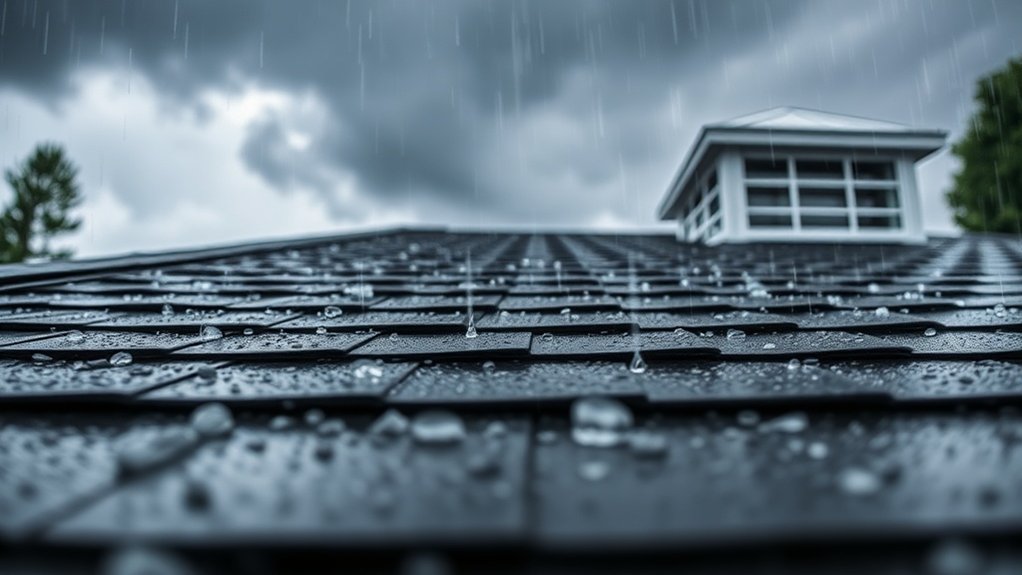
When attic ventilation is insufficient, the risk of leaks during heavy rain significantly increases.
Trapped moisture and heat can damage roofing materials. Poor airflow in the attic leads to moisture accumulation, which speeds up the deterioration of shingles and raises the chance of seal failure.
This buildup not only jeopardises the roof deck’s integrity but also creates an environment for mould growth, further risking your home’s structure.
During heavy downpours, the added water pressure worsens these issues, making leaks more likely.
Ensuring proper ventilation helps regulate temperature and moisture levels, greatly reducing leak risk and extending the life of your roofing system.
Prioritising attic airflow is crucial for safeguarding your home against severe weather.
How Clogged Gutters Contribute to Water Backup

Clogged gutters can quickly escalate from a minor annoyance to a serious issue, as the build-up of debris blocks water flow and leads to significant water backup.
This can cause major problems for your roof and home. To avoid these complications, regular gutter maintenance is essential.
Here are some key points to consider:
- Debris such as leaves and twigs can obstruct water flow.
- Blocked gutters can lead to water pooling on your roof.
- Gutters that aren’t pitched correctly may not drain efficiently.
- Insufficient downspout extension can result in water build-up.
- Overloaded gutters can overflow, spilling water onto walls.
Neglecting these issues can lead to roof leaks and structural damage.
Regularly cleaning your gutters is a simple way to reduce these risks and protect your home from expensive repairs caused by water overflow.
Identifying Signs of Internal Condensation
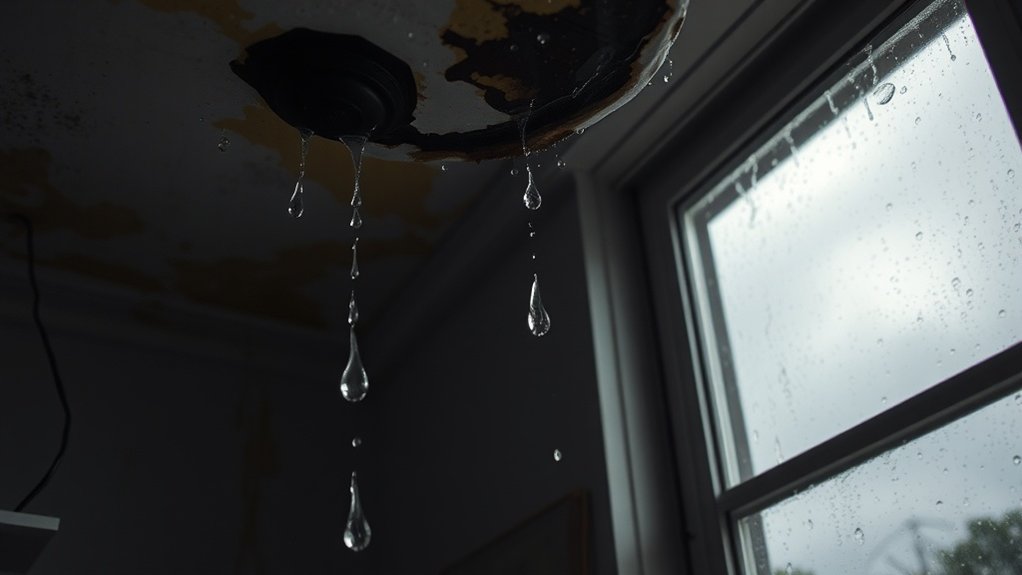
How can you tell if internal condensation is affecting your roof? Look for specific signs of condensation and indicators of mould. Here are some key symptoms to check for:
| Condensation Signs | Mould Indicators |
|---|---|
| Water stains on ceilings | Mould growth in corners |
| Damp, sagging insulation | Musty or earthy smells |
| Peeling or blistering paint | Hidden mould behind wallpaper |
| Buckling insulation materials | Increased respiratory issues |
| Dark streaks on roof purlins | Persistent humidity |
Keeping an eye on these signs can help you catch problems early. If you notice worsening stains or unpleasant odours, it’s vital to address these issues promptly to prevent structural damage and health risks associated with mould growth.
Frequently Asked Questions
How Can I Determine if My Shingles Are Causing Leaks?
To check if your shingles are causing leaks, perform a detailed inspection looking for any damage or loss of granules. Regular inspections help prevent leaks, ensuring your roof effectively keeps water out. For example, look for curled, cracked, or missing shingles, as these can lead to water ingress.
What Are the Signs of Deteriorating Flashing?
If you notice rust, cracks, or missing sections in your flashing, it’s deteriorating quickly. These problems can lead to water leaks, so make sure to inspect it regularly. Tackling flashing issues promptly can help you avoid expensive repairs later on.
How Often Should I Clean My Gutters?
You should clean your gutters twice a year, preferably in spring and autumn. This regular maintenance helps prevent debris accumulation, ensuring proper drainage and minimising the risk of expensive water damage to your home over time.
Can Roof Leaks Occur Without Visible Damage?
Yes, roof leaks can occur without any visible damage. Hidden leaks often arise due to weather conditions, taking advantage of small cracks or gaps that may not be immediately noticeable. Regular inspections are essential to catch these issues early, preventing them from turning into serious problems. For example, a small crack might allow water to seep in, leading to dampness or mould inside your home if left unchecked.
What Are the Long-Term Effects of Roof Leaks?
Imagine finding mould within days of a roof leak. The long-term effects can lead to significant property damage, structural decline, and soaring repair costs. Acting quickly is crucial to prevent worsening issues and protect your home’s integrity. For instance, ignoring a minor leak can result in rotting beams or costly damp treatments. Stay proactive to keep your home safe and sound.
Conclusion
During heavy rain, your roof can reveal its vulnerabilities. Check for any damaged shingles and flashing, and ensure your gutters are clear to avoid water backing up. Don’t overlook the potential issues of condensation and poor ventilation; these can turn a small leak into a significant problem. By addressing these concerns, you can safeguard your home against the relentless force of storms and keep it dry and secure.