

Why Written Contracts Matter in Roofing Projects
Written contracts are crucial in roofing projects as they offer legal protection and set clear expectations for both parties involved. They specify the project scope, financial agreements, and timelines, which helps to minimise misunderstandings and disputes. For instance, if a contractor is late in completing the work, the contract can clarify penalties or repercussions.
Contracts also ensure compliance with regulations, fostering customer confidence through transparency. They outline warranties and quality assurances, safeguarding you against unexpected costs. Understanding these key components can significantly improve the success and satisfaction of your project. Discover how a solid contract can enhance your roofing experience.
Key Takeaways
Why Written Contracts Matter in Roofing Projects
- Written contracts offer legal protection, ensuring that the rights and responsibilities of both homeowners and contractors are clearly defined in roofing projects.
- Clear specifications in contracts detail the project scope, helping to avoid misunderstandings and aligning expectations for everyone involved.
- Financial transparency is achieved through documented prices and payment terms, which reduces confusion and potential disputes over costs.
- Warranty terms are precisely outlined, safeguarding both parties and ensuring compliance with installation guidelines to prevent unexpected expenses.
- A formal contract boosts customer confidence and professionalism, leading to higher satisfaction and positive referrals for roofing contractors.
Legal Protection and Dispute Prevention

While you might trust your contractor’s word, having a written contract is crucial for legal protection and preventing disputes in roofing projects. A roofing contract clearly outlines the contractor’s obligations and establishes enforceable rights for both parties. If a breach occurs, you can seek legal remedies, such as claims for lost profits or contract violations.
Written contracts eliminate ambiguity, serving as clear evidence of expectations, payment terms, and project timelines. In case of disputes, courts can refer to these documents to determine responsibility. Moreover, including regulatory compliance requirements in contracts enhances consumer protection by ensuring contractors adhere to legal standards, such as building regulations approval. With the proposed law mandating written contracts between roofing contractors and consumers, you can feel more secure in your agreements.
Ultimately, a written contract protects your interests and fosters a professional relationship, reducing the chances of disagreements and misunderstandings during your roofing project.
Project Clarity and Scope Definition

In roofing projects, clear specifications are vital for both you and the contractor. By outlining responsibilities, tasks, and timelines, you ensure that everyone understands what’s expected and what needs to be delivered. This clarity helps the project run smoothly and reduces the likelihood of disputes during and after the work. For instance, if the scope of work includes specific materials or design elements, having these clearly stated prevents misunderstandings later on. Additionally, a well-defined scope minimizes misunderstandings between parties, ensuring that homeowner expectations are aligned with the contractor’s execution. Moreover, having a written contract helps protect your rights regarding workmanship warranties, ensuring that any installation issues are addressed within the specified guarantee period.
Detailed Project Specifications
Establishing detailed project specifications is crucial for clarity and defining the scope of a roofing project. These specifications outline tasks, material requirements, and methods, removing any ambiguity regarding project accuracy. For instance, clearly detailing the removal of old roofing, identifying repair needs, and outlining installation processes helps create a straightforward workflow that all parties can follow. Specifying the types and quality standards for materials is essential to prevent any unauthorised substitutions, which supports the project’s integrity. By clearly defining the scope, you reduce the chances of disputes and scope creep, ensuring everyone is aligned on expectations. Detailed specifications also serve as a legal reference, minimising risks and protecting both contractors and property owners throughout the project. This is especially important because a signed contract is essential before starting any job. Furthermore, adherence to building regulations ensures that all project specifications meet safety and compliance standards.
Defined Responsibilities and Tasks
Defined responsibilities and tasks are crucial for ensuring clarity and scope in roofing contracts. Clearly defined roles enhance accountability and minimise misunderstandings.
Here are key components to consider:
- Clear Task Specification: Detail roofing activities, such as installation and waste removal, to avoid scope creep.
- Qualified Labour: Ensure that only trained professionals carry out critical tasks.
- Material Specifications: Clearly identify the brands and quality of materials to be used.
- Change Management Procedures: Set out clear protocols for handling unforeseen issues or changes.
Clear Timeline and Milestones
A clear timeline and well-defined milestones are crucial for effectively managing roofing projects. They clarify project objectives and ensure everyone is aligned on deadlines. By managing the timeline diligently, you can create a structured approach that prevents scope creep and ensures all tasks are covered.
For example, setting a milestone for the completion of the roof framework allows you to measure progress and allocate resources effectively. Regular updates on these milestones keep stakeholders informed and help address any potential issues quickly.
A defined timeline also aids in decision-making and resolving conflicts, making it easier to navigate challenges. Incorporating these elements into your contract enhances project clarity and promotes successful outcomes for all parties involved.
Financial Transparency and Risk Management

Many homeowners underestimate the importance of written contracts in roofing projects, but these documents are crucial for ensuring financial transparency and managing risks effectively.
Written contracts help establish clear financial agreements, reducing the chances of misunderstandings and disputes. Here are four key benefits:
- Documentation: They provide a record of agreed prices, payment terms, and the scope of work, ensuring both parties are on the same page.
- Change Orders: They set out the process for managing changes, helping to avoid unexpected costs.
- Payment Clarity: Contracts specify how invoicing will work, minimising confusion around payments.
- Risk Assessment: They outline how to handle late payments, providing legal protections for both parties.
Having a solid contract can save you time, money, and stress in the long run.
Compliance and Regulatory Assurance

In roofing projects, compliance with licensing, insurance, and building regulations is crucial to safeguard everyone involved.
Clear written contracts specify these responsibilities, helping to ensure adherence to regulations and reduce legal risks.
For example, including terms related to warranties and regulatory compliance in your agreements establishes accountability, fostering trust and transparency throughout the project.
License and Insurance Verification
Ensuring compliance with licensing and insurance requirements is crucial for any roofing project. Verification of these elements not only protects you from potential liabilities but also enhances the security of the project.
Here are four essential steps to follow:
- Confirm Licensing: Check that the contractor possesses a valid licence from the relevant local authority.
- Check Insurance: Request evidence of workers’ compensation and public liability insurance to reduce risks.
- Review Documentation: Ensure all bonding and insurance documents are up to date and meet regulatory standards.
- Direct Verification: Contact the issuing companies to validate insurance certificates, confirming their authenticity and coverage details.
Building Code Compliance
Building code compliance is crucial for successful roofing projects in the UK. It ensures safety, structural integrity, and adherence to legal standards. Each local authority has its own codes, and it’s important to follow these enforceable requirements. Ignoring them can result in legal issues, project delays, and fines.
Most local councils require permits and inspections to ensure you’re up-to-date with current regulations. Challenges may arise, especially when new roofing must meet specific standards like load capacity, fire resistance, and protection against weather.
Keeping detailed records of compliance isn’t just a safety measure; it also aids future sales and insurance claims. Engaging professionals who understand complex codes can significantly improve your chances of meeting these essential standards effectively.
Warranty and Regulation Adherence
Understanding warranty and regulatory compliance is vital for protecting your roofing investment. Having clear written contracts ensures you understand the warranty terms and coverage limits, which can save you from unexpected expenses.
Here are some key points to consider:
- Manufacturer warranties primarily cover material defects; they often don’t include installation errors.
- Contractor warranties usually cover workmanship, typically lasting between 1 to 5 years.
- Adhering to installation guidelines is crucial; not following them can void your warranties.
- Written contracts offer legal protection, ensuring contractors meet their commitments.
Project Scheduling and Timelines

When planning a roofing project, setting a realistic timeline is crucial for both efficiency and your satisfaction. Clearly defining the project scope and assessing the current condition of the roof are key steps in this process.
Be mindful that scheduling issues, such as obtaining permits and the availability of materials, can affect how long the project takes. Using modern technology can provide flexibility, making it easier to adapt to any unexpected delays.
Additionally, if you’re carrying out other home renovations, coordinating these can help determine the best time to start the roofing work. Keeping open lines of communication with your contractor will help you manage any potential disruptions, ensuring the project runs smoothly and meets your expectations.
Customer Confidence and Professionalism

Many homeowners underestimate the significance of written contracts, yet these documents are crucial for fostering customer confidence and professionalism in roofing projects. They provide clarity and transparency, which are key to building trust and ensuring customer satisfaction.
Here are four essential benefits:
- Clear Documentation: Contracts specify agreed-upon terms, minimising the chance of misunderstandings.
- Professional Commitment: A contract demonstrates a contractor’s dedication to their responsibilities, enhancing credibility.
- Transparent Pricing: Contracts clarify costs, alleviating worries about hidden fees and instilling a sense of security.
- Positive Reputation: Formal agreements lead to greater customer satisfaction, which encourages positive reviews and referrals.
Using written contracts reflects organised business practices, establishing you as a trustworthy option in a competitive market.
This professionalism not only builds trust but also strengthens long-term relationships with clients.
Detailed Specifications and Quality Assurance

Detailed specifications are crucial in roofing contracts, providing a clear guide for both the contractor and the homeowner. By specifying the types, brands, and qualities of materials, you ensure they meet industry standards.
Clear methods for installation, including components like insulation and flashing, help define the project scope and set quality expectations. These specifications also cover pre-installation tasks and outline workmanship standards, reducing the risk of installation issues.
It’s important to comply with manufacturer warranties by following their installation guidelines. Quality assurance protocols, such as inspections and testing during installation, confirm that the roofing project meets all relevant codes and standards, ensuring optimal performance and longevity.
Protecting Against Scope Creep
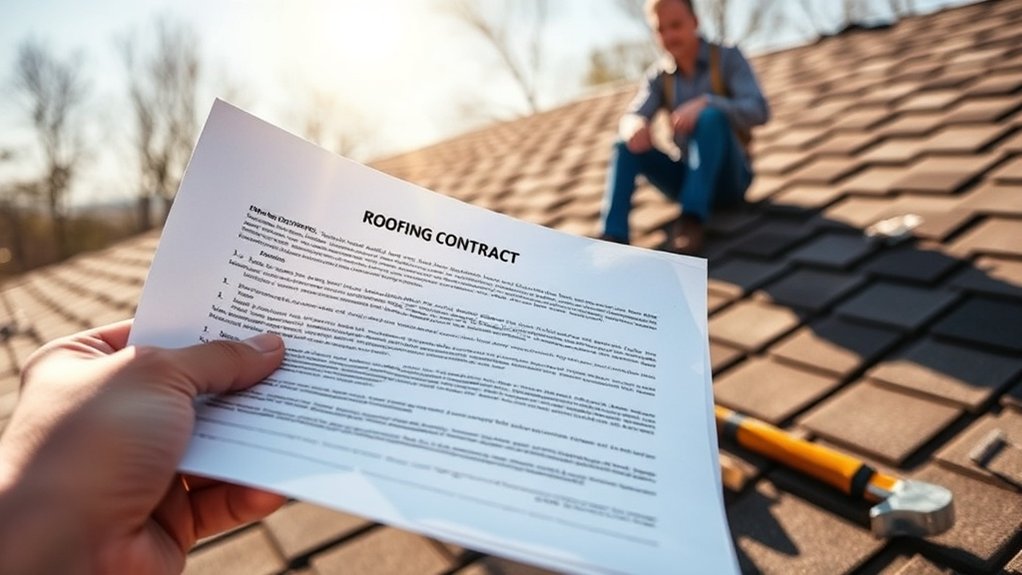
Written contracts not only establish a foundation for quality assurance but also play a crucial role in safeguarding against scope creep in roofing projects.
Effective scope management relies on clear agreements that prevent unauthorised changes. Here are four ways contracts protect your project:
- Change Documentation: Contracts formalise the approval process for modifications, ensuring that all changes are recorded and agreed upon.
- Defining Boundaries: By specifying deliverables and exclusions, contracts limit interpretations, reducing the chances of scope creep.
- Budget Controls: Having established budgets tied to the scope helps deter unauthorised spending and promotes effective cost management.
- Schedule Integrity: Clearly defined timelines within contracts mitigate disruptions by requiring that any changes are acknowledged in advance.
In essence, a well-drafted contract is essential for keeping your roofing project on track and within budget.
Enhancing Communication and Accountability

Effective communication and accountability are crucial in roofing projects, ensuring that everyone is on the same page. Written contracts are vital, as they outline roles, expectations, and specific details of the project. By adopting clear communication strategies and accountability measures, you can build trust and transparency.
| Aspect | Communication Strategies | Accountability Measures |
|---|---|---|
| Project Scope | Clear definitions | Defined roles |
| Change Orders | Documented updates | Tracking milestones |
| Payment Terms | Clear payment schedules | Regular performance reviews |
| Dispute Resolution | Established processes | Early flagging of issues |
| Progress Monitoring | Scheduled check-ins | Real-time data tracking |
Implementing these frameworks ensures that both parties stay informed and responsible, leading to a more successful roofing project.
Frequently Asked Questions
What Happens if a Contractor Breaches the Contract Terms?
If a contractor breaches the terms of the contract, you have the right to terminate the agreement and claim compensation for any additional expenses incurred. For instance, if the contractor fails to meet deadlines, you may need to hire someone else to complete the work, leading to extra costs. It’s essential to keep detailed records of all communications and transactions to support your claims and bolster your position should you need to pursue legal action.
Can I Modify a Signed Contract Later?
Can you modify a signed contract later? Yes, you can. Just ensure that both parties agree in writing to any amendments. Clearly document the changes to avoid confusion and maintain a professional relationship throughout the project. For example, if you’re working on a home renovation and need to adjust timelines or costs, it’s essential to have these changes formally recorded.
Are Verbal Agreements Binding in Roofing Projects?
Yes, verbal agreements can be binding in roofing projects, but they frequently result in disputes. Without proper documentation, it can be difficult to prove the terms and responsibilities agreed upon, which raises the likelihood of misunderstandings and conflicts later on. For example, if a homeowner verbally agrees to a specific type of roofing material but doesn’t document it, they may find themselves in a disagreement with the contractor who uses a different material.
How Can I Ensure My Contract Is Legally Enforceable?
To ensure your contract is legally enforceable, include essential elements such as mutual agreement, a clear offer, and a lawful purpose. For example, if you’re hiring a builder, specify the work to be done and the payment terms. It’s crucial to be precise, as over 70% of disputes stem from unclear terms. Clarity and detail are key for effective agreements.
What Should I Do if I Don’T Understand the Contract?
If you don’t understand the contract, ask your contractor for clarification. It’s also wise to seek legal advice for complex terms to ensure you understand your rights and obligations before signing anything. For instance, if a clause seems vague about payment terms, don’t hesitate to get it explained. Always be clear on what you’re agreeing to.
Conclusion
In roofing projects, a written contract serves as your reliable protection against unforeseen issues. It helps prevent disputes and ensures clarity and accountability. For example, when you agree on the scope of work, materials, and costs, the contract keeps everyone on the same page. It also promotes financial transparency and ensures compliance with regulations, giving you confidence in your chosen contractor. By prioritising this important document, you not only protect your investment but also set the stage for a smooth and successful roofing experience, regardless of the weather.