
Flat Roofs vs. Metal Roofs for Commercial Properties
When deciding between flat roofs and metal roofs for your commercial property, it’s important to weigh their pros and cons. Flat roofs are generally more affordable and offer flexible usage options, but they can struggle with drainage and may lack visual appeal. On the other hand, metal roofs are known for their durability, energy efficiency, and minimal upkeep, though they typically require a larger upfront investment and can be noisier during storms.
Each roofing type has its own maintenance needs and long-term cost considerations. For instance, flat roofs might need regular inspections to avoid leaks, while metal roofs may only need occasional cleaning. Assess your specific requirements and budget carefully to make the best choice for your property.
Key Takeaways
- Flat roofs are economical to install, making them a budget-friendly choice for commercial properties with lower initial costs.
- Metal roofs are durable, with a lifespan of 40-70 years, which can significantly reduce long-term replacement expenses for commercial buildings.
- Flat roofs offer versatile usage, accommodating rooftop gardens and HVAC systems, thereby optimising space for various commercial needs.
- Metal roofs improve energy efficiency by reflecting solar heat, potentially reducing cooling costs by 10-25% for commercial properties.
- Maintenance on flat roofs can be more demanding due to drainage issues, whereas metal roofs require regular inspections to prevent leaks and corrosion.
Overview of Roofing Types
When choosing roofing types for commercial properties, it’s important to understand the key characteristics of flat and metal roofs.
Flat roofs, which are technically low-slope roofs, have a pitch ranging from 1 to 10 degrees. They aren’t entirely flat but have a slight incline to aid drainage. You’ll commonly see flat roofs on warehouses, retail parks, and shopping centres. However, they necessitate well-designed drainage systems and regular maintenance to avert water pooling and potential damage. Additionally, advances in roofing technology have led to the development of innovative materials that enhance the performance and durability of flat roofs, including options like EPDM membranes known for their longevity and UV resistance.
In contrast, metal roofs are typically fitted on steep-slope designs with angles exceeding 10 degrees. While often associated with residential properties, metal roofs are also suitable for commercial use. Made from robust materials like metal, shingles, slate, or tile, these roofs encourage effective drainage due to their incline.
Compared to flat roofs, metal roofs generally offer greater resistance to weathering and require less upkeep, making them a practical choice for commercial buildings. Understanding these differences will help you select the right roofing system to meet your property’s unique needs.
Advantages of Flat Roofs
When considering flat roofs for your commercial property, you’ll find their cost-effective installation beneficial. Their simple design not only lowers initial construction costs but also makes maintenance easier, offering a budget-friendly option in the long run. Moreover, flat roofs provide versatile usage opportunities, allowing you to optimise space for installations like air conditioning units or even green roofs. Additionally, flat roofs can support green roofing systems, improving insulation and contributing to overall building sustainability. The use of reflective materials in flat roofs can significantly enhance energy efficiency by reducing cooling costs.
Cost-Effective Installation Benefits
Flat roofs offer significant cost-effective installation advantages for commercial properties. Typically, they’ve lower initial costs than metal roofs due to their simpler design and reduced material needs. This straightforward design enables faster installation, which helps cut down on labour costs and minimises disruptions to your business. With fewer materials required, waste is also reduced, leading to further savings. The quicker installation means your business can get back to normal operations sooner, minimising any downtime expenses. Moreover, flat roofs are easier to maintain and repair, making them a more budget-friendly option in the long run. Additionally, their excellent accessibility for inspections and maintenance contributes to their overall cost-effectiveness. Roofing labor costs typically account for a significant portion of the overall budget, making the efficiency of installation even more critical.
Versatile Usage Opportunities
The versatility of flat roofs makes them a great choice for commercial properties, allowing for innovative use beyond standard roofing functions.
Here are some key advantages:
- Rooftop Gardens: Create green spaces that boost sustainability and offer ecological benefits, enhancing the overall appeal of your property. Additionally, flat roofs support rooftop spaces becoming essential for modern urban planning. The addition of solar panels on flat roofs can further enhance green initiatives by promoting renewable energy use.
- Equipment Placement: Flat roofs facilitate the strategic placement of essential systems such as HVAC units and solar panels, helping to optimise space while maintaining the building’s aesthetics.
- Outdoor Areas: The spacious nature of flat roofs allows for the design of patios or recreational areas, providing valuable outdoor spaces for staff or clients.
Disadvantages of Flat Roofs

When considering flat roofs for your commercial property, it’s essential to be aware of their drainage issues and limited aesthetic appeal. Water can pool on flat surfaces, potentially causing serious structural problems if not managed properly. Additionally, the flat design mightn’t provide the visual attractiveness that some buildings require. These factors can affect both maintenance costs and the overall lifespan of your roofing system. To mitigate these risks, proper drainage systems are essential for maintaining the integrity of a flat roof. Regular maintenance and inspections can help identify vulnerabilities before they lead to significant damage.
Drainage Challenges
Drainage Challenges for Flat Roofs
Flat roofs are popular for many commercial properties due to their sleek design and practical advantages, but they come with significant drainage challenges. Poor water management can lead to serious issues, so it’s important to recognise the common vulnerabilities associated with flat roofs.
Here are some key drainage challenges you might face:
- Insufficient Slope: If your roof lacks the right slope, water can collect, which heightens the risk of leaks.
- Blocked Drains: Debris can clog drainage points, leading to water build-up and potential structural damage.
- Long-Term Damage: Persistent drainage problems can drastically reduce your roof’s lifespan, resulting in expensive repairs.
To combat these issues, consider solutions like tapered insulation to ensure proper drainage, and schedule regular inspections to clear any blockages.
Regular maintenance, such as removing debris and addressing low areas, is crucial for keeping your flat roof in good condition.
Limited Aesthetic Options
Limited aesthetic options are a significant drawback of flat roofs, primarily due to their design constraints. This limitation can impact the visual appeal of your commercial property, as flat roofs typically offer fewer architectural choices compared to pitched roofs. The absence of a slope can make buildings look boxy and less attractive, restricting creative design opportunities.
While flat roofs do provide extra usable space, they often compromise architectural flexibility. The flat design limits the use of certain materials and features that could enhance the overall look of your building. In contrast, sloped roofs can add character and detail, resulting in a more visually appealing exterior.
The aesthetic limitations of flat roofs can also affect marketability and property value. If you want to attract tenants or buyers, consider how an appealing roof design can improve your property’s overall impression.
Ultimately, while flat roofs have practical benefits, their limited aesthetic options may restrict the architectural creativity you seek for your commercial property. Balancing functionality with visual appeal is crucial for achieving the best design outcome.
Advantages of Metal Roofs
Metal roofs are renowned for their impressive longevity and durability, often lasting 40 to 70 years or more, significantly outlasting traditional roofing materials like asphalt shingles.
This durability means fewer replacements, resulting in considerable cost savings over time.
Additionally, metal roofs offer several key benefits:
- Energy Efficiency: Metal roofs reflect solar heat, which can reduce cooling costs by 10-25%, leading to lower energy bills for your business.
- Fire Resistance: Their non-combustible properties enhance fire safety for your property.
- Low Maintenance: Metal roofs require minimal upkeep, such as occasional inspections and debris removal, saving you time and money.
Furthermore, the aesthetic appeal of metal roofing can boost the overall value and appearance of your commercial property.
By opting for a metal roof, you’re not only investing in a robust material but also choosing sustainability and versatility that align with modern energy-efficient practices.
This decision supports both your financial interests and your commitment to environmental responsibility.
Disadvantages of Metal Roofs

While metal roofs have many advantages, they also come with some significant drawbacks that property owners should be aware of. One major issue is installation. If not fitted correctly, gaps and poor sealing can occur, compromising their waterproofing. Inadequate fastening might lead to panels becoming loose during strong winds, and thermal expansion can cause seams to separate and buckle.
These problems can create ongoing maintenance issues, as leaks and structural concerns may arise if not dealt with swiftly.
Metal roofs are also prone to corrosion and rust, especially in coastal regions due to moisture and salt exposure. Fastener issues can worsen leakage, and the thermal movement of metal requires regular inspections to ensure seals and flashing remain intact.
Noise during heavy rain or hail can be bothersome, impacting comfort levels. Additionally, without proper insulation and ventilation, energy costs might increase due to heat transfer.
Cost Comparison
When comparing the costs of flat roofs and metal roofs for commercial properties, it’s important to assess both initial and ongoing expenses.
A thorough cost analysis will help you make informed choices based on your budget and building requirements.
- Initial Costs: Flat roofs generally have lower installation expenses due to the simplicity of materials and labour involved.
- Long-Term Expenses: While metal roofs may have higher upfront costs, their durability and energy efficiency can lead to savings over time.
- Maintenance Considerations: Both types of roofs require regular maintenance, but flat roofs often incur higher costs due to their need for more frequent upkeep.
Consider these factors carefully to choose the best roofing solution for your needs.
Installation Process

The installation process for flat and metal roofs involves key steps to ensure a robust and effective roofing solution.
First, begin with inspection and planning. Assess the roof’s condition, consider suitable materials, and confirm compliance with local building regulations. Address any necessary structural repairs at this stage.
Next, proceed to removal and preparation. Strip off existing roofing materials to examine the deck, ensuring it’s level and repairing any structural issues.
Once the deck is ready, move on to installation and waterproofing. This involves laying down underlayment and installing a waterproof membrane, ensuring seams are well-sealed and adding flashing for a watertight finish.
Finally, wrap up with finishing touches and quality assurance. Install trim pieces and conduct a thorough inspection to confirm the roof’s durability.
Using the correct installation techniques throughout is essential for the materials to perform effectively, providing long-term protection for your property. By following this clear approach, you can achieve a reliable roofing solution that meets both practical and aesthetic needs.
Maintenance Requirements
Maintaining a flat roof is essential for its longevity and effectiveness. To keep your roof in prime condition, follow these maintenance tasks:
1. Inspection Frequency: Check your roof at least three times a year, especially after severe weather or in areas with overhanging trees.
2. Key Inspection Tasks:
- Look for damage to flashing or seals around roof penetrations.
- Check for debris build-up and drainage problems.
- Document any findings and address issues quickly.
3. Seasonal Maintenance Tasks:
- In spring and summer, focus on drainage solutions and apply protective roof coatings if necessary.
- In autumn and winter, clear leaves and debris, and ensure insulation is adequate.
Regular cleaning helps prevent clogged drains and gutters, and limiting foot traffic reduces the risk of damage.
It’s also wise to consider professional maintenance services for ongoing protection and efficiency.
Address any damage or leaks promptly to prevent further issues, ensuring your flat roof remains a dependable part of your property.
Choosing the Right Roof
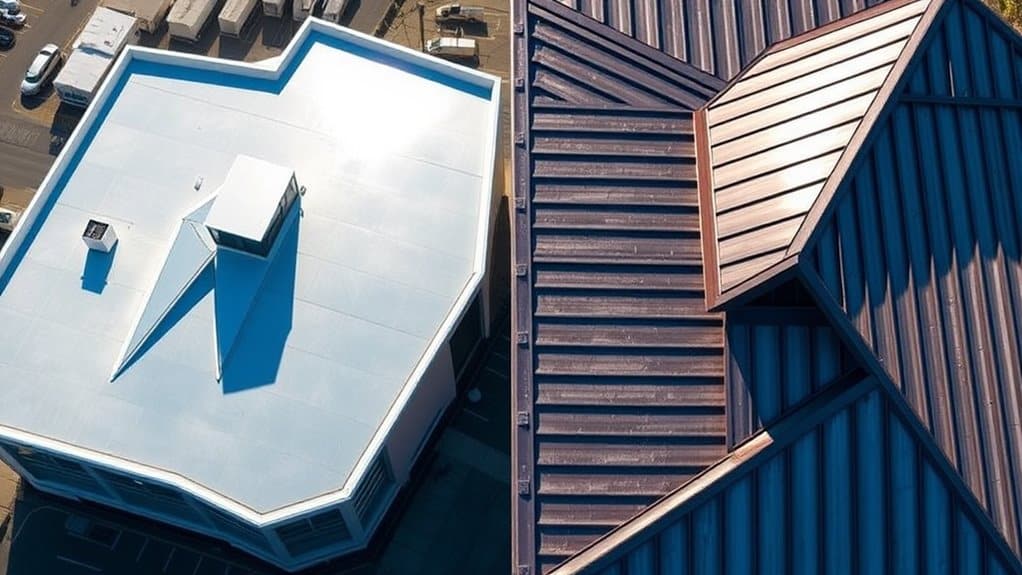
Choosing the right roof for your commercial property requires careful consideration, as the roofing material can significantly affect durability, energy efficiency, and long-term costs. Metal roofs are often preferred for their impressive durability and lifespan, while flat roofs may seem attractive due to their lower initial costs.
Here’s a quick comparison to help you assess your options:
| Factor | Metal Roofs |
|---|---|
| Durability | Excellent; lasts over 50 years |
| Weather Resistance | Outstanding in harsh conditions |
| Energy Efficiency | High solar reflectance |
| Installation Cost | Generally higher due to labour |
When choosing roofing materials, consider your building’s structure and the local climate. Metal roofs typically impose less strain and provide better energy efficiency, potentially leading to considerable savings over time. However, the upfront costs are higher, so it’s crucial to balance your budget with long-term benefits. By making an informed decision, you can ensure your commercial property remains protected and energy-efficient for years to come.
Frequently Asked Questions
How Do Weather Conditions Affect Roof Lifespan?
Weather conditions significantly affect the lifespan of roofs. Extreme temperatures, exposure to UV rays, and high humidity can speed up wear and tear. For instance, heavy rainfall can lead to leaks, while intense sun can cause materials to crack. Regular maintenance and inspections are crucial to counter these impacts, helping to keep roofs effective and lasting throughout their expected lifespan.
Can Flat Roofs Support Solar Panel Installations?
Yes, flat roofs can support solar panel installations. They offer several benefits, such as straightforward installation and optimal positioning for efficiency. This allows for maximum energy capture while reducing the need for roof penetrations and lowering maintenance concerns. For instance, many commercial buildings with flat roofs have successfully installed solar panels, making the most of their available space.
What Are the Best Materials for Flat Roofs?
When choosing the best materials for flat roofs, consider options such as EPDM, TPO, and PVC. It’s also important to include flat roof insulation to enhance energy efficiency and weather resistance, which can extend the lifespan of your roofing system.
How Do I Choose Between Flat and Metal Roofs?
When deciding between flat and metal roofs, think about costs and maintenance. Compare the initial installation prices with long-term upkeep. For example, flat roofs might be cheaper upfront but could require more frequent repairs, while metal roofs may have a higher initial cost but often last longer with less maintenance. Choose the option that suits your building’s requirements and fits your budget.
What Warranties Are Available for Commercial Roofing?
What warranties are available for commercial roofing? There are several options to consider, including material warranties, installation warranties, and full-system warranties. Each type provides specific coverage against defects and installation problems, ensuring your property is protected. For example, a material warranty might cover issues with the roofing materials themselves, while an installation warranty would address problems arising from the way the roof was fitted. Full-system warranties combine both aspects, offering comprehensive protection for your roofing investment.
Conclusion
When choosing between flat roofs and metal roofs for your commercial property, it’s important to consider both the immediate benefits and the long-term effects. Flat roofs can enhance the building’s aesthetics and create additional usable space, while metal roofs are known for their durability and energy efficiency. However, the decision you make now could influence your property’s future in unexpected ways.
Carefully assess the costs, installation methods, and maintenance needs of each option. For instance, while flat roofs may require regular inspections to prevent leaks, metal roofs generally demand less upkeep. The right choice could be pivotal to your property’s success in the years to come.


