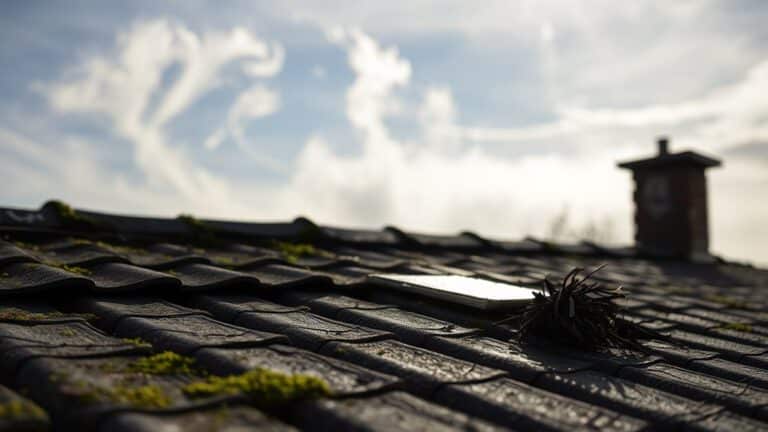

Why Does My Roof Leak in Winter in Pitsea
Your roof might leak in winter in Pitsea for several reasons. Poor ventilation can trap moisture, leading to leaks. Ice dams can form and block drainage, while damaged flashing or shingles can allow water to seep in. Additionally, clogged gutters can cause water to pool, increasing the risk of leaks. If these issues aren’t addressed, they can lead to significant water damage. Understanding these factors is key to protecting your roof. It’s essential to stay proactive in preventing winter roof leaks.
Key Takeaways
- Poor roof ventilation traps moisture, resulting in condensation that can lead to leaks during winter in Pitsea.
- Damaged or missing tiles can let in water, particularly when snow begins to melt.
- Clogged gutters and downpipes hinder proper drainage, causing water to pool on the roof.
- Ice dams can form due to inadequate ventilation, blocking drainage and increasing the risk of leaks.
- Compromised flashing and brittle shingles can lead to water penetration and possible structural damage.
Common Causes of Winter Roof Leaks
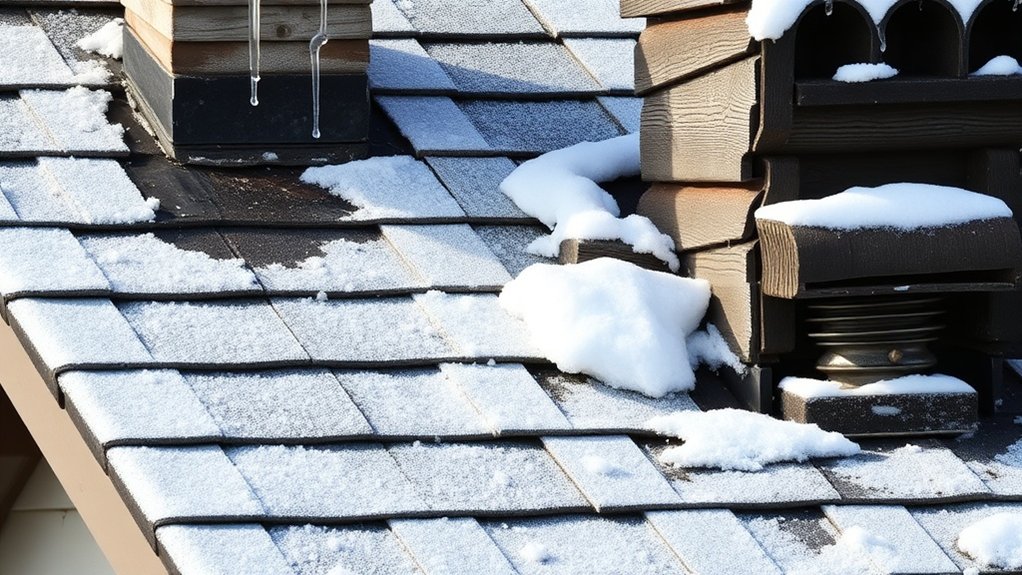
When winter hits, roof leaks can become a real problem. Understanding the common causes is crucial for homeowners.
One major issue is poor roof ventilation, which traps warm, moist air, leading to condensation and potential water damage. Regular inspections can help identify ventilation issues before they become serious problems. Implementing effective ventilation strategies can significantly mitigate this risk.
Damaged or missing tiles, often worsened by harsh weather, create openings for water during melting snow.
Additionally, clogged gutters and downpipes can hinder proper drainage, causing water to pool on the roof and heightening the risk of leaks.
Attic condensation can also mimic roof leaks due to temperature differences, highlighting the need for better ventilation and insulation.
Regular winter maintenance and proactive leak detection are essential to tackle these issues and protect your home from expensive water damage.
The Impact of Ice Dams on Roof Integrity
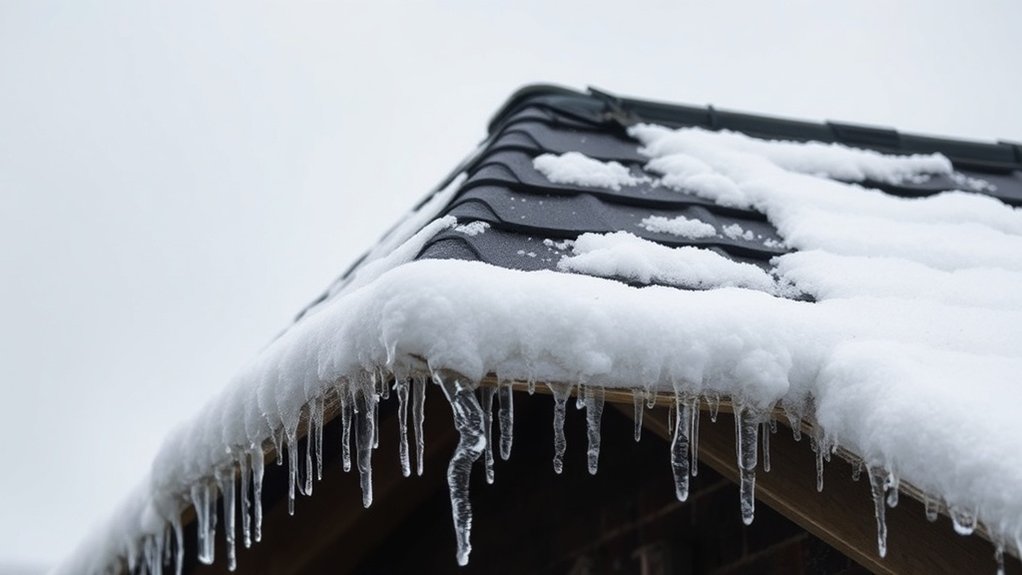
Ice dams occur when melting snow flows down your roof and refreezes at the eaves, obstructing proper drainage. This can cause serious damage, including moisture penetration that threatens your roof’s structural integrity. To prevent ice dams, ensure your loft is well-insulated and ventilated, which helps minimise heat loss and maintain consistent roof temperatures. Proper air sealing can also mitigate the formation of ice dams, leading to more significant roofing issues.
Formation of Ice Dams
As snow builds up on your roof, heat from your home can lead to a serious issue known as an ice dam, which can compromise the integrity of your roof.
Ice dams form when the upper surface of the roof warms up, causing snow to melt and the resulting water to pool behind a ridge of ice at the eaves. This trapped water can seep under roofing materials, leading to leaks and damage. Poor attic ventilation is a critical factor that contributes to the uneven heating of the roof, exacerbating the formation of ice dams. Regular maintenance is essential to address any vulnerabilities that could lead to ice dam formation.
Key factors contributing to ice dams include:
- Poor insulation and ventilation that result in heat escaping
- Thick snow cover that retains heat
- Roof designs that create vulnerable spots
Effects on Roof
The formation of ice dams can seriously compromise your roof’s integrity. These structures can become quite heavy, putting extra strain on roofing materials and increasing the risk of sagging or even collapse, particularly on low-slope roofs.
The freeze-thaw cycles common in winter can accelerate damage, lifting shingles and weakening their structure. This may lead to water leaks that harm ceilings, insulation, and support structures.
Additionally, when insulation becomes saturated, it loses its effectiveness, which can drive up energy costs and encourage mould growth. The weight of ice dams can also damage gutters, leading to expensive repairs.
In the long run, the effects of persistent ice dams may force you to replace your roof sooner than expected, underscoring the importance of maintaining your roofing system during harsh winter weather.
Prevention Strategies
To effectively prevent ice dams from damaging your roof, it’s important to use a mix of insulation, ventilation, and snow management techniques.
Here are some straightforward maintenance tips:
- Check and improve insulation levels to reduce heat loss and keep your roof temperature steady.
- Enhance attic ventilation by ensuring a balanced flow of intake and exhaust vents, allowing cold air to circulate and prevent warming of the roof.
- Clear snow build-up by removing snow quickly and ensuring gutters are free-flowing for proper drainage.
These steps can help protect your roof and maintain its integrity during the colder months.
The Role of Damaged Flashing in Winter Leaks

Damaged flashing can significantly lead to winter leaks, mainly due to corrosion or poor installation.
When flashing is compromised, it fails to direct water away from critical areas, increasing the risk of water intrusion.
For example, if the flashing around a chimney or roof joints is damaged, melting snow can seep in and cause leaks.
It’s vital to ensure your flashing is in good condition and properly fitted to prevent leaks during harsh winter weather.
Flashing Corrosion and Damage
Flashing is vital for preventing leaks, especially during winter’s harsh conditions. Corrosion of flashing can lead to significant water intrusion due to several factors:
- Thermal expansion and contraction: Rapid temperature changes can loosen connections, weakening the structure.
- Sealant brittleness: Cold weather can make sealants inflexible, causing adhesive failure and cracks.
- Chemical exposure: Salt and pollutants can speed up corrosion, especially during freeze-thaw cycles.
To effectively prevent corrosion and maintain your flashing, inspect it regularly for signs of wear.
Addressing minor issues quickly can help you avoid major leaks and expensive repairs later.
Be proactive about flashing care this winter to protect your home.
Importance of Proper Installation
When flashing isn’t properly installed, it significantly increases the risk of winter roof leaks, particularly in regions that experience heavy snowfall and freeze-thaw cycles.
Gaps or misalignments in the flashing can allow water to seep underneath roofing materials, resulting in serious damage. Using substandard flashing materials or poor installation methods can lead to lifting or separation, creating entry points for water.
It’s crucial to adhere to manufacturer specifications and local building regulations to ensure effective sealing at joints and penetrations. Regular inspections can help catch problems early, preventing expensive repairs.
Consequences of Poor Drainage and Blocked Gutters

Effective drainage systems are essential for preserving the integrity of your roof during winter.
Poor drainage and blocked gutters can lead to significant issues, including:
- Water pooling on the roof, raising the likelihood of leaks and damage to the roofing membrane.
- Ice dams forming, which obstruct water flow and can cause structural harm.
- Overflowing gutters leading to moisture seeping in, which can damage the fascia and foundations.
To avoid these problems, it’s crucial to implement proper drainage solutions.
Regularly cleaning your gutters and inspecting your roof can help you spot potential issues early on.
Understanding Shingle and Tile Damage in Cold Weather

Understanding the impact of cold weather on roofing materials is crucial for maintaining your home’s integrity. Shingles become brittle at temperatures below 4°C, making them more susceptible to cracking during winter. Freeze-thaw cycles exacerbate existing cracks, leading to significant deterioration. Similarly, tiles are at risk of cracking; any water trapped in cracks expands when frozen, causing further damage.
| Issue | Effect on Shingles | Effect on Tiles |
|---|---|---|
| Shingle Brittleness | Increased cracking and breakage | N/A |
| Freeze-Thaw Cycles | Widen existing cracks | Causes further tile damage |
| Granule Loss | Reduced watertightness | N/A |
Regular inspections can help spot these issues before they result in leaks.
The Importance of Attic Ventilation and Insulation

Roofing materials such as shingles and tiles can face significant challenges during winter, but the conditions in your attic are equally important for preventing leaks and damage.
Proper attic ventilation and insulation are crucial for maintaining the integrity of your roof. Here are some key points to consider:
- Ventilation helps prevent warm air from heating the roof deck, which can reduce the formation of ice dams.
- Insulation limits heat loss, lowering the risk of melting snow that can lead to leaks.
- Effective systems minimise moisture buildup, protecting against mould and structural damage.
Ensuring your attic is well-ventilated and insulated can save you from costly repairs down the line.
Frequently Asked Questions
How Can I Tell if My Roof Is Leaking?
You can spot roof leaks by looking for water stains, peeling paint, or damp insulation. Regular maintenance and inspections are essential to catch problems early, helping you detect leaks and prevent serious damage to your home. For instance, check your loft after heavy rain for signs of moisture.
What Should I Do if I Find a Leak?
When you notice a leak, be proactive. Contain the water, remove any soaked items, and take photos of the damage. Put in place preventive measures, then carry out a leak detection to ensure your home is protected from further issues.
Are There Temporary Fixes for Winter Roof Leaks?
Yes, you can carry out temporary repairs such as using waterproof tarps, roofing cement, or sealants. It’s important to prevent leaks by clearing snow and ice from the roof, ensuring gutters are unblocked, and addressing any leaks promptly to reduce long-term damage.
When Should I Call a Professional for Roof Repairs?
You should contact a professional for roof repairs if you spot leaks, sagging, or damaged tiles. Addressing these issues promptly can reduce repair costs and ensure your roof is properly maintained, safeguarding your home from further damage and helping to maintain its value.
How Often Should I Inspect My Roof in Winter?
How often should you inspect your roof in winter? It’s advisable to check it at least twice during the season. This helps ensure it can withstand harsh weather and prevents leaks. For instance, after a heavy snowfall or storm, it’s wise to look for any visible damage or blockages. Regular inspections can save you from costly repairs later on.
Conclusion
Is your roof leaking this winter? That’s not uncommon. Ice dams, damaged flashing, and blocked gutters can all contribute to leaks. Poor attic ventilation and insulation can also make matters worse, leading to unwanted water features in your home. It’s essential to keep your roof well-maintained to prevent costly water damage. Make sure to check these areas regularly to avoid finding yourself with an unexpected indoor water feature.