

Why Is Water Coming Through My Ceiling in Grays
Water coming through your ceiling in Grays usually indicates serious problems such as roof damage, cracked tiles, or faulty flashing. Plumbing issues, like corroded pipes or loose fittings, can also cause leaks. Additionally, blocked gutters can lead to water backing up and creating leaks. If you spot stains, sagging ceilings, or detect a musty smell, it’s crucial to tackle these issues promptly. Identifying the root causes will help you manage the situation effectively and consider appropriate solutions.
Key Takeaways
Water may be coming through your ceiling due to several reasons:
- Roof damage, such as missing tiles or damaged flashing, is a common culprit.
- Blocked gutters can lead to water backing up, causing leaks in your ceiling.
- Issues with plumbing, like corroded pipes or faulty fittings, can result in water leaking into ceilings.
- Look out for signs such as discolouration, sagging areas, or a musty smell; these indicate a potential leak that needs urgent attention.
- If you notice active water flow or significant structural damage, it’s best to contact a professional to prevent further complications.
Common Causes of Ceiling Water Leaks

When you spot water leaking through your ceiling, it’s vital to pinpoint the common causes. Damage to your roof, such as missing tiles or compromised flashing, can let rainwater seep into your home. Blocked gutters can cause water to back up, leading to leaks as well. Additionally, condensation, often due to poor ventilation in the attic or insufficient insulation, can result in moisture dripping onto your ceiling. Regular inspections can help identify common roof issues that may lead to leaks. Keep an eye out for water stains, as they can signal ongoing problems. Ceiling leaks arise from various sources and can lead to significant damage if not addressed promptly. Structural issues, like cracks in walls, can also allow water in. If you discover mould, it’s important to act swiftly, as this can indicate long-term moisture exposure. Tackling these issues is crucial for maintaining a safe and healthy living space.
Damaged Plumbing: A Leading Source

Damaged plumbing is a common cause of ceiling leaks. Issues like corroded pipes, faulty fittings, and loose connections can allow water to escape. Look out for signs such as persistent damp patches, discolouration, or sagging ceilings, as these can indicate a plumbing issue above. Tackling these problems promptly can save you from more extensive damage and expensive repairs later on. Wet ceiling panels can almost always lead to mold development, making it even more crucial to address any leaks immediately. Additionally, regular plumbing checks can help catch leaks early to prevent damage.
Common Plumbing Issues
Many homeowners may not be aware that common plumbing issues often arise from damaged systems, leading to significant water leaks. In older properties, ageing and corroded pipes can develop cracks, allowing water to escape. During colder months, poorly insulated pipes can freeze and burst, releasing water rapidly. Clogged drains can create excessive pressure, potentially causing leaks or backflow into ceilings. Moreover, faulty fixtures, such as leaking taps, can accumulate water and cause damage over time. Regular plumbing maintenance and thorough pipe inspections are crucial for spotting these problems early, helping to prevent costly water damage and ensuring your home stays safe and dry. New Jersey ranks as the top state for plumbing repairs, indicating a higher likelihood of facing such issues.
Signs of Plumbing Leaks
Ignoring signs of plumbing leaks can have serious repercussions for your home and health.
Look out for water stains on ceilings or walls, typically brown or rust-coloured, and be alert for musty smells or mould around plumbing fixtures. An unexpected increase in your water bill, along with dripping sounds, may signal hidden problems.
Also, keep an eye out for puddles near skirting boards or under sinks. Rust on pipes and changes in water pressure are clear signs of damage.
Regular plumbing maintenance and professional leak detection methods, such as acoustic devices or moisture meters, can help spot and resolve leaks early, safeguarding your home and well-being.
Roof Damage and Water Ingress
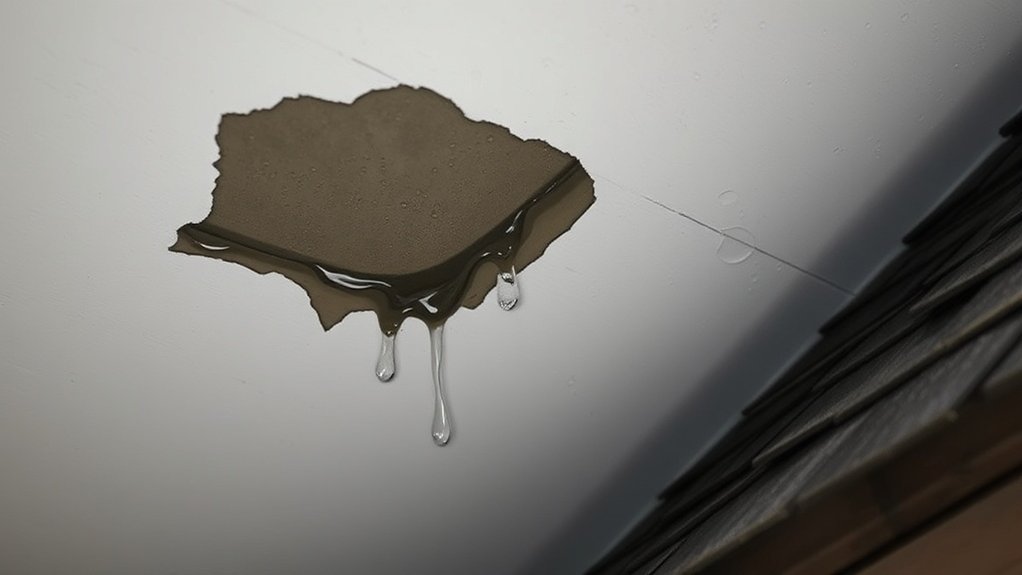
Understanding roof damage and water ingress is crucial for maintaining your home’s integrity, as even small issues can escalate into major problems.
Low roof penetrations, like plumbing stacks, are particularly susceptible to leaks due to heightened water runoff. If the flashing around these penetrations fails, water can seep in, leading to damage in your ceilings and plasterboard.
To prevent leaks, prioritise regular roof maintenance. Ensure the flashing is secure and minimise the number of penetrations.
Regularly check shingles for signs of damage; missing or cracked tiles can indicate emerging roof issues. By proactively addressing these vulnerabilities, you can protect your home from expensive water damage and ensure a healthy living environment. Regular inspections can help identify vulnerabilities before leaks occur.
The Impact of Blocked Gutters
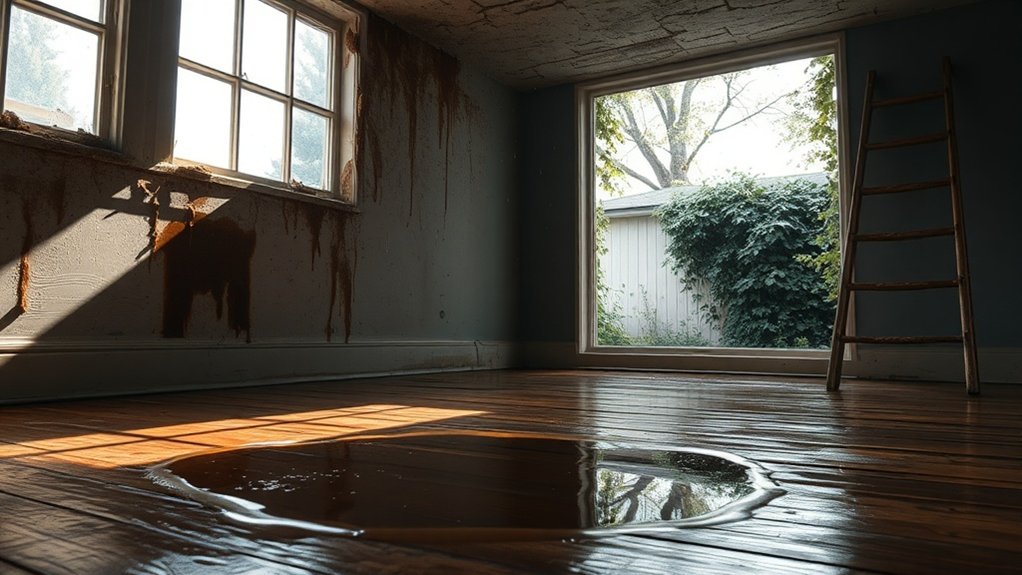
Blocked gutters can cause serious water damage to your home by failing to channel rainwater away from the roof and foundation. When gutters get clogged, water can overflow, pooling at the edges and infiltrating your roof and walls. This can lead to structural damage, promote mould growth, and incur expensive repairs.
| Consequence | Description | Impact |
|---|---|---|
| Water Stains | Unsightly marks on walls and ceilings | Aesthetic and structural |
| Mould Growth | Health risks from damp environments | Safety and hygiene |
| Weakened Fascia | Decaying wood caused by moisture | Compromised structural integrity |
| Sagging Gutters | Higher chance of gutters detaching | Increased repair costs |
| Foundation Issues | Disrupted drainage | Risk of structural shifting |
Regular gutter maintenance is crucial for preventing these problems and safeguarding your home.
Faulty Appliances and Fixtures

When appliances and fixtures fail, they can unexpectedly cause water damage in your home. Regular maintenance and inspection are vital to prevent leaks.
Common issues include:
- Washing machine leaks from worn door seals or damaged hoses.
- Dishwasher leaks due to worn gaskets or blocked drains.
- Water heater failures from corrosion or issues with the pressure relief valve.
- Refrigerator waterline problems caused by cracked supply lines or frozen connections.
Neglecting these issues can lead to significant water damage, often seen as stains on ceilings.
HVAC System Issues
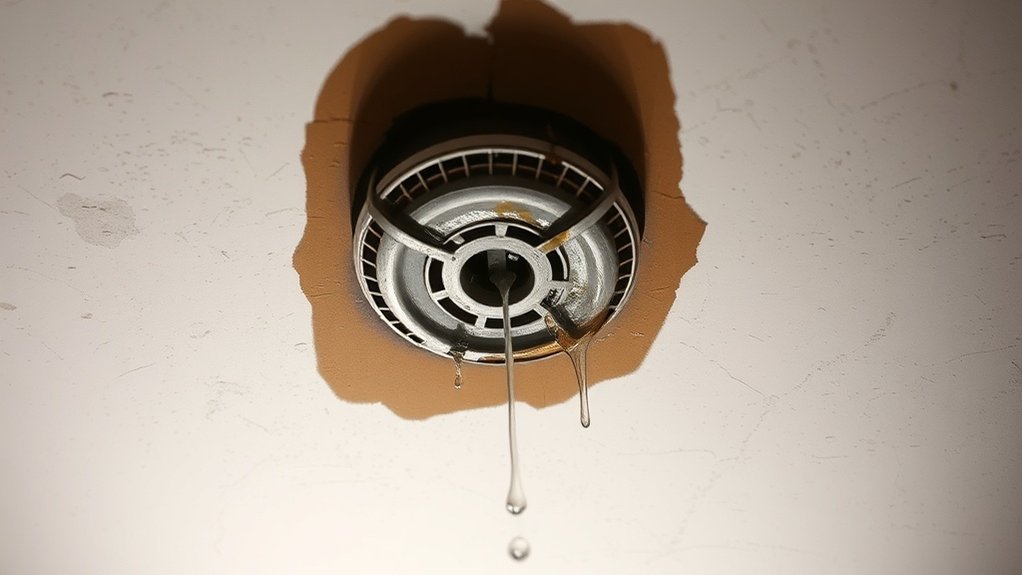
Water damage can arise from problems within your HVAC system, often going unnoticed until leaks appear through ceilings. Regular maintenance is crucial to prevent issues such as blocked condensate drain lines, frozen evaporator coils, and damaged drain pans. Keeping an eye on refrigerant levels and ensuring adequate airflow can significantly minimise the risk of leaks.
| Issue | Prevention |
|---|---|
| Blocked Condensate Drain Line | Regular cleaning and maintenance |
| Frozen Evaporator Coil | Monitor refrigerant levels |
| Damaged Drain Pan | Timely inspection and replacement |
| Improper Installation | Use a professional for installation |
| Poor Airflow | Change air filters regularly |
Identifying the Source of the Leak
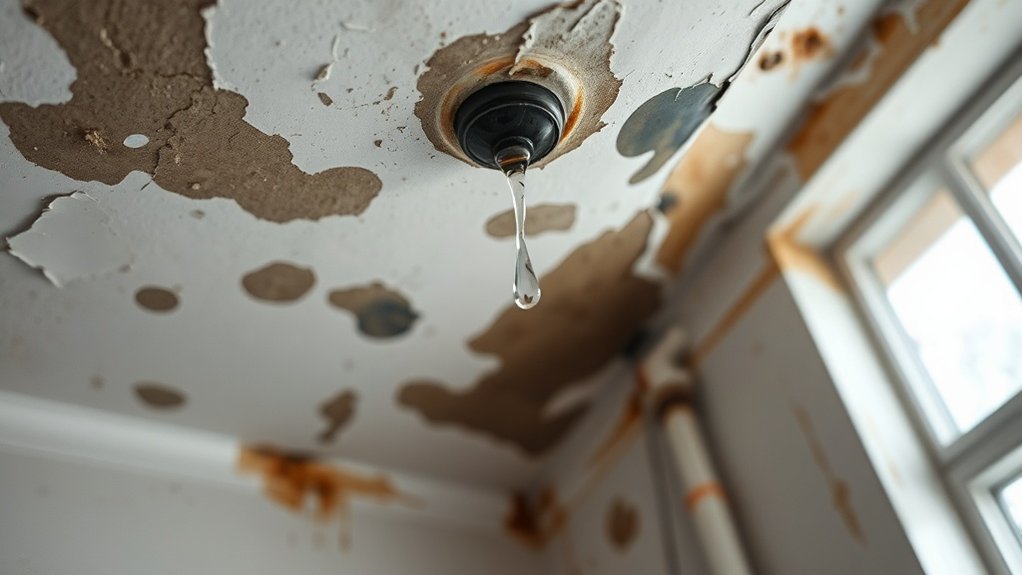
How can you identify the precise source of a leak in your ceiling? Start with a careful inspection and systematic approach. Here are some essential steps:
- Look for visible water stains, sagging areas, or cracked paint on the ceiling.
- Examine the spaces around plumbing fixtures for signs of pipe issues.
- Check your attic for damp insulation and any signs of roof damage.
- Use moisture meters and thermal imaging for accurate leak detection.
Signs Indicating Water Leakage

Signs of Water Leakage in Your Ceiling
Water leaks can often go unnoticed initially, but there are several signs you can look out for. Keep an eye out for discolouration on your ceiling, such as circular or irregular yellow, brown, or dark stains—these often appear as rings and can expand over time. Such stains may indicate trapped moisture or even mould growth, especially in older properties.
Also, check for sagging or bulging areas, which suggest accumulated water and could compromise the structure of your ceiling.
A musty smell is another warning sign, as it often points to hidden mould thriving in damp conditions. If you spot drips or persistent wet patches, these are clear indicators of active leaks that need immediate attention.
It’s crucial to address these signs swiftly to prevent further damage and potential health risks.
Immediate Actions to Take

When you find a leak in your ceiling, it’s crucial to act quickly to minimise damage and ensure safety. Here’s what you should do:
- Turn off the main water supply to prevent further water ingress.
- Place buckets or containers beneath the leak to catch any dripping water.
- Move furniture and valuables away from the affected area to avoid damage.
- Switch off the electricity in the area to prevent electrical hazards.
Take photos and make notes of the situation for your emergency response team, whether it’s a plumber or your insurance provider.
Acting promptly will help you manage the situation effectively and protect your home and possessions from further harm.
Common Plumbing-Related Leak Details
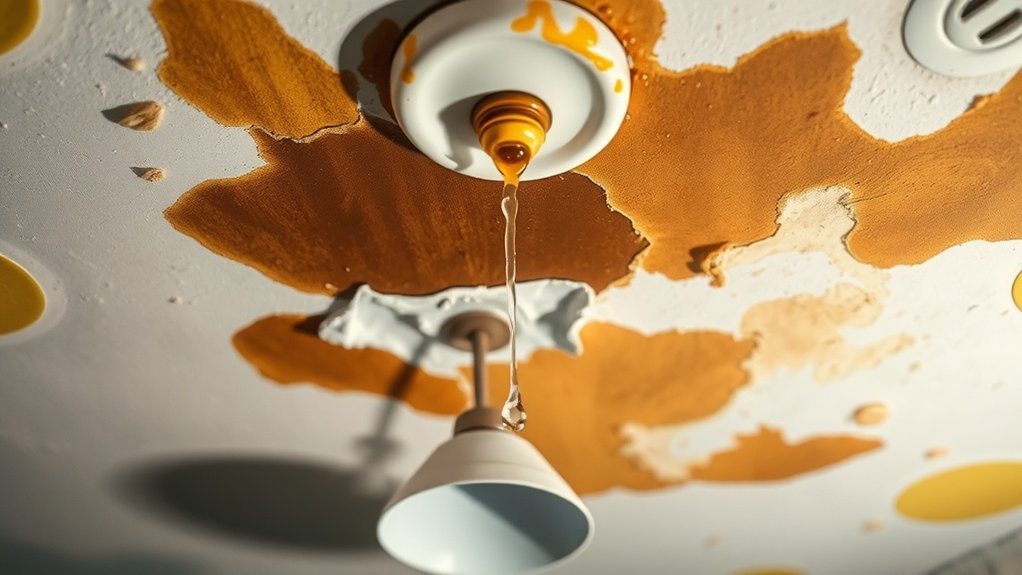
After taking immediate steps to manage a leak, it’s important to understand common plumbing causes to pinpoint the source.
Aging pipes can become corroded or cracked, often leading to leaks in ceilings. Burst or frozen supply pipes hidden within walls can cause serious water damage. Loose plumbing connections or clogs can increase pressure, resulting in leaks as well.
In bathrooms, leaky supply lines, faulty toilet seals, and damaged shower trays can lead to slow drips, while blocked drains may overflow.
Regular plumbing maintenance and inspections are crucial for catching issues early. Employing modern leak detection methods can help identify hidden leaks, preventing extensive damage and ensuring your home remains sound.
Roofing and Structural Concerns
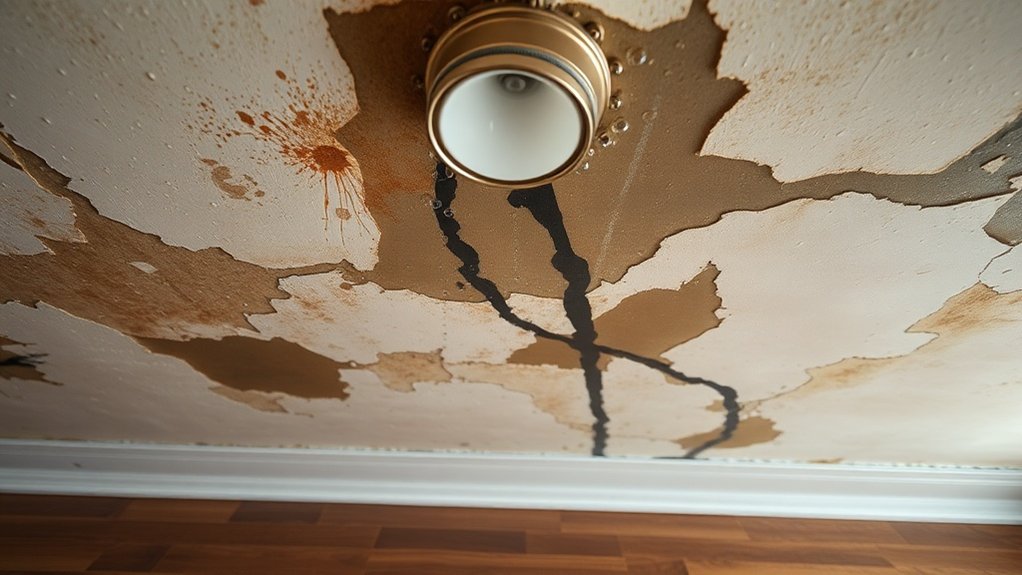
When water seeps through your ceiling, it often indicates serious roofing and structural problems that require prompt attention.
Missing or damaged tiles can allow water to enter, while blocked gutters may channel rainwater beneath the roof, worsening leaks.
Furthermore, issues with structural integrity, like weakened roof decking, can lead to slow, unnoticed leaks that jeopardise your home’s safety and comfort.
Missing or Damaged Shingles
Missing or damaged shingles can severely compromise your roof’s integrity, leaving your home vulnerable to water ingress.
Regular inspections of shingles are crucial for effective roof upkeep, as even one compromised shingle can lead to substantial damage.
Here are some important points to consider:
- Water can easily seep through gaps, creating structural weaknesses.
- Moisture build-up can damage insulation, electrical systems, and pose safety risks.
- Extended exposure to water can lead to expensive repairs, often three to five times more costly if not addressed promptly.
- Missing shingles can attract pests, leading to further issues within your home.
Clogged Gutter Issues
Clogged gutters can cause serious roofing and structural problems that many homeowners overlook until it’s too late. Leaves, twigs, and debris can block the flow of water, leading to backups that prevent gutters from directing rainwater away from your property. This build-up can result in roof leaks, as water seeps under tiles and damages insulation and ceilings.
Many homeowners neglect gutter maintenance; in fact, 27% only clean their gutters when issues arise. To avoid costly repairs, it’s essential to clean your gutters regularly, ideally at the start of each season.
Inspecting and clearing your gutters prevents standing water, which can lead to significant interior damage and promote mould growth. Taking these proactive measures helps ensure your home stays safe and sound, protecting both its structure and your peace of mind.
Structural Integrity Problems
Neglected gutters can trigger serious structural integrity issues in your home.
Water infiltration may weaken load-bearing elements, leading to dangerous deterioration.
Consider the following key problems:
- Sagging roofs, suggesting weakened support.
- Prolonged water exposure, which can damage roof joints.
- Poor roof design, causing water pooling and increased stress.
- Delayed repairs, transforming minor leaks into significant structural damage.
It is crucial to address these issues promptly.
Regular inspections and maintenance can prevent small problems from escalating into severe breaches that threaten your home’s safety and stability.
When to Call a Professional
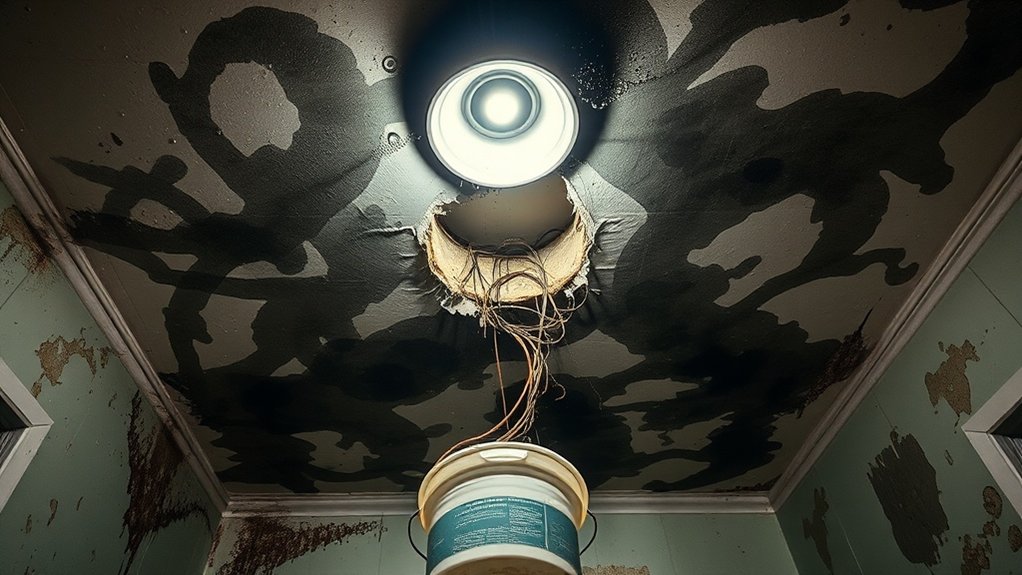
When should you call a professional about water coming through your ceiling? If you see active dripping or running water, it’s time for an emergency response. Even minor leaks can lead to significant water damage and mould growth. Here’s a quick guide to help you decide:
| Situation | Indication | Action |
|---|---|---|
| Active water flow | Puddles forming | Call an emergency plumber |
| Visible stains | Discolouration on surfaces | Schedule a professional assessment |
| Sagging or cracked ceiling | Signs of structural compromise | Seek immediate professional help |
| Suspicion of mould | Mildew smell present | Contact water damage specialists |
Don’t delay—timely professional intervention can save you from expensive repairs and health risks.
Frequently Asked Questions
Can I Repair Ceiling Water Damage Myself?
Yes, you can manage minor ceiling water damage with DIY repairs, as long as you first tackle the source of the leak. For effective repairs, make sure you have the right tools and materials. If the damage is extensive or you’re unsure, it’s wise to call in a professional. For example, if you notice a small water stain, you might simply need to patch it up and repaint. However, if the ceiling is sagging or there are signs of mould, it’s best to seek expert help.
How Long Can Water Sit Before Causing Mold?
Water can sit for as little as 24 hours before mould starts to develop. If you don’t tackle water damage within 48 hours, the chances of mould growth increase significantly, posing risks to both health and structural integrity.
Will Homeowners Insurance Cover Ceiling Water Leaks?
Homeowners insurance usually covers water damage to ceilings if the leak is sudden and accidental, such as from a burst pipe. However, gradual leaks resulting from neglect or wear and tear are typically not covered. It’s important to keep your home well-maintained to ensure you’re protected. For example, regularly checking your plumbing can help prevent unexpected issues that could lead to insurance claims being denied.
What Are the Health Risks of Mold Exposure?
Oh, you thought mould was just an odd decoration? Think again! Mould can cause sneezing, coughing, and even asthma attacks. Its health effects can range from bothersome to serious, particularly for those with existing health issues. Stay alert!
How Can I Prevent Future Ceiling Leaks?
To prevent future ceiling leaks, carry out regular maintenance checks on your roof, plumbing, and drainage systems. For example, inspect your gutters to ensure they’re clear of debris, and check for any signs of wear on your roof. This proactive approach helps catch issues early, keeping your home safe and dry.
Conclusion
If you’ve discovered water leaking through your ceiling, it’s time to prioritise repairs over any sense of tranquility. The cause could be plumbing issues, roof damage, or even some questionable DIY work. Don’t let your home turn into a water park—contact a professional before your living room resembles a swimming pool. A leaky ceiling is not just a nuisance; it’s your home’s way of signalling that it needs urgent attention.


