

Planning Permission: Do You Need It for a New Roof?
When considering a new roof in the UK, whether you need planning permission depends on your property’s specifics. Typically, if you’re replacing the roof with the same materials, you won’t need permission. However, if you’re changing the roof shape or using different materials, permission is often required, especially for listed buildings or homes in conservation areas. It’s always best to check with your local council for the exact requirements. Understanding these regulations is crucial for your project.
Key Takeaways
- You usually don’t need planning permission for re-roofing if you’re using the same materials.
- However, changing the roof’s shape or using different materials often requires permission.
- If your property is in a conservation area or is a listed building, you’ll likely need further permissions for any roof alterations.
- It’s a good idea to check with your local council for regulations specific to your property.
- Consulting early can help you avoid delays and ensure you follow local planning rules.
Understanding Planning Permission and Roof Installations

When planning a new roof installation in the UK, it’s crucial to understand whether you need planning permission. The type of roof and the materials you select can dictate this.
For example, if you’re altering the shape of your roof or using different materials, you may need to apply for planning permission, especially if your property is in a conservation area or is a listed building. However, if you’re simply re-roofing with the same materials, you generally won’t need permission. Always check with your local council for specific requirements before you begin.
Even if planning permission isn’t required, you must still adhere to Building Regulations to ensure your roof meets safety and energy efficiency standards. This approach helps you contribute positively to your community. Additionally, it’s important to note that certain bat species are protected, so if bats reside in your roof, you may need to consult with wildlife experts before proceeding with any renovations.
Exceptions to Permitted Development Rights

When considering a new roof, it’s crucial to understand the exceptions to permitted development rights. Article 4 Directions can limit these rights in conservation areas or national parks, meaning you may need planning permission for work that would usually be allowed. If your home is a listed building, you’ll require listed building consent for significant alterations, including roofing. This ensures any changes maintain the building’s character and must be approved by the local planning authority. Additionally, certain planning conditions may apply that remove permitted development rights in sensitive locations. Always check your property’s planning history and your local authority’s policies, as these exemptions can vary significantly and affect your renovation plans. Understanding the permitted development rights is essential to navigate these complexities effectively.
The Distinction Between Building Regulations and Planning Permission

While both planning permission and building regulations are crucial for any construction project, they serve different purposes and follow separate legal frameworks. It’s important to grasp these differences.
| Aspect | Planning Permission | Building Regulations |
|---|---|---|
| Legal Framework | Governed by planning legislation | Covered by building control laws |
| Purpose | Assesses land use and environmental impact | Ensures safety and construction standards |
| Application Process | Submitted to the planning department | Submitted to the building control department |
| Approval Significance | Authorises development | Confirms compliance with safety standards |
For example, if you’re looking to build a new home, you need planning permission to ensure it fits within local zoning laws and doesn’t negatively impact the area. Once that’s approved, you then need to ensure your build meets safety standards through building regulations. Understanding this sequence is key to a successful project. Additionally, obtaining planning permission helps verify the suitability of buildings in a location and their impact on neighbors and local services.
Permitted Development Rights for Roof Alterations

Permitted development rights for roof alterations allow homeowners in the UK to improve their properties without needing planning permission, as long as they follow certain guidelines.
Under Class B of the GPDO, you can add roof extensions or dormer windows, provided you meet specific requirements. For detached and semi-detached houses, the maximum extension is 50 cubic metres, while for terraced houses, it’s 40 cubic metres.
Dormers must be placed at the rear, can’t exceed the existing roof height, and should cover less than half of the roof area. Additionally, you need to maintain a distance of 0.3 metres from the roof edge and 10 metres from any boundary.
Keep in mind that these rights may not apply in conservation areas or for listed buildings, so it’s important to check your local regulations.
Importance of Consultation and Compliance With Local Authorities
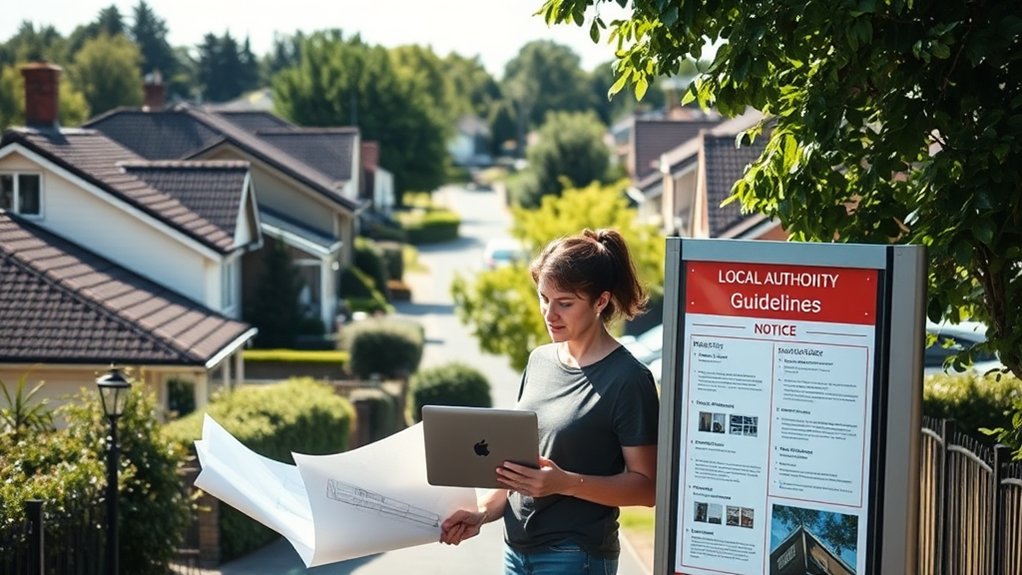
When planning a roofing project, it’s crucial to consult local authorities to ensure your plans meet building regulations. Here are some key benefits of this consultation:
- Avoiding Delays: Discussing your project early can help prevent potential setbacks.
- Regulatory Clarity: You’ll gain a clear understanding of what’s required for compliance.
- Cost Savings: Ensuring compliance from the outset can save you money on any amendments needed later.
- Satisfying Neighbours: Addressing local concerns early on can help maintain good relationships in your community.
Neglecting compliance can lead to fines or work being stopped, complicating your project. Additionally, understanding local permit requirements is essential for ensuring your project aligns with specific regulations.
Engaging with local authorities not only ensures you follow regulations but also streamlines the entire process, making your roofing project more efficient and successful.
Compliance is vital for protecting your investment and facilitating future property sales.
Frequently Asked Questions
How Long Does Planning Permission Typically Take to Be Approved?
When applying for planning permission in the UK, you can generally expect the process to take between 8 to 12 weeks. However, this timeframe can vary depending on the complexity of your project and the current workload of your local authority. For instance, if you’re looking to build a new home or extend an existing one, it’s wise to factor in potential delays. Always plan ahead to accommodate any unforeseen hold-ups.
What Are the Costs Associated With Applying for Planning Permission?
When applying for planning permission, you’ll need to consider application fees, which can differ depending on the complexity of your project. For example, a simple extension may cost less than a large new build. Additionally, there are consultation fees to factor in. Being aware of these costs will help you budget properly and ensure a smoother application process for your project.
Can I Appeal a Denied Planning Permission Application?
Yes, you can appeal a planning permission application that has been denied. During the appeal process, it’s important to focus on the reasons given for refusal. Present a clear and structured case that directly addresses the concerns raised by the council. For example, if the refusal was due to impact on local traffic, you could provide evidence of traffic studies or suggest alternative access routes.
Do I Need Permission for Minor Roof Repairs or Maintenance?
Generally, you won’t need permission for minor roof repairs. Simple tasks like patching leaks or replacing a few tiles can be done without fuss. Just ensure your property isn’t listed or situated in a conservation area to sidestep any potential issues.
Will My Neighbors Be Notified About My Planning Permission Application?
Yes, your neighbours will be notified about your planning permission application. Local councils usually send letters to properties nearby, ensuring that the community has a chance to provide feedback on your proposal. For example, if you’re planning to build an extension, those living next door will be informed and can share their thoughts.
Conclusion
Before you start your roof renovation, it’s crucial to check whether you need planning permission. This isn’t just a bureaucratic formality; it’s essential to keep your home compliant with local regulations. While you may feel confident in your decisions, local authorities may have specific requirements. Engaging in the consultation process can help ensure your new roof enhances your home rather than causing issues with neighbours or the community.


