

How to Identify the Source of a Roof Leak in Maldon
To identify the source of a roof leak in Maldon, begin with a thorough visual inspection of your roof. Look for cracked or missing tiles, and check for any water stains in your loft. You can also use water testing methods, such as spraying water around roof features to see if any leaks develop. For a more accurate diagnosis, consider using thermal imaging or moisture sensors. Remember to prioritise safety while inspecting. There are effective strategies available that can help you resolve the issue quickly.
Key Takeaways
- Regularly check your roof for missing, cracked, or curling tiles, and look for discolouration that might indicate moisture problems.
- Inspect the loft for water stains and mould on rafters and insulation, using a torch or binoculars for hard-to-reach spots.
- Try water testing methods, like flood testing or spray testing, to simulate leak conditions and see if any signs of leakage appear indoors.
- Consider using advanced techniques such as thermal imaging and electronic leak detection for pinpointing leak sources more accurately.
- If you’re uncertain, it’s wise to hire professional leak detection services for a thorough inspection and tailored advice on effective leak prevention.
Understanding Common Roof Leak Sources in Maldon
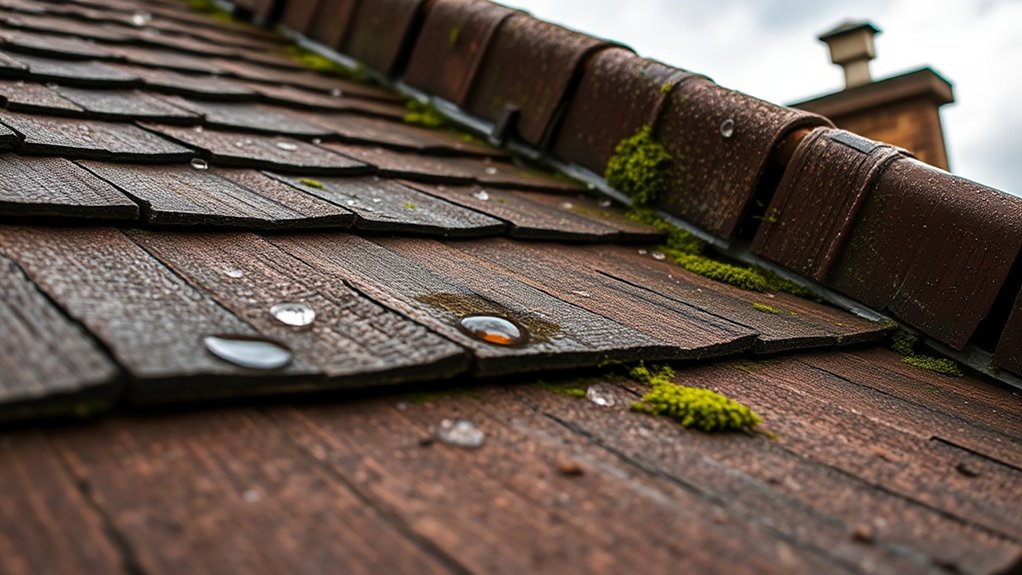
When looking for roof leak sources in Maldon, it’s important to know the common causes of water infiltration. One frequent issue is flashing failures around chimneys; if the flashing is cracked or loose, it can let water in, especially if it wasn’t installed correctly. Flashing issues are often exacerbated by deteriorating bricks in masonry chimneys, which can also contribute to these problems. Regular maintenance of high-quality materials used in flashing can significantly reduce the likelihood of leaks.
Gutter maintenance is equally crucial; blocked gutters from debris can lead to water overflowing at the edges of the roof and increase the chance of leaks. Regularly clearing out your gutters helps prevent moisture buildup and reduces the risk of mould growth. Implementing seasonal cleanings is essential for optimal gutter performance.
Conducting a Visual Inspection

After identifying common sources of roof leaks in Maldon, you can begin a visual inspection to locate any issues. Follow these steps:
- Examine the Roof Exterior: Look for missing, cracked, or curling tiles as indicators of potential leaks. Regularly checking for damaged tiles can help prevent serious issues.
- Check for Discolouration: Dark patches or stains suggest moisture build-up that requires further investigation. Regular visual inspection can help catch these issues early.
- Inspect the Loft: Look for water stains and mould on rafters and insulation.
- Utilise Tools: Use a torch for dark areas and binoculars for hard-to-reach spots to improve your inspection.
Utilizing Water Testing Methods
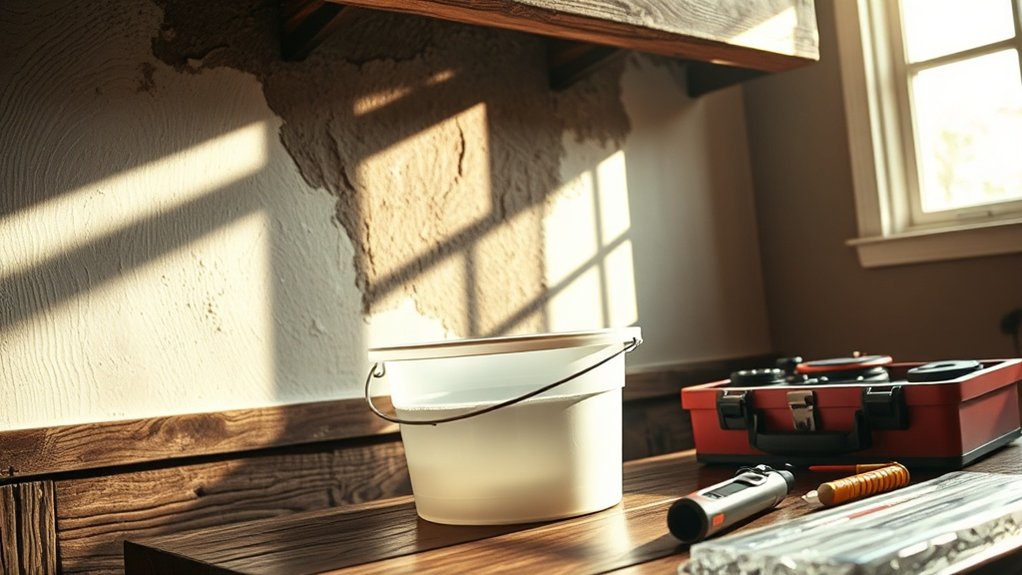
To accurately identify the source of a roof leak, water testing methods can be very effective. Flood testing involves covering the roof surface with water to recreate leak conditions, allowing you to pinpoint exact areas of infiltration. During this process, it’s crucial to observe the interior ceiling for any signs of leaking. If flood testing isn’t feasible due to the roof’s layout, spray testing is a good alternative. This method involves spraying water on specific areas to simulate weather conditions while checking for leaks indoors. Although it can be time-consuming, spray testing offers precision in locating problem spots. Be sure to focus on valleys, roof vents, and chimneys during your assessment to cover all potential sources of leaks. Utilizing these diagnostic tools can significantly improve your chances of finding and fixing the leak effectively.
Exploring Electronic Leak Detection Techniques

When dealing with roof leaks, electronic leak detection (ELD) techniques provide reliable solutions.
High voltage methods send a small current through electrode brushes, allowing for quick identification of breaches in dry membranes.
On the other hand, low voltage methods, such as Electric Field Vector Mapping, use perimeter wiring to spot leaks in conductive materials.
Familiarising yourself with these techniques will help you effectively locate and resolve leaks, maintaining the integrity of your roofing systems.
High Voltage Detection Methods
High Voltage Electronic Leak Detection (ELD) techniques provide an efficient and accurate method for identifying breaches in waterproof membranes, making it a valuable tool for contractors and building owners.
Here’s a straightforward overview of how it works:
- A conductive electrode brush sweeps high voltage across the membrane.
- The testing unit generates over 30,000 volts at low current, creating an electrical field.
- If there’s a breach, current will flow through the hole, triggering an alarm.
- The technician then scans the surface, using the device to locate defects.
High voltage ELD is non-destructive, effective on various membrane types, and complies with ASTM Standard D7877, ensuring reliable leak detection for roofing systems.
Low Voltage Applications
How can you identify leaks in roofing systems without causing damage? Using low voltage technology, you can utilise Electronic Field Vector Mapping (EFVM) testing, which employs a 30-40 volt battery-generated signal for non-destructive assessments.
To begin, ground a conductive roof deck beneath the roof membrane and install a trace wire around the testing area. By measuring resistance with probes, you can locate electric field breaches that indicate leaks.
This method is effective on most membranes, apart from those with high carbon content, and allows for immediate repairs and retesting without waiting for the membrane to dry. Proper roof ventilation is crucial for preventing moisture build-up, which can exacerbate leaks and damage over time.
With 100% coverage and the ability to detect even small leaks, EFVM provides a reliable solution for maintaining your roof’s integrity.
Implementing Thermal Imaging and Moisture Sensors
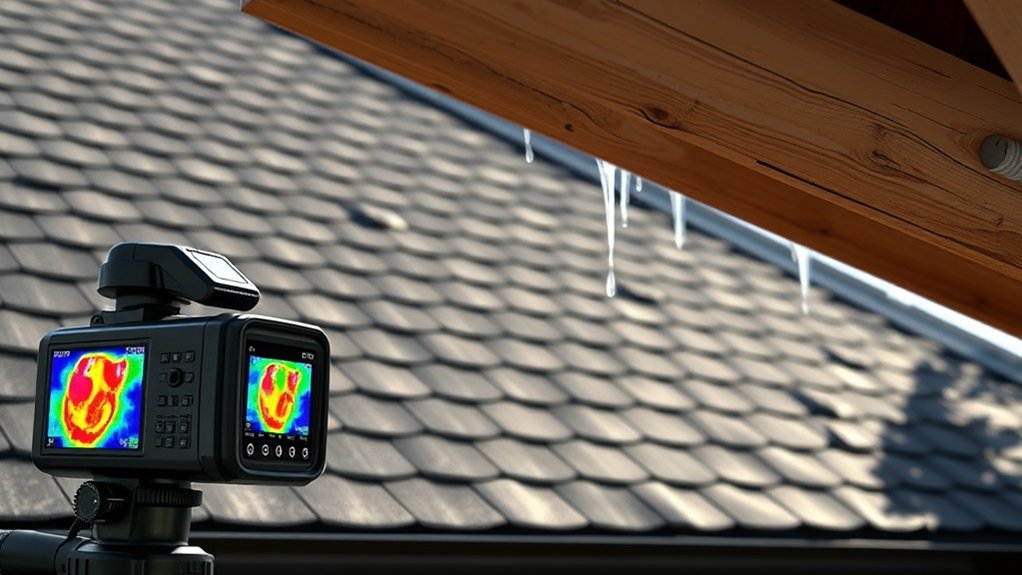
Traditional roof leak detection methods can be invasive and disruptive. However, using thermal imaging and moisture sensors provides a more efficient and non-destructive solution.
Here’s how you can make the most of these technologies:
- Use thermal imaging to create detailed thermal maps that show moisture retention in roofing materials.
- Conduct scans during cooler periods for the best results, as this highlights thermal anomalies effectively.
- Install moisture sensors for continuous monitoring and precise confirmation of wetness at suspected areas.
- Combine data from thermal imaging and moisture sensors for accurate identification of leak sources, enabling targeted repairs.
This approach not only saves time but also minimises disruption to your property.
Safety Measures and Preparation for Leak Detection
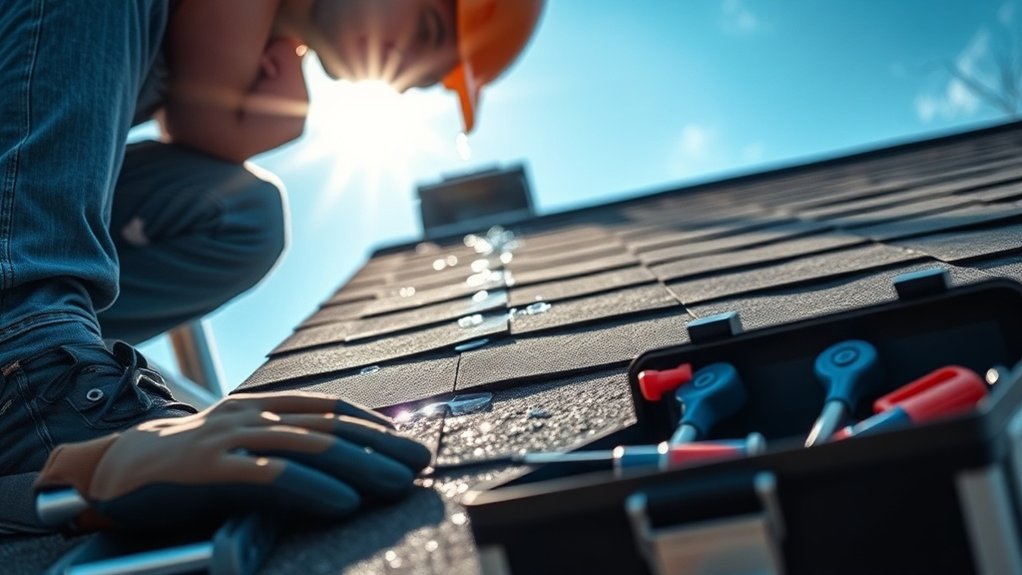
Before starting a roof leak detection process, it’s essential to prioritise safety and preparation. First, check the weather; avoid working in rain, strong winds, or icy conditions.
Use a sturdy ladder with non-slip feet, ensuring it’s secure at both ends. Your preparation should include wearing non-slip shoes, safety goggles, gloves, and a hard hat. If you’re working on a steep roof, make sure to use a harness and safety line.
Clear the area around the ladder of any obstacles and put up warning signs to alert others. Keep a first aid kit and a charged mobile phone on hand for emergencies.
Finally, document the current state of the roof for future reference, and ensure you’re aware of local regulations regarding roof work.
Addressing Specific Challenges in Maldon

Addressing roof leaks in Maldon requires a tailored approach due to its specific climatic conditions. Here are some effective strategies:
- Debris Clearance: Regularly remove leaves and debris from roofs and gutters to avoid water pooling.
- Humidity Control: Use vapour barriers in roof constructions to reduce humidity and prevent condensation.
- Material Checks: Regularly inspect roofing materials, particularly tiles and membranes, for signs of wear or damage, especially around joints and flashings.
- Thermal Imaging: Implement thermal imaging to detect hidden leaks that may arise from temperature changes and structural movements.
Engaging Professional Leak Detection Services

When dealing with a stubborn roof leak, hiring professional leak detection services is essential for accurately locating the source and preventing further damage.
These specialists use advanced techniques, such as thermal imaging cameras and electronic leak detection, to identify problems without causing disruption. They may also conduct drone surveys for hard-to-reach areas and use moisture meters to find damp spots effectively.
Their process typically starts with a thorough inspection, followed by tailored recommendations for your specific situation, ensuring precise leak identification.
Additionally, they provide detailed reports that can help with long-term leak prevention strategies.
Investing in professional leak detection not only minimises damage but also extends the lifespan of your roofing system, ensuring it complies with local regulations and industry standards.
Frequently Asked Questions
How Often Should I Inspect My Roof for Leaks?
You should inspect your roof for leaks twice a year, preferably in spring and autumn. Regular maintenance helps prevent leaks, allowing you to identify potential problems early and extend the life of your roof. For instance, after a storm, check for missing tiles or signs of damp, as these can indicate issues that need addressing.
Can I Fix a Roof Leak Myself?
Yes, you can repair a roof leak yourself with the right tools and safety measures. Start by assessing the damage, then gather the necessary materials. Follow clear leak repair techniques to ensure a long-lasting fix. For example, if you notice a leak around a chimney, apply roofing cement to seal any gaps. Remember to prioritise your safety and consider calling a professional if the job seems too daunting.
What Are the Signs of a Serious Roof Leak?
Signs of a serious roof leak include water stains on ceilings, sagging areas in the roof, and mould growth. Regular leak detection and proactive roof maintenance can help prevent significant damage, ensuring the safety and longevity of your home and its occupants.
How Long Do Roofing Materials Typically Last?
The lifespan of roofing materials varies significantly. For example, slate roofs can last over 100 years, whereas asphalt shingles typically last between 15 to 30 years. Knowing the durability of different materials helps you make an informed choice, ensuring your roof can handle the UK’s weather and requires less maintenance over time.
What Should I Do if I Find Mold From a Leak?
If you discover mould, take immediate action—it can cause serious health issues. First, address the source of the leak to eliminate the moisture. Next, dry out the affected areas completely. Consider using a dehumidifier or fans to speed up the process. To prevent future mould growth, ensure proper ventilation in your home and carry out regular checks, especially in damp areas like bathrooms and kitchens.
Conclusion
Identifying the source of a roof leak in Maldon can be quite simple if you follow the right steps. Start by inspecting the roof for visible damage, such as cracked tiles or worn-out flashing. Using thermal imaging can also help reveal hidden issues. It’s important to address even small cracks, as they can lead to major problems if ignored. Whether you choose to fix it yourself or call in a professional, tackling leaks quickly will help keep your roof in good condition for years to come.


