

Hopper Heads and Rainwater Decorative Features for UK Period Properties
Hopper heads are vital decorative elements in UK period properties, providing both charm and practical rainwater management. These ornate structures enhance the architectural style while facilitating effective drainage to prevent overflow and protect buildings from moisture damage. Traditional cast iron materials showcase craftsmanship and prestige, whereas modern alternatives promote sustainability. Their historical significance and functionality are crucial for maintaining the integrity of these properties. Explore the challenges of restoring hopper heads and their role in sustainable architecture.
Key Takeaways
Hopper heads are decorative features that not only enhance the beauty of UK period properties but also play a vital role in effective drainage. These elements date back to medieval times and often reflect the socio-economic status of the property owner through their detailed craftsmanship.
Today, modern alternatives like cast aluminium can replicate traditional designs while offering better rainwater management and improved sustainability. To keep hopper heads functional and preserve their historical significance, regular maintenance is key. It’s advisable to inspect them at least twice a year.
However, restoring these features can be challenging due to issues like corrosion and the difficulty of sourcing authentic materials. Skilled craftsmanship is essential to ensure that any restoration maintains both the original look and structural integrity.
Historical Significance of Hopper Heads

Hopper heads may seem like a minor detail in rainwater management, but they hold significant historical value in UK architecture. Originating in medieval times, these features evolved from simple designs to ornate structures that symbolised cultural significance and status.
Initially practical for large Norman and medieval buildings, they took on new meaning after the Dissolution of the Monasteries, becoming symbols of wealth adorned with heraldic motifs. As part of the Walthamstow Heritage Economic Regeneration Scheme, efforts to restore such features support the preservation of local history and architectural integrity.
As you visit period properties, you’ll notice how hopper heads reflect the socio-economic status of their original owners. Their intricate craftsmanship not only adds to the aesthetic appeal but also preserves local history, making them vital for conservation efforts aimed at maintaining traditional streetscapes.
The Hydraulic Function of Hopper Heads
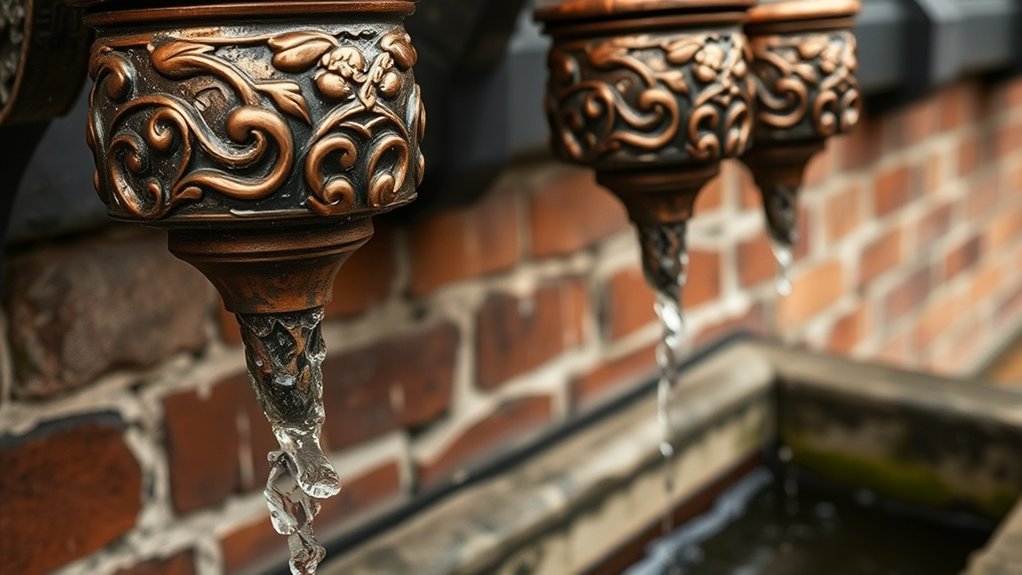
Hopper heads significantly improve the hydraulic performance of rainwater drainage systems by creating a syphonic effect, which can boost flow capacity by up to 66%. As water gathers in the hopper, it efficiently fills the pipes, allowing for increased volume and speed during heavy rainfall. This design helps to prevent overflow and ensures effective water management, making it a crucial feature for period properties. Additionally, when properly installed, hopper heads function as a syphonic system, enhancing the overall efficiency of drainage.
Syphonic Drainage Effect
During heavy rainfall, syphonic drainage systems in hopper heads are crucial for managing water effectively. This siphonic design ensures that downpipes fill completely with water, creating a negative pressure zone in the horizontal pipes. This generates suction, which speeds up water evacuation. Baffle plates prevent air from entering the system, allowing for a continuous siphonic flow that can transport up to 66% more water than traditional drainage methods. This increased capacity lowers the risk of overflow and helps protect historic foundations from damp. Moreover, syphonic systems allow for narrower pipes, enhancing efficiency while preserving the aesthetic appeal of period properties. This makes them vital for maintaining both functionality and beauty in architectural designs. Additionally, full pipe bore flow is necessary to create suction, enhancing flow velocity and ensuring effective drainage in these systems.
Water Flow Optimization
Proper management of rainwater is significantly improved by hopper heads, which enhance water flow in period properties.
By increasing downpipe capacity, these designs allow pipes to handle nearly full loads during heavy rainfall, improving water flow efficiency by up to 66%.
Located just below gutters, hopper heads temporarily hold water, directing it smoothly into downpipes. This arrangement not only boosts gutter performance but also lowers the risk of overflow.
Moreover, the design promotes siphonic action for a consistent flow, reducing the likelihood of debris accumulation.
In essence, hopper heads ensure that your drainage system operates effectively, protecting your building from water damage while adding to its architectural appeal.
Architectural Styles and Decorative Elements
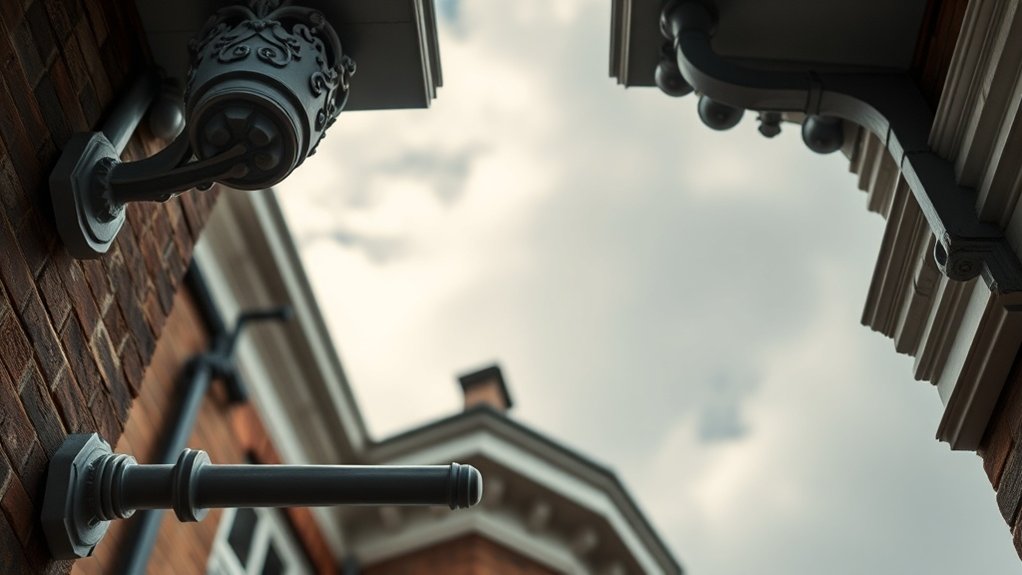
Various architectural styles have significantly influenced the design of hopper heads and rainwater features in period properties, reflecting the distinct aesthetic values of each era. Victorian architecture is known for its ornate details, while Tudor styles often feature timber-effect designs.
| Style | Decorative Elements |
|---|---|
| Victorian | Finials, moulded cornices, intricate spikes |
| Tudor | Half-timbering motifs, steep roofs |
| Georgian | Symmetrical designs, understated elegance |
The Edwardian style adds fretwork and stained glass, enhancing the elaborate designs of hopper heads. In contrast, Georgian architecture leans towards simpler, more balanced shapes. Understanding these elements helps us appreciate how historical aesthetics influence the restoration and maintenance of period properties today.
Materials Used in Hopper Head Construction
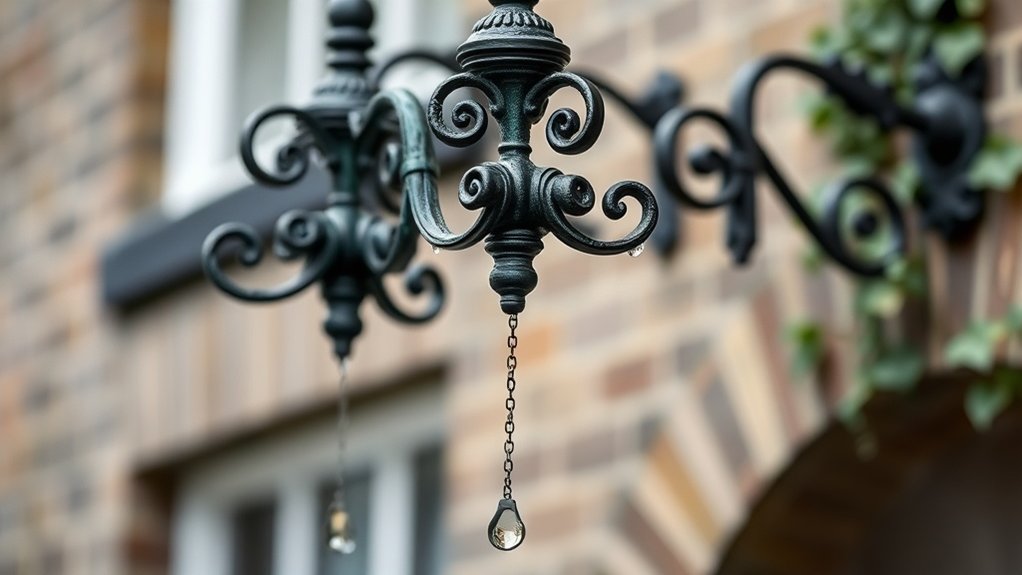
When selecting materials for hopper head construction, you’ll see a shift from traditional cast iron to modern alternatives.
Cast iron has been a popular choice since the mid-19th century, prized for its durability and decorative appeal.
However, contemporary materials like aluminium and uPVC provide lightweight, low-maintenance options.
Understanding these choices will help you select the best fit for both the aesthetic and functional requirements of your property.
Historical Material Evolution
As architectural styles changed, so did the materials used in hopper head construction, reflecting technological advancements and shifting design preferences.
- After the Dissolution of the Monasteries, lead became popular for its durability and ability to create intricate designs.
- Wooden gutters, once the norm, were eventually phased out due to their short lifespan.
- By the late 18th century, cast iron gained popularity for its ornamental qualities and strength.
- In modern times, aluminium and plastic have been introduced, although they often lack the character of traditional materials.
These material changes not only highlight practical improvements but also mirror the evolving tastes and values of society, impacting the decorative elements of period properties.
Cast Iron Dominance
Despite the availability of modern materials, cast iron continues to be the preferred choice for hopper head construction in period properties due to its durability and aesthetic appeal.
It can endure harsh weather conditions and has a lifespan of 70 to 100 years with proper care. The intricate designs typical of Victorian and Edwardian architecture, such as decorative scrollwork and coats of arms, highlight the craftsmanship of cast iron.
Modern Material Alternatives
While cast iron is a traditional choice for hopper heads in period properties, modern materials now offer excellent alternatives that blend historical charm with modern practicality.
Here are some options worth considering for your restoration or renovation:
- Aluminium: Lightweight and rust-resistant, aluminium can be customised to match heritage styles.
- Zinc: Naturally corrosion-resistant, zinc is malleable, making it suitable for bespoke designs.
- Stainless Steel: Known for its durability and low maintenance, stainless steel is perfect for harsher conditions.
- Fibreglass (GRP): This weather-resistant material can be easily moulded into traditional shapes.
These alternatives not only improve rainwater management but also maintain the visual appeal of your property, while often being more environmentally friendly. Additionally, using energy-efficient materials contributes to lower energy costs and enhances the overall sustainability of your home.
The Role of Hopper Heads in Period Property Preservation

Hopper heads are vital for the preservation of period properties, ensuring efficient rainwater management and protecting the structural integrity of these historic buildings. Not only do they enhance architectural beauty, but they also help maintain our cultural heritage. By consolidating multiple gutter outlets and effectively managing water flow, hopper heads prevent flooding and water damage.
| Function | Benefit |
|---|---|
| Increased Drainage Capacity | Reduces overflow during heavy rain |
| Water Flow Regulation | Prevents localised flooding |
| Structural Protection | Mitigates damage to masonry and timber |
| Architectural Integrity | Maintains period authenticity |
| Historical Significance | Reflects craftsmanship and prestige |
In essence, proper management of rainwater through hopper heads is crucial for safeguarding both the aesthetic and structural elements of period properties.
Maintenance and Conservation Practices

To ensure the longevity and integrity of period properties, regular maintenance and conservation practices for hopper heads and rainwater features are crucial. A proactive approach to gutter maintenance not only preserves historic charm but also prevents costly damage.
Here are some essential practices:
- Schedule inspections twice a year, preferably in late autumn and spring, to remove debris.
- Look out for signs of wear, such as discolouration on walls and plants growing in gutters.
- Use gentle methods to avoid causing mechanical damage during maintenance.
- Keep a record of each inspection to monitor changes and address issues promptly.
- Regularly check for visible damage to ensure that any potential issues are dealt with before they escalate.
Protection Against Water Damage

To protect period properties from water damage, taking proactive steps is crucial for maintaining their structure and appearance. Regularly checking roofs and foundations allows you to spot leaks and cracks early, which is key to preventing water damage. Installing flood barriers and water-resistant features, such as air brick covers and non-return valves, significantly boosts your property’s defence against heavy rainfall. Sump pumps and well-kept drainage systems help swiftly remove water, minimising potential damage. Professional waterproofing solutions provide lasting protection against leaks, tackling issues that DIY methods might overlook. Additionally, annual professional roof inspections are essential for maintenance and can help identify minor issues before they escalate.
Modern Alternatives and Their Implications

As the need to preserve period properties increases, modern alternatives such as aluminium and plastic hopper heads present both benefits and drawbacks.
While these materials are durable and require less maintenance, they often fall short in matching the aesthetic quality of traditional designs.
Consider these points:
- Aluminium typically lacks the detailed craftsmanship of cast iron.
- Plastic may be more affordable, but it often doesn’t last as long.
- Stainless steel can clash with the visual appeal of period features.
- Custom powder-coated cast aluminium can mimic a heritage appearance.
Installation can also be tricky, as modern materials come with different fixing methods and compatibility issues.
As you explore these options, it’s crucial to strike a balance between functionality and the preservation of historical character in UK period properties.
Challenges in Restoring Historical Hopper Heads

Restoring historical hopper heads poses distinct challenges that require careful attention to material integrity and access difficulties. Issues like corrosion and material degradation, along with safety constraints, often hinder restoration efforts. Here’s a summary of the main challenges:
| Challenge | Impact | Restoration Techniques |
|---|---|---|
| Corrosion | Weakens structural integrity | Use of protective coatings |
| Access limitations | Delays inspections | Employ rope access techniques |
| Material sourcing | Hard to find authentic materials | Opt for repair over replacement |
| Environmental factors | Accelerates weathering and clogging | Implement careful cleaning methods |
| Historical authenticity | Risks eroding the building’s character | Requires skilled craftsmanship |
These challenges demand a thoughtful approach to ensure that the restoration is both effective and respectful of the historical significance of the structure.
The Future of Hopper Heads in Sustainable Architecture

The future of hopper heads in sustainable architecture looks promising, blending aesthetics with environmental responsibility.
Key innovations in hopper head design include:
- Using durable, recyclable materials such as cast iron and aluminium to reduce waste.
- Merging traditional craftsmanship with modern sustainable practices to maintain aesthetic appeal.
- Enhancing rainwater management to safeguard building structures.
- Incorporating systems for rainwater harvesting that encourage water conservation.
As you consider sustainable designs, recognise how these advancements not only honour architectural heritage but also promote eco-friendly practices.
Frequently Asked Questions
Can I Install Modern Hopper Heads on Historical Buildings?
You can’t install modern hopper heads on historic buildings without jeopardising their historical integrity. Using contemporary materials can compromise the building’s character. It’s crucial to consult with local authorities and prioritise authentic restoration or custom replacements that replicate original features. For example, if you’re restoring a Victorian terrace, consider sourcing traditional cast iron hopper heads that match the original design.
How Do I Identify an Authentic Victorian Hopper Head?
To spot an authentic Victorian hopper head, look for cast iron materials, detailed Victorian designs, and signs of age. Genuine examples often showcase intricate patterns, demonstrating the craftsmanship of the era. Remember, a plastic imitation won’t cut it!
Are There Grants Available for Restoring Original Hopper Heads?
Yes, there are several grants available for restoring original hopper heads. Seeking funding for restoration can significantly support heritage preservation, helping to keep these architectural features intact for future generations and fostering a greater appreciation of local history. For instance, local councils and heritage organisations often provide financial assistance for such projects.
What Are the Best Practices for Cleaning Hopper Heads?
When cleaning hopper heads, use gentle methods such as low-pressure water and soft brushes. Regular maintenance is essential: check for blockages and debris, ensure proper drainage, and schedule cleanings twice a year to maintain both functionality and appearance.
Can I Customize the Design of a New Hopper Head?
Yes, you can customise the design of a new hopper head. There are various material options available, allowing you to create designs that reflect your property’s character while ensuring both functionality and visual appeal.
Conclusion
Hopper heads are not just functional; they add character to your period property while managing rainwater effectively. By restoring these features, you preserve a piece of history and enhance your home’s appearance. Each hopper head has its own story, reflecting the craftsmanship of its time. Embracing these elements helps maintain their legacy for future generations.


