

How to Spot Signs of Gutter Corrosion Early
To spot signs of gutter corrosion early, regularly check for reddish-brown rust spots and any peeling or flaking paint. Look for sagging gutters or warped metal, which could indicate structural problems. Inspect for water stains beneath the gutters, discoloured fascia boards, and paint bubbles that suggest water damage. Don’t forget to check the fasteners for rust and discolouration. By staying alert to these signs, you can maintain your gutters effectively and prevent issues from worsening. Recognising these indicators can significantly enhance your preventative measures.
Key Takeaways
- Look for rust spots or discolouration on the gutters, which may indicate moisture exposure and potential corrosion.
- Check for peeling or flaking paint; this could suggest moisture trapped beneath and hidden deterioration.
- Inspect for sagging or warped gutters, as these may indicate debris build-up and weakened support.
- Keep an eye out for water stains beneath gutters or discoloured fascia boards, which can signal leaks and prolonged moisture presence.
- Regularly examine fasteners for rust and movement, as these signs may suggest moisture ingress and instability in the gutter system.
Visual Indicators of Corrosion

How can you identify corrosion in your gutters? Start by checking for rust, which often appears as red-brown spots, particularly on downspouts and light-coloured surfaces. This signifies prolonged moisture exposure and may indicate the start of corrosion. Regular maintenance of your gutter system helps to prevent such issues, especially in varied climates that may accelerate wear.
Look out for bubbles or peeling paint—these signs suggest moisture trapped under the coating, indicating hidden corrosion. Flaking paint alongside rust streaks can further highlight metal deterioration. Additionally, persistent moisture can lead to corrosion of the gutters, making it essential to address these issues promptly.
Regularly inspecting these visual clues can help you catch issues before they turn into serious structural problems. By addressing early signs of corrosion, like rust and paint failures, you can preserve your gutter system’s integrity and prevent future damage.
Structural and Attachment Signs

Maintaining the structural integrity of your gutters is crucial, as signs of corrosion and detachment can lead to bigger problems.
Look out for these key indicators:
- Sagging or bowing gutters due to debris build-up may require immediate attention.
- Deteriorating fasteners can result in loosening or breakage, causing gutters to detach from your home.
- Warped metal can weaken support, increasing the risk of damage. Visible cracks should also be monitored, as they can allow water to leak through and worsen the corrosion process.
- Growth of mould or algae can trap moisture and hasten material decay.
Regular inspections are vital.
If your gutters aren’t sitting flush or appear to be pulling away, it might be time to call in a professional.
Addressing issues early can save you from costly repairs and protect your home from water damage.
Water Damage Evidence
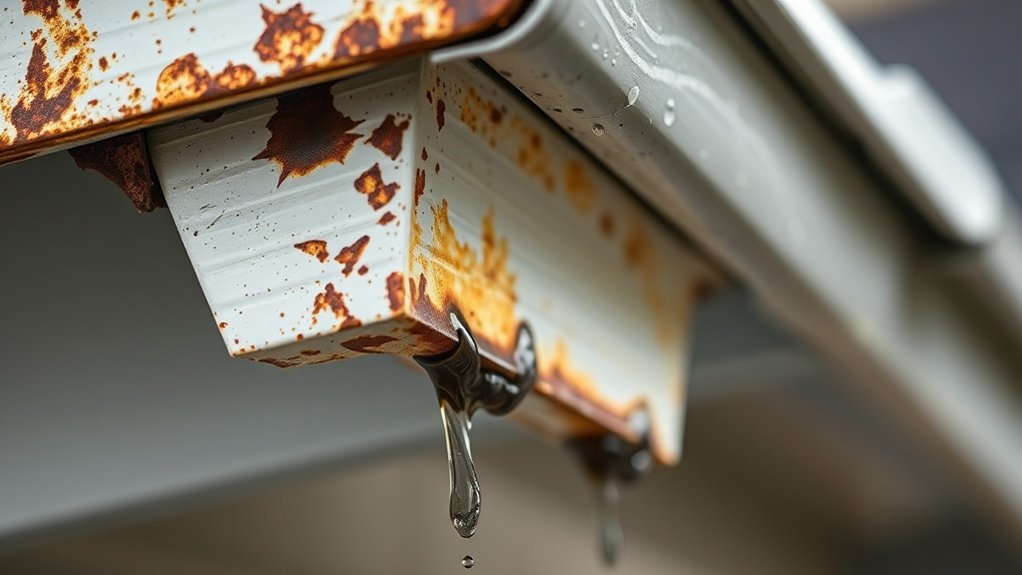
When inspecting your gutters, it’s crucial to spot signs of water damage that could indicate deeper issues. Look for water stains under your gutters, which may suggest overflow or leaks. Discolouration or streaks on fascia boards and cladding can indicate prolonged moisture exposure. Peeling or blistering paint in these areas often correlates with water damage and poor paint adhesion. Proper water management is essential to prevent these issues from escalating. Additionally, regular inspections can help identify minor problems before they develop into significant leaks.
Persistent moisture can weaken fascia boards, increasing the risk of wood rot. Furthermore, stains reaching your foundation may indicate improper drainage, leading to soil erosion. Addressing these signs early can prevent more serious problems and safeguard your home’s integrity.
Surface and Material Degradation
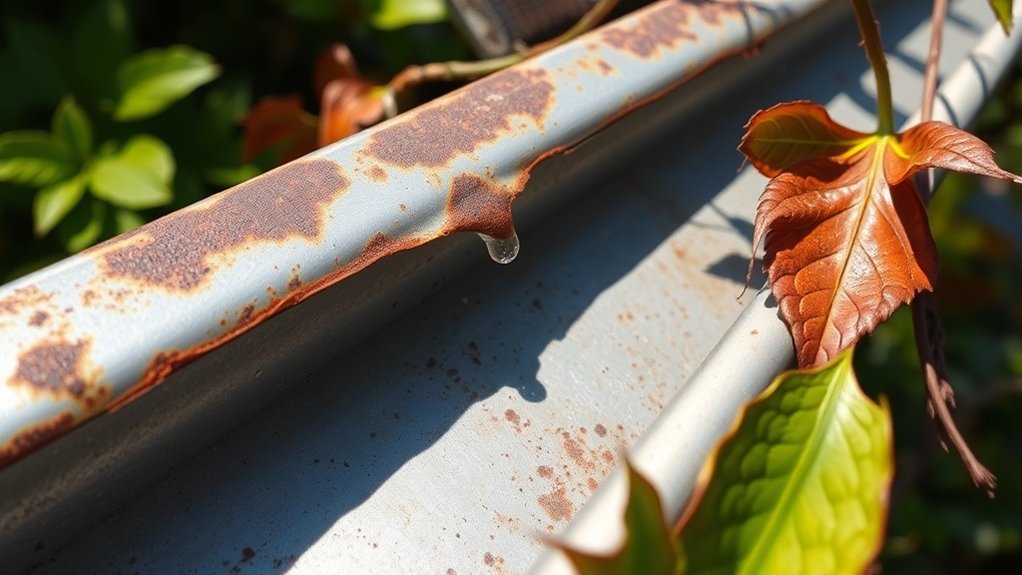
Identifying water damage is just one part of maintaining your gutters; understanding surface and material degradation is equally crucial.
Look out for these signs of deterioration:
- Aluminium oxidation shows up as a chalky, powdery residue, indicating a breakdown in the protective coating.
- Steel rust appears as red-brown streaks, signalling deeper corrosion and a weakened structure.
- Bubbling or peeling paint often points to trapped moisture, suggesting early stages of corrosion beneath the surface.
- Rough, pitted textures indicate significant material degradation, which can compromise your gutters’ performance.
Additionally, maintaining proper drainage is essential to ensure that any corrosion does not lead to more severe issues in your roofing system.
Fastener and Joint Condition
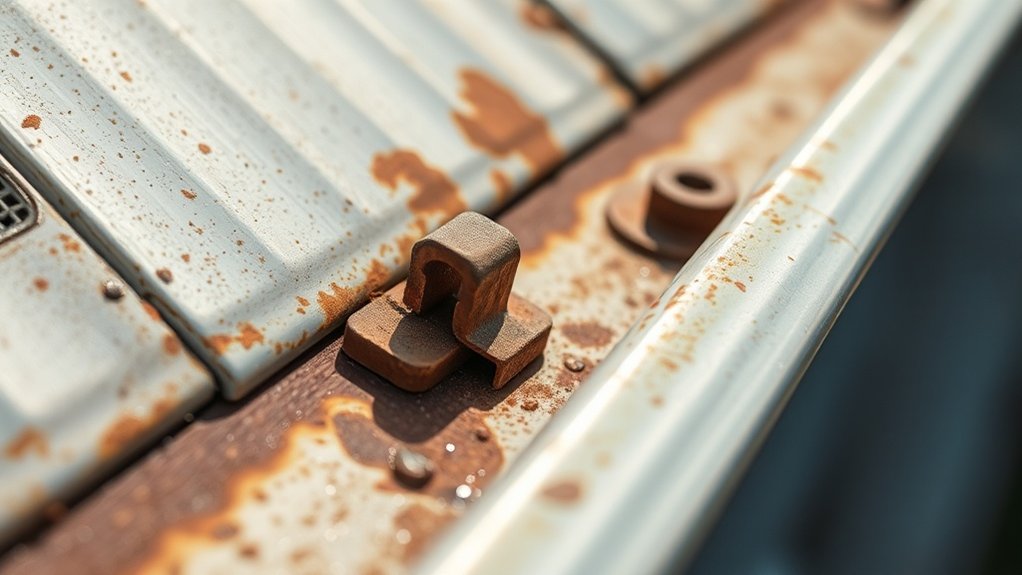
The condition of fasteners and joints is crucial for the integrity of your gutter system. Regularly inspecting the types of fasteners and the materials of joints can help identify early signs of corrosion. Look out for rust on nails, screws, and brackets, as this indicates moisture ingress. Missing or loose fasteners can lead to sagging, which undermines structural stability.
| Indicator | Fastener Types | Joint Materials |
|---|---|---|
| Rust or corrosion | Nails, screws | Soldered, welded |
| Discolouration | Galvanised, stainless | Copper, aluminium |
| Movement at joints | Zinc-coated, steel | Copper joints |
| Moisture stains | Stainless, incompatible | Aluminium, copper |
Regular cleaning and inspection of these components can prevent damage and help maintain your gutter system effectively.
Frequently Asked Questions
How Often Should I Inspect My Gutters for Corrosion?
You should check your gutters for signs of corrosion at least twice a year, preferably in spring and autumn. If you live near trees or in areas prone to severe weather, you might need to inspect them more frequently.
What Materials Are Least Prone to Gutter Corrosion?
When it comes to materials that resist gutter corrosion, copper, vinyl, aluminium coatings, and stainless steel stand out for their durability and resistance. These options help ensure your home’s drainage system remains effective and attractive over time. For example, copper not only fights corrosion but also develops a beautiful patina, while vinyl is lightweight and easy to install. Choosing any of these materials can lead to a long-lasting and low-maintenance gutter system.
Can I Prevent Gutter Corrosion With Regular Maintenance?
Gutter maintenance may seem laborious, but regular care is essential for preventing corrosion. Simple tasks like cleaning out leaves, inspecting for damage, and applying protective coatings can significantly extend the life of your gutters. This ensures they continue to function properly, safeguarding your home from water damage for years to come.
What Are the Best Cleaning Methods for Gutters?
For effective gutter cleaning, consider manual methods for thoroughness, gutter vacuums for efficiency, or powered water systems for stubborn blockages. It’s advisable to inspect and clean your gutters at least twice a year to prevent build-up and damage. For example, clearing leaves in autumn and assessing for ice in winter can save you from costly repairs later on.
When Should I Consider Replacing Corroded Gutters?
Consider replacing corroded gutters when you see clear signs of deterioration, such as rust or structural damage, particularly as they near the end of their expected lifespan. Regular checks can help you avoid costly repairs and ensure effective water drainage for your home. For instance, if you notice water pooling around your foundation or damp patches on the walls, it’s time to take action.
Conclusion
To summarise, regularly inspecting your gutters for signs of corrosion can save you from expensive repairs. Approximately 80% of homeowners experience significant water damage due to neglected gutter maintenance. By being proactive and identifying visual signs, structural problems, or water damage early, you can safeguard your home’s integrity and avoid the stress of major repairs. Don’t underestimate the importance of gutter maintenance; it’s vital for your home’s longevity.


